Interviews

Cable’s punditry could come unstuck

From our UK edition

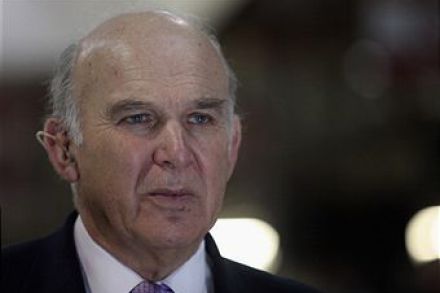
"It's not imminent. But you can see this happening." So sayeth Vince Cable about the prospect of another global financial crisis, in interview with the New Statesman today. To be fair, you can see his point: there is a pervasive sense that the contradictions of the banking sector still haven't been fixed, and — as I have written recently — our economy, and economies worldwide, are still afflicted by debt of all varieties. But that's not going to calm those Tories who regard Cable as a combustive liability. In the weeks since the Lib Dems'  annihilation at the polls, the Business Secretary has increasingly reverted to his pre-coalition form: a professional commentator on the state of the economy.
Alan Greenspan doesn’t exist

From our UK edition

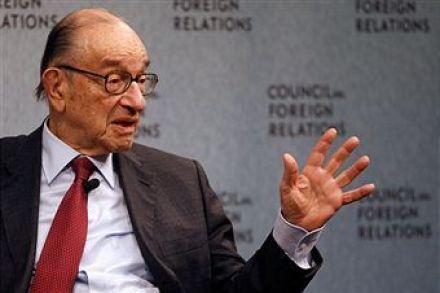
Five years have passed since Alan Greenspan stepped down from the most influential banking job in the world. (Now that’s how to leave at the right time.) Described in books, interviews and profiles too numerous to mention as ‘the most powerful regulator/person on earth’, he served as Chairman of the Federal Reserve for 19 years. For reasons of sheer longevity, perhaps Greenspan deserves to be called the architect of the modern global economy more than any of his elected contemporaries.

Cable’s latest warnings and provocations

From our UK edition

My favourite part of the Guardian's interview with Vince Cable today? When the business secretary says that his sermonic prescriptions from during the crash are of "enduring relevance" now. But there's more to the article than self-aggrandisement, not least Cable's gloomy overview of the British economy. It's not quite the same as Alastair Darling's Guardian interview in August 2008, but there is a touch of that here. "I think it is not understood that the British economy has declined by 6 or 7 per cent — it is now 10 per cent below trend," says Cable, "Britain is no longer one of the world's price setters. It is painful.

Lansley stands up for his reforms

From our UK edition

If there's anything that stands out from Andrew Lansley's interview with the Sunday Times (£) it is his air of quiet defiance. Of course, the Health Secretary sounds some of the conciliatory notes that have crept in to the government's rhetoric since they decided to pause, listen and engage on NHS reform. But he also stands up for the original reforms as he conceived them. "From my point of view," he says, "the White Paper was setting out what sensible, intelligent people inside the NHS were saying." For him, the concerns that remain are not with the general thrust of his reforms, but with "implementation, the nuts and bolts of how it will work." Lansley also makes sure to bind Cameron into the White Paper.

Clegg’s implicit attack on the Tories

From our UK edition

Up until a few months ago, David Cameron and Nick Clegg tried to avoid doing big set piece broadcast interviews on the same day. This was driven by a desire to both maximise the coalition’s dominance of the media agenda and to avoid having to give a running commentary on what the other had said. But this rule has gone out of the window as the AV referendum has got rougher and rougher. So, following on from their both doing separate interviews on Andrew Marr on Sunday, they both were on the Today Programme this morning. Clegg even told Justin Webb to ask Cameron about the split between the two of them on internships when he was on in forty minutes time.   Clegg isn’t, unlike Cable and Huhne, openly attacking the Tories. But he is doing so implicitly.

John Humphrys makes the case for voting No to AV

From our UK edition

Is AV too complex? Ask John Humphrys, who unwittingly made the case against switching system today, in conversation with David Cameron on the Today programme. It became clear that Humphrys believed that everyone's second preference vote would be counted under AV — and Cameron pounced. Here's the transcript: DC: If you go to an AV system you start counting some people's votes more than once. And you end up, in the words of Churchill... JH: No you don't. It simply isn't true that you count votes more than once. DC: Yes, you count all the votes. You start eliminating candidates, and you count people's second preferences. JH: And I have a second preference, as well as you, as well as anyone else. So you don't count some people's votes more than others.

Miliband’s pre-election surgery

From our UK edition

Miliband-o-rama on this Good Friday, with the Labour leader spread all across the papers. The Mirror reports that he is to have an operation to have his adenoids removed this summer, in a rather extreme bid to "improve his voice". The Guardian says that he's to deliver a speech next week — presumably with adenoids still intact — that will engage with the "Blue Labour" thinking of Maurice Glasman. And, if that's not enough, there's a curious interview with Miliband in the Sun. I say "curious," because there aren't too many interviews where a party leader goes through the (less than flattering) nicknames that have been bestowed upon him — and offers comments. On Wallace, from Wallace and Gromit, he says, "I don't see the resemblance, but it is not bad.

Ed Miliband by numbers, April edition

From our UK edition

It's just a single poll, sure — but Ipsos MORI's latest is still fairly eye-catching stuff. And this is why: it has the Tories level with Labour for the first time since October. Anthony Wells serves up a pinch of salt over at UK Polling Report, saying that this "unusual" result is most likely down to the weightings that are used. But, technicalities aside, any poll that puts the Tories close to Labour, at this stage in the political cycle, is going to be greeted cheerily by Cameron & Co. – and less so by Team Miliband. It's not all bad news for Ed Miliband, though. His personal ratings have improved since last month; a fact which deepens one of the conundrums of his reign.

Cameron quells the storm

From our UK edition

David Cameron turned in an emollient performance on the Today Programme this morning. He declined to stoke the coalition row over immigration, heaped praise on Vince Cable and stressed that the Liberal Democrats have been good coalition partners. Even when pressed on the question of whether Britain would block Gordon Brown from becoming director of the International Monetary Fund, Cameron spoke softly. The only line of questioning in the interview that discomforted the Prime Minister was when Evan Davis pressed him on why a localist government was placing restrictions on what local government could charge residents for recycling or rubbish collection.

Cameron: we’re looking at doing more for the Libyan rebels

From our UK edition

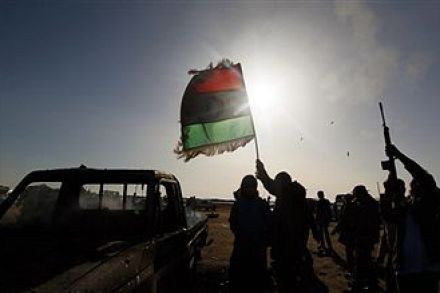
As James Kirkup says, David Cameron’s appearance on Sky News this morning was intriguing. In addition to trying to reassure the massing media doubters that the coalition “remains strong” despite its differences, the PM was keen to discuss the military mission in Libya. The letter that he authored with Sarkozy and Obama on Friday asserted that regime change was a necessity for peace. Since then, both Whitehall and the Elysee have insisted that Gaddafi cannot remain. How then might he go? Plainly, Gaddafi will not abdicate of his own volition. On the other hand, Cameron is adamant that there can be no ‘invasion or occupation’, and he reiterated the point this morning. Therefore the rebels will have to defeat Gaddafi.

The consequences of political abuse

From our UK edition

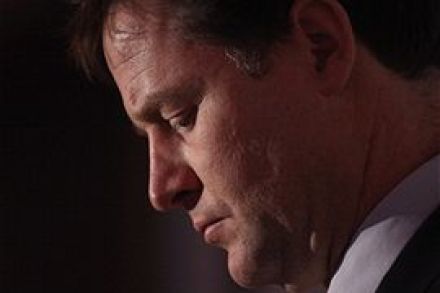
Nick Clegg’s interview with Jemima Khan (née Goldsmith), in which he admits to crying regularly to music, is already coming in for predictable mockery. But the point that Clegg makes about how his job is affecting his kids is worth dwelling on.   Clegg is not the only coalition minister to fret about this. Sarah Vine, Michael Gove’s wife, wrote earlier this year about how she worried about the psychological effect on her children of people verbally assaulting her husband in front of them. During the Labour leadership contest, Ed Balls, for all his faults, spoke movingly about his concern over how he would protect his kids from what was said about him and Yvette Cooper.

Nick Clegg was claiming that the NHS reforms were the Lib Dems’ idea just three months ago

From our UK edition

Ahead of this morning’s Cameron, Clegg, Lansley event on the NHS, it is worth reminding ourselves of what Nick Clegg was saying about these reforms back at the start of the year. On January 23rd, he went on the Andrew Marr show and had this exchange: 'ANDREW MARR: Huge change to the NHS just coming down the line. Was that in the Liberal Democrat manifesto? NICK CLEGG: Actually funnily enough it was. Indeed it was. We were one of the primary critics in opposition of what we felt was a top … ANDREW MARR: (over) I don't remember you saying you were going to get rid of Primary Care Trusts and pass it down to GPs. NICK CLEGG: We certainly said we were going to get rid of Primary Care Trusts.

Exclusive: the man who saved the Zurbarans

From our UK edition

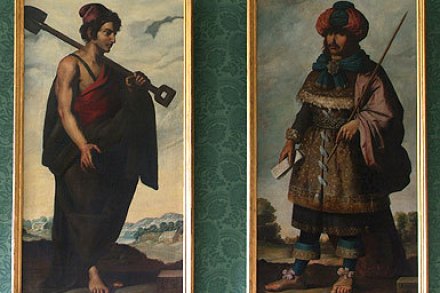
The drama over Durham's Zurbaran paintings has reached an extraordinary conclusion — and one that is revealed exclusively in this week's Spectator. The protest against the Church of England's proposed sale had snowballed into a national campaign, with Jeremy Hunt calling for them to be “enjoyed by the public.” Today we can disclose that they have been bought for £15 million — by an investor (and Spectator reader) called Jonathan Ruffer, who has decided to gift them back to the church. Here, for CoffeeHousers, is Charles Moore's interview with him for the magazine: ‘It’s the pearl of great price,’ says Jonathan Ruffer. Like the merchant in the Gospel, he is selling all that he hath.

Livingstone: Londoners won’t know what I’m planning until after I’m elected

From our UK edition

Ken Livingstone was out on the stump in Croydon yesterday. So far, Livingstone has not made any election pledges; his entire campaign has been founded on his past record as London Mayor. So, when can Londoners expect to hear what Red Ken plans to do, and how he intends to fund it? 6:30 into this interview with the Mayor Watch website, he said: “On the morning after the election, I’ll let you know.” Thirty seconds later, he repeated himself for clarity's sake.

Cuddly Ken comes out snarling, and sneering

From our UK edition

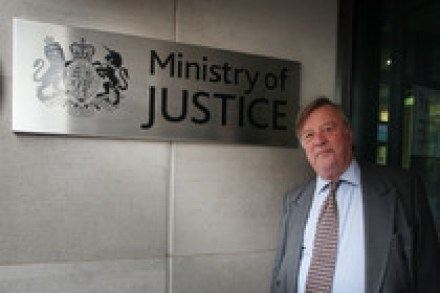
Another Saturday, another interview with Ken Clarke. This time, the bruised bruiser has been talking to the FT and the remarkable thing is that he has managed to say nothing. Not a sausage. Colleagues were not insulted, Middle England escaped unscathed and the European Court of Human Rights wasn’t even mentioned.  But Clarke conveys his determination to fight. He defends his prison reforms and community sentences, to which the right has now applied the grave term ‘misconceived’. Clarke retorts: ‘We are trying to take 23 per cent out of the budget. I don’t recall any government that’s ever tried to make any spending reductions on law and order – let alone 23 per cent.

A disheartening story

From our UK edition

A sad juxtaposition between David Cameron's defence of liberal values and the Times's interview (£) with Paul Maynard, the Tory MP for Blackpool North & Cleveleys. Maynard – who has cerebral palsy – describes his experiences in what ought to be a bastion of British decency: "Mr Maynard knew that people could be unkind, perhaps unconsciously. Nevertheless his worst experience in Parliament came as a shock. A few months later he stood up in the chamber to defend the Government’s decision to cut the Child Trust Fund. Mr Maynard admits that it was a controversial issue but still could not believe what happened. Each time that he lifted his head, his eyes were drawn to MPs across from him.

Coffee House interview: Julian Astle

From our UK edition

Open any mass-circulation newspaper and you will find plenty of insider's information about the Tory party. But precious little is known about their coalition partners, the Liberal Democrats. After decades in the political wilderness, most editors reasoned that it wasn't really worth their while finding out what the party thought. After all, what difference did it make?   Well, times have changed. What the party thinks, what it does, and, crucially, what it won't do, really does matter. So to help us here at Coffee House, Julian Astle, a friend of the Lib Dem leadership and director of CentreForum, the liberal think tank, has agreed to answer a few questions.

Ten things you need to know about the NHS reforms

From our UK edition

At last we have it: a defence of the coalition's NHS reforms that is worthy of the name. It came courtesy of David Cameron, speaking on BBC Breakfast earlier, and you can watch it in the video above. Suffice to say, the Prime Minister dwelt on the endemic waste and excessive bureaucracy of the current system, yet he also found room to explain why choice matters, and why it won't leave patients stranded. But, even then, the performance wasn't perfect. Cameron may have thought he was being disarmingly honest by admitting that his brother-in-law's fellow hospital consultants have qualms about the proposals, but one suspects it has served only to arm his opponents. Downing Street spokesmen have since put out hurried explanations that the PM was trying to "humanise" the issue.

Has Maude shut the door in Boris’s face?

From our UK edition

Nigel Lawson and Francis Maude are both interviewed in the Telegraph today, and the results are very different in each case. For his part, Lawson is in bombastic form – waxing sceptical on everything from the coalition to the Big Society. Whereas Maude is predictably more reserved and accepting. It's the Maude interview, though, that contains the most politically significant revelation. Namely, this: "Boris Johnson, privately backed by several Cabinet ministers, is leading the charge for tougher union laws. But Maude, a key player in the Coalition’s dealings with the public sector, is reluctant. Tightening Thatcher’s labour laws is a 'last resort' he says.

Ten points about the Ed Balls interview

From our UK edition

Ed Balls gets personal in his interview with the Times (£) today, but not in the way you might expect. For most of the piece he dwells on what the paper calls his "hidden vulnerability" – the effort to contain his stammer. And from there on, the politics seems a touch softer than usual. There are surprisingly few overt attacks on his opponents, and those that make the cut are considerably less violent that we're used too. Which isn't to say that the interview lacks politics. No sirree. Here's a ten-point selection of some of the political highlights (so to speak), with my added comments:      1) Doubling back on a double dip.