Interviews

In the foothills of Brown’s debt mountain

From our UK edition

After the sunshine of the Downing St rose garden, the gloom of the public finances. This morning's newspapers are full of stories about the tax hikes and spending cuts that our coalition government is looking to introduce. The Sun and the Times dwell on yesterday's forecast for a rise in VAT. The Guardian outlines possible cuts to middle-class benefits. And there's plenty more besides. Two articles, though, are particularly indicative of the tensions that the government will face.  Interviewed in the Sun, David Cameron has to go on the defensive about tax rises; insisting that "The Conservative party is still a low-tax party, a tax-cutting party – and that's in the agreement.
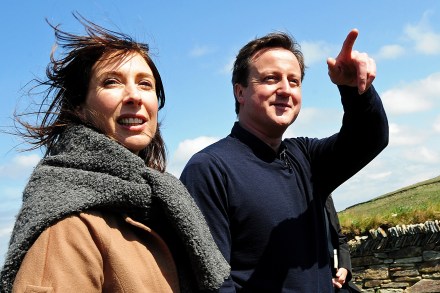
Cameron gets ready for government – but will he manage to avoid “frontline” cuts?

From our UK edition

For the past few years, the Tory task has been to look like a government-in-waiting. Now, with the election only a matter of days away, David Cameron has dialled that process up to eleven. In interviews with the Sunday Times and Andrew Marr today, the Tory leader concentrates firmly on the nuts and bolts of government. The content of the Queen's speech, the depth of Tory cuts, the possibility of coalition – all get name-checked and cross-referenced. There's much in there to encourage Tory supporters. Indeed, CoffeeHousers have been clamouring for one of Cameron's proposals: a "Great Repeal Act," which would "scrap ID cards, home information packs and dozens of rarely enforced criminal offences introduced by Labour over 13 years.

The curtain starts to fall on Gordon Brown

From our UK edition

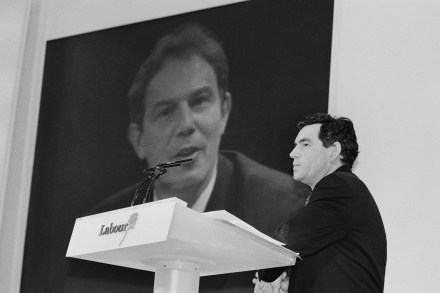
There's a strange fin de siècle air about Labour this weekend: a new appreciation that the forthcoming election marks either the end of their reign, or – at best – is the start of a different, diluted kind of power.  There are still a few signs of life and struggle, sure.  I mean, Gordon Brown's interview with Jeremy Paxman last night was fairly proficient by his standards, if typically disingenuous.  But, even then, the PM is struggling to move the conversation on from Gillian Duffy.  In interview with the Telegraph today, he admits that he has "paid [a] heavy price" for his gaffe. That line forms the headline of the article. Even Tony Blair can't inject much joy into Labour's campaign.

Brown calls woman a ‘bigot’

From our UK edition

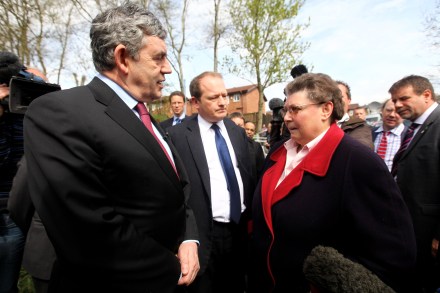
Wow. Just when you thought Labour's campaign couldn't get any worse, they go and wheel out Brown in front of ordinary voters.  And this is the result: he has been caught on mic describing a member of the public as a "bigoted woman".  Speaking to one of his advisers, he added "you shouldn't have put me with that woman. Whose idea was that?"  Classic. This may be trivial beside the big questions about the economy, etc. - but you can expect is to become one of the defining TV moments of the campaign.  It's one thing to insult and attack the politicians who serve alongside you, but quite another to do similar to someone whose vote you're courting.  Toxic, toxic stuff.

Just whom will the Lib Dems work with, then?

From our UK edition

Two noteworthy entries, today, in the will-they-won't-they game of coalition government.  The first from Nick Clegg in the Sunday Times: "You can’t have Gordon Brown squatting in No 10 just because of the irrational idiosyncrasies of our electoral system." And the second from Paddy Ashdown speaking to the People: "Nick Clegg cannot work with David Cameron ... We could not go into a coalition with the Tories, it wouldn't work." So, assuming both are true, it sounds as though Clegg would only work with a Labour party headed by someone other than Brown.  But don't count on it.

Tories growing used to a hung parliament in public and in private

From our UK edition

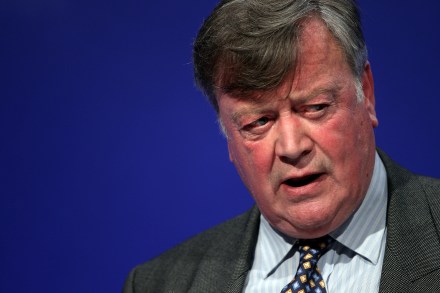
Planting seeds, that's what the Tories are doing – they're planting the seeds of a Lib-Con alliance.  Yes, it's a subtle process, and is couched in terms of denial and defiance.  But it's still going on.  I mean, look at Cameron's interview with Jeremy Paxman past night (video on Spectator Live), where he declined to rule out having Nick Clegg in his Cabinet – although, happily, he was more unequivocal on the subject of Vince Cable.  And then there's Ken Clarke's interview with the Daily Telegraph this morning, in which he says that the Conservative "starting point" for any coalition would be a refusal to compromise on their economic plans.

Cameron’s low reward interview with Paxo

From our UK edition

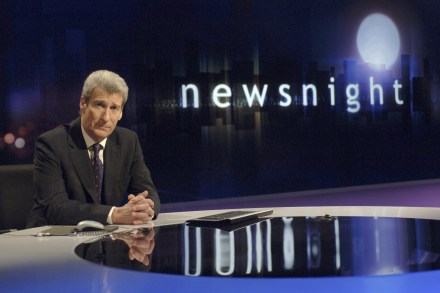
David Cameron is recording his interview with Jeremy Paxman at 5.15 today, it’ll air at 8.30. Cameron didn’t want to do this interview. Originally, Clegg was the only leader to agree to be interviewed by Paxman. But after the first debate, Brown said yes and the Tories decided that Cameron couldn’t be the only party leader not to do it. There is, of course, history between Paxman and Cameron. When Paxo interviewed Cameron during the 2005 leadership contest, Cameron turned the tables on Paxman spectacularly, attacking the whole Paxman school of interviewing. Cameron’s approach in 2005 was previewed by a very funny piece by Michael Gove in The Times which imagined Paxman interviewing Jesus.

A bumpy ride for Brown on Radio One

From our UK edition

Gordon, meet disillusionment.  Disillusionment, the Prime Minister.  Ask him questions on whatever you want: the economy, jobs, immigration, expenses - the ball is in your court.  Make him squirm, if you like.  Confront him.  He is, after all, here at your pleasure. For that was the set-up of Radio One Newsbeat's interview with Gordon Brown earlier this afternoon.  It was one of those impossible situations for the PM.  He could hardly decline to be quizzed by a group of first time voters, aged between 18 and 28.  But it put him at the mercy of some pretty disgruntled members of the public.  And they took full advantage. The questions were direct and drew blood.  On the economy: "Where are the cuts going to come from?

Brown’s mindset on full display

From our UK edition

Labour high command will be very satisfied with Brown’s performance on Marr this morning. There was far less of the tetchiness that we usually see from Brown in interviews and by being invited to talk about the ash cloud and the government’s response to it at the beginning, Brown was able to assume some of the aura of his office as Prime Minister. The interview saw the debut of Brown’s latest rewriting of history. Apparently he has always been for bringing in the liberals (exact quote to follow when the BBC release the transcript) and a ‘progressive consensus’. This will come as a shock to anyone who has read Paddy Ashdown’s diaries or talked to those involved in the discussions between the two parties in the mid to late nineties.

The future might be yellow

From our UK edition

The Liberal Democrats are doing well. Very well. More voters seem actively to want a hung parliament - they neither hate Labour or love the Tories enough to act decisevely either way - and a vote for Nick Clegg seems a safe, fair choice. A few years ago Paddy Ashdown was over the moon to have won far fewer MPs than the party is hoping for at this election. Then came the "Iraq Bounce" with Charles Kennedy's anti-war stance doing the party well. Many assumed that without a clear-cut issue, and having chosen a leader who looked like David Cameron's younger brother, the Lib Dems might struggle. Instead, the party seems to be fighting off Tory inroads.

The return of Chris Grayling

From our UK edition

Adam Boutlon's interview with Chris Grayling this afternoon felt like a pressure valve being released.  Grayling's recent low profile had already become a rolling story, and his absence from the speaking line-up at his party's manifesto launch was bound to fuel more murmuring and speculation – so the Tories clearly decided to wheel him out in front of the cameras to calm things down a bit.  As it happened, Boulton was on combative form – arguing that elected police commissioners would just add "another layer of bureaucracy" to society – but Grayling sounded quite reasonable in response.

What would you ask Cameron?

From our UK edition

David Cameron takes a few journalists with him on each of his one-day tours, and it's my turn tomorrow: 6am start. I should be able to get  half an hour or so with him, to do an interview for The Spectator. As is customary, I'll try and ask him some questions on behalf of CoffeeHousers - so please add any thoughts as a comment below.

Nick Clegg’s self-defeating Scargillian rhetoric

From our UK edition

The transformation of Nick Clegg from moderate Europeanist to a populist continues apace. The Lib Dem leader is very serious about capturing the anti-politics mood among the electorate - no easy feat for some who looks as Establishment as the rest. Though he will likely be pleased with today's Observer interview, I wonder whether he will, in retrospect, feel comfortable with his view that a small Tory majority would somehow make a Cameron government illegitimate and that Britain could be plunged into "Greek-style unrest" if cuts were introduced. Where to begin? The electoral system works the way it does. It has many inbuilt problems - particularly for the Tories - but until it is reformed it produces lawful and legitimate governments.

Cameron is Mr Reasonable on Today

From our UK edition

Another day, another party leader on the Today Programme.  This time it was David Cameron, and his interrogator was Evan Davis.  My quick capsule review would be that the Tory leader did quite well, sounding measured and reasonable for most of the twenty minutes - which is certainly better than Brown managed yesterday.  But for more, read on... Unsurprisingly, Davis led on this morning's FT interview with Peter Gershon, the Tories' efficiency advisor, who has fleshed out some of the party's spending plans.  This was the most aggressive segment of the interview, with Davis asking how many job losses would be incurred by a "£2 billion saving on public sector pay rolls.

Woolas on the rack

From our UK edition

Phil Woolas has just been confronted on Daily Politics about immigration figures which we uncovered on Coffee House yesterday, showing 99 percent of new jobs since 1997 are accounted for by immigration. His response is (unintentionally) hilarious. He is immigration minister, yet appears not to know what immigration figures mean. Here's the transcript: Phil Woolas: I think that the Spectator's analysis, perhaps not surprisingly, is confusing two completely separate things Andrew Neil: These are Office of National Statistics figures.which we checked this morning. Do you accept that there are 1.7 million new jobs for people of working age between 16 and 64, correct? PW: Yes AN: And according to the Labour Force Survey, compiled by the Office of National Statistics. 1.

Civil service discussing Tory efficiency savings

From our UK edition

Laura Kuenssberg of the BBC is reporting that senior civil servants met this morning to discuss how they would implement the Tory plans for efficiency savings. Now, it is not surprising that the civil service is discussing how to implement the opposition’s plans. But what is intriguing is who told the BBC about the meeting. If it was the Tories, then no surprise. But if it was the civil service who told the BBC about it, then that would indicate that they want it to be known that they think these efficiencies are possible. My hunch, and it is no more than that, is that it was civil servants who told the BBC. I can’t imagine that the BBC news channel at noon would be treating it as breaking news if they had heard it from the Tories.

Brown comes under heavy fire on Today

From our UK edition

Woah. I doubt Brown will endure many tougher twenty-minute spells during this election campaign than his interview with on the Today Programme this morning. You could practically hear the crunching of his teeth, as John Humphrys took him on over Labour's economic record; practically smell the sweat and fear dripping down his brow. It was compulsive, and compelling, stuff. Humphrys started by putting a grim story to Brown: that his "handling of the economy was not prudent ... your record suggests that the economy is not safe in your hands."  The PM's mission was to deny all this, and he did so with his usual stubborness and disingenuity.  His pitch here was all about inflation: about how we'd avoided the high inflation of recessions past, and how we should be grateful for that.

Two steps forward for the Tories, one step backwards for the Lib Dems

From our UK edition

Last week, the Tories strengthened their tax-cutting credentials with a smart policy on national insurance.  I'm sure you didn't miss it.  But one part of the recent Tory resurgence is, to my mind, being underplayed: they now have a much stronger message on government waste.  After all, the NI policy is being funded by cutting waste.  And then there was that spoof website which pulled the limelight onto Labour's wasted spending.  And then there are the interviews in which Tory frontbenchers – such as William Hague today – say stuff like: "If there’s waste in government spending, which the Labour Government says there is, we should be saving the waste, not saying we’ll go on wasting it for several more years.

Osborne confirms that there will be no more Tory cuts this year

From our UK edition

David Cameron said as much in his Today Programme interview, but now we know for sure: we've heard everything we're going to about Tory spending cuts this year.  George Osborne confirms the news in an interview with the Guardian today: "In the interview, the shadow chancellor also disclosed, for the first time, that he would not reduce public spending by more than £6.5bn in the current financial year. He said £6bn would come from efficiencies, and £500m from cuts to child trust funds and working tax credits for the better off. There would be no further 'in year' cuts in his emergency budget, scheduled within 50 days of a possible Tory victory, he said." It's tempting to point out that £6.

Cameron defends his spending cuts – and suggests there won’t be more before the election

From our UK edition

Want some more David Cameron?  Well, the Tories are happy to oblige.  After their party leader's speech yesterday, he is interviewed in the FT and appeared on the Today programme earlier.  The FT interview was certainly the more comfortable of the two.  In it, Cameron stikes a confident note – saying that his party have "come a long way," and that "people are gagging for change".  And he stresses that he thinks – and, apparently, Ken Clarke thinks – that George Osborne is "the right person" to be Chancellor. But Cameron had a tougher time in his Today Programme interview.  It started well, with Today highlighting the supportive letter that business leaders have written about the Tories' national insurance cut.