Interviews

Don Paterson interview

From our UK edition

Don Paterson was born in 1963 in Dundee. He moved to London in 1984 to work as a jazz musician, and eventually began to write poetry. In 1993, Faber published his debut collection, Nil Nil, which won the Forward prize. In total, he’s published seven collections and three books of aphorisms. Paterson has won the prestigious T.S. Eliot prize for poetry twice. Other awards include: the Whitbread prize, and The Geoffrey Faber memorial prize. He received an OBE in 2008, and teaches poetry at the University of St Andrews.

Interview: Nick Makoha’s shame

From our UK edition

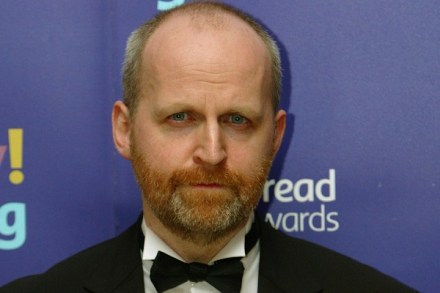
“My shame was my father wasn’t there,” says Nick Makoha, the London poet who represented Uganda at the recent Poetry Parnassus. This frank vulnerability is at the core of his first collection of poetry and his new theatre performance, ‘My Father and other Superheroes.’ Uganda is a source of tension for Makoha as both the place of his birth but also a place he fled, a place from which he feels distant. “Most people are from somewhere else,” he says. “So the story of the exile isn’t the minority, we’re the majority. Look at T.S. Eliot, by all rights and purposes he belongs to America. He liked French poets, Italian poets.

Interview: Bernard Wasserstein and the Nazi genocide

From our UK edition

As 1930s Europe moved towards the catastrophe of the Second World War, much of the greater part of the continent —  for Jews — was being turned into a giant concentration camp. Bernard Wasserstein’s On the Eve, The Jews of Europe Before the Second World War, captures the sorrows and glories of European Jewry in the decades leading up the Nazi genocide. From the shtetls of Lithuania, to the salons of Vienna, Jewish culture was already on the road to extinction. Wasserstein’s book also proves that contrary to received wisdom, there was a growing awareness that Jews were approaching a cataclysmic extinction. Bernard Wasserstein was born in London and has taught at Oxford, Sheffield, Jerusalem, Brandeis, and Glasgow Universities.

LA gangs, Arab feminists, and learning Classics

From our UK edition

‘There are more people teaching Ancient Greek in China than there are in Britain,’ declares Professor Edith Hall from the distinctively academic chaos of her study at King’s College, London. ‘Now you can either wring your hands about this, or do what I intend to, and go and talk to them! At the Zhejiang University [one of China’s C9 universities, their Ivy league] they’re translating Greek philosophy — Plato and Aristotle. They’re also looking at ancient Athens with a view to instituting a big discussion about democracy. This is the next frontier for Western classics.

Transcript: IDS on Today

From our UK edition

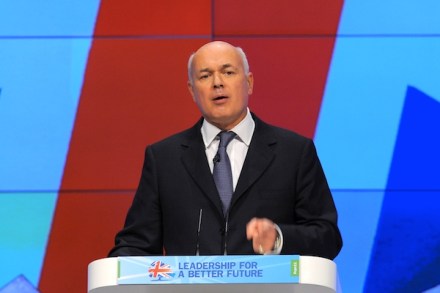
Iain Duncan Smith appeared on the Today programme this morning. In a heated interview with Evan Davis, the work and pensions secretary was interrogated about David Cameron’s radical welfare proposals. Conversation ranged from cutting rental payments for under-25s to protecting non-means tested pensioner benefits. The bulk of the exchange was devoted to discussing Cameron’s intentions, as he seeks to make welfare reform a central part of the 2015 election. Here is a transcript of those passages: Evan Davis: Okay, I’m going to quote a couple of things that you wrote in your green paper. ‘Successive governments have made well-intentioned but piecemeal reforms to the system.

Interview: Jorie Graham’s poetry

From our UK edition

Possessing a meticulously detailed and layered style, as well as having an exceptional ability to describe nature, Jorie Graham’s poetry is primarily concerned with how we can relate our internal consciousness to the exterior natural world we inhabit. In 1996, The Dream of the Unified Field: Selected Poems, 1974-1994, earned Graham the Pulitzer Prize in poetry. She is currently the Boylston professor of poetry at Harvard University. Her forthcoming book, Place will be her twelfth collection to date. She spoke to the Spectator about why poetry needs to be reclaimed to the oral tradition, how technology is corrupting our imagination, and why her work is laced with contradictions and paradoxes. What sort of ideas/ themes are you dealing with in your new collection, Place?

Interview: John Irving on writing sexuality

From our UK edition

John Irving’s latest novel, In One Person is narrated by a bisexual writer, Billy Abbot, who recalls his high school days from the 1950s, in the small New-England town of First Sister — where the majority of the cross-dressing residents are more likely to celebrate polymorphous perversity than puritanical punishment. Billy takes a fancy to various people, including: his stepfather; his friend’s mother; the captain of the school wrestling team; and the local librarian, Miss Frost — who reveals to Billy a secret regarding her own identity. The mood of the latter half of the book darkens when Billy moves to New York in the 1980s, witnessing the AIDS epidemic. Irving published his debut novel Setting Free the Bears in 1968.

Interview: Evgeny Morozov and the net delusion

From our UK edition

You are reading this article thanks to the greatest invention of the last 50 years: the internet. The web is often regarded as a panacea for absolutely everything. It is revolutionising the world’s economy. It is changing leisure and entertainment. And it is also a political tool that can liberate oppressed people. Jared Cohen, a former internet guru at the US State Department, once remarked: ‘Any combination of these [digital] tools [Facebook, Google etc.] allows for a greater chance of civil society organizations coming to fruition regardless of how challenging the environment.’ There is nothing that this incredible device can’t do. It is the greatest ever democratiser. But, a few dissenting voices have risen above the fevered chorus.

The net delusion

From our UK edition

The internet is democratising and enriching the world, right? It’s happening now in the Middle East, isn’t it? No it isn't, says Evgeny Morozov, author of The Net Delusion, not as such. The Spectator has an interview with him over at the books blog (spectator.co.uk/blogs/books). He spoke to us about those liberal westerners, many of whom are close to President Obama and Secretary of State Clinton, whose utopian dreams ask far too much of the internet, and how their misguided analysis of global affairs is strengthening dictators not weakening them. Here is a flavour of what he had to say: ‘We have a very confused sense of how modern authoritarianism works. It works differently.

Balls wants you to trust him

From our UK edition

It's only ten days or so since Ed Balls was last quizzed by Andrew Neil, but there he was rehashing many of the same lines on the Sunday Politics today. Among the things that stood out was this: the shadow chancellor’s argument on the public finances is ever more cleaving into two halves. First, he accuses George Osborne of borrowing £150 billion more over this Parliament than originally planned. (Although there’s a detail that often, conveniently, gets obscured: namely, that borrowing is still going down year-on-year under Osborne's plan). Second, that Balls's plan would decrease borrowing in the medium-term even though it would increase spending and reduce tax revenues in the short-term.

Osborne brings it back to the economy

From our UK edition

It wasn’t, as expected, Nick Clegg on Marr this morning but George Osborne as the coalition attempted to move the argument back onto the economy. Osborne kept stressing that the government would focus on the things that ‘really matter’ to people; code for we’re not going to spend too long on Lords reform. Indeed, given that Nick Clegg has turned down a compromise on that, we now appear to be heading for — at most — a referendum on the subject. Osborne defended his deficit reduction programme, arguing that the lack of growth was a result of the Eurozone crisis and the oil price spike. But he did concede that a Tory government would be going far further on employment law reform than the coalition is.

Cameron’s Euro line

From our UK edition

One line jumped out at me in David Cameron’s Marr interview this morning. When Andrew Marr asked him if he thought we were halfway through the Euro crisis or nearing the end of it, Cameron replied: ‘I don’t think we're anywhere near half way through it.’ Cameron clearly does not believe that any resolution to the crisis is in sight. Given that, as long as the Eurozone crisis rumbles on it is hard to see how the British economy returns to robust growth, this is immensely significant. It does, though, make me wonder if the government’s approach to the crisis should now change.

Cameron needs results that match his words

From our UK edition

Further to James’s post on the Cameron interview, here’s what jumped out at me: 1. ‘Governments have difficult months. This government came together to dig this country out of the huge economic mess that it's in…’ This is the official No.10 explanation about the last few months; that it’s the problems of the austerity agenda. As James Forsyth says in his political column in the current magazine, there are strongly-held alternative explanations. 2. ‘We’re not just a bunch of accountants dealing with the deficit…’ Cameron kicks off with this, an interesting phrase as it has been used by those criticising his Chancellor’s economic message.

Cameron tries to return to the big picture

From our UK edition

David Cameron is out doing the media rounds today. He wants to, in his words, get back to the ‘big picture’, the argument over deficit reduction. Indeed, Danny Alexander’s speech today saying that departments have to indentify additional saving seems to have been timed to tee up this argument. Cameron’s Today Programme interview, though, was dominated by Abu Qatada, tax avoidance, Lords reforms and whether or not — in John Humphrys’ words — the PM is ‘a bit lazy.’ On Qatada, Cameron was insistent that the Home Office had ‘checked repeatedly’ with the European Court of Human Rights on the deadline. I expect that the Home Office will have to release details of these contacts today.

Bookends: Disarming but disingenuous

From our UK edition

At first glance, Be the Worst You Can Be (Booth-Clibborn Editions, £9.99) by Charles Saatchi (pictured above with his wife, Nigella Lawson) seems a rather distinguished book, with its gilt pages bound in what feels like genuine Gnomitex, and this impression persists until one begins to read it. The title page explains the format — ‘Charles Saatchi answers questions from journalists and readers’ — and the first page sets the tone: ‘If you had a bumper- sticker on your car,’ asks a journalist or reader, ‘what would it be?’ And our modern Maecenas replies: ‘Jesus loves you. But I’m his favourite.’ (Boom boom!) So it’s not a distinguished book. It’s a toilet book. Nothing wrong with that, of course.

Balls lays into Brown — but why?

From our UK edition

Normally, pre-Budget interviews with shadow chancellors are dry and methodical. But the Times's interview with Ed Balls (£) today is the opposite: frenetic, relatively non-fiscal and utterly, utterly strange. Given that CoffeeHousers are probably waking up to brunch, I thought it might be a bit much for you to wade through his thoughts on food and on crying (‘OK. Crying. What do you want to know about crying?’). So I've pulled out some of the main political points from the interview here: 1) Laying into Brown. The quotation that gives the interview its headline is an eye-opener, coming as it does from Ed Balls. ‘Nobody is going to look back at any point in history,’ he says, ‘and say that Gordon Brown was a great Prime Minister.

Nassim Taleb: Ban Tesco bonuses

From our UK edition

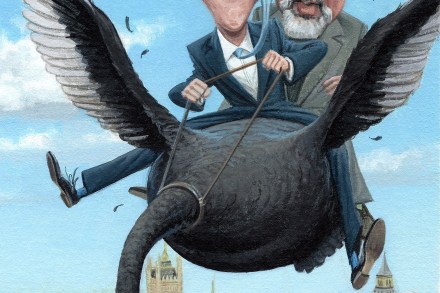
There have been precious few people able to make sense of the crash. The main commentators didn’t see it coming — and so have focused their energies stressing how no man born of woman could have predicted it. But Nassim Taleb did. He has been a voice of sense, originality and common sense throughout, and David Cameron has been listening. The respect is mutual: Taleb even described Cameron as ‘the best hope we have left on this planet’ because he understood the dangers of deficits. If CoffeeHousers haven’t come across Taleb’s books, such as Fooled by Randomness and Black Swan, I can’t recommend them enough. I met him recently, and published the interview in this week’s magazine.

Dave talks film, finances and Europe

From our UK edition

It was the second of the Today Programme's New Year's interviews with the three party leaders today; this one with David Cameron. And there was plenty to digest from it. So much, in fact, that we thought we'd bash out a transcript, so that CoffeeHousers can read it through for themselves. That's below, but before we get there it's worth highlighting a couple of things that Cameron says. First, his point that ‘we've seen a level of reward at the top that just hasn’t been commensurate with success’, which is another volley in the battle against the ‘undeserving rich’ that James mentioned yesterday.

The Tories’ latest frustration with the Lib Dems

From our UK edition

Nick Clegg’s interview in The Observer today highlights what is fast becoming one of the biggest tensions in the coalition: the Lib Dem desire to show that they are the governing party who cares. Allies of Iain Duncan Smith have been infuriated by Lib Dem suggestions that the government would be doing little about youth unemployment if it was not for them. But Clegg repeats the claim to The Observer: ‘Whether it's on youth unemployment, whether it's on youngsters, whether it's on getting behind advanced manufacturing and not putting all our eggs into the City of London basket, I don't think that would have happened without the coalition.

Cameron cross-questioned

From our UK edition

A quick post just to add the Guardian's interview with David Cameron to your Saturday reading list. It takes the unusual approach of fielding questions to the PM from a range of ‘public figures’ — and, although many of those questions reduce down to ‘why aren't you giving more money to X?’, the results are still generally engaging and occasionally insightful. And so we learn, after an enquiry by The Spectator's own Toby Young, that Cameron doesn't keep a diary. And we also have the PM justifiying his stance on Europe to Nigel Farage; skipping over a question about what he may or may not have inhaled during his time at Eton; claiming that ‘not everything [Gordon Brown] did was wrong’; and more besides.