Interviews

Gary Kemp on David Bowie, Margaret Thatcher, and joining the establishment

From our UK edition

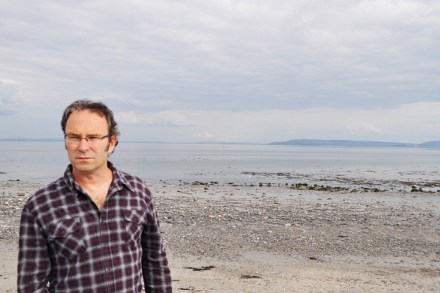
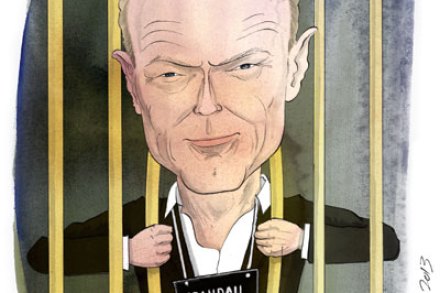
There was a funny gaffe on Radio 4 the other day, when the newsreader announced that Hitler’s favourite architect Albert Speer had been banged up in ‘Spandau Ballet’. Cue a lot of laughter across middle England. Gary Kemp, the founder of Spandau Ballet, the 1980s pop band (not the Berlin prison) was also rather amused, even if he’d heard it before. ‘When we first started,’ he recalls, ‘the inky press thought our name meant we were a new fascist movement in music, which was obviously nonsense.’ The real inspiration behind the Spandau name was David Bowie. ‘We were obsessed with Berlin, which had been validated by Bowie. We all went to the Blitz club and bought synthesisers.

Interview with a writer: Lars Iyer

From our UK edition

People call Lars Iyer a ‘cult author,’ which is odd, because almost every paper to have reviewed him from here to Los Angeles has praised him endlessly. The ‘cult’ thing is probably down to people naturally associating innovative, serious and challenging art with the marginal. This no doubt plays up to Iyer’s own theories about the climate of contemporary literature, but the reception of these books tells quite a different story. While his manifesto claims masterpieces cannot be produced in our age, and that no contemporary literature could be as important as anything by Samuel Beckett, critics call his books masterpieces and constantly compare him to Beckett.

Interview with a writer: Jared Diamond

From our UK edition

In his latest book The World Until Yesterday, Jared Diamond analyses the behavioral differences between human beings in tribal stateless-societies and those living in bureaucratic nation states. Diamond says that if states only came into existence 5,400 years ago, and agriculture in the last 11,000, human beings have been wandering nomads for most of history. Therefore, if modern nations are relatively new concepts, we have much to learn from traditional cultures. Drawing on his experience of 50 years of field research in New Guinea, Diamond attempts to prove his thesis with a mixture of personal anecdotes and academic research.

Interview with a writer: John Ashbery

From our UK edition

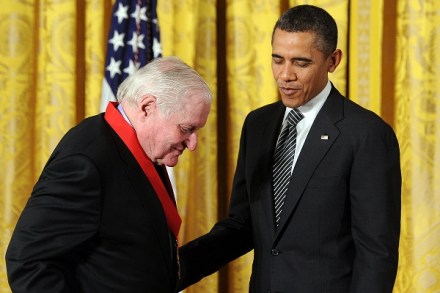
John Ashbery is recognized as one of the most eminent American poets of the twentieth-century. He also been called America’s greatest living poet today. Ashbery published his first book of poems Some Trees in 1956; it earned him the Yale Younger Poets Prize: a competition that was judged by W.H. Auden at the time. He has picked up many literary prizes, including the Pulitzer Prize for Poetry, the National Book Critics Circle Award and the National Book Award. At 85, he shows no signs of putting down his pen. He has recently published a collection of poems entitled Quick Question. Although the majority of critics have recognized his talent, many have also pointed to the fact that his poems don’t have — in the traditional sense — a specific subject matter.

Google maps North Korea

From our UK edition

Google has mapped North Korea. The Washington Post has useful selection of before and after images. Compare the images for North Korea with a map of the county in which you live and you will get a sense of North Korea's poverty. Britain is debating the merits of cutting the rail journey time between London and Brum by 10 minutes; North Korea has only the most basic road infrastructure. Small wonder, then, that the North Korean economy is so parlous that the Kims have accommodated a nascent form of capitalism in order to stave off mass starvation; an important point among many made by Victor Cha in The Impossible State, published last year.

Secrecy and the State in Modern Britain

From our UK edition

In his new book Classified: Secrecy and The State In Modern Britain, Dr Christopher Moran gives an account of the British state's long obsession with secrecy, and the various methods it used to prevent information leaking into the public domain. Using a number of hitherto declassified documents, unpublished letters, as well as various interviews with key officials and journalists, Moran’s book explores the subtle approach used by the British government in their attempt to silence members of the civil service, and journalists, from speaking out about information that was deemed classified.

Meeting J.G. Ballard

From our UK edition

In the programme Frost on Interviews that was recently rebroadcasted by BBC Four, the distinguished journalist, David Frost, attempted to understand what makes a compelling interview. Frost’s programme concentrated primarily on the actions of the interviewer. Various questions were asked, most notably: should one take a relaxed or heavy-handed approach with their guest? I tell this anecdote because I was half way through reading Extreme Metaphors: Selected Interviews with J.G. Ballard 1967-2008,when I stumbled upon this insightful programme. But the process Frost was speaking about was light-years away from the text I was reading. For J.G.

Wole Soyinka: Boko Haram must be destroyed

From our UK edition

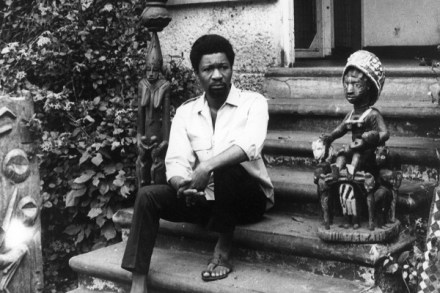
Born in 1934 in Nigeria, Wole Soyinka is the author of more than twenty plays, ten volumes of poetry, two novels, seven collections of essays and five autobiographical works. He won the Nobel Prize for Literature in 1986. He was the first black African man to win the prestigious prize His latest book, Of Africa, is a 200-page polemic that attempts to understand the contradictory nature of African politics. Two important questions that arise from Soyinka’s book are: what is Africa? And what do we understand of its history? Soyinka expends considerable effort in his book discussing how the nihilist nature of fundamentalist Islam is destroying societies in certain African nations: particularly in Somali, Mali, and Nigeria.

Sharon Olds’ fear and self-loathing

From our UK edition

Since the publication of her debut collection, Satan Says in 1980, which was awarded the inaugural San Francisco Poetry Center Award, Sharon Olds has become a prominent - and controversial - voice in American poetry. Olds’ work has been given many unflattering adjectives from her harshest critics: self-indulgent, sensationalist, solipsistic, and pornographic, to name a few. While her confessional, and overtly autobiographical style, may not be to every critics’ taste, Olds’ candid voice, describing her own troubled childhood; the human body; and a world which very often displays fear, violence, love and kindness, in equal measure, has seen her become one of the most widely read poets of her generation.

Interview: Ciaran Carson on translating Rimbaud

From our UK edition

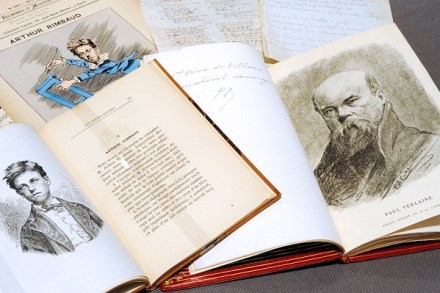
Ciaran Carson was born in Belfast in 1948, and published his first book of poetry, The New Estate, in 1976. Fans of Carson had to wait eleven years for his second book, The Irish for No (1987), which earned him the Alice Hunt Barlett Award. Belfast Confetti (1990) won The Irish Times Literature Prize for Poetry. In 1993 Carson won the first ever T.S. Eliot Prize for poetry, for his collection, First Language; while his 2003 collection, Breaking News, won the Forward Poetry Prize. That same year, Carson was appointed Professor of Poetry, and Director of the Seamus Heaney Centre for Poetry, at Queen’s University in Belfast; a position he has held since. Carson has also proved himself to be an accomplished translator.

Cult status: an interview with Mike McCormack

From our UK edition

Mike McCormack published his first book of short stories Getting it in the Head in 1996. The debut earned him the Rooney Prize for Literature, and was chosen as a New York Times notable book of the year in 1998. McCormack has published two novels: Crowe’s Requiem, and Notes From a Coma, which was shortlisted for the Irish Book of the Year Award in 2006. Forensic Songs, his latest collection of short stories, fuses traditional social realism with elements of science fiction, and the detective genre. While some stories here follow the path of straightforward naturalism; analyzing the difficult relationships within families; or the alienation of emigration, others probe issues that move into the world of futuristic surrealism.

Route to conflict? David Priestland’s Merchant, Soldier, Sage

From our UK edition

David Priestland is worried. Towards the end of his recently published book Merchant, Soldier, Sage, he warns: ‘[The crash of] 2008 has set the world on a course towards potential conflict, and the domestic and international forces that brought us the violence of the 1930s and 1940s are with us today – albeit still in embryonic form.’ It is fashionable, especially in heavily indebted Europe, to compare the uncertainties of the present with those of the 1930s. The Second World War is passing out of living memory and entering popular historical consciousness. Angela Merkel appeals to this when she warns that only the European project can guarantee peace; and Greek protesters who equate her with the Nazis assert the opposite view.

Michael Gove: why I’ll never run for leader

From our UK edition

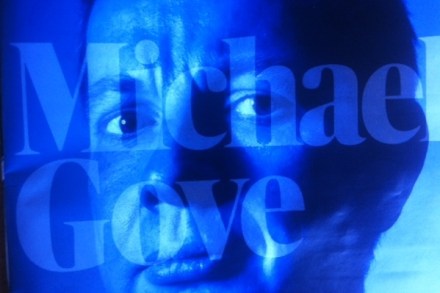
Today's Guardian magazine runs a Michael Gove profile, colouring him blue on the cover as if to alert readers to the threat he poses. "Smoother than Cameron," it warns. "Funnier than Boris. More right-wing than both. Are you looking at the next leader of the Tory Party?" There is nothing unusual about leadership speculation following a  prominent Tory frontbencher, but there is something unusual about the way Gove has ruled it out in almost any way imaginable. He has combined General Sherman and Estelle Morris, saying he wouldn't and couldn't do  the job. It is now being said that Gove is protesting too much, but he has been clear about this for years. I'll add my tuppenceworth. Gove was once, briefly, my news editor at The Times.

Interview: James Lasdun’s art

From our UK edition

James Lasdun published his first book of short stories The Silver Age in 1985. The debut won him The Dylan Thomas Award, and was followed by Three Evenings another book of stories. In 1998, Italian filmmaker, Bernardo Bertolucci, directed the film ‘Besieged’, which was an adaptation of Lasdun’s short story ‘The Siege’. In 2002 Lasdun published his first novel The Horned Man. The book earned him the New York Times Notable Book of the Year and the Economist Best Book of the Year. His second novel Seven Lies was shortlisted for the 2007 James Tait Black Memorial Prize. Lasdun is also a highly acclaimed poet. His collections include A Jump Start; The Revenant and Landscape with Chainsaw, which was shortlisted for the T. S.

Interview – Patrick Hennessey, Kandak: Fighting with the Afghans

From our UK edition

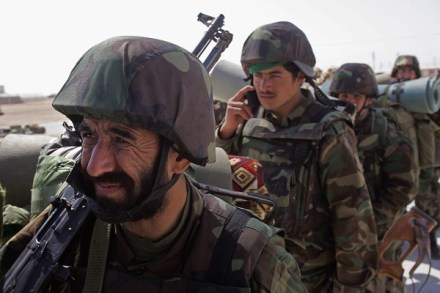
“It always struck me that it was a much easier war to support the closer you got to it,” says Patrick Hennessey of the war in Afghanistan. Hennessey, who served in Helmand with the Grenadier Guards in 2007, continues: "It was so obvious that we were making the country better and that we were broadly supported by the locals, certainly in a way that we weren’t in Iraq in 2006. I know that most Guardsmen preferred Afghanistan to Iraq in that respect because they felt they were doing something tangible and positive and that it was being appreciated by the people in the country, if not necessarily the people at home.” Hennessey has just published Kandak: Fighting with the Afghans.

Interview: Mary Robinson

From our UK edition

In 1990 Mary Robinson became Ireland’s first female president. As a progressive liberal, Robinson seemed a very unlikely candidate for the job, in what was then, a deeply conservative country.  Throughout the 70s and 80s, she worked as a human rights lawyer, as well as a Senator, arguing a number of landmark cases that challenged various clauses in the Irish constitution that failed to protect minorities. Robinson fought on behalf of women, who were effectively treated as second-class citizens, homosexuals, who were criminalized for their sexual orientation, and she also campaigned to change the law on the sale of contraceptives, which were illegal in Ireland, without prescription, until 1985. When she became President, Robinson was determined to reinvigorate the role.

Interview: John R. MacArthur on the US election

From our UK edition

When Barack Obama entered the White House in January 2009, millions of citizens across the United States believed it was a new dawn for the American political system. Obama promised a presidency that would tear up the rulebook when it came to party loyalty; campaign fundraising, corruption; and the petty issues of partisan politics. But he would soon learn that attempting to transform the money machine and vested interest groups that run Washington would be near impossible. First released in September 2008, John R. MacArthur’s ‘You Can’t Be President: The Outrageous Barriers To Democracy in America’ is a book that openly criticizes Obama from the liberal left.

Shelf Life: Kate Tempest

From our UK edition

Kate Tempest started out as a 16-year-old rapper in London. Now she performs the spoken word, reading her poetry, rhymes and prose to stage audiences across the world. She has also written a play called ‘Wasted’, which toured Britain earlier this year. She is involved in a spoken word project at the Battersea Arts Centre. You can find more details by visiting her website, katetempest.co.uk. 1). What are you reading at the moment? I'm reading Robert Walser Selected Stories and a book of plays by Martin McDonagh. Also Christopher Logue's War Music. 2). As a child, what did you read under the covers? The Wizard of Earthsea trilogy by Ursula Le Guin was a favourite for a long time, and my Dad gave me Lord of the Rings when I was so young I could hardly pick it up.

Roger McGough interview

From our UK edition

As Roger McGough approaches 75, his latest collection of poems As Far As I Know shows him writing with the same blend of mischievous word play, subversion of cliché and distinctive sense of humor that makes him one of Britain’s most popular poets. McGough became a prominent force in the late 1960s when his poems were included in ‘The Mersey Sound’: a Penguin anthology that has since sold over a million copies. To date, McGough has published over fifty collections of poetry for both adults and children. His work has always reached a wide audience due to its incredible accessibility.

Interview: James Kelman

From our UK edition

Born in Glasgow in 1946, James Kelman left school at fifteen to begin an apprenticeship as a compositor. His first collection of short stories ‘An Old Pub Near the Angel’ was published in the United States in 1973. It was another nine years before his first novel 'The Busconductor Hines appeared. Kelman has received several prizes for his fiction including: the Cheltenham Prize for Greyhound for Breakfast and the James Tait Black Memorial Prize for ‘A Disaffection’. His fourth novel, ‘How Late it Was, How Late’, landed him the Booker Prize in 1994, amid a storm of controversy. To date he has published eight collections of short stories, eight novels, and two books of essays.