Interviews

‘We knew there was greatness in these songs’: Steve Diggle of the Buzzcocks interviewed

From our UK edition

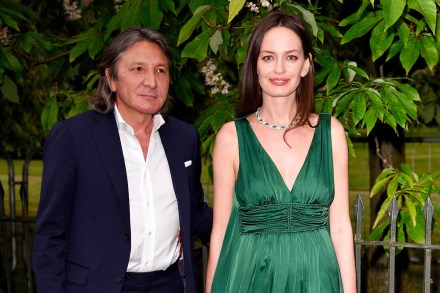
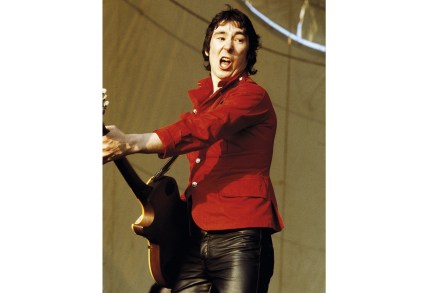
Steve Diggle hasn’t spent this long away from a stage in 40-odd years. For the Buzzcocks guitarist, like everyone else, 2020 was a year of thwarted plans. Instead of touring Britain and America, Diggle spent the year in ‘self-analysis’ and writing a new album. What else for an ageing punk to do? Except, of course, curate your legacy, grapple with the past. When Diggle joined Buzzcocks in 1976, originally as the bass player, he didn’t imagine he would still be flying the flag 45 years later. It’s both a blessing and a curse. Though his band remains a going concern, the songs that shift tickets were written half a lifetime ago. ‘Ever Fallen In Love (With Someone You Shouldn’t’ve)’, ‘What Do I Get?
‘You can’t have opinions any more’: Rick Wakeman interviewed

From our UK edition

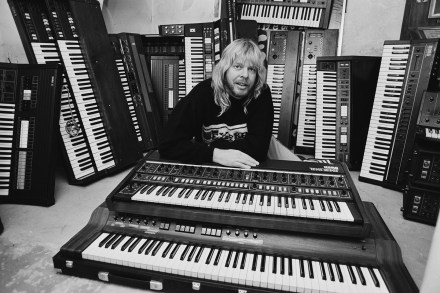
‘Classic rock’ is a rather fusty old oxymoron, but then the term ‘classic’ is applied these days to chocolate bars and that most in-demand of consumer undurable, lavatory paper, so I suppose one shouldn’t complain. Covid-19 will probably be remembered as a ‘classic virus’ one day not too soon, when there are other more baleful new-wave viruses with spiky hair pogoing around. ‘Classic rock’, meanwhile, is a term applied to the sort of chest-beating rawk that people of my generation admire: the Who, Bad Company, Blue Oyster Cult insisting, in timely fashion, that we should embrace death, and Lynyrd Skynyrd informing us, with unforeseen irony, that they can fly, free as a bird.

Meet the front man of ‘the most revolting band in the world’

From our UK edition

Corey Taylor, the singer of Slipknot, laughs when I observe that he is disappointingly well adjusted. He had just been explaining that he does his own cleaning at home, that he ‘hates seeing privilege and entitlement’, that he can get from place to place without needing his hand held (you might scoff, but many musicians get infantilised by a life of indulging and being indulged). ‘I have a very healthy ego,’ he says. ‘But I also know to keep it in check as much as I can, because I don’t want to be that dude.’ Which is not to say Slipknot’s career has been free of incident. Far from it. Though they have released only six studio albums over the past 21 years — the last three all US No.

‘I was tossed out of the tribe’: climate scientist Judith Curry interviewed

From our UK edition

It is safe to predict that when 20,000 world leaders, officials, green activists and hangers-on convene in Paris next week for the 21st United Nations climate conference, one person you will not see much quotedis Professor Judith Curry. This is a pity. Her record of peer-reviewed publication in the best climate-science journals is second to none, and in America she has become a public intellectual. But on this side of the Atlantic, apparently, she is too ‘challenging’. What is troubling about her pariah status is that her trenchant critique of the supposed consensus on global warming is not derived from warped ideology, let alone funding by fossil-fuel firms, but from solid data and analysis. Some consider her a heretic.

There’s no single trick to making money — just resist a noble calling

From our UK edition

‘Beauty is pain,’ the model Gigi Hadid asserts. She’s one of the successful, rich people quizzed by William Leith in The Trick: Why Some People Can Make Money and Other People Can’t. We all know a few of the tricks of getting rich. You start by avoiding noble, important professions that benefit everyone but pay poorly: primary school teacher, nurse, book reviewer. Those of my friends and family who’ve made money (although none has made it to rich) went into banking and business. Those who haven’t went into teaching, academic research and museum curating. That much is obvious. Has Leith unearthed a magic formula? His book is part Hunter S. Thompson, part Montaigne: a blend of gonzo journalism and rambling reflection interspersed with learned references.

‘Paint goes on living’

From our UK edition

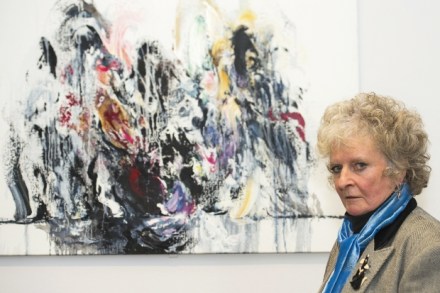
Maggi Hambling is 70 later this year, and a career that took off when she was appointed the first artist in residence at the National Gallery, in 1980, shows no signs of slackening in momentum. Hambling is still as uncompromising as ever, and as difficult to categorise. An artist of sustained originality and inventiveness who fits no pigeonhole and is part of no group, she is a resolutely independent figure (she enjoys the description ‘maverick’) who considers it her duty to keep questioning assumptions (her own as much as other people’s) and looking afresh at the world.

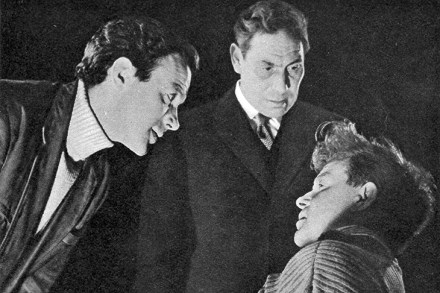
The director that everyone loved to hate: David Thomson interviews Peter Bogdanovich

From our UK edition

Peter Bogdanovich’s new documentary about Buster Keaton, The Great Buster, is a match made in movie heaven. I can’t think of two men more devoted to making motion pictures — huge successes in their day — more acquainted with the merciless climate of Hollywood, or more aware that they were as instrumental in their own downfall as in their glory. ‘Buster said he made the great mistake of his life in 1928,’ says Bogdanovich. ‘He had done these masterpieces in the 1920s — Steamboat Bill Jr, Sherlock Jr, The Navigator, The General — and done them the way he wanted with his own production unit... It couldn’t get any better. But then [he was] told to sign with MGM. And Buster was never the same again.

Voices from the recent past

From our UK edition

Interviews, like watercolours, are very hard to get right, and yet look how steadily their art has become degraded and under-appreciated. Each and every Shumble, Whelper and Pigge in our media fancies that an interview can be tossed off: you need only switch on the microphone and let the person speak. Radio is the worst culprit. John Fowles was on a US book tour when the announcer muddled his notes and introduced him as ‘the singing nun of Milwaukee’. Inevitably hitting the wrong note, too many interviewers rely on the rickety scaffolding of the unpublished novelist, seizing on, say, their subject’s white socks, and then truffling up some unpalatable morsel from their past with which to spring an ambush — resulting in a locked jaw that no road drill could unclamp.

Art’s hard graft

From our UK edition

Once, when a number of Royal Academicians were invited to Buckingham Palace, the celebrated abstract painter John Hoyland (1934–2011) found himself enjoying a conversation with the Duke of Edinburgh about art. ‘The real problem with painting,’ said the Duke, in Hoyland’s delighted re-telling of this encounter, ‘is not so much the doing of it, as to know what to paint.’ Hoyland immediately concurred, adding that his friend Patrick Caulfield had been saying the same thing only the day before. This definition of painting’s central challenge appears again in Studio Voices, recollected by Tess Jaray as one of the first things her tutor at the Slade, Andrew Forge, told her.

Close of play | 15 February 2018

From our UK edition

‘Mad, wearying and inconsequential gabble,’ sighed the Financial Times in 1958. ‘One quails in slack-jawed dismay.’ Here’s the FT at the same play last month: ‘The best I have seen on-stage.’ How about the Evening Standard? Then: ‘Like trying to solve a crossword puzzle where every vertical clue is designed to put you off the horizontal.’ Now: ‘Pinter’s cruel dialogue has rarely sounded sharper.’ ‘What all this means only Mr Pinter knows,’ mused the Manchester Guardian. On its return to the West End, the playwright’s biographer Michael Billington, writing in the Guardian, judged that ‘The Birthday Party has lost none of its capacity to intrigue’.

Dear Mary | 25 May 2017

From our UK edition

Q. Re getting away from bores at drinks parties (Dear Mary, 20 May). I take issue with the idea that you even need to give an excuse. I usually just say: ‘Great to see you but I suppose you and I had better circulate now.’ — E.G., Wiltshire A. You are quite right. After all, your host would be furious if you got ‘stuck’ and monopolised the most interesting person in the room, for example Elon Musk. It is a guest’s duty to circulate and I will U-turn on last week’s edict. Q. My son’s godfather rang him in winter after forgetting his 21st. He asked for his postcode in Bristol (where my son was then at university) so he could send a gift. My son has now left uni and tells me that nothing arrived. His godfather, an MP, is very reliable.

‘Money, money, money’

From our UK edition

[audioplayer src="http://rss.acast.com/viewfrom22/thegreatbritishkowtow/media.mp3" title="Listen: Fraser Nelson and Jonathan Mirsky discuss Britain's attitude towards China" startat=35] Listen [/audioplayer] The Dalai Lama is a connoisseur of absurdity. When we met in London on Monday I reminded him that two years ago, desperate to resume relations with China, No. 10 said it had ‘turned the page on that issue,’ by which he meant the Dalai Lama. He responded with his celebrated chuckle but it became clear that he’s far from sanguine about being snubbed by Britain. He agreed with me that not even Beijing could have thought up a phrase like ‘turn the page’.

Man of many worlds

From our UK edition

By the kind of uncanny coincidence that would tickle his psychogeographically minded friends Iain Sinclair and Peter Ackroyd, Michael Moorcock’s publishers have recently moved offices to the same corner of London occupied by his latest novel, The Whispering Swarm; and just as their rather swanky embankment premises are called Carmelite House, so does the religious order provide Moorcock with one of his key characters. It is a Carmelite monk who leads the book’s teenage protagonist, one ‘Michael Moorcock’, from an ABC teashop to a mysterious enclave just off post-Blitz Fleet Street.

Unequal struggle

From our UK edition

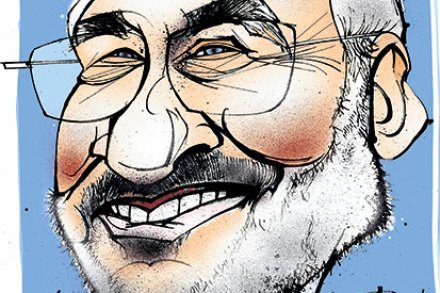
‘How do you feel when you go back to Gary?’ I ask Joe Stiglitz. ‘Well, frankly, I get depressed,’ he replies. ‘The American middle class was created in places like my home town and is now struggling badly — which makes me sad.’ Stiglitz, a Nobel prize-winning economist and the closest thing the left has to an intellectual superstar, grew up in Gary, Indiana, during the 1950s, when it was the heart of the booming US steel industry. His father sold insurance and his mother was a teacher. ‘We had a modest detached brick house, with a lawn all around — it was safe and secure,’ he recalls. ‘Back then, if you worked hard and played by the rules in America, you’d make it — you could get ahead.

Alex Salmond sets out his terms for Ed Miliband

From our UK edition

‘Would you like a glass of pink champagne?’ asks Alex Salmond at 3.30 p.m., sounding very much like a man settling down for the afternoon. It’s Monday and Scotland’s former first minister has cause to celebrate. He spent the previous day musing on television about the price he’d demand for the SNP supporting Ed Miliband in the Commons, and his thoughts dominate the front pages. There’s plenty of outrage at the idea of the SNP toying with England, and outrage is just what he wanted. So champagne it is. He has found himself an unlikely star of the Tory election campaign; the party this week released a cartoon showing him playing a whistle while Miliband dances.

George Osborne interview: smaller government is not enough

From our UK edition

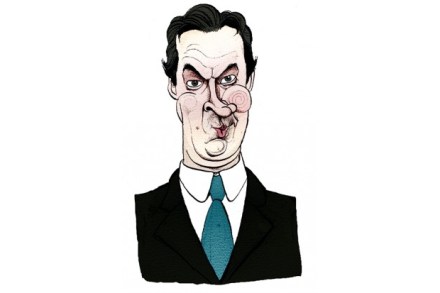
[audioplayer src="http://rss.acast.com/viewfrom22/putin-s-empire-building/media.mp3" title="James Forsyth and Fraser Nelson discuss Osborne's election manoeuvres " startat=839] Listen [/audioplayer]Puccini’s doesn’t seem like George Osborne’s sort of restaurant. It is a pizza-and-pasta place in the safely Labour constituency of Salford and Eccles, Greater Manchester, most notable for the fact that Sir Alex Ferguson once took his whole squad there. (‘Penne alla Giggs’ is still on offer to prove it.) In recent years, however, the Chancellor has become something of a regular — he has even taken the Prime Minister along — and is made welcome to the point that when we met there last Thursday diners queued to be photographed with him.

Jonathan Sacks on religion, politics and the civil war that Islam needs

From our UK edition

Jonathan Sacks has an impressive track record for predicting the age we are in. In his 1990 Reith Lectures, ‘The Persistence of Faith’, the then chief rabbi pushed back against the dominant idea that religion was going to disappear. In the early 2000s, he predicted a century of conflict within Islam. And he was one of the first religious leaders and thinkers not only to critique multi-culturalism (‘the spanner in the works for tolerance’) but to try to think of a path beyond it. We recently talked over some of this at his house in London, where he lives during gaps in a busy teaching schedule that also takes him to New York.

Clive James on his late flowering: ‘I am in the slightly embarrassing position where I write poems saying I’m about to die and then don’t’

From our UK edition

Clive James has published a new poem days before we meet. It opens, ‘Your death, near now, is of an easy sort’. It is about a Japanese maple his daughter has planted in the garden of his Cambridge home where we are sitting, and whether the poet will live to see the leaves flame red this autumn. The poem has made news. ‘At the moment,’ he says, laughing, ‘I am in the slightly embarrassing position where I write poems saying I am about to die and I don’t. My wife is very funny on that subject.’ It is part of an astonishing late body of work. This month there is a new book of writing on poetry, Poetry Notebook.

Has anything in the recent past had a bigger effect on writers and writing than Twitter?

From our UK edition

I’ve been trying to think of something – anything – in recent years that has had a bigger effect on the working day of the average writer than Twitter. And I can’t. Writing, for just about everyone who does it professionally, is the act of minimising your number of excuses for not writing. Nigel Farndale’s recent piece in the magazine addressed the problem of views; Julian Barnes, for instance, can only work if he’s facing the blank wall of his study. It reminded me of David Niven, who saw a plane flying over as ‘a bonanza – I’ll watch that for hours’. Eventually he had to retreat to a chair facing into the right-angle of a hedge in his garden: ‘I can’t even see the sky.

Interview with a poet: Richard Murphy, an old Spectator hand

From our UK edition

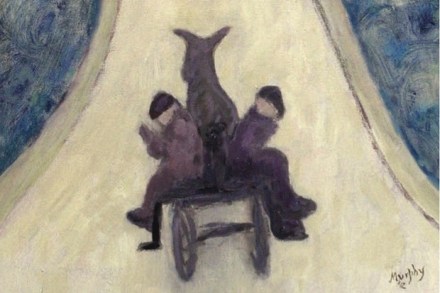
Richard Murphy was born in County Mayo in Ireland in 1927. He spent part of his childhood in Ceylon (now Sri Lanka) where his father was the last British mayor of Colombo. From the age of eight he attended boarding schools in Ireland and England, eventually winning a scholarship to Oxford. In 1959 Murphy moved to Inishbofin, an island off the coast of Connemara in County Galway. He settled there for twenty years, writing poems inspired by tragic tales from the local fishing community. These include ‘The Cleggan Disaster’, ‘The Last Galway Hooker’, ‘Pat Cloherty’s Version of The Maisie’ and ‘Sailing to an Island’. The latter describes a dangerous boating trip Murphy took with his brother. Murphy has always been an outsider.