Internet

The chaotic truth about Russia’s internet blackouts

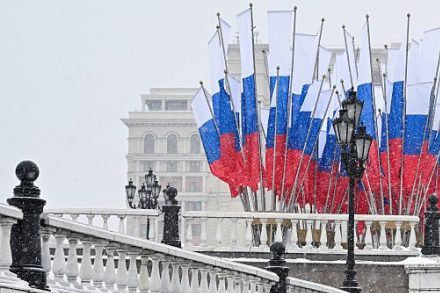
From the modern metropolises of Moscow and St. Petersburg to Arkhangelsk on the permafrosted northern coast and Khabarovsk on the Chinese border, for over a week now, Russian cities have been experiencing unprecedented interruptions to mobile internet coverage. Ostensibly for security reasons, the rumor mill has inevitably cranked out all kinds of alternative explanations, from fear of a coup to preparations for a comprehensive imposition of state control on the "runet," Russia's online world. Notions that Vladimir Putin fears some imminent coup can most quickly be laid to rest. There is dissatisfaction with the continuing war and its economic consequences, but nothing to suggest anything more serious.

russian

Jeffrey Epstein: pro gamer

One of the many mysteries surrounding the Epstein saga is Jeffrey Epstein the man. Beyond simple hedonism, his motives seem inscrutable – and how did he make his money anyway? The latest cache of released Epstein files has shed new light on his character. Part of what emerges is Epstein the compulsive video gamer, who was banned from online play due to abusive behavior and who liked to cruise anonymous online forums for odd genres of pornography. A December 2013 automated email to Epstein from Xbox Live (the online multiplayer feature for the Xbox console) informed him that he had been banned from the service due to “harassment, threats, and/or abuse of other players.

Epstein

My father gave me the internet

My father went into the kitchen for a cookie, then disappeared into his home office for a phone call. He was arranging a surprise for my mother – hired waitstaff for Christmas Eve dinner, one of the biggest our family would have hosted. Then he died. It took 15 seconds. We found him within minutes. The waitstaff called back 11 times over the next two days. I thought they were debt collectors. Finally, I went into his office, where we had found him, picked up his phone, and yelled, “He’s gone! Stop calling!” That’s how I learned what he’d been doing. They were trying to confirm. And in the corner of my eye, on his bookshelf: Irish Folk and Fairy Tales by W.B. Yeats.

father internet

No sex please, we’re Gen Z

For many years now we have all been agonizing over the fertility crisis. Why aren’t the kids having kids? It’s become a sort of parlor game, the swapping of the various theories. Is it the cost of living? Microplastics? Eco-anxiety? Tight underwear, I heard the other day, and snorted with scorn even as I tipped my son’s stretch-cotton briefs into the bin. But now another, rather more fundamental explanation for the baby shortage has emerged. It’s not just that younger generations aren’t having babies – it turns out they aren’t really having sex at all. The Atlantic was first to properly examine this trend among young Americans, in a terrific piece which gave a name to the phenomenon: the Great Sex Recession.

Has QAnon been vindicated?

QAnon is the online movement spawned by Q, a poster on the anonymous message board 4chan. In October 2017, they began leaving a series of gnomic posts riven with strange imagery – “drops.” Claiming to be a US official with a high-level security clearance, Q informed fellow users that the United States was secretly controlled by a clique of pedophiles and traitors encompassing much of the Democratic party and the intelligence services. But Donald Trump, who had recently been elected president, was alive to the danger. With the aid of friendly “deep state” elements, Trump was working behind the scenes in a grand effort (“The Plan”) to expose the cabal that would culminate in a day of action (“The Storm”) in which its members would be arrested and executed.

The perils of Catholic social media evangelism

Jesus, it could be reasonably observed, recruited a motley cast to serve as the first heralds of the gospel. An endlessly squabbling band of fishermen, with a few tax collectors and zealots thrown in, the biblical narratives have them endlessly jockeying among themselves for prominence and status before they, to a man, flee when the going gets tough and their Messiah gets arrested. In the two thousand years since, the Catholic Church has done its best to balance the inevitable imperfections of its messengers with the perfect truths they are supposed to announce. It’s not always an easy task – and as with so many other things, the internet has made it much more complicated.

Catholic

What folklore can teach us about our online lives

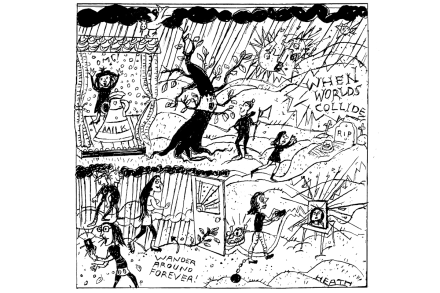
Irish folklore spoke of many worlds. There was the world of fields and hearths and then there were the hidden places where the non-material lived: the Sídhe mounds, the sea-realm of Manannán mac Lir, the land of youth called Tír na nÓg and, finally, the land of the dead. These worlds coexisted with ours. A woman might leave butter on the windowsill, lest the fairies sour the churn. A new mother would avoid complimenting her baby – at least, not too loudly – for fear he would be kidnapped by the Good Neighbors and replaced with a changeling. My first real boyfriend’s father blamed every family misfortune on their decision to cut down a hawthorn tree.

folklore

Nihilism is destroying young minds

Sandy Hook was supposed to be the tipping point in our national conversation about mass shootings. This wasn’t a shopping mall or movie theater. It wasn’t a high school. We could imagine this happening at a high school. We had seen that before. But we could not imagine anyone shooting six-year-olds. It was so monstrous that it seemed beyond the realm of possibility. Since that day, 13 years ago, the killings have continued and their settings have shifted. Earlier this month, a gunman opened fire at a Turning Point USA event, fatally shooting conservative commentator Charlie Kirk. In the past year or so, 15-year-old Natalie Rupnow killed a teacher and a fellow student in Madison, Wisconsin, before taking her own life. Solomon Henderson opened fire in a Nashville school cafeteria.

young

America’s ‘fringe’ has taken over the country

Another day, another public execution. The talking heads on television and Twitter tell us not to worry too much: America is still strong. They repeat this sentiment after every waking nightmare. These horrific events are not the norm, they say. They’re just the actions of a few people on the “fringe.”  But what is the American “fringe”? The “fringe” tried to incinerate the country in 2020. The “fringe” tore down statues of George Washington and Abraham Lincoln. The “fringe” control the universities and has spent years indoctrinating kids with discriminatory dogmas. The “fringe” created the policies that let violent, mentally ill men prowl the streets and kill refugees. The “fringe” killed a healthcare CEO at sunrise in December.

Robin Westman and the unstoppable tide of ‘slop violence’

On Wednesday, doing my laundry, I decided to turn on the TV for the first time in decades. Breaking news: a school shooting in Minnesota. It’s been years since a story like this made me cry. How could you cry at every mention of gun violence when you live in a place like the Midwest? I have been aware of gun violence in schools since I was a child myself. I remember first hearing about a school shooting when I was six years old. A little boy had shot his sister. I cried and cried and cried – I cried for the child that died, and I cried for the child who’d killed her. It remains one of my most traumatizing memories. The last shooting that made me cry was Sandy Hook. I was at dinner when a friend showed me Adam Lanza’s photo on his phone. Twenty first-graders dead.

robin westman

Lives upended: TonyInterruptor, by Nicola Barker, reviewed

From our UK edition

‘Is it any good?’ a friend asked when he saw I was reading this book. ‘Yes,’ I said, ‘but it’s full of wankers.’ By that stage I was only up to page 24, but the remaining 184 pages did nothing to fundamentally alter my view. There is nothing intrinsically wrong with this. The works of, say, Geoffrey Chaucer and Jane Austen, not to mention thousands of others, would be considerably poorer if all the tiresome people were filtered out. But it does make it hard to read TonyInterruptor for more than 30 pages at a stretch. One has to pinch the bridge of the nose and go for a little walk.

Essex-boy Elegy: J.D. Vance meets the Bosh man

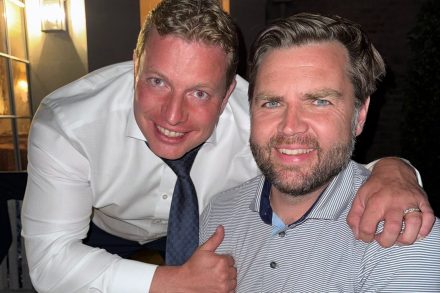
Vice President Vance is currently receiving visitors at an 18th-century Georgian manor in the Cotswolds, an implausibly quaint patch of the English countryside. Petitioners so far have included James Orr, the Cambridge academic and right-wing activist, Robert Jenrick, likely the next leader of Britain's Tories, and Nigel Farage, likely the next UK Prime Minister. Also on the list was one Thomas Skinner, a gregarious wide boy from East London turned e-celebrity turned patriotic influencer. After a stint as a pillow and mattress merchant Skinner, 34, found fame as a contestant on the 15th series of the British version of The Apprentice.

Thomas Skinner JD Vance

A global MAGA crusade against web regulation?

“Censorship is not how we do things in Western civilization”. So said Congressman Scott Fitzgerald (R-WI) of the United Kingdom’s new Online Safety Act (OSA). Its effects on free expression are “dangerous and needs to be addressed,” possibly by means of an international “united front”. The Congressman was fresh from meetings with British and Irish lawmakers and US tech firms, held as part of a House Judiciary Committee fact-finding mission to investigate the impact of the OSA and the European Union’s new Digital Marketing Act on American businesses. The main event was a one-on-one between Committee chair Jim Jordan (R-OH) and Peter Kyle, the United Kingdom’s Secretary of State for Science, Innovation and Technology.

Online Safety Act

The UK censorship files: Jim Jordan’s crusade against Britain

The British Empire may be gone, but there is one area where the UK has not lost its global ambitions: online censorship. The latest vehicle is the Online Safety Act (OSA), a behemoth internet regulation law whose vast provisions are steadily coming into force – and increasingly drawing the ire of the Trump administration as it starts to impact US tech firms.  Under the OSA, “Britain has the power to shut down any platform” that breaks its content regulation rules, boasts secretary of state for technology Peter Kyle. The latest stage of its implementation began last week with new mandatory age-verification measures for social media platforms.  The Act is already curtailing what can be read online in the UK.

Free speech

Will AI kill off Captchas?

From our UK edition

It was a line on Poker Face (the excellent US detective drama currently streaming on Now TV) that piqued my interest. Hunched over a laptop, Natasha Lyonne’s heroine, Charlie Cale, claimed to be working as a ‘Captcha technician’ – someone who solves those fiddly, occasionally infuriating internet puzzles for money. You know – the ones that ask you to ‘Select all the squares with traffic lights’, ‘Select all the squares with bridges’ or simply tick a box to say you’re human before you can log into a website. Given the series has satirised everything from New York City rent controls to multi-level marketing schemes, I originally assumed it must be a joke.

The internet is dying and so are we

Sometime in the mid-2010s, a conspiracy theory called the “dead internet theory” started circulating on the darker parts of the web. It made its way to 4chan’s /x/ board in 2020 and from there it has gained traction. The theory posits that the internet will eventually become entirely devoid of genuine human activity and that all online content, interactions and accounts will be generated by bots, AI or automated systems rather than real people. The conspiracy is that the entire internet is a government-manipulated psy-op used to influence public opinion, control news narratives or boost engagement metrics for commercial or political purposes. The terrible reality is that dead internet theory isn’t wrong. It’s becoming true, more and more so all the time.

Internet

Don’t mourn the death of TV

The online American right is positively obsessed with the nineties. It’s easy to establish the cause here: a surfeit of Gen X and early millennial users, many of whom are fresh converts from within the last decade. Social-media posts by conservative users depicting America’s cities, beaches, and nightclubs from this era regularly achieve staggering virality. The memorialization of these things is justified by presenting them, perhaps not wrongly, as evidence of the cultural homogeneity that America has lost in the past quarter century. There is one tendency among these that I find particularly troubling – lamenting the death of American network television.

Television

Left-wing violence is being normalized

Something has changed in America’s psyche. Violence has become more acceptable. It’s not just that we’ve seen two attempted – and very nearly successful – attacks on Donald Trump’s life, it’s that a worrying number of young Americans cheered on those attempted assassinations and still wish they had succeeded. Since early this year there has been widespread public support for smashing up Tesla dealerships – and for shooting Elon Musk. An unprecedented 10,000 new threats have been made against Senate and congressional members just this year, according to Capitol Police. Applause for the actual murder of UnitedHealthcare CEO Brian Thompson in December goes on, unabated, online.

luigi mangione political violence

Meet the Zoomer Doomers: Britain’s secret right-wing movement

From our UK edition

One of the striking aspects of the AfD’s success in the German elections was the party’s popularity among the young, especially men under 25: one in four voted for the hard-right movement. Support for bracingly conservative positions among Gen-Z men isn’t just a German phenomenon, however. In Westminster and beyond, a new breed of young right-wing influencers is seeking to shift our politics. Meet the Zoomer Doomers. They use acerbic posts to humiliate the defenders of the status quo, in a strategy known as ‘from posting to policy’. Terms such as ‘Boriswave’ – which refers to the net migration figure that spiked at 900,000 under Johnson’s leadership – first appeared within this network.

An insightful account of America’s decline

I wouldn’t have thought a book about America’s decline would cause me to laugh out loud, but having enjoyed its author Matt Purple’s work for years now (full disclosure: he’s a personal friend and former Spectator colleague), I should not have been the least bit surprised that his debut book is as funny as it is insightful. Decline from the Top: Snapshots from America’s Crisis and Glimmers of Hope is a veritable joy to read. Though he declares himself to be a “cranky conservative,” Purple’s humor and wit offer a diagnostic examination of the American condition that exudes warmth and obvious heartfelt concern for our nation’s wellbeing.

Purple