Infrastructure

Newsom won’t create abundance

With great fanfare, California Governor Gavin Newsom recently signed “historic” legislative package designed to “advance an abundance agenda.” It’s a nod to the recent (and fashionable) book Abundance by the liberal bloggers Ezra Klein and Derek Thompson, and it’s supposed to reform a state best known for a punitive cost of living and chronic shortages of everything essential – including housing, water, and energy.  Key to Newsom’s new legislation are Assembly Bill 130 and Senate Bill 131, both of which make fundamental changes to how the California Environmental Quality Act (CEQA) is enforced.

Newsom abundance

America’s undersea lifelines

It is out of sight and usually out of mind, but recent events are forcing Americans to focus on the security of a vast network of undersea cables that the nation depends upon. In early February 2022, cables connecting Taiwan to its Matsu Islands off the coast of China were cut in what appears to be an act of sabotage that Taipei later ascribed to Chinese vessels. It took nearly two months for the internet to be up and running again, highlighting the importance of a largely ignored element of a country’s critical infrastructure.  According to TeleGeography, a telecommunications research and consulting firm, there are around 552 undersea cables, connecting almost every inhabited landmass. Most are fiberoptic, utilizing light to transmit massive quantities of data.

cables

The bipartisan bridge to nowhere

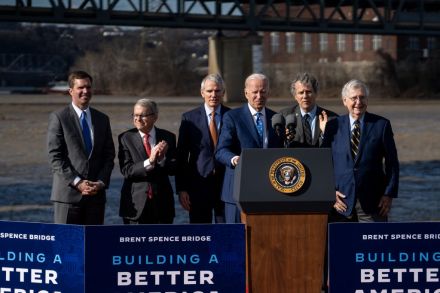
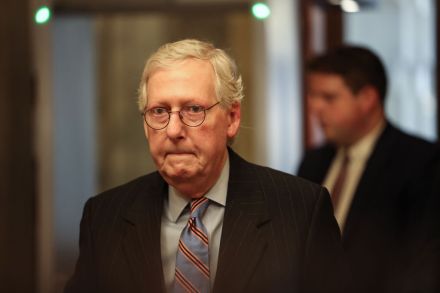
Politicians and members of the press love to drone on about bipartisanship, waxing lyrical about the way things used to be. Back in the day, a congressman could debate a member of the opposing party on the House floor, only to grab a beer with him after the work day ended! Isn’t that swell? They used to let bygones be bygones. It was a simpler time — and it’s now a cliché in politics that we should be striving to return to those good old days. But guess what? After seeing Senator Mitch McConnell and President Joe Biden slapping each other’s backs in Kentucky on Wednesday, the only thing both sides of the aisle might be able to agree on is that bipartisanship is overrated. That’s right. The president landed in Covington, Kentucky, to tout the $1.

bipartisanship kentucky mitch mcconnell

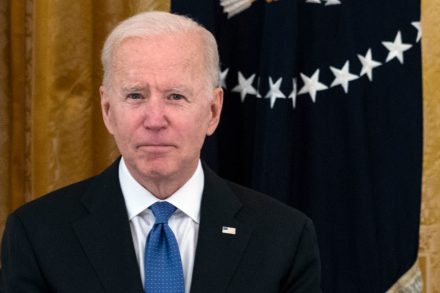
Joe Biden is winning

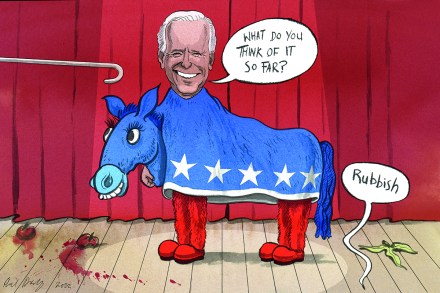
By the middle of January, I’d read some version of the headline “Biden Can Still Rescue His Presidency” so many times that it seemed an algorithm had taken over from the editors. The New York Times placed it above a column by Bret Stephens, a prominent anti-Trump conservative and a member of the pundit pack that earnestly wished the president Godspeed when he entered the White House more than a year ago. Stephens, like most of his colleagues, argued that Biden was “flailing — and failing” — because of what the paper’s news pages have described as a “legislative agenda in shambles.

biden

Infrastructure Republicans aren’t ‘traitors’

Are you a Republican — or did you vote for the infrastructure bill? That’s the binary choice offered to House GOP members by the right-wing of the party. The thirteen representatives who voted to pass the landmark legislation find themselves in the sights of not just their fellow members of Congress, like Marjorie Taylor Greene and Madison Cawthorn, but also former president Donald Trump, whose list of primary targets grows longer by the day. In a Saturday email, Trump called for “good and SMART America First Republican Patriots to run primary campaigns” against both the members who’d voted for the infrastructure bill and the members who had voted to impeach him for causing the January 6 storming of the Capitol. “You will have my backing!” he asserted.

infrastructure traitors

The infrastructure bill spends big at the worst time

Few things are inevitable in Congress, but passing massive spending during a time of record deficits is probably one of them. Late Friday night, the House agreed to changes made by their Senate colleagues, sending a $1.2 trillion infrastructure package to President Joe Biden’s desk after months of debate. Despite much palace intrigue and handwringing, our leaders managed to do what they do best: authorize spending a lot more of our money. The vote was mostly along party lines, with a baker’s dozen Republicans crossing the aisle in support of the package — much to the chagrin of their conservative colleagues. With contentious midterms closing in, some Republicans wanted to tout their adeptness at bringing home the bacon to more moderate districts.

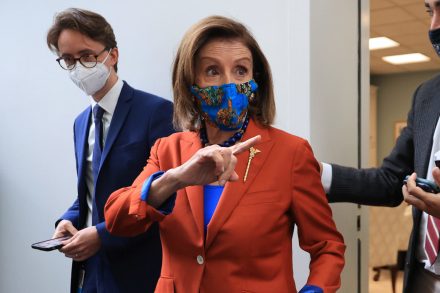
Nancy Pelosi is losing her grip

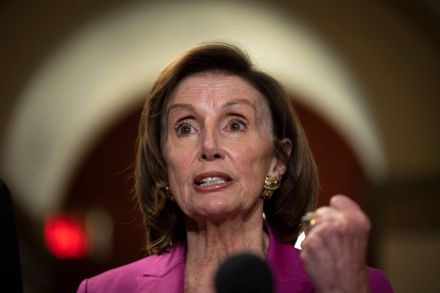
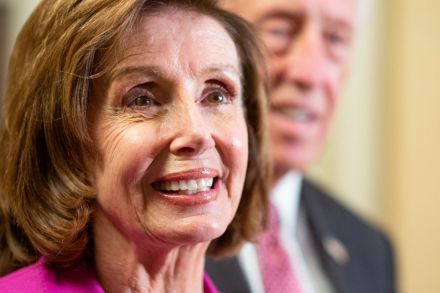
Top Democrats took a media victory lap last weekend, crowing about the $1 trillion infrastructure bill that finally cleared the House on Friday night after months of false starts and intra-party squabbling. The vote came only after Speaker Nancy Pelosi, in her latest Hail Mary, attempted to satisfy progressive lawmakers by also allowing a procedural vote on the massive social spending bill craved by liberals. Even then, Pelosi was forced to rely on a handful of Republicans to secure a majority. Predictably, the White House was eager to spin the bill’s passage as major win for the Biden agenda, claiming it would energize voters and pave the way for trillions more in government spending just in time for the holidays.

Biden and Pelosi score late-night infrastructure win

For months, Democratic negotiations over Joe Biden’s twin spending bills were stuck in a cycle of infighting that felt it would never end: the unstoppable force of progressive overexcitement up against the immovable object of moderate resistance. That deadlock was finally broken late on Friday night, when the House passed an infrastructure bill worth $550 billion in new spending. The breakthrough came after a head-spinning day on the Hill (a day that progressive congressman Mark Pocan described as a “clusterfuck”).

infrastructure

Kyrsten Sinema’s harassers shouldn’t get a pass from Biden

Ever wonder why President Biden doesn’t take questions very often? Or more accurately, why his staff doesn’t allow him to take questions? The easy lay-up handed to him about an altercation between an activist organization and Arizona senator Kyrsten Sinema offers a perfect example. Biden was asked whether he believes it was appropriate for immigration activists to follow Sinema into a women’s restroom and film her. The President, who could have resoundingly condemned the behavior using the podium of the presidency of the United States, chose not to. In fact, he passively endorsed the activists’ conduct by saying that ‘it happens to everybody’ and that ‘the only people it doesn’t happen to are people who have Secret Service around them.

kyrsten sinema

A government of drunken sailors

It seems strange, but just two decades ago the United States government had a balanced budget. Bill Clinton had run for president as a new type of Democrat, calling for an end to the deficits that had so bedeviled George H.W. Bush. Thanks in large part to pressure from Newt Gingrich and the Republican Congress, he pulled it off. Clinton trimmed military spending and signed into law a package of tax increases. This cued haunted house noises in the parlors of center-right think tanks, but Biden also approved more conservative-friendly measures like domestic spending cuts and welfare reform. This bipartisan approach, in conjunction with a galloping economy, led to the unthinkable: budget surpluses for four fiscal years in a row.

drunken sailors
bill Speaker of the House Nancy Pelosi (D-CA) (Photo by Chip Somodevilla/Getty Images)

Blame Biden for the sinking infrastructure bill

President Joe Biden, facing a crisis on the southern border, a Taliban takeover in Afghanistan, and a breakdown of relations with foreign allies, desperately needs a win on his domestic agenda. It looks increasingly unlikely, however, that the ambitious spending bills he wants passed will ever make it to his desk. The usually unified Democratic party is so fractured over the $1 trillion bipartisan infrastructure bill and the $3.5 trillion reconciliation package that it appears Speaker Nancy Pelosi no longer has the votes to pass either. Biden is primarily to blame for negotiations going this way. He said back in June that he would not sign the infrastructure bill without the reconciliation bill, describing the bills as being in 'tandem’.

Why the GOP (apparently) supports bipartisan infrastructure

With infrastructure talks continuing to hit snags, many Democrats don’t believe Republicans are negotiating in good faith. And why should they? During the Obama presidency, when some Republicans initially expressed interest in compromising on major Democratic priorities including health care, climate change and immigration, they would always find some excuse to bail. Why should we expect Republican behavior during the Biden presidency to be any different? Because today the Republican party has genuine incentive to cooperate. First, Republicans want to shed their obstruction reputation. Many assumed Senate Minority Leader Mitch McConnell would run the same filibuster-heavy playbook he used against Obama.

infrastructure

The infrastructure Trojan horse

The official Twitter account of VOX Madrid, the local chapter of a Spanish political party, noted a funny and familiar thing recently. In 2015, under a Communist party mayor, the colors of the rainbow illuminated Madrid's city hall in a tribute to the LGBTQ community. In 2021, under a conservative mayor, the same rainbow shone over city hall. ‘The left proposes new ideas, the center adopts them, and the so-called right administers them,’ tweeted VOX with pictures of the two scenes. It's hard to think of a better description of what the Republican party does in the United States. On the culture war side, for example, Juneteenth had until recently been an obscure and irrelevant event for most Americans.

infrastructure

Biden’s bait-and-switch presidency

Joe Biden was elected as a moderate-left Democrat, but he is not governing as one. He pledged repeatedly to work across party lines, but he is ramming through the biggest, most expensive progressive agenda in American history without any Republican votes. He is almost certain to try it again with his next two spending proposals, the largest since Lyndon Johnson’s Great Society programs. As the White House pushes these mammoth bills with only Democratic votes, Americans are realizing they got a very different president from the one they bargained for, the one they were promised during the campaign. What’s unclear is whether they will recoil from this new reality. Throughout the summer and fall, Biden ran as a unifier who could work across party lines.

bait

America is socialist, dummy

It’s widely agreed that Bernie Sanders fell short in the Democratic primary because he described himself as a socialist. As a movement, socialism has never had mass appeal in America. Even at its strongest, in 1912, it garnered fewer than one million votes for presidential candidate Eugene Debs, who was trounced by Woodrow Wilson. More often, Americans have used the word ‘socialism’ as a synonym for communism, to signify everything America doesn’t stand for. Pundits put Sanders’s failure down to his attempts to give the word a positive spin. On the other hand, a dispassionate glance at American history shows that Uncle Sam has already gone a long way down the road of democratic socialism.

socialist