Inflation

Joe Biden’s greatest hits tour

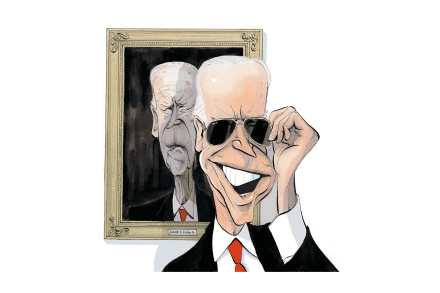
Joe Biden would never be in a hair band; a hair plugs band, maybe. Yet the president does seem to be following a maxim known well to every aging rocker: when nothing else is working, you hit the road. So it was that yesterday Biden left Washington on a tour that sent him to Los Angeles with stops afterward in Santa Fe and Philadelphia. And while his handlers seem to have talked him out of doing the whole thing via Amtrak, there are other reasons to think this is not a typical presidential jaunt. From out of the White House has come news that the president is frustrated with his dismal poll numbers. He's also reportedly tired of being over-handled by his staff — and fair enough.

kimmel

Kimmel gives Biden the grilling of his presidency

Cockburn can’t help but tune into the late-night shows. On Wednesday night, he was spoiled rotten: President Joe Biden showed up on Jimmy Kimmel Live!, kicking off a West Coast tour to revive his declining popularity. While the audience applause lasted more than a minute upon his arrival, Cockburn wasn't quite impressed with the interview. https://www.youtube.com/watch?v=ZEtPV-qvLe8&ab_channel=JimmyKimmelLive From the start, it was clear Kimmel would carry the show like a pack mule, clarifying Biden’s points and continually asking questions that led the president towards easy answers, along with the occasional jab at Trump and Fox News. Kimmel kicked off proceedings by asking: “Do you mind if I ask you some serious questions?

Is stagflation in America’s future?

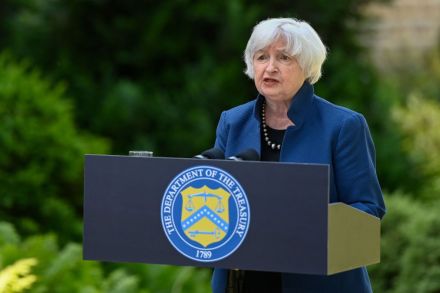
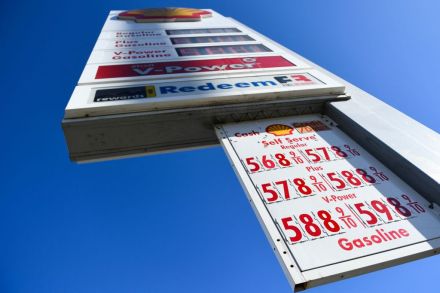
All is not well with the economy. It’s true that 390,000 jobs were added last month, exceeding estimates, while hourly income is up 5.2 percent since May 2021. However, analysts guessed unemployment would drop a tenth of a percent, which didn’t happen. Gas prices keep rising, as GasBuddy.com reports a 43 cent jump over this time last month. It’s enough of a problem that OPEC has agreed to increase production in July and August. The economy remains stricken by inflation, with Treasury Secretary Janet Yellen issuing a mea maxima culpa earlier this week. “I think I was wrong then about the path that inflation would take," she told CNN on Tuesday.

The moral cost of inflation

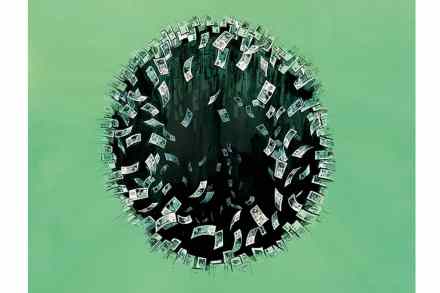
Inflation is about far more than rising prices. In this excerpt adapted from Inflation: What It Is, Why It’s Bad — and How to Fix It, the book’s authors explain how the debasement of money ultimately corrupts society. The scenario is fairly standard: central banks devalue money; prices shoot up. Governments look for ways to tamp down inflation by keeping people from spending. They also respond with price controls, capital controls, higher taxes. Governments grow larger and often impose more constraints. People lose their freedom, and worse.

inflation

There’s never been a better time to ditch the net zero agenda

From our UK edition

The cost of living crisis is confronting Westminster elites with the stark reality of some of the dubious policy choices they’ve recently made. Last week, the government was forced to postpone its ban on buy one get one free deals on ‘junk food’. The foolishness of outlawing cheap food – a policy Boris Johnson adopted after his spell in intensive care – has been laid bare now that inflation has risen to a 40-year high. Soaring energy bills ought to give proponents of eco-austerity similar pause for thought. Dozens of retail energy companies have gone bust in recent months. We are shipping fracked gas from the US while banning the technology here.

Life in an age of hyperinflation

From our UK edition

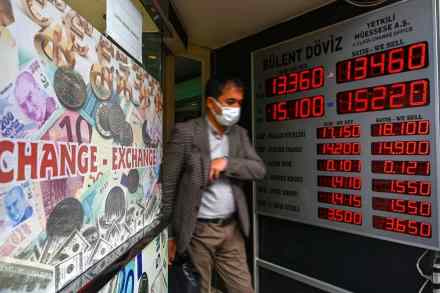
Istanbul, Turkey On Saturday mornings, Istanbul’s markets and greengrocers are packed with housewives in search of a bargain. Anxious women compare cabbages while chefs haggle over bunches of parsley, passing across thick wads of ten Lira notes – equivalent to about £5 a decade ago, now worth just 50 pence. The rising cost of food has become a national obsession in Turkey. Menemen, a staple breakfast dish of scrambled eggs with tomato, onion and fried green peppers, has seen the cost of its basic ingredients shoot up by 132 per cent in a year. Some shops in the big cities have invested in digital price tags – those little grey electronic screens you see in continental supermarkets that can be updated with the click of a mouse.

Everyone hates Nancy Pelosi’s gas bill

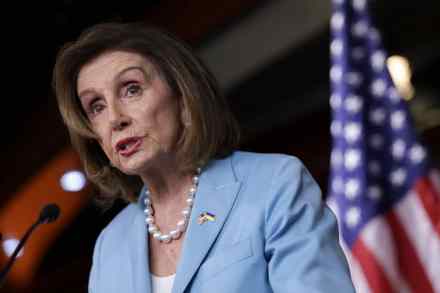
Congress on Thursday approved a bill that gives the White House power to enact price controls on gasoline. The Consumer Fuel Price Gouging Prevention Act lets the Federal Trade Commission treat so-called price gouging as a deceptive trade practice. Congress specifically directs the FTC to prioritize cases “concerning companies with total United States wholesale or retail sales of consumer fuels in excess of $500,000,000 per year.” In other words, all the major suppliers of oil and gas to the United States. “This is a major exploitation of the consumer, because this is a product the consumer must have,” droned House Speaker Nancy Pelosi, whose love of fuel price gouging legislation dates to 2005.

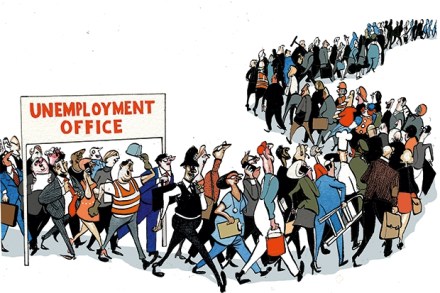
Unemployment is low – so why aren’t wages improving?

From our UK edition

For the first time ever, the number of UK job vacancies – now almost 1.3 million – has overtaken the unemployment count. Normally, this would lead to people in work feeling much better off, and lead to pay hikes and bonuses as employers compete to recruit and retain employees. But in fact, regular pay in real terms (that is, after inflation and before bonuses) is down 1.2 per cent – fuelling the cost-of-living crisis that is now the central fact of British politics. What’s going on? In short, today’s ONS labour market overview is yet another example of how inflation can ruin otherwise good news. Total salaries are up 7 per cent and unemployment fell to 3.7 per cent in Q1 (a record low not seen since the mid 1970s).

Tinkering with the energy price cap won’t fix it

From our UK edition

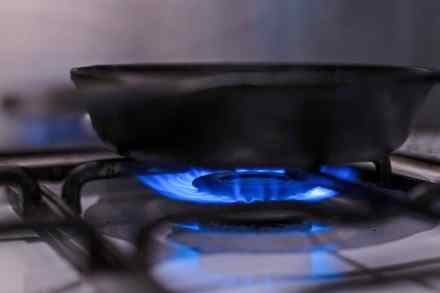
In principle, the UK’s energy price cap is supposed to provide a buffer for consumers who might otherwise see their energy bills go through the roof. But governments can’t control international energy prices: a lesson that has been learned the hard way over the past six months, as dozens of energy companies have gone bust, unable to raise prices for customers to reflect increasing wholesale costs. Meanwhile the cap has not stopped bills from skyrocketing: Ofgem’s last price cap went up by 54 per cent, taking the total cost for an average household to just under £2,000 per year.

The cruelty really is the point

Earlier this week, Politico ran a piece called “Inflation’s biting. Roe’s fraying. Dems are still trying to connect with voters.” The crux of the article is that while congressional Democrats have plans to counter rising inflation, they are having a hard time selling their command of the situation to voters. It’s no wonder. The star of the piece is Representative Katie Porter. Porter, a member of her party’s progressive wing, is portrayed as more aware of the impacts of inflation than her colleagues. The story describes an instance in which Porter had to put a package of bacon back on the shelf because, to her surprise, it was up to $9.99 per pound.

Could Haldane have helped save us from inflation?

From our UK edition

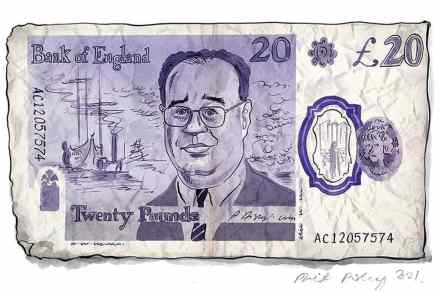
Would Andy Haldane, the economist who left the Bank of England to run the Royal Society of Arts, have made a better governor than Andrew Bailey? You might be thinking that Daffy Duck would have made a better fist than Bailey of combatting the cost of living crisis. But seriously, Haldane was an outsider (backed by this column) in the race won by Mark Carney in 2012, and Dominic Cummings reportedly wanted him to follow Carney in 2020. He’s a brilliant real-world observer and it’s poignant to know that, though he warned Monetary Policy Committee colleagues early last year to brace for inflation, it has ‘surpassed my worst expectations’.

Has the Fed restored its credibility?

From our UK edition

The Federal Reserve is playing catch-up. Today’s interest rate hike is only the second rate rise since 2018 – but it’s the first half-point rise in 22 years. As expected, the federal-funds rate – the interest rate banks use to lend to each other on a short-term basis – will rise from a target range of between 0.25 and 0.5 per cent, to a range between 0.75 and 1 per cent. After many months of insisting price hikes would be transitory, with inflation soaring to a 40-year high in the meantime, the Fed is finally acting to curb it. By historical standards, today’s hike keeps interest rates very low – but that’s all expected to change over the next year.

Higher taxes won’t fix inflation

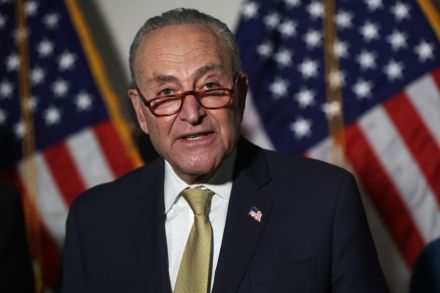
Senate Majority Leader Chuck Schumer knows how to fix inflation: higher taxes. “If you want to get rid of inflation, the only way to do it is to undo a lot of the Trump tax cuts and raise rates,” surmised the New York Democrat to reporters on Tuesday, after meeting with West Virginia Senator Joe Manchin about the budget. “No Republican is ever going to do that. So the only way to get rid of inflation is through reconciliation.” Manchin saw it slightly differently, portraying tax increases as budget reduction tools. He believes debt reduction is “the only way” to fight an inflation problem that threatens to wash away Democratic majorities in Congress.

democrats

The Biden Bust is here

From our UK edition

A wave of government spending would reboot the economy. Fairer taxes would pay for restored infrastructure. Skills would be improved, productivity raised, and new digital champions would emerge. When Joe Biden was elected, he promised the most radical programme of economic reform since Franklin Roosevelt's New Deal in the 1930s, and, to his army of cheerleaders at least, the American economy was about to be completely transformed. But hold on. Only a year into his term, the reality is very different from the promises. In reality, the Biden Bust has arrived. Donald Trump may have been personally obnoxious, but he bequeathed an economy in perfectly good shape The US GDP figures released today was genuinely shocking.

How we got to inflation

And just when everything was looking so tidy — the Ukraine war, a new Covid subvariant, mass shootings, a woked-up Disney operation — what should come along to light up our lives but 8.5 percent inflation? And who, I ask you, ought to wonder? Like acid reflux and obstreperous two-year-olds, inflation ranks high among human durable goods: always looming, never gone for long, even when it pulls back, and even then leaving its indelible marks. This, due to another human durable: the determination of governments, autocratic as well as democratic, to mishandle the pretended spreading of economic joy.

bewilderment

How the boomers robbed the young of all hope

"Young people do not degenerate; this occurs only after grown men have already become corrupt.” — Montesquieu, The Spirit of Laws, 1748. The great test of a generation is whether it leaves better prospects for its descendants. Yet by virtually every indication, the baby boomers, and even the Gen Xers, are leaving a heritage of economic carnage — as well as a growing social and cultural dissipation that could shape our future and the fate of democratic self-rule, and not for the better. This legacy comes not from outside forces, but the investment bankers, tech oligarchs and their partners in the clerisy who have weakened their national economies and undermined the chances of upward mobility for most young people.

young

The government didn’t miss inflation, they ignored it

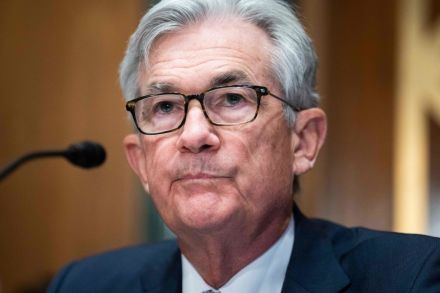
Federal Reserve Chairman Jerome Powell looked calm when he testified before the Senate Banking Committee in February 2021. He’d just been asked by the folksy Louisiana senator John Kennedy whether he had concerns about the dollar supply being the highest it had been since 1946. “Right now, I would say the growth of M2, which is quite substantial, doesn't really have important implications for the economic outlook,” Powell stated. “M2 was removed some years ago from the standard list of leading indicators, and just that classic relationship between monetary aggregates and economic growth in the size of the economy, it just no longer holds. We've had big growth of monetary aggregates at various times without inflation, so something we have to unlearn, I guess.

interest inflation

Inflation is here to stay

Inflation last month increased to 8.5 percent over a year ago. That’s up from 7.9 percent just last month. It’s the sixth straight month that inflation has been over 6 percent, and the highest it’s been since 1981. The Fed will almost certainly be raising the funds rate steadily for the rest of the year, perhaps by fifty basis point increments instead of the usual twenty-five basis points. The trick, of course, is to rein in the inflation without causing a severe recession. The price of gasoline rose a staggering 18.3 percent in March alone. But even if you take out the cost of fuel and food, which tend to be much more volatile than other commodities, the “core inflation” was 6.5 percent, again the highest in decades.

Who can put the toothpaste of inflation back in its tube?

From our UK edition

The UN Food and Agriculture Organisation’s food price index rose 13 per cent last month to stand a third higher than a year ago. Within the index, cereals rose by 17 per cent – driven by interrupted Ukrainian and Russian wheat supplies – and vegetable oils by 23 per cent, Ukraine being the world’s biggest sunflower farmer. In the UK, wholesale milk is up 20 per cent, as farmers face rising fuel and feed costs. Supermarkets squeeze suppliers to suppress retail prices: but soon, around the same time as our next quarterly gas bills, we’ll feel the full impact at the checkout. And then what?

Inflation is the real lockdown scandal

From our UK edition

No. 10 was an endless series of parties. The Chancellor was more interested in socializing than sorting out the economy. And the Prime Minister was imposing rules on everyone else that he cavalierly ignored himself. It remains to be seen whether Boris Johnson and Rishi Sunak can survive the fines handed out for breaking the lockdown rules and the public anger over their behaviour. And yet, in reality, there is a far larger lockdown scandal and one that will cause far more lasting political damage: inflation. The ‘partygate’ scandal, and its fallout, has distracted attention from yet another sobering set of inflation statistics. Today we learned that prices are now rising at an annual rate of 7 per cent, up from 6.2 per cent last month.