Indie-pop

Ian McCulloch’s still got it

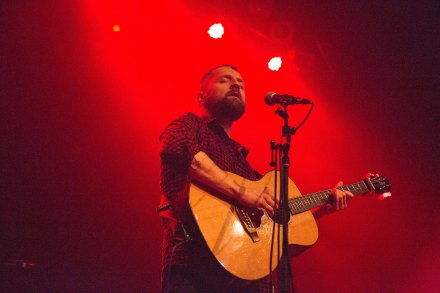
No one ever joined a rock band because they didn’t want to be recognised. Being adored matters to stars, sometimes too much, but that only makes those who love them care even more. That could be heard in the cries of ‘We love you, Mac!’ at a glorious night in Regent’s Park. Echo & The Bunnymen’s singer Ian McCulloch – who was once famous for pronouncing on how much better his band was than any other – has not had an easy time of it in recent years. Unlike his peers in the Cure and U2, he’s not playing to 50,000 people at a time, though his band were regarded as every bit their equals – perhaps their betters – in the early 1980s.

Farewell to Saint Etienne

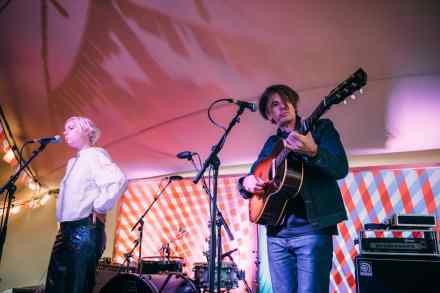
There are many ways for an established act or artist to call it a day. Some implode mid-tour in a fireball of drugs, ego and flying guitars. Others drift quietly out of sight unannounced. Some take their cue from those annoying people at parties who bid everyone a fulsome farewell and then just keep coming back. Most, as we know, don’t manage to say goodbye at all. As ardent scholars of pop history, Sarah Cracknell, Pete Wiggs and Bob Stanley are more aware than most of all the pitfalls and indignities involved. They have duly planned Saint Etienne’s exit from the scene with obvious care and attention. Like those annoyingly reasonable couples who throw divorce parties, the trio have pitched their retirement as a celebration. This is conscious dethroupling, indie-pop style.

The joy of Belle and Sebastian

Do Belle and Sebastian have the most polite audience in pop? Normally when a pop singer leaves the stage to promenade through the audience, they are besieged. Even in seated venues most stars ​will make sure to take a security guard with them. I once saw bouncers drag women in red dresses away from Chris de Burgh at the Royal Albert Hall. Not with Belle and Sebastian. When Stuart Murdoch stepped off the stage, barely anyone even stood up. One chap had a little dance with him but no one reached out for a touch of his hand. He climbed from the arena floor to the stalls that circle it, and made his way into a row, where everyone swivelled their seats to let him pass. Yet as soon as he gave them permission, dozens of them were up on stage dancing with this joyful band.

The maudlin, magical world of Celtic Connections

Is it possible to find a common thread running through the finest Scottish music? If pushed, one might identify a quality of ecstatic melancholy, a rapturous yet fateful romanticism, in everything from the Incredible String Band to the Cocteau Twins, the Blue Nile to Frightened Rabbit, Simple Minds to Mogwai. The Jesus & Mary Chain have a song called ‘Happy When It Rains’, which seems about right. There were moments during the launch event for Celtic Connections, Glasgow’s annual and much-valued winter celebration of roots music from Scotland and far beyond, when this bittersweet admixture of moods was thrillingly conjured up. At other times, it simply felt a little contained, even now and again flirting with that lethal old enemy, the Scottish Cringe.

Full of unexpected delights: Green Man Festival reviewed

One learns the strangest things at festivals. That, for instance, this summer has been a bit of a blackcurrant disaster in the UK because the extreme heat caused all the different varieties to ripen at the same time and fall from the bushes before they could be properly harvested. That fact came from a retired Kentish farmer called Ian, next to whom we were sitting at a £65-a-head dinner at this year’s Green Man, just outside Crickhowell in Wales. That alone should spell the difference between Green Man and the scene depicted in the Netflix series Trainwreck: Woodstock ’99. No one here was getting mouth ulcers because the drinking water was running with sewage, or rioting, or burning the catering tents down (what a waste of slow-cooked Welsh lamb that would have been).