Indian ocean

Washing it all away in the Maldives

From our US edition

The Maldives is an unusual country. It’s Asia’s smallest country, but also the world’s most geographically dispersed. It has Asia’s second smallest population, but is one of the world’s most densely populated. It was Buddhist for a millennium and a half, which is conspicuous in most of the country’s ruling institutions, early scriptures and even language, but you wouldn’t know it from the people; it’s almost 100 percent Muslim now, demographically and culturally, and has been since the last Buddhist king of Maldives, Dhovemi, converted in 1153 (or maybe it was 1193 — depends on who you ask).

maldives

Our future life on Earth depends on the state of the ocean

When we observe the ocean we rarely peek beneath its surface. As Helen Czerski shows in her lively and engrossing account of the physics of ocean spaces, we would not see much anyway. Sounds travel well in water, and blue whales talk to one another across thousands of miles; but light soon disappears, apart from the glow emitted by luminous fish. Historians of the oceans (myself included) have looked at how, when and why people have crossed the surface of these spaces, uninhabitable except in the security of a boat or on islands, such as those in Polynesia with which Czerski begins her book. But we need to dive deeper.

With tourists absent, the teeming marine life has returned to the sea off Malindi

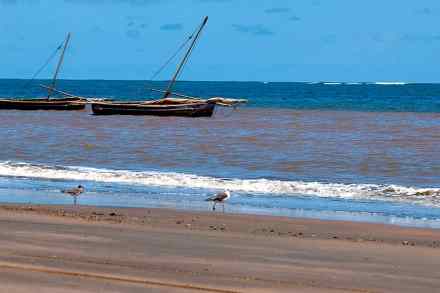
Malindi, Kenya Beneath the Indian Ocean’s surface, I wondered if the pandemic had turned out to be a good thing after all. I swam among corals blooming more colourfully and with more diversity of reef fishes than on any dive I can recall since my childhood. On the high-tide line in front of our beach house on Kenya’s north coast, sandpiper feet and the claws of ghost crabs are becoming entangled in discarded blue face masks. This year, the tourists are mostly absent and the seafront nightclubs, restricted by curfew, are silent. But out here among the coral gardens, the teeming marine life, flaring with psychedelic colours, hints how swiftly the world might recover if another variant wiped out the human race.