India

Is Europe a continent? Does it matter? 

Nikole Hannah-Jones, who is never at a loss for a tweet, ridiculed Americans who are expressing alarm over the threat to Europe implicit in Putin’s invasion of Ukraine. She put down those spoilsports for their referring to Europe as a “continent.”  Quoth Hannah-Jones, under her nom-de-plume Ida Bae Wells: What if I told you Europe is not a continent by definition, but a geopolitical fiction to separate it from Asia and so the alarm about a European, or civilized, or First World nation being invaded is a dog whistle to tell us we should care because they are like us. The triumphant silliness of the author of the 1619 Project always comes down to her desire to find racism at the root of whatever happens.

europe nikole hannah-jones

The US and India in a new world

The world’s center of gravity is shifting to the Indo-Pacific. The new global order will be shaped by developments in a sprawling region where interstate rivalries and tensions are sharpening geopolitical risks. Building a stable balance of power in the Indo-Pacific has become more important than ever, but China’s territorial and maritime revisionism, and its heavy-handed use of economic and military power, are causing instability and undercutting international norms. Against this background, the expanding strategic partnership between the world’s most powerful and most populous democracies — the United States and India — has become pivotal to equilibrium in the Indo-Pacific.

india

#Wanderlusting

I’m twenty-seven weeks pregnant, which is technically the last week of my second trimester, and shit is getting real. Apparently, this is also the “longingly and obsessively scroll through Instagram travel pages” phase of pregnancy, so of course Facebook took it upon itself to remind me that nine years ago today I was in Sri Lanka. The algorithm is tormenting me. I’m wanderlusting. Wondering if I’ll ever travel again. Reminiscing about the good ol’ days. As I scroll through my photo albums on Facebook, I am reminded of how often people would comment, “You’re so free!” The people who said this to me over the years had “real” jobs and mortgages and pets and kids.

traveling

Can the India-US relationship last?

India and the United States have rediscovered each other after the cordial hostility of the Cold War. Those years of isolation have made India’s political and financial elites susceptible to flattery. America’s courtship of India, lubricated by the economics of globalization and the post-9/11 zeal to spread democracy, is now being consummated in the American search for a democratic counterweight to China. But India is a chaotic democracy in a volatile neighborhood. Can it hitch itself to America without forfeiting its autonomy? Foreign strategic experts exhort India, which is non-interventionist to its marrow, to act like a global power.

india

Back to Bangalore

India’s fast-growing population now stands at 1.38 billion, just shy of China’s ginormous 1.4 billion. China’s population is rapidly aging, so it’s only a matter of time before a youthful India —average age twenty-nine to China’s thirty-seven — overtakes its communist neighbor and becomes the most populous nation on the planet. I left India as a child, and just spent two months in Bangalore, selling some ancestral property. Bangalore is India’s booming tech hub and Silicon Valley; most major American tech companies, including Facebook, Google, Amazon and Microsoft have opened large offices there to manage their back-end operations.

india

We aren’t serious about fighting climate change

“UN Global Climate Poll: ‘The People’s Voice Is Clear – They Want Action.’” So ran a typical headline in the British newspaper the Guardian in January. Yet this month, a poll released as world leaders met at the Glasgow Climate Change Conference prompted a very different Guardian headline: “Few Willing To Change Lifestyle To Save The Planet, Climate Survey Finds.” Huh? Yes, surveys are essentially universal in showing people worldwide are terribly concerned about Global Climate Change (GCC) and support efforts to mitigate it, often no matter how drastic. But those polls may reflect a false perception.

Welcome to the age of entropy

Americans and other westerners have long been accustomed to thinking that history has a clear direction. Sometimes the direction is contested, as it was during the Cold War. The future could have been capitalist or communist, or perhaps a blend of both systems — ‘convergence’ was a trendy notion for a time — but one way or another the alternatives were clear. After the Cold War, there were no alternatives. Capitalism, democracy and liberalism were here to stay, and soon they would be everywhere else too. All the Islamic world needed if it was to join us at the end of history was a nudge: regime change would speedily bring about social and economic change.

liberalism

In search of Nirad Chaudhuri

The false sense of complacency in Washington DC, now restored as the imperial capital of the world, is only matched by a tone of utter bafflement. History has apparently renewed its march toward a progressive utopia, and the American cabinet seems as epidermally diverse as it is ideologically totalitarian. But there remains a sense of unease. The imperium suffered a systemic shock in 2016, one that needed and still lacks explanation. The shock was not limited to America. The Guardian struggles to comprehend that British Indians tended to support Brexit, and that members of their community such as Rishi Sunak and Priti Patel have risen to influence in the Conservative party and high office in the government.

chaudhuri

Joe Biden is letting India down

With 40 percent of the population vaccinated, a palpable sense of normalcy has returned to America. The young are now getting their turn at the COVID vaccine and in almost every city, restaurants and bars are back in full swing. But while selfies of joyful reunions with older relatives flood social media here, in India, the picture is grim. The country reported world record-breaking coronavirus infection rates for four days in a row. Hospitals in several cities are grappling with severe shortages of beds, medicines and oxygen. For a country widely seen as the pharmacy of the world (India produces 60 percent of the world’s total vaccines), it is a sad irony that just 8 percent of its own population has been vaccinated thus far.

india

Kamala Harris’s Indian summer

The Indian vote in American politics has been a lock for the Democrats in recent years. President Obama won the group in 2008 and many of them preferred him to Mitt Romney in 2012. Likewise, Hillary Clinton won the Indian vote in something of a landslide in 2016 against President Trump. Early polling indicates that Asian Americans in general still lean Democrat. But might Joe Biden’s selection of Kamala Harris put a meaningful portion of the Indian vote up for grabs? Kamala Harris represents something historic for the Indian-American community — she is the first person with Indian ancestry to run on either party’s presidential ticket. The Biden campaign have been quick to capitalize on this, forming an 'Indians for Biden' National Council.

kamala harris indian

Will India and China go to war?

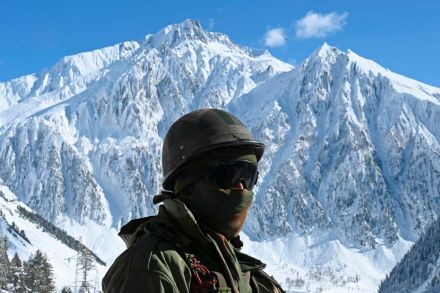
India and China are separated by the longest un-demarcated border in the world. They fought a war in 1962, which India squarely lost, and engaged in a fierce clash in 1967, in which India decisively prevailed. Since then, a tense peace has been maintained in the high and strategic Himalayan passes. The Line of Actual Control (LAC) that divides the two Asian rivals was sustained by a strict adherence to elaborate protocols agreed at the topmost levels by both sides. There have been numerous skirmishes and fistfights between Indian and Chinese soldiers over the years, but with the exception of an ambush by the Chinese in 1975 in which four Indian soldiers were killed, lives were never lost.

india

The renaissance of the porch

On a cold and unremarkable November night about 10 years ago, I arrived from India in Knoxville, Tennessee. The first thing I noticed about my new home was its massive front porch.Long and unfussy, it stretched along the entire width of the red-brick Craftsman bungalow. It had an old wooden floor and on one side furniture half-swallowed by shadow. More than anything, I was struck by its deep sense of ease, and how familiar it felt. I’d grown up in a small town in India, in a bungalow with a veranda not unlike this porch. Standing on it that freezing night, I suddenly felt a little less cold.

porch

The possibilities of a US-Indo alliance are YUGE

President Donald Trump is not all that fussed, one way or another, about vague concepts like human rights. He prefers realpolitik and semi-feudal pomp; the Maharaja of Queens is set to enjoy plenty of both during his visit to India this week. Indo-US relations are not as sclerotic as they were during the bleak, stagnating, Sovietized Eighties — an era which no one other than the New York Times remembers fondly. Since the Cold War, American presidents have conspicuously sought to align with New Delhi, as a counterbalance to a rising China, and have equally been courted back. The appeal of an alliance is not simply strategic, Indian Americans are the most successful minority community in the US. With Trump and Modi, their bonds look set to grow even stronger.

US-Indo alliance

Birth of a nation

This article is in The Spectator’s March 2020 US edition. Subscribe here. The 20th century was a crowded century. Event piled upon world-historical event to produce a mass of history so heavy with the prospect of annihilation and so alive with the possibilities of individual emancipation that one of humanity’s most extraordinary accomplishments, the constitution of a liberal democratic republic on the Indian subcontinent, went largely unnoticed in the West. The significance of India’s birth was, however, not lost on a colonial world clamoring for freedom, or African Americans striving to unlock the full promise of America. India’s founding on August 15, 1947, W.E.B. DuBois rhapsodized, would be ‘remembered as the greatest historical date of the 19th and 20th centuries’.

india

The Bard and Bollywood

Hindi cinema has a deep and abiding love affair with Romeo and Juliet. Shakespeare’s tragedy of star-crossed lovers has been adapted in at least six Bollywood films in the last seven years, from 2012’s Love Rebels (Ishaqzaade) to 2018’s Heartbeat (Dhadak).  And audiences like them: A Play of Bullets: Ram-Leela (Goliyon Ki Rasleela Ram-Leela) was India’s fifth highest-grossing film of 2013, and Wild in Love (Sairat) is still the highest-grossing film ever produced in the Marathi language. What has the Bard to do with Bollywood? And why the much ado about Romeo and Juliet?

bollywood bard