Income tax

Can tariffs replace income taxes?

From our US edition

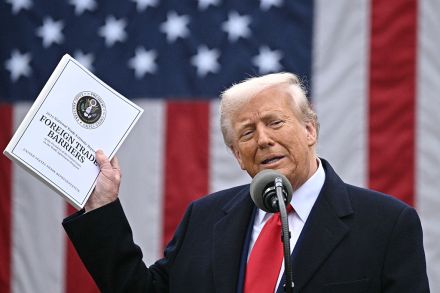
Can tariffs replace income taxes paid by Americans earning an income under $200,000 annually, as President Trump has suggested? We seem to have entered a new world in 2025, or rather, reincarnated an older America whose tax receipts were heavily built on tariff payments. U.S. Secretary of Commerce Howard Lutnick recently stated that tariffs could replace income taxes paid by Americans making up to $150,000 per year. And certain economic nationalists have urged that there is a vital causal connection here worth recalling in an “American system” of tariffs and protectionism, and the growth of American industry. They argue that America’s Gilded Age wasn’t regressive economically; in fact, the country exploded in growth, commerce and inventions.

Tariffs

Could this be the last time I ever have to pay my taxes? 

From our US edition

Another Tax Day has come and gone. Here I sit, all broken-hearted. The tax-industrial complex has once again swallowed up thousands of dollars that used to be mine. But this year, I found myself legitimately wondering: could this be the last time I ever have to pay my taxes?  One of the major pillars of President Trump’s economic platform is the abolition of income tax for all Americans who make less than $150,000 a year. This sounds like a fantasy, an empty chicken-in-every-pot promise, like a student council candidate winking after saying, “If you elect me, I’ll make sure we have soda in the drinking fountains.” But if Trump 2.0 has shown anything this year, it’s a willingness to set into motion seemingly impossible plans.

tax

How much does it cost to hold a general election?

Canada’s Reformation This general election has been likened to the Canadian general election of 1993, when the Conservative party collapsed from 169 seats (a majority) to just 2 as its vote was split by a new party called the Reform party of Canada. Did it prove to be an extinction event? Neither party prospered in the following two elections: in 1997 the Conservatives won 20 seats and Reform 60; in 2000 their respective totals were 12 and 66. In 2003, however, they merged, with Reform leader Stephen Harper becoming leader of the combined party, known as the Conservative party of Canada. It won 99 seats in 2004. In 2006 it gained power as a minority government with 124 seats (out of 308). Harper became prime minister and remained so for nine years.