Impressionism

Why one of Renoir’s most celebrated paintings languished unloved

From our UK edition

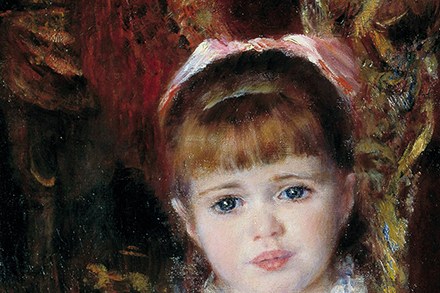
Shimmering off the cover of The Renoir Girls are sisters Alice (aged four) and Elisabeth Cahen d’Anvers (six), portrayed in all the promise and innocence of a pampered childhood by Pierre-Auguste Renoir. Aged 40, Renoir was then the coming portrait painter for the gratin of Paris, as he struggled to make ends meet with smart commissions from wealthy sponsors – a network of Catholic and Jewish banking families that included the Ephrussis (memorialised by Edmund de Waal in The Hare with Amber Eyes), Camondos, Rothschilds and Cahen d’Anvers.

In defense of Renoir’s pretty pictures

Those who think it’s chic to dismiss Renoir have a rethink coming, courtesy of the absorbing, highly informative exhibit Renoir Drawings, now on view in New York. Not so long ago, the idea of ousting Pierre-Auguste Renoir (1841-1919) from the canon of western art sparked a movement of sorts. “RENOIR SUCKS AT PAINTING,” proclaimed a protester’s sign at the Museum of Fine Arts in Boston in 2015. The performance artist Max Geller had organized the demonstration to condemn Renoir as a purveyor of “treacle.” His female nudes objectified women, it charged; even when clothed, they smiled and blushed too prettily. Indeed, Renoir’s work held value only for the unsophisticated and its popularity represented the triumph of the cliché.

renoir

The making of Van Gogh as an artist came at a terrible cost

From our UK edition

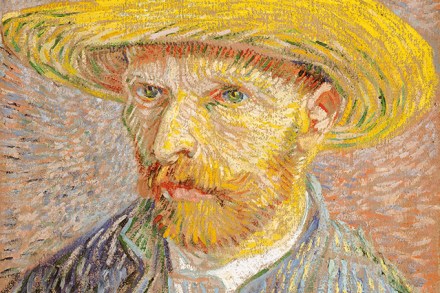
Six months before Vincent van Gogh’s death, the critic Albert Aurier, waxing poetical, wrote an article entitled Les Isolés on the then unknown painter. It raised to sainthood the solitary genius driven to insanity by an uncomprehending world. ‘Is he not one of the noble and immortal race which the common people call madmen but which men among us consider sort of saints?’ The man had already become myth. His life would be a sacrament and his suicide a reproach. It has remained that way ever since. Miles J. Unger thinks otherwise. He recasts our hero as the very opposite of isolé, a painter whose stylistic development was totally dependent on the artists and influences surrounding him in Paris.

Fog, tea and full English breakfasts: Monet and London, at the Courtauld, reviewed

From our UK edition

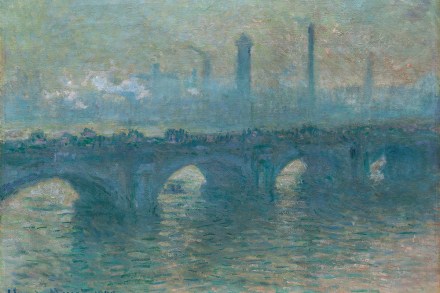
For the maids on the top floors of the Savoy, everything was in turmoil. The 6th had been commandeered by wounded Boer War officers, and since February 1900 a suite of rooms on the 5th had been taken over by a French painter, who was using one as a studio. The officers were nice enough, but the Frenchman spoke almost no English and you could smell the turps down the corridor. Whatever was the management thinking? ‘Without the fog, London wouldn’t be a beautiful city.

The most original sea painter since Turner? Lowry

From our UK edition

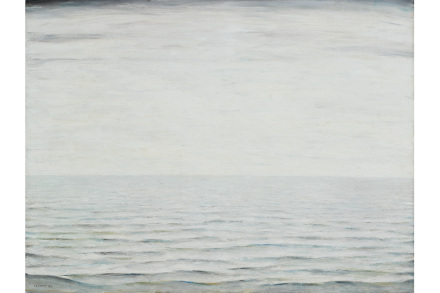
In 1958 an elderly gentleman staying at the Castle Hotel in Berwick-upon-Tweed gave the receptionist a doodle he had made on the hotel’s notepaper. She kept it in a box and 43 years later, on the advice of Antiques Roadshow, sold it at auction for £8,000. ‘I don’t think anyone since Turner has looked at the sea with such an original eye’ A contemporary photograph shows that gentleman in his trademark trilby, dark suit and tie – no casual wear for L.S. Lowry – standing on the pier with Berwick in the background. Lowry (1887-1976) is not best known for his paintings of the sea, but there are 21 – including the receptionist’s sketch – in this interesting little exhibition in the Northumbrian town which he regular visited, and they cast him in an unaccustomed light.

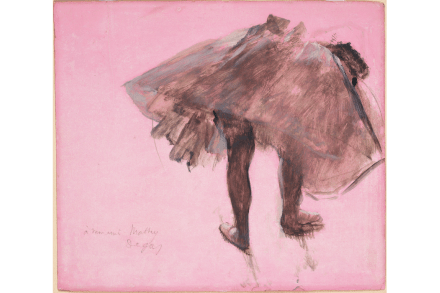
How Miss La La captured Degas’s imagination

From our UK edition

‘Can you come Saturday morning to my studio, 19 bis rue Fontaine?’ Degas wrote to Edmond de Goncourt in 1879. ‘From 10.30 to half-past noon, I will have my négresse and her partner who will come expressly to be at your disposal.’ Not content with dangling from a rope by her teeth, she suspended a 300-kilo cannon barrel from her jaw It’s not what it sounds like. The ‘négresse’ in question was Anna Albertine Olga Brown, stage name Miss La La, an aerialist at the Cirque Fernando who had been sitting – or more accurately hanging – in Degas’s studio for a painting for that year’s fourth Impressionist exhibition. As his friend was working on a circus novel, he thought he might be interested in meeting her.

Breathtaking: Mary Cassatt at Work, at the Philadelphia Museum of Art, reviewed

From our UK edition

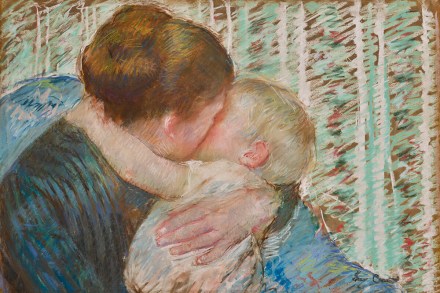
Work – in the sense of toil – is about the last thing a 19th-century painter wished to be associated with. Inspiration and success were gifts bestowed on the lucky few – about as easy to grasp as smoke. For Mary Cassatt, however, art was nothing more than work. ‘Effort upon effort,’ is how she described the process of painting to her friend, the collector Louisine Havemeyer. Pissarro admired her technical skill, Gauguin her charm and strength, but Degas was her true mentor Still, she produced almost 1,000 works in her lifetime, and Mary Cassatt at Work – a new exhibition at the Philadelphia Museum of Art – tells us how. Spoiler: unswerving determination, ambition and, well, work.

Impressionism is 150 years old – this is the anniversary show to see

From our UK edition

The time that elapsed between the fall of the Paris Commune and the opening of the first proper impressionist exhibition amounted to less than three years. Over the course of that period, the city had witnessed the collapse of the Second Empire, suffered a siege at the hands of the Prussian army and seen vicious house-to-house fighting between the troops of the Versailles government and thescrappy citizen-army of Paris proper. All Parisians would recall the rivers of blood running down the city’s ritziest shopping streets, zoo animals being butchered for restaurant fodder, and the mass slaughter of rebel prisoners across the public squares of the city’s eastern faubourgs.

Masterclass of an exhibition: Impressionists on Paper, at the RA, reviewed

From our UK edition

Viewers have different relationships with small pictures, or perhaps it’s the other way round: small pictures have different relationships with them. A big picture clamours for attention; a small picture you have to lean in to hear. No picture is more intimate than a drawing, and none brings you closer to the artist’s hand. A drawing can’t lie; it wears its facture on its sleeve. If you look closely, you can work out how it was made and even track the artist’s changes of direction. You can see, for instance, how Van Gogh launched into ‘The Fortifications of Paris with Houses’ (1887) in watercolour, then fortified the fortifications with gouache and chalk. A graphic artist by nature, he was at sea with watercolour washes.

Why did this brilliant Irish artist fall off the radar? 

From our UK edition

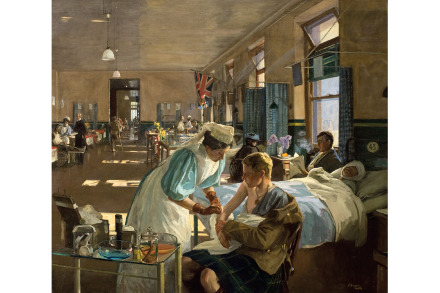
Sir John Lavery has always had a place in Irish affections. His depiction of his wife, Hazel, as the mythical figure of Cathleen ni Houlihan, which appeared on the old ten shilling and subsequently on the watermark of the Irish pound notes, meant, as the joke went, that every Irishman kept her close to his heart. He was indeed Irish – born in Belfast – but was at home in Scotland, and was the best known of the spirited group of painters called the Glasgow Boys. Yet he lived most of his life in London, was friends with Winston Churchill (they took a painting trip together) and also with Michael Collins, the Irish Nationalist, with whom Hazel was, ahem, close. If ever there were a man who embodied the interconnectedness of Britain and Ireland, it was Lavery.

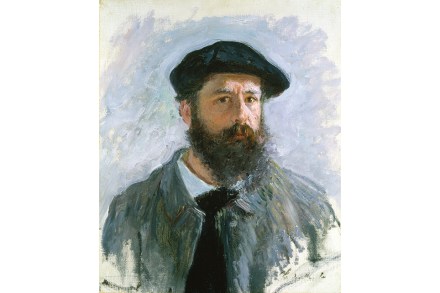
The force of nature that drove Claude Monet

From our UK edition

There have been some really good biographies of artists over recent years and what distinguishes the best of them is their sense of context and a lucid prose free from the jargon of the art historian. In the end, of course, any work of art has to be able to stand by itself, but for Jackie Wullschläger her appreciation of Monet’s paintings has been immeasurably deepened by her sense of the man behind them. ‘My approach,’ she writes, ‘stems from the belief that painters transform the raw material of experience into art’, and that material, both the familiar external events and, more illuminatingly, the inner man, is what she gives us here.

What makes Berthe Morisot’s nudes so unique?

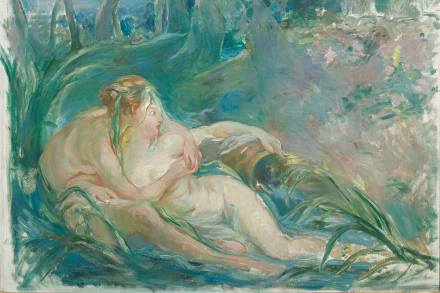
In the years before the French Revolution saw heads roll down the boulevards, revolutionaries murdered in the bath, and endless numbers of fluffy lap dogs forced to fend for themselves after their mamans met their untimely ends, one art critic made his name with his fearless criticism of Paris’s annual art exhibition, the “Salon.” The prominent style in mid- and late-eighteenth century France was Rococo — think impossibly ornate, gold-swirled furniture; paintings of pink, fluffy nymphs in gilt-edged, asymmetrical frames; and portraits of women in dresses so large, and so embellished, that they resemble iced wedding cakes more than human beings. In the face of endless walls of this style of art, the critic Denis Diderot was caustic.

Morisot

The quiet genius of Gwen John

From our UK edition

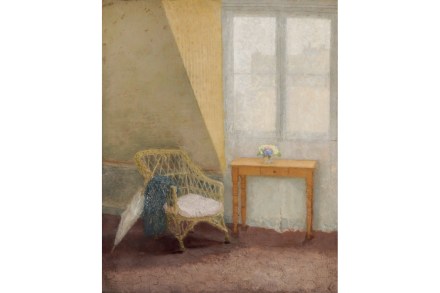
In the rush to right the historical gender balance, galleries have been corralling neglected women artists into group exhibitions: the Whitechapel Gallery rounded up 80 women abstract expressionists for its recent Action, Gesture, Paint show. But imbalances can’t be corrected retrospectively. Rather than elevating women artists who didn’t make it in a male-dominated world – not all of whose work, if we’re honest, helps the female cause – we should be celebrating the grit and talent of the few who did. And Berthe Morisot and Gwen John – currently the subjects of solo shows at Dulwich Picture Gallery and Pallant House – had both in spades.

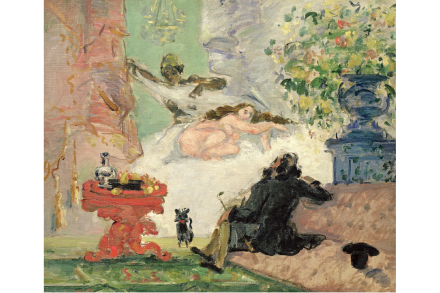
The genius of Cezanne

From our UK edition

Pity the poor curators of major exhibitions struggling to find fresh takes on famous masters. The curators of Tate Modern’s new Cezanne blockbuster have begun by dropping the acute accent from his surname, apparently a Parisian affectation not in use on the artist’s home turf. Anticipating grumbles about another major exhibition devoted to a dead white male artist, they have emphasised Cezanne’s outsider status by painting him as a provincial from Provence. It was a role the artist liked to play in Paris, once famously excusing himself from shaking Manet’s hand on the grounds that he hadn’t washed in a week. Cezanne’s peers put their money where their mouths were, creating an artists’ market for his work With or without his accent, Cezanne remains French.

How good is he? Pissarro: Father of Impressionism, at the Ashmolean Museum, reviewed

From our UK edition

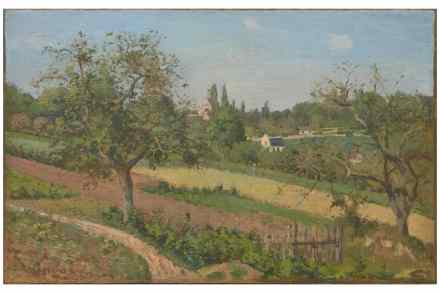
Two markers: ‘Cottages at Auvers-sur-Oise’ (c.1873) is a sweet especial rural scene of faintly slovenly thatched cottages with, at its centre, an outside privy, its door modestly shut. A discreet little detail. Second, early in the exhibition, Corot’s ‘Duck-Pond’ (1855–60), an indicator of the tradition to which Pissarro belongs — a world of unconsidered trifles, granted a quiet importance. Linda Whiteley’s excellent, informative catalogue essay quotes Pissarro on Corot: ‘Happy are those who see beauty in modest places where others see nothing. Everything is beautiful, the whole secret lies in knowing how to interpret.’ He is writing this credo to his son Lucien in 1893.

The supreme pictures of the Courtauld finally have a home of equal magnificence

From our UK edition

When the Courtauld Gallery’s impressionist pictures were shown at the Fondation Louis Vuitton in Paris in 2019, the Parisian public was so bowled over by the exhibition that some were inclined to claim Samuel Courtauld as an honorary Frenchman. This was not completely unreasonable; after all Courtauld (1876–1947) was a Francophile from an old Huguenot family. But it was even more of a compliment to the magnificent array of French art he had put together. In this city of impressionism, home to the Musée d’Orsay and the Orangerie, half a million visitors came to see it.

We’re wrong to think the impressionists were chocolate boxy

From our UK edition

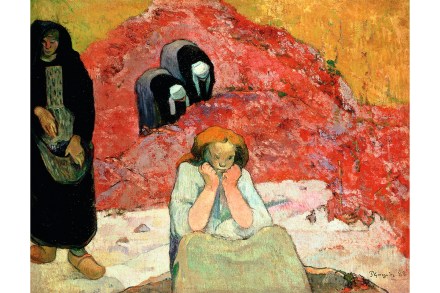
One Sunday evening in the autumn of 1888 Vincent van Gogh and Paul Gauguin went for a walk. They headed out of Arles into the countryside and when they looked back towards town they saw a sunset so splendid that each was inspired to paint a masterpiece. One of these, Gauguin’s painting bearing the timely title ‘Human Misery’, is among the star exhibits in a new exhibition at the Royal Academy. All the works in this show come from a delightful small museum in the northern suburbs of Copenhagen, housed in the early 20th-century mansion from which it takes its name, Ordrupgaard. This was the dwelling of Wilhelm Hansen (1868–1936), a mover-and-shaker in the Danish life insurance business and an avid collector of what was then modern art.

Making sense of Seurat

From our UK edition

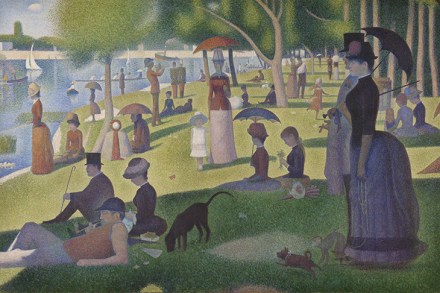
‘It’s too familiar, too obvious,’ says Cathy FitzGerald at the beginning of her new interactive series for Radio 4, Moving Pictures. But then she took another look at Georges Seurat’s ‘A Sunday on La Grande Jatte’, that huge, weird and unsettling pointilliste painting of a crowd of Parisians enjoying a sunny afternoon on the banks of the Seine some time in the 1880s. Instead of the 30-second glance we might give it in the art gallery, or five minutes at the very most, FitzGerald encourages us to linger, to look a little more slowly, take in the detail and fully appreciate what’s there on the canvas. After all, Seurat took two years to finish it.

Remembrance of things past | 24 January 2019

From our UK edition

An attendant at an art gallery in France once apprehended a little old vandal, or so the story goes. He had smuggled in a palette, paints and brushes under his coat and was trying to alter one of the exhibits — a picture by Pierre Bonnard. On further questioning, it turned out that the elderly vandal was none other than Bonnard himself. Though the work in question had been ‘finished’ years before, he just couldn’t leave it alone. Bonnard (1867–1947) was a master of indecision, as a glance at just about any picture in Tate Modern’s new exhibition The Colour of Memory reveals. There are no straight lines or clear divisions in his work. Even items you might expect to be sharp —such as window frames — turn out, on closer inspection, to waver.

Women and children first

From our UK edition

A lady licking an envelope. An intimate thing. It might be only the bill from the coal-man she’s paying, but it has the feel of something else: an assignation, a confession, an apology, a breaking-off. Would this woman in her deep-blue day dress and jacket be so unguarded if the artist had been a man? Mary Cassatt (1844–1926) was a femme sérieuse who painted women of quick wits and tender instincts. No grubby models, no ballet rats, no laundresses, no absinthe. Her sitters, you feel, would write a thank-you note, send flowers, recommend a dressmaker. Mary Cassatt: An American Impressionist in Paris, at the Musée Jacquemart-André, is the first French exhibition to be dedicated to the Pittsburgh-born painter since her death.