Immigration

Canada can do more to address the fentanyl crisis

It was a field day for the Canadian freight industry on Monday. Every truck in the country, stuffed to the gills with product, was racing the clock to the border. The few drivers still available commanded ridiculous prices — up to $12,000 higher than normal. At the stroke of midnight, the 25 percent blanket tariff kicked in. Trucks that had yet to make it across the border hit the brakes and turned around. The party was over; the coaches became pumpkins again, it was time for Cinderella to go home. The whole week before, business owners, brokers and shippers were asking each other: "Have you seen anything official on this? Anything from the Canadian government?" They hadn't.

fentanyl canada

Trump’s $5 million immigration ‘Gold Cards’ could split his party

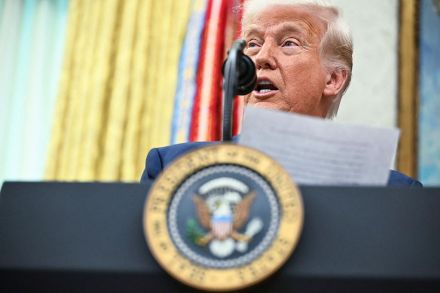
President Trump announced Tuesday that his administration is planning to unveil a program that lets foreigners acquire a path to citizenship for a one-time $5 million fee. Unlike the existing EB-5 visa program, which grants green cards to wealthy investors for about one-fifth of the cost, Trump’s “gold card” initiative aims to attract greater capital while using the revenue to help reduce national debt. “We’re going to be selling a gold card,” Trump said from the Oval Office during an Executive Order signing on price transparency in the hospital system.  “You have a green card. This is a gold card.

gold card

It’s time to scrap the asylum system

From our UK edition

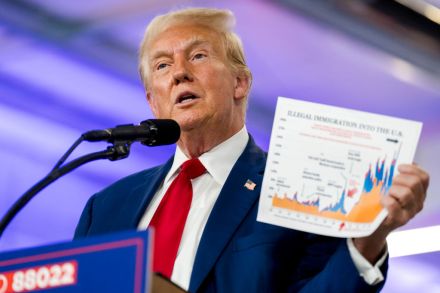
Whatever you think of the blizzard of executive orders howling from the White House, at least the new President doesn’t succumb to the seductive gravitational pull of the status quo. This is therefore a fitting juncture at which to not simply think outside the box, but in some cases to chuck the box. For example, Donald Trump wants to chuck the US Department of Education. Yet can’t he set his sights higher? Like, set an example for the rest of the West: chuck the asylum system. Having long ago predicted that the subject would dominate this century, I’ve written about immigration for 35 years. Although repeatedly approaching the radioactive issue with a certain frankness has incurred considerable reputational damage, I’ve no regrets.

Veteran journalist Edward Wong on his memoir of food and feud

From 2008 to 2016, Edward Wong reported on China for the New York Times, heading up its Beijing bureau. Last year, the veteran journalist, now the Times’s diplomatic correspondent, published his first book: a blend of family memoir, narrative history, political observation and personal reckoning. At the Edge of Empire tracks Wong’s father, Yook Kearn Wong, as he moves from fervent support of the Chinese Communist Party and its ideological goals to disillusionment and disappointment. It is also a book about what makes an empire. Born in Hong Kong before moving to Guangdong Province as a child, after joining the military as a young man Yook Kearn was posted to remote Xinjiang province, in China’s northwest corner.

Wong

Can we trust the Tories on immigration? An interview with Chris Philp, shadow home secretary

From our UK edition

38 min listen

On this special episode of Coffee House Shots, economics editor Kate Andrews is joined by shadow home secretary Chris Philp to discuss the Tories’ newly announced plan to tackle immigration. On legal migration, their proposal includes plans to end worklessness in order to stop the reliance on low-paid migrant workers. And on illegal migration, the line is ‘zero tolerance’ on small boats, including a removals deterrent much like the Rwanda plan, as well as other changes to the legal framework. One of the more controversial elements of their strategy is on citizenship.

Pope Francis’s immigration letter was seriously imprudent

Everyone in the world, it seems, believes they’re entitled to an opinion on US immigration policy. That includes Pope Francis. The Supreme Pontiff made clear his displeasure with the administration’s resetting of America’s approach to immigration in a letter addressed to the US Catholic bishops, but clearly directed against the new Trump administration’s efforts to enforce existing US immigration laws — with a particular emphasis on deporting immigrants who are criminals or who have committed crimes as well as others judged not to have valid claims to refugee status.

pope

Europe should be careful in wishing for their own Trump

When I visited Toronto with a UK delegation last winter, conversation focused on the issues of immigration, housing and inflation that were contributing to the unpopularity of Justin Trudeau, who finally announced his resignation as prime minister last month. The prospect of Donald Trump’s return to the White House was the slumbering python in the chandelier above the conference table: I sensed our hosts preferred not to think about how bad it might turn out to be. Well, now they know. In response to Trump’s declaration of 25 percent tariffs on Canadian goods, plus 10 percent on imported energy, Trudeau retorted with tariffs on many billions worth of US products.

Trump

Have the Tories thought through their immigration policy?

From our UK edition

12 min listen

The Bank of England has cut interest rates for the third time since the inflation crisis, taking the base rate to 4.5 per cent. The Monetary Policy Committee voted by seven to two to further reduce rates by 0.25 percentage points – a move that was widely expected by markets, but had been put into doubt after government borrowing costs surged in January and President Donald Trump announced his plans for substantial tariffs last week. Why have the Bank of England decided to cut rates? Also today, Kemi Badenoch has announced some policy! Ahead of the Labour government’s Border Security, Asylum and Immigration Bill being debated in Parliament next week, the Tory leader has unveiled her party’s latest offering on immigration. But have they actually thought it through?

How is round one of Trump’s deportations plan going?

From our UK edition

33 min listen

Colombia has agreed to accept military aircraft carrying deported migrants from the US – avoiding a trade war between the two countries. Donald Trump had threatened sanctions on Colombia to punish it for initially refusing military flights following a rapid immigration crackdown. What are the challenges of deportation flights, and what's Trump's vision for Latin America? Freddy Gray is joined by Todd Bensman, Fellow at the Center for Immigration Studies, and author of 'Overrun'.

How will Trump take on the administrative state?

By the time you read this, the first raft or two of Donald Trump’s executive orders will have been promulgated. No one outside the charmed circle of his close advisors knows what is coming down the pike, but all indications are that the orders will be energetic and far-reaching. Colin Powell would probably have pulled out the phrase “shock and awe.” Most observers believe that there will be robust attention to immigration, the border, energy, regulation, taxes and the conduct of elections. There will probably also be orders touching the fate of some 1,500 people charged in connection with the self-guided tour of the Capitol on January 6, 2021. I would not be surprised if there were also orders regarding the conduct of some of the prosecutors involved in those cases.

administrative

Immigration’s theatre of the absurd

From our UK edition

On the cusp of an almighty row over Trump’s planned mass deportations, let’s look to Europe for light relief. Last month, the pridefully left-wing management of the storied 19th-century Parisian theatre Gaité Lyrique, owned by the pridefully left-wing Paris council and traditionally the home of operettas, digital arts and musical performances, staged a free conference on ‘reinventing the refugee welcome in France’. The organisers literally invited their own downfall: 200 West African migrants who apparently felt very welcome indeed and refused to leave. Gaité Lyrique invited its own downfall: 200 West African migrants who refused to leave These passionate opera fans have since swelled to 350.

What Trump’s executive orders will do

The newly sworn-in President Trump had a busy inaugural day. Between swearing into office and waving a saber around while dancing to “YMCA” at an inaugural ball, he also signed several executive orders and proclamations. After signing his cabinet and other nominations, President Trump’s first order of business was to proclaim that all flags should be flown at full staff for this and all future inauguration days. Following the inaugural parade, President Trump signed a bevy of additional executive documents as thousands of his supporters cheered.

Chicago at a crossroads

America’s incoming border czar, Tom Homan, is already taking his job more seriously than his predecessor ever did. Unlike Kamala Harris, Homan does not need to be goaded into doing the job assigned to him by the president. Homan, the former director of US Immigration and Customs Enforcement, is already hitting the trail, telling prospective illegal immigrants to turn the caravans around and warning America’s bluest cities that a new sheriff is coming to town. During a swing through Chicago, Homan told the Windy City’s residents that “your mayor sucks and your governor sucks.” Both Chicago mayor Brandon Johnson and Illinois governor J.B. Pritzker have suggested that they plan to resist President-elect Donald Trump’s broadly popular immigration plans.

chicago

How to get on the housing ladder

From our UK edition

It is always interesting to watch the debates that roil a nation. So far as I can see, the current debate in parliament mainly consists of trying to work out whether the NHS is competent enough to kill people or not. This week one of our greatest Home Office ministers – Jess Phillips MP – was asked about the question of ‘assisted dying’. She said that, naturally, she is in favour of this ‘progressive’ policy. But one qualm held back her support. In Phillips’s estimation the NHS is ‘not in a fit enough state’ at present to kill patients on demand. Many people whose family members have gone through the NHS might beg to differ with Phillips on this point.

Who are the longest-serving Archbishops of Canterbury?

From our UK edition

Arch rivals Justin Welby served longer as Archbishop of Canterbury than any of his four immediate predecessors, but others have served far longer. The longest since the Reformation was Randall Davidson, who held the position between 1903 and 1928, when he retired aged 80 – becoming the first not to die in post. Before the reformation, several Archbishops served stints of nearly three decades, but none so long as Thomas Bourchier, who was Archbishop between 1454 and 1486. Another long-serving Archbishop was St Dunstan, who held the post between 959 and 988, surviving to the age of around 80 in spite of having been beaten, bound and thrown into a cesspit in his youth. Digital divide How buoyant is the market for jobs in the digital sector?

William Morris’s debt to Islam

From our UK edition

When William Morris was born in Walthamstow, in 1834, it was little more than a clump of marshland at the edge of the Epping Forest. This was the terrain of his free, frolicsome childhood, and it would forever form his image of humble, Edenic England, uncorrupted by the industrialist’s yoke. About the only thing that remains of this prelapsarian Walthamstow, amid its railway lines and brownfield sites, is the family home where Morris grew up, in some splendour – now a gallery dedicated to his artistic legacy. ‘To us pattern designers, Persia has become a holy land, for there our art was perfected’ The landscape has been supplanted, and much of the population transplanted.

What comes after Trump’s decisive victory?

The candidate who said Americans should be “unburdened by what has been” is now a has-been. The irony will be lost on her.  Also lost was the traditional graciousness — and normative necessity — of conceding defeat clearly and publicly as soon as the loss is certain. When Donald Trump failed to take that step in 2020, after exhausting his court challenges, he violated that norm and deepened our national divisions. He deepened that chasm on January 6 and later by continuing to challenge the rightful winner. Those challenges threaten the peaceful transfer of power and undermine the public consensus that the winner holds office legitimately.  Kamala Harris learned from Trump’s mistake and repeated it.

donald trump victory

Trump is Team MAGA’s last chance

Elon Musk has often commented that “if Trump is NOT elected, this will be the last election.” He often adds that, “far from being a threat to democracy, he is the only way to save it.” I believe both statements are essentially true. I say “essentially” because, should Trump lose — or to follow Musk more accurately, should he not be elected, which is not quite the same thing as losing — then there would still be events called elections. Only they wouldn’t be like elections of yore.  According to the Constitution (another thing that would retired should Trump fail to be elected), the qualifications to be president of the United States are pretty minimal.

trump

The strange silence around the Southport attacks

From our UK edition

There are certain rules in British public life that are worth noting. Such as this one: if someone is killed by a jihadist or someone who could plausibly be connected to immigration in any way, the British public will not be informed of the possible motive – or at least not until it becomes impossible to conceal it any longer. It was revealed that the attacker was of Rwandan heritage, at which point people said: ‘Nothing to see here’ Certain rules follow on from this. One is that ‘wise’ heads will inform anyone who does mention a likely motive that they must be exceptionally careful not to prejudice any forthcoming trial. There then comes an insistence that there will be a time and a place to debate these things. Quite often, that time and place never arrives.

Leaving the ECHR won’t fix Britain’s immigration chaos

From our UK edition

If you tuned into the Tory party leadership race, you will have heard rather a lot about the European Convention on Human Rights (ECHR). Robert Jenrick wants Britain to leave because it stops us deporting foreign criminals. Kemi Badenoch argues that leaving won’t fix our immigration woes. She’s not wrong. Of the 144,200 people who have arrived on small boats since the start of the crisis in 2018, just 3,788 have been returned. That’s despite the fact that, according to the left-leaning charity the Refugee Council, some 40 per cent of people who come to the UK this way are not refugees. If you apply that rather liberal calculation to the total number, 57,200 should have been made to leave. And yet here they still are.