Immigration

Planning Minister: Govt must be tough on new migrants to protect housing from more pressure

From our UK edition

MPs' concerns about how many Bulgarian and Romanian migrants might come to this country when transitional controls are lifted aren't going away any time soon, by the looks of things. There were six questions on the order paper from Conservative MPs about the matter at Home Office questions yesterday, for starters. But I've also spoken to a minister who is uneasy about the impact that the end of the controls will have on his own sector.

Reducing the ‘pull factor’ for Romanian and Bulgarian migrants

From our UK edition

Whisper it but the government have a fighting chance of reaching their immigration target. The main risk now is an inflow from Romania and Bulgaria when our labour market is fully opened to them next January. That is why the issue of child benefit is important; if we continue to pay it to children left at home it could greatly encourage such migration. Opposition to the government's immigration policy is now starting to dissipate. Much of it has come from special interest groups who stand to gain from unlimited immigration. Unfortunately for them, their raucous campaigns are colliding with the facts.

Briefing: Immigration from Bulgaria and Romania

From our UK edition

What's changing? Bulgaria and Romania joined the European Union on 1 January 2007. This gave their citizens the freedom to travel unrestricted within the EU, but countries were allowed to impose transitional controls on their freedom to work for up to seven years. In 2004, when eight other east European countries (the 'A8') joined the EU, the Labour government decided not to impose such restrictions, but this time they did. Those controls must be lifted by 1 January 2014. What are the transitional controls?

The government’s attitude to Romania and Bulgaria is contemptible – Spectator Blogs

From our UK edition

Pity the staff at the British embassy in Bucharest. Only last month they were cheerfully banging the drum for Great Britain, telling Romanians what a swell country this rain-soaked archipelago is. You see: The GREAT campaign invites the world to take a fresh look at the UK, and is designed to promote Britain as one of the very best places to visit, live, work, study, invest and do business. Oh dear. Time to reverse ferret. Brother Forsyth reports that the government is so spooked by the appalling thought that plucky Romanians and enterprising Bulgars might think the United Kingdom a land of opportunity that they are considering a new advertising campaign targeting the EU's newest members: Britain is crap. Don't come here.

Worthwhile Canadian Immigration Initiative – Spectator Blogs

From our UK edition

Reihan Salam highlights the latest pro-immigration move by Stephen Harper's Canadian government: Canada is looking to poach Silicon Valley’s intrepid foreign up-and-comers as it launches a “first of its kind in the world” program that will grant immediate permanent residency to qualifying entrepreneurs starting April 1. Immigration Minister Jason Kenney said Thursday he will head down to America’s technology heartland once the program is in place to begin recruiting the “thousands of super bright young foreign nationals,” often from Asia, who are working at technology start-ups on temporary visas and may have to go home before they’ve been able to obtain their coveted U.S. Green Card.

Why I’m not keen on referenda

From our UK edition

It did not, in the end, take very much to outfox Ed Miliband. You wonder what he had been expecting the Prime Minister to say about a referendum on withdrawing, or otherwise, from the EU. As it was, Ed floundered, and felt obliged to say that Labour would not be promising a referendum – that will lose him even more votes to UKIP. Later ex shadow cabinet and existing shadow cabinet members had to defend this position, which they did by stating that this was Labour’s intention ‘at the moment’. Great. There’s increasing evidence that UKIP is taking more and more votes from the Labour Party, whereas once they thrived on disgruntled ex Tory votes.

Tory MPs to press Theresa May on Bulgarian and Romanian migrants

From our UK edition

Tory backbenchers will raise concerns about the government's preparations for the lifting of controls on Bulgarian and Romanian migrants at a meeting with the Home Secretary in the next few weeks, I understand. Conservative MPs are becoming increasingly nervous about the situation, fearing that if handled poorly, it could have a particularly bad impact on the party's performance in the 2014 European elections, as the transitional controls end on 31 December 2013. One of those worried backbenchers is former ministerial aide Stewart Jackson, who tells me he is considering introducing a modified version of the 10-Minute Rule Bill that he brought before the House in October.

Home Office won’t produce estimate of number of Romanian and Bulgarian migrants

From our UK edition

Eric Pickles says he's waiting for figures on how many Romanians and Bulgarians are expected to come to the UK when transitional controls on their freedom of movement expire on 31 December 2013. The problem is that the Home Office isn't producing those figures, arguing that such an estimate would be impossible. I've spoken to a Home Office source, who told me: 'There are no Home Office figures in terms of a projection of the numbers because there's not really very much point in guess work about this because it really is just guess work. Instead, our view is that we should be focusing on the factors that are bringing Europeans here to Britain and cutting out abuses of freedom of movement such as sham marriages, and looking at access to benefits and public services.

Luton is changing. But it’s still a dump

From our UK edition

Does it matter that white Britons are now a minority in three towns or cities in this country? The latest census figures suggest that whitey is outnumbered in Leicester, Luton and Slough. I assume the reason for this is that lots of Asians have colonised these places and as a consequence many of the whites have got the hell out. They have always been fairly awful places, mind, in any case - Luton in particular. Those who welcome more and more immigration usually wave their hands and say listen, change happens, and we should welcome it – for the white people in those towns it is a chance to meet new neighbours from a vibrant culture, an uplifting experience for them. But of course this is not always how it feels if you actually live there...

Why the Poles keep coming

From our UK edition

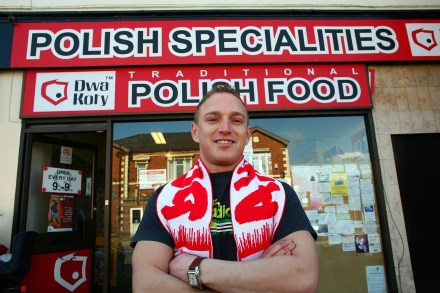
Yes, Britain’s employment figures are strong but most of the rise in employment so far under this government is accounted for by foreign-born workers (as was 99pc of the rise in employment under Labour). The recession has not diminished employers’ appetite for immigrant workers and today’s Sunday Times magazine has a long piece asking whether there is a “fundamental difference in our attitudes to work”. It’s still one of the most important questions in Britain today: what’s the use of economic growth if it doesn’t shorten British dole queues? And should we blame these industrious immigrants; aren’t the Brits just lazy? I’d urge CoffeeHousers to read the whole thing, but one passage jumps out at me.

The political impact of immigration

From our UK edition

It won’t actually come as a surprise to anyone living in London that the census results from the Office of National Statistics this week showed that 'white British' are down to 45 per cent in the capital. There are bits of the capital whose look and feel suggests that the percentage is much higher – well, the figures are from people who filled in the census forms, which isn’t quite the same thing as the actual population. Remember that cover story in The Spectator a couple of months back, based on the premise that London was practically a city-state, radically different from most other parts of the UK?

The easy language of opposition

From our UK edition

Isabel makes an excellent point about Ed Miliband's One Nation spiel. It soothes political minds to talk about society rather than economics, people rather than the state, the common good rather individual utility. Voters like it, too, because globalisation and technology make many of us feel lost and alone. But it is, as Isabel says, an easy language of opposition, even a facile one. In office, reality tends to preclude such grand posturing, particularly in an economic crisis. As it happens, last night I went to an interesting Centre for Social Justice lecture by Jon Cruddas, Labour's policy review chief, on the role of the state in the Good Society. Now I like Cruddas, even if he is a little too inebriated by the exuberance of his own verbosity.

One Nation Labour can’t just be about reassuring voters

From our UK edition

Ed Miliband is giving another one of his repositioning speeches today: this time about immigration and integration. We're going back to the Labour leader's school and his family again, as well as reminiscing about Olympics: none of which are exactly groundbreaking territory, given Ed explored the first two at length in his conference speech, has explored his family history at length in many speeches since becoming leader, and that all three party leaders used the Olympics for their own purposes in their autumn conference speeches. Mo Farah and Jessica Ennis should start charging politicians royalties for using their names in speeches about culture: they appear, alongside Zara Philips, in Miliband's speech today.

The 2011 census proves why politicians are distrusted

From our UK edition

What do people take away from the 2011 census? I cannot help but see the clearest possible reason for why trust of politicians is at an all-time low. Perhaps other voting members of the public remember as far back as 2004 when the Labour government predicted that fewer than 20,000 people would come to Britain from those Eastern European countries given full access to the UK labour market. As of last year the Office of National Statistics confirmed at least 669,000 people from these countries working in the UK. Or they might remember Labour immigration minister Phil Woolas promising in an interview with the Times in 2008 that, ‘It’s been too easy to get into this country in the past and it’s going to get harder.’ Mr Woolas even talked about quotas being brought in.

Tory minister says yes to EU and no to immigration to win at 2015

From our UK edition

David Cameron's Conservative modernisation agenda is struggling. Several of today's front pages highlight how traditional Tory issues — immigration and family values — have returned to the centre stage. And many of Cameron's attempts to modernise his party on big issues (climate change, green energy, gay marriage, HS2) have met with a negative responses. How can he retool his modus operandi to win a Tory a majority at the next general election? Policing and ex-immigration minister Damian Green has a few suggestions. In a speech he will give to Bright Blue this evening, Green suggests Cameron's modernising agenda is not yet an ex-agenda, and can still be refashioned to work in 2015.

Today’s easy question: Why won’t minorities support right-wing parties? – Spectator Blogs

From our UK edition

I'm afraid that I can't help but feel some of the comments left responding to this post go some way towards answering a question Daniel Hannan asked recently: why do right-wing parties struggle to win support from immigrants? After all, and as Mr Hannan notes, emigration is an entrepreneurial act and immigrants tend to be thrifty, hard-working types. This should, all things being equal, be fertile territory for conservatives. Except, as we know, not all things are equal and they're certainly not equal in this case. The truth of the matter is that the conservative movement - whether in the United Kingdom or the United States - still has a race problem.

The Census demonstrates the importance – and benefits – of immigration – Spectator Blogs

From our UK edition

I suppose the confirmation that 13 per cent of the present population of England and Wales were born overseas will be the cause of some eye-brow raising and much spluttering from the usual suspects. It's too late to repel the foreign hordes. They are inside the castle already. Some 7.5 million people born overseas now live in England and Wales (but mainly England). Lucky old England, says I. Immigrants are drawn to and then help create economic prosperity. It is not, I suspect, a coincidence that depressed parts of northern England are also often those parts with the fewest numbers of foreign-born inhabitants. This makes sense: why would you leave Poland to claim benefits in Sunderland? No, you go where the work is.

More left the UK for work in the last year than came here for it

From our UK edition

Net migration to the UK from April 2011 to March 2012 was 183,000, down by a quarter on 242,000 the year before. That's the headline figure from today's Office for National Statistics release, and the government is using it to claim success. Immigration minister Mark Harper said: ‘This shows we are bringing immigration back under control. Our tough policies are taking effect and this marks a significant step towards bringing net migration down from the hundreds of thousands to the tens of thousands by the end of this Parliament.’ But it's worth looking a bit deeper into the figures.

What can Theresa May do to deport Abu Qatada?

From our UK edition

Theresa May gave a defiant statement to the house on the Special Immigration Appeals Committee’s (SIAC)  decision to uphold Abu Qatada’s appeal against deportation to Jordan on grounds that he would not receive a fair trial. She vowed to fight on by ‘appealing the decision’, which prompts the question: how will she do that? It’s necessary to understand what the SIAC considered (here is its judgment and here is a précis). First, it examined whether or not evidence given by Qatada’s former co-defendants in an earlier trial (from which Qatada was absent), Abu Hawsher and Al-Hamasher, is admissible in Qatada’s retrial.