Immigration

What Tory backbenchers want on immigration, and what the PM can give them

From our UK edition

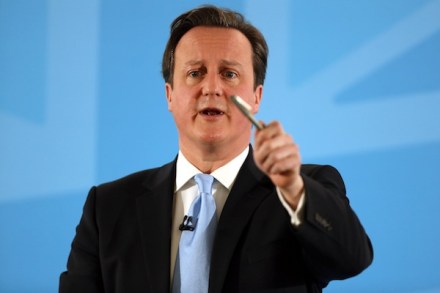
David Cameron knows that immigration is an issue that bothers voters, and that the mainstream parties have snubbed it in recent years to their detriment. So his speech today is partly an attempt to regain ground from UKIP, which fought a campaign in Eastleigh that was all about immigration, bringing every gripe back to that. He also knows, as I explained on Friday, that Tory MPs are preparing for the first dedicated Commons debate on Bulgarian and Romanian migrants, and he wants to take some of the steam out of that by announcing clear measures to reduce the 'pull factor'. Those measures, which the Prime Minister will detail in a speech in Ipswich, include: Cutting access to benefits for non-UK nationals after 6 months.

Europe should shut the door on immigration

From our UK edition

The Prime Minister is giving a speech about immigration on Monday.  I am sure we can all guess the content.  If anybody is interested in a break from this — or indeed if the PM's speech-writers are curious — perhaps I could humbly recommend this debate I took part in a couple of weeks ago in Athens. The motion was 'Europe should shut the door on immigration'.  I used my speech and time in Q&A to explain why although we should not slam the door, let alone lock it, Europe urgently needs to wean ourselves off the habit of mass immigration and, at the very least, to give the door of mass immigration a firm but gentle push.

Migrants debate looms as PM prepares immigration speech

From our UK edition

It's not just Nick Clegg who is having a good long think about immigration at the moment: David Cameron is as well. He's got a big immigration speech on Monday, which shows how spooked the parties are by UKIP that they feel they need to at least address the topic, even if they insist that they're not adopting Nigel Farage's terms of debate. As he writes his speech, Cameron will probably have in mind the looming problem of how many Romanian and Bulgarian migrants are coming to this country when transitional controls lift at the end of 2013. If he doesn't, he should, because that backbench debate from Mark Pritchard on this issue now has a date: 22 April.

Clegg aims for ‘sensible’ 2015 manifesto with immigration speech

From our UK edition

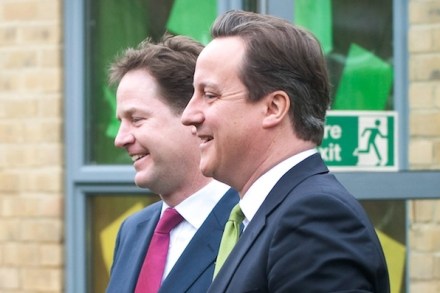
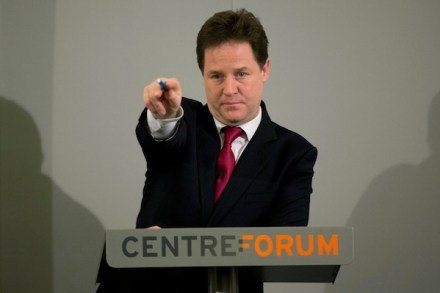
Nick Clegg gave his 'sensible' immigration speech this morning. He started off by agreeing with Labour's Yvette Cooper that politicians shouldn't enter an 'arms race of rhetoric', and then spent a considerable part of the speech either attacking Labour or backing a policy that his own colleagues had previously attacked: a security bond system for immigrants from 'high-risk' countries to cut down on people overstaying their visas. It's also a policy that Theresa May backs. And what he doesn't back anymore is the idea of an amnesty for illegal immigrants, which was a big Lib Dem policy in 2010. Clegg said: 'But despite the policy's aims, it was seen by many people as a reward for those who have broken the law. And so it risked undermining public confidence in the immigration system.

Letters | 7 March 2013

From our UK edition

Gove’s history lessons Sir: ‘The idea that there is a canonical body of knowledge that must be mastered,’ says Professor Jackie Eales, ‘but not questioned, is inconsistent with high standards of education in any age.’ This is not true. Primary education is, or should be, all about just such a body of knowledge. This gives children a foundation of fact, preferably facts learnt by heart. Without it, they cannot begin to reason, and develop valid ideas, in the secondary stage. It may be a tight squeeze to get them through English history up to 1700 by the age of 11, but it is better than not covering the ground at all. The bizarre result of 25 years of the national curriculum is that schoolchildren don’t know English history.

Labour will have to get used to about-turns on policies it opposed

From our UK edition

Yesterday Ed Miliband reiterated his party's existing policies on immigration for voters, today Yvette Cooper went into further detail about how Labour would address the policy area in government. Like Miliband's PPB, Cooper's speech speech to IPPR included an acknowledgement that politicians don't like to talk about immigration, and a mea culpa. She said Labour should have been quicker to bring in the Australian-style points-based system, that the party should have kept transitional controls for Eastern Europe, and that as a government it should have 'looked more at the impact, and been ready to talk about problems.

Germany realises the limits of the EU project

From our UK edition

Britain isn't the only country whose politicians are getting just a little bit jittery about an increase in Bulgarian and Romanian migrants. In this week's Spectator, Rod Liddle examines the German and Dutch response to the lifting of transitional controls. We were enjoined by the Romanians to believe that our fears of being ‘flooded’ or ‘swamped’, or whatever emotive term you wish to use, were greatly overstated, and that the citizens of Romania would prefer to travel to places with which the home country had historic links. Such as, for example, Germany. But that simply isn’t going to happen, is it? The Germans won’t let it happen.

Isn’t Germany’s attitude towards Romania a little at odds with the EU project?

From our UK edition

‘Can you imagine anything worse,’ a Hungarian once said to me, ‘than a Slav who thinks he’s Latin?’ He was referring to the Romanians, of course. There is a certain degree of tension in Romania between the ethnic Romanians, who run the place, and the ethnic Hungarians, who feel that they have been press-ganged into a chaotic and useless country and, worse, forced to learn a stupid language. The Hungarians hole up in the beautiful wilderness of Transylvania, yearning for the old empire and metaphorically spitting upon their political masters. But the enmity dissolves entirely when a third racial group is brought into the equation: the gypsies.

Ed Miliband tries to reassure voters on Labour’s immigration policy, without mentioning the EU

From our UK edition

Today is, according to the party's own institutional memory, the first time Labour has talked about immigration in a party political broadcast. As I blogged yesterday, the party struggles to raise its voice when this policy area is debated in parliament because of the mistakes ministers made on migration when in government. Ed Miliband knows this, and so tonight television audiences across England will be treated to this party political broadcast: The first thing that's clear, aside from the emotional backing music that would be more at home on an animal rescue programme, is that this isn't about announcing big new policies. Miliband announced all of these ideas on English lessons, tougher restrictions and a focus on skills for those competing with migrants back in December.

‘Tell the European Commission to sod off!’: MPs press government on migrants

From our UK edition

'Oooh, your statement was so much more partisan than mine!' Iain Duncan Smith almost said to Stephen Timms this afternoon as the pair sparred over Bulgarian and Romanian migrants. The Work and Pensions Secretary was answering an urgent question from Labour's Frank Field on the government's readiness for the end of transitional controls. The debate veered towards the two men accusing the other of making party political points on this issue, but it also offered those in the House of Commons a number of useful opportunities. The first was an opportunity for the Secretary of State to indulge in just a little bit of Labour-bashing.

How much will Britain change in the next 10 years?

From our UK edition

In the latest issue of Standpoint magazine I have a longish piece on the census for England and Wales. The story made the news for a couple of days at the end of last year, but I thought the census results deserved to be dwelt upon a little longer. I hope readers find it interesting: ‘Imagine yourself back in 2002. The census for England and Wales, compiled the previous year, has just come out, showing the extent to which the country has changed. You decide to extrapolate from the findings and speculate about what the next decade might bring. "The Muslim population of Britain will double in the next ten years," you conclude. "White Britons will become a minority in their own capital city by the end of this decade." How would those statements by your younger self have been greeted?

The daily I miss every day

From our UK edition

Not a day passes in which I don’t regret firing Irena. She was my ‘daily’ from 1991 to 2004. I don’t think I could have asked for anyone better qualified. Until she came to work for me she had been a professor of geology at a Russian university, but she lost her job when the Soviet Union collapsed and became an economic migrant. In spite of this setback, she never displayed any bitterness. On the contrary, she was remarkably stoical — something to do with the Russian soul, no doubt. Her only shortcoming was that she never called me by my correct name. She’d misheard me when I first introduced myself and after I’d let it go for a few weeks I became too embarrassed to correct her.

Barometer | 28 February 2013

From our UK edition

Political joke The Five Star Movement, led by comedian Beppe Grillo, won 26% of the vote in the Italian general election. Comedian John O’Farrell competed as Labour’s candidate in the Eastleigh by-election. Some other comedians who have won office: — Jon Gnarr won Reykjavik’s mayoral election in 2010 with 35% of the vote, on a platform of free towels in swimming pools and putting polar bears in the city’s museum (instead of shooting them). He had previously played a Swedish Marxist in a TV comedy show. — Al Franken was elected to the US Senate for Minnesota in 2009, after a recount. He had previously been a writer for Saturday Night Live and a stand-up comedian.

Falling net migration: a clear policy success?

From our UK edition

The fall of one third in the net immigration statistics announced today is the most significant development since that number rose by 50 per cent in 2004 (unremarked, incidentally, by the BBC at the time). On this occasion the IPPR (and the Migration Observatory) seemed determined to play down the government’s achievement. Certainly there is still a distance to go from today’s 160,000 to the target of tens of thousands but there are another two years in which to reach it. Sarah Mulley argues that the government are laying a trap for themselves because a reduction in student arrivals will lead to a reduction in departures in a few years time.   That would only be true if the fall was in genuine students.

Falling net migration: A trap for future governments?

From our UK edition

Today’s migration statistics show a marked decline in net migration to the UK (down 34 per cent to 163,000 in the year to June 2012). Although this still leaves the Government some way off their target of reducing net migration to less than 100,000 by 2015, ministers will be pleased to be able to say that things are, in their terms, moving in the right direction. But there is a catch, and the simple maths of net migration mean that the current Government may be, wittingly or unwittingly, laying a trap for themselves, or for a future one. Net migration is the difference between immigration and emigration.  So net migration rises if immigration goes up, or if emigration goes down; and falls if immigration goes down, or if emigration goes up.

What the government must do to prepare for Romanian and Bulgarian migrants

From our UK edition

Ministers and MPs are nervous about a mass influx of Romanian and Bulgarian migrants putting the benefit system under strain next year. But ministers should beware, and learn from the political mistakes of the past. The failure to predict the scale of post-2004 migration to the UK from the EU caused major political problems for the Labour government. The public were left with the impression that the government was not in control of immigration and that Labour were contemptuous of public views and that they were even deliberately misleading them. The Conservatives have less to worry about on the second point – polling suggests the public broadly support them on immigration - but they have plenty to worry about on the first.

The Myth of the Immigrant Benefit-Moocher, Part Two

From our UK edition

I am afraid, dear reader, that I have misled you. Yesterday's post on immigrants and benefit-claimants contained an inaccuracy. I repeated a claim I'd seen in the Telegraph that there are almost 14,000 Polish-born people claiming unemployment benefit in Britain. This is not the case. The true picture of Polish benefit-dependency is very different. There are, in fact, fewer than 7,000 Poles claiming the Job Seekers' Allowance. Indeed, there are fewer than 13,000 JSA claimants from the "Accession Eight" countries (Poland, Czech Republic, Hungary, Slovakia, Lithuania, Latvia, Estonia and Slovenia). Whatever else these eastern europeans have been doing in Britain, they've not been mooching off the benefits system. And it is a lie - dirty and simple - to suggest they are.

The Myth of the Immigrant Benefit-Scrounger

From our UK edition

The Sunday Express is at it again. It is outraged that Britain's prisons contain some inmates who were not born in this country. Of course, everyone is hopping aboard the immigrant-bashing bandwagon these days. Immigration, it sometimes seems, is something to be feared, not valued. I understand the political calculation behind all this. The restrictionists have carried the day and there are few votes in seeming "soft" on immigration these days. Which is a shame. But there you have it. Nevertheless, the immigration brouhaha increasingly bears more than a passing resemblance to a moral panic. As tends to be the case, such fears are not utterly groundless but they are hyped and exaggerated to a point at which they become irrational and, even, nonsensical.

Exclusive: MPs could debate controls for Bulgarian and Romanian migrants

From our UK edition

So far, MPs have only been able to raise concerns about the effects of the end of transitional controls for Bulgarian and Romanian migrants in departmental questions in the Commons. But one Tory is calling for a full backbench debate on the issue after recess. I understand that Mark Pritchard wants the government to extend transitional controls beyond 2013. He has applied for a debate, and tells me: 'I am pleased that the government is looking at the pull factors that will draw thousands of Bulgarian and Romanian migrants to the UK. However, time is running out and action rather than words are required. There also needs to be a recognition that there are also push factors and reducing pull factors alone will not be sufficient.

David Cameron’s Immigration Reverse Ferret

From our UK edition

If you seek cheap entertainment, the sight of government ministers defending their immigration policies to the foreign press is always worth a sardonic chuckle or two. And, lo, it came to pass that David Cameron assured Indian TV that, actually and despite the impression his coalition may have given, Her Britannic Majesty's government is jolly keen on bright young Indians coming to the United Kingdom. Which is just as well. If, as the Prime Minister is keen on suggesting, Britain is but one entrant in a keenly competitive "global race" then it makes no sense at all to restrict our selection policy to those born on these sodden islands. The global gene pool is deeper and better than ours. Fortunately, Britain remains an attractive place to study, work and live.