Immigration

There is no such thing as ‘immigrants’ – only Poles, Yanks, Somalis…

From our UK edition

There was much glee about yesterday’s publication of a report into the economic impact of immigration, which concluded eastern Europeans had provided a net benefit of £4.4 billion to the UK economy. There was far less mention of the fact that immigrants from outside Europe in the same period cost the taxpayers £118 billion. But as Christopher Caldwell observed in Reflections on the Revolution in Europe, the immigration debate is not about economics, for ‘the social, spiritual, and political effects of immigration are huge and enduring, while the economic effects are puny and transitory. If, like certain Europeans, you are infuriated by polyglot markets and street signs written in Polish, Urdu, and Arabic, sacrificing 0.

To make asylum work, we’ll have to talk frankly

From our UK edition

[audioplayer src="http://traffic.libsyn.com/spectator/TheViewFrom22_6_Nov_2014_v4.mp3" title="Justin Marozzi, Douglas Murray and Fraser Nelson discuss immigration" startat=53] Listen [/audioplayer]It is the easiest thing in the world to say who should come to Britain and why. But if there are people who should be coming here, then surely there are others who should not? It is through our unwillingness to address the second part of this question that our problems arise. All polls show a majority of the British public want immigration reduced. But our politicians do not know what to do about it. One answer is to be honest. The Canadian and Australian ‘points-based systems’ we often hear about these days is just cover-speak for ‘who we want to let in’.

The shameful truth: Britain lets in far too few refugees

From our UK edition

Pictures from Calais have returned to our television screens, showing desperate men and women trying to break into lorries bound for Britain. A Sudanese man died jumping from a bridge onto a lorry heading for Dover. Another perished after falling from the axles of a bus. The mayor of Calais has blamed Britain for being an ‘El Dorado’ offering aspirational benefits to migrants — but as she’d know, the Africans arriving in her morgues would never have qualified for welfare. They risked death due to a sense of desperation, and hope, that we can scarcely imagine. The same is true in the Mediterranean, where 2,500 have died after embarking on unseaworthy boats heading for Europe. Corpses of Syrians, Egyptians and others now regularly wash up on Italian shores.

What Angela Merkel really wants (it’s not good news for Dave)

From our UK edition

Angela Merkel is misunderstood. Last winter, when Russia moved to annex Crimea after the overthrow of Ukraine’s government, American officials put it about that the German Chancellor had described Russia’s leader Vladimir Putin as ‘living in another world’ and ‘out of touch with reality’. No evidence has emerged that she ever said any such thing. Europhiles in the press and in Westminster have now pulled the same trick on David Cameron. The Prime Minister has lately been ruminating about quotas for migrants from certain European Union countries. He complained last month when an unannounced £1.7 billion upward adjustment in Britain’s EU payment turned out to be triple the levy on anyone else.

Ukip’s Patrick O’Flynn on the ‘genius’ Nigel Farage and why Douglas Carswell’s votes won’t set party policy

From our UK edition

Interviews with Ukip bigwigs used to happen in pubs. But times are changing. When I meet Patrick O’Flynn — the party’s economics spokesman, and until recently chief spin doctor — it’s in a juice bar. O’Flynn, a former political editor of the Daily Express who studied economics at Cambridge, is one of those driving Ukip towards professionalism. Ukip, he says, is the only party he’s ever joined, and it is ‘not part of the Conservative family’. That is why he rates its chances in northern Labour seats: ‘We didn’t close down any coal mines or steelworks and we’re not known as the patrician Home Counties rich people’s party.

PMQs sketch: No poppy for Harman, Miliband on the attack, Cameron in transcendental-parrot mode

From our UK edition

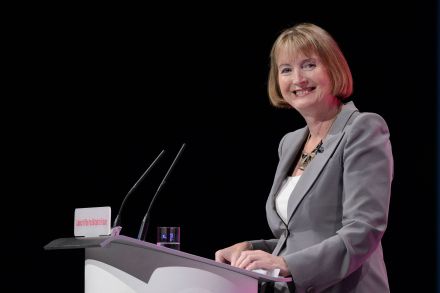
Was that a pop at Hattie? Ed Miliband began PMQs by evoking the centenary of the Great War. ‘We will all be wearing our poppies with particular pride this year,’ he said. And every eye ran along Labour’s front bench to count off the crimson blooms. Balls, poppy. Miliband poppy. Harman, poppy. No, wait. As you were. Harman, no poppy! Her chic, double-breasted grey jacket bore no tribute to the fallen. But I expect it’s a CND thing. All the same, Miliband should send her out to buy one. Tuppence ought to do it. The Labour leader needed a win today. Badly. His poll ratings have dipped to the same level as Gordon Brown’s in 2010, but at least Brown had the excuse of being in a fag-end administration led by a scowling narcissistic tax-junkie.

Lame duck unleashed – Bulgarian in London asks ‘what next’ on US immigration

From our UK edition

London Careening through the city in a minicab last night, en route to a pub in Bloomsbury that had promised to screen US election results, the mustachioed driver confirmed my accent and inquired: 'So, what will happen after the elections?' I issued the run-down: left-ish Democrats lose control of the Senate to right-ish Republicans, who also expand their House majority. The Republican gains won't be enough to have too much fun (for instance, re-reforming health care) without meeting the President's veto pen; but should prove enough to justify more executive action from the White House, bypassing Congress in areas such as immigration and border control, if Mr Obama's pre-election promises can be believed.

‘Swamped’ much? David Blunkett 2014, meet David Blunkett 2002

From our UK edition

[audioplayer src="http://traffic.libsyn.com/spectator/TheViewFrom22_23_Oct_2014_v4.mp3" title="Mats Persson and Matthew Elliott join James Forsyth to discuss Europe and migration."] Listen [/audioplayer] Last week saw an example of the cynicism, not to mention circularity, of our immigration debate that is too important to miss. The former home secretary, David Blunkett, took to the pages of the Daily Mail to support the current defence secretary, Michael Fallon. Mr Fallon, readers will recall, had just been caught in an interview using the ‘swamped’ word to refer to the historically unprecedented levels of immigration that have affected much of Britain in recent years.

Carry on waffling about Europe, Dave – but do the EastEnders approve?

From our UK edition

Having perused the replies for my call to caption Ed Miliband and Mary Creagh, Mr S is sorry to say that there is no 'winner', nor even a 'favourite.' There is merely a non-honourable mention for the response that caused your correspondent to chortle so lustily that I spilled my tea and soaked my smoking jacket. So, for reader 'Samson', no prizes or accolades, but rather a stern gaze for his amusing submission, reposted below. Samson 'These earthlings are ever-displeased with me. Xinipemnan ijsdiih dhhjejndb ghty am I doing wrongly?

Is David Cameron about to make another migration promise he can’t fulfil – and distract from meaningful EU reform?

From our UK edition

It is easy to understand David Cameron’s desire to make a ‘game changing’ speech on EU immigration. Voters are telling pollsters it is the issue that most concerns them, Ukip are breathing down his neck and it could be the swing issue in any future EU referendum. However, he needs to play his cards carefully. By making a ‘big pledge’ on reducing numbers, the risk is that Mr Cameron needlessly raises expectations that are undeliverable and draws attention away from negotiable reforms to EU migrants’ access to the British welfare system that would concretely address the inconsistencies and perverse incentives undermining public confidence in free movement.

The bluffing game between Cameron and Merkel begins…

From our UK edition

We should all get used to reading stories about how Angela Merkel has warned David Cameron that if he persists with X, Y or Z she’ll no longer be able to support Britain staying in the EU. It is the nature of a negotiation that those involved in it will, at points, suggest that they will walk away if the other party continues to demand something. The skill is, obviously, to know whether the other person is bluffing or not. Now as Mats Persson points out, Merkel’s comments are not as definitive as they are being portrayed as in some places. But there is no getting round the fact that Merkel is determined to protect the principle of free movement while Cameron—ideally—would like to impose limits on it.

What Tory MPs remember from their away day

From our UK edition

Two things have stuck in Tory MPs’ minds from their away. The first, that painting of George Osborne. The second, Jim Messina’s presentation and his confidence that the Tories would win.   Messina managed Barack Obama’s 2012 re-election effort and last year, the Tories announced that they had signed him up to advise them. At the time, most people—including several senior Cabinet ministers—regarded it as a press release hire, a good way of tweaking Labour but not much more. But Messina has, perhaps prompted by his great rival from the Obama campaign David Axelrod joining up with Ed Miliband, got more involved in recent months. He was over for Tory conference and flew in to the UK specially to address this away day, as I report in the Mail on Sunday.

Tories on away day put away hopes of winning Rochester

From our UK edition

Tory MPs are in Oxfordshire today for an 'away day'. It's supposed to focus on the autumn statement, but Tory MPs also want to make a few points about the Prime Minister's immigration policies (read Fraser's Telegraph column on the problems with aping Ukip) and others want to complain about the Coalition continuing when the Lib Dems have blocked the EU referendum bill and are complaining about the Tory stance on drugs (this will be in vain, but a good number of backbenchers have told me they want to bring it up anyway). But the funny thing about this away day is that many Tory backbenchers were rather surprised to find themselves travelling to Oxfordshire at all.

How to fight Ukip

From our UK edition

In the 2005 general election this magazine supported the Conservatives, with one exception — we urged voters in Medway not to vote for a deeply unimpressive Tory candidate by the name of Mark Reckless. Our then political editor, Peter Oborne, went so far as to write a pamphlet in support of the Labour rival, Bob Marshall Andrews, who had a commendable record of sticking it to Tony Blair. Reckless, by contrast, had nothing to commend him. He lost by just 213 votes — suggesting that The Spectator’s intervention had been decisive. But nothing, it seems, will prevent Reckless from being elected as Ukip’s second MP in two weeks’ time. The Ukip momentum in Rochester & Strood now looks unstoppable.

PMQs: Immigration arguments mean Ukip won the session without asking a question

From our UK edition

Ed Miliband chose one of his medleys of things that have gone wrong for today's Prime Minister's Questions. There were plenty of those to choose from, and the Labour leader started with the almighty row in the Tory party over the European Arrest Warrant. He accused David Cameron of delaying the vote because of the Rochester and Strood by-election, and offered the Prime Minister next week's Opposition Day debate to hold it, where he said Labour would support him to get the measure through. Cameron was having none of that, though, and pledged that the vote would be held before Rochester. He claimed Miliband's questions had collapsed.

How Maggie’s ‘swamped’ comment crushed the National Front

From our UK edition

The brilliant Matthew Parris writes in his Times column today about Margaret Thatcher using the word 'swamped' in relation to immigration in 1978. We had been averaging 500-700 letters a week when, discussing immigration in a TV interview, Mrs Thatcher used the word “swamped”. In the following week she received about 5,000 letters, almost all in support, almost all reacting to that interview. I had to read them. We were swamped indeed: swamped by racist bilge. It’s the things people confide in you when they think you’re one of them that can be so revealing. But there is another part of this story that Matthew leaves out. On election night in 1979 various experts were lined up to discuss what was expected to be a National Front breakthrough.

Justin Welby: I worry about damage caused by language on immigration

From our UK edition

When Justin Welby spoke to the Parliamentary press gallery today, he took great care to emphasise a number of points. One was about the influence the Church of England has in public debate, and the other was about the church's influence in local communities and the strength of its connections in those communities. He didn't give the impression initially that he didn't want to intervene in the public debate about immigration when asked about it, but then couldn't resist commenting anyway. He told journalists that he was worried about the language in the debate, and that local churches were seeing a rise in racism, which he seemed to think was linked: 'Yes I think with some people we have a duty of care.