Immigration

Universities challenged

From our UK edition

On the face of it, this year’s Nobel Prize awards have been a triumph for British scientists. No fewer than five laureates come from these shores: three physicists, one chemist and an economist. But before anyone starts praising our higher education system, there is one small snag: all five are currently working at US universities. David Thouless, who was awarded half the Physics prize, has followed a typical career path. After taking a degree at Cambridge, he took a PhD at Cornell University and a postdoc at the University of California before heading back to Britain, where he worked for 13 years at the University of Birmingham. There, he started the work that would eventually win him his Nobel prize.

Tory Theresa is Blue Labour at heart

From our UK edition

I never really agreed with the central-thesis of The Hitchhiker’s Guide to the Galaxy — that ‘42’ is the answer to life, the universe and everything. I have no great animus against the number — it does its job, filling that yawning gap between 41 and 43. But I had never thought it actually-special until the beginning of this week. That’s when I read that the Conservative Party was 17 points ahead in the latest opinion polls, on 42 per cent. A remarkable figure. I suppose you can argue that it says more about the current state of the Labour party than it does about Theresa May’s stewardship of the country.

Corbyn leaves Ukip an open goal, and they miss it

From our UK edition

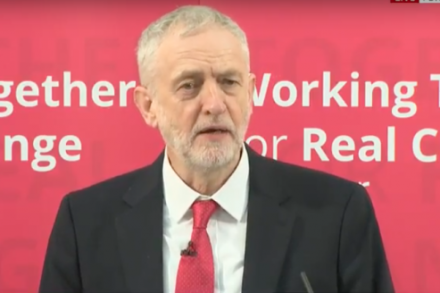
Jeremy Corbyn is taking Labour ever further away from its traditional working class voters in the north and the midlands. As I say in The Sun today, the party now has a leader who didn’t sing the national anthem at St Paul’s, a shadow Chancellor who has praised the IRA, a shadow Home Secretary who thinks promising ‘controls on immigration’ is shameful and a shadow Foreign Secretary who sneers at those who fly the English flag. This presents Ukip with an open goal and a chance to do to Labour in the north and the midlands what the SNP did to in Scotland following the independence referendum. Indeed, half of Labour supporters who backed Brexit already say they won’t vote for the party again.

Where are the ideas?

From our UK edition

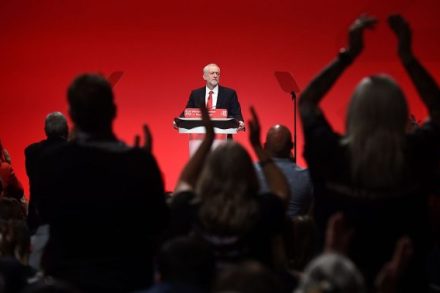
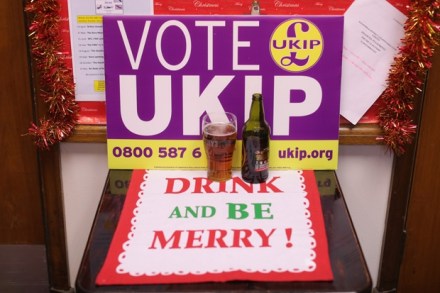
The Conservative party conference in Birmingham this week seemed a remarkably relaxed affair. The European question has been settled. Seldom has victory in the next-election looked more secure. The Labour conference in Liverpool had been a debacle, as the hard left set about picking off the remaining moderates. Diane James has resigned as Ukip leader after 18 days. It’s quite possible that her replacement could transform Ukip into a new working-class party — and then do to Labour in the north of England what the SNP has done to it in Scotland. One cabinet member put it well: the Tory party, he said, was like a piece of elastic that had been stretched much too far under David Cameron but has now been allowed to revert to a more natural position.

Theresa’s Tory love-in

From our UK edition

Theresa May doesn’t use an autocue for her speeches. She feels that reading off a screen at the back of the hall makes it far harder to connect with the audience. But the Prime Minister had no need to worry about her connection with the audience at this conference. Tory activists love her; they regard her as one of their own and are rejoicing at her leadership. ‘The grown ups are back in charge’ was a refrain heard frequently in Birmingham this week. The mood of Tory activists has been further improved by what Mrs May has said about Brexit.

Let the right ones in

From our UK edition

As the UK prepares for Brexit into the big wide world outside, it has been pointed out that the Foreign Office is sadly lacking in people with hard experience of that world, and even more lacking in people from that world. But if the Romans can do it, surely we can too. Whatever else the Romans were, they were not hung up about race. That did not mean they admired all foreigners. The satirist Juvenal was cynical about the Greeks, who would happily turn into anything you wanted them to at the drop of a hat; and doctors observed that different environments produced not only different physical make-ups but also different mentalities — often unattractive ones. But Romans seemed to think that none of that mattered as long as Johnny Foreigner learned the Roman way.

The immigration debate shouldn’t be sugar-coated

From our UK edition

Do you like Skittles? Do you like them so much you'd eat one from a packet even if you knew a couple were poisoned? Makes u think, ey? This was the analogy Donald Trump Jr made this week about refugees and terrorism, a tweet which caused anger, not least from the company that makes Skittles, who responded: 'Skittles are candy. Refugees are people. We don’t feel it’s an appropriate analogy.' https://twitter.com/DonaldJTrumpJr/status/778016283342307328 This particular meme seems to have originated among feminists, who were making the point that it's no good saying that most men aren't violent rapists, because enough of them are to make problems: 'Imagine a bowl of M&Ms. 10 per cent of them are poisoned. Go ahead. Eat a handful.

Letters | 15 September 2016

From our UK edition

What immigration debate? Sir: Henrik Jonsson says (Letters, 10 September) that Swedes ought to learn from the Brits how to maintain a broad and dynamic public debate. I can’t say I witnessed anything approximating public debate on the topic of immigration during the referendum, when the debate was carried out through the ballot box, not in reasonable parliamentary discussion. What we need is for more senior politicians to be willing to engage in public discourse and take a non-careerist approach. Too many leaders have thought it best to avoid this toxic issue rather than risk their positions. As Enoch Powell once described the typical politicians’ view on immigration, ‘It’s better for us to do nothing now and let it happen perhaps after our time.

After Brexit, who should Britain let in?

From our UK edition

Why has ‘trust’ became such a dominant issue in British politics in the early 21st century? Is it the failure to find weapons of mass destruction in Iraq? Or the arrogant ineptitude that led to the financial crisis and the bank bailouts? Or the parliamentary expenses scandal? Or is it, more than the above, the failure of successive governments to meet their immigration targets? Trust in politics will fall to dangerously low levels if-immigration continues as is following this year’s referendum. This is why the government has acknowledged that some control over EU immigration must be part of the Brexit deal. The extent of these restrictions will be key to our agreement with the rest of the EU. The relationship between the Brexit vote and immigration is complex.

Mrs May the ‘Student Killer’ should count the cost of her visa crackdown

From our UK edition

In the post-Brexit landscape whose shape was barely glimpsed in G20 discussions at Hangzhou, one thing is clear: soon we’ll have to stop waffling about trade deals and start pushing British products the world wants to buy. One such is education, at our universities, independent schools and English-language colleges — an export sector calculated in 2011 by the now defunct Department for Business, Innovation and Skills to be worth £17.5 billion. Not only does this sector attract foreign exchange, plug funding gaps for cash-strapped universities and support thousands of jobs, it also lays the ground for future relationships with students who return home to embark on business careers.

What we learnt about Brexit from Theresa May today

From our UK edition

Theresa May began her statement on the G20 by talking about Brexit. She insisted that she wasn’t going to give a ‘running commentary’ or reveal the government’s negotiating hand as, she said, that would not deliver the best deal for Britain. In other words, we’ll all just have to wait and see what she negotiates. May’s insistence that she won’t rule anything in or out does lead to some rather bizarre moments. May repeatedly, and rightly, stressed the trade deals that the UK would seek to do outside the EU. But when Labour’s Emma Reynolds asked her to confirm that these deals would require leaving the customs union, May ducked the question.

Is May dropping the ‘Leave’ campaign’s immigration policy?

From our UK edition

'Brexit means Brexit', Theresa May has repeatedly reassured us. But it seems Brexit might not mean an introduction of a 'points-based' immigration policy which Vote Leave - and a number of cabinet ministers, including Boris Johnson - had called for during the referendum campaign. The Prime Minister said the system was no 'silver bullet' and planned to look 'across the board' for answers instead. As is becoming clearer - and as James Forsyth pointed out after May's Marr interview yesterday - the Prime Minister has a style in front of journalists which involves giving little away.

The Cabinet’s Brexit talk

From our UK edition

So, where are we at on Brexit? Well, we know that Theresa May wants immigration control as part of the deal which essentially rules out a Swiss or Norwegian style deal. But, as I report in The Sun, beyond that little is settled. As one Cabinet Minister said to me after the away day at Chequers this week, ‘The truth is that, at the moment, we’re still in the preparatory stage’. Cabinet Ministers were struck by how open the discussion was at Chequers. Unlike in the Cameron era, there was no early indication as to what the Prime Minister wanted the meeting to conclude. According to those present, one of the most forceful speakers was the Chancellor Philip Hammond. He emphasised that growth would be lower next year.

The Spectator podcast: The Swedish model. How not to welcome refugees | 3 September 2016

From our UK edition

For a certain type of social democrat, no country gets them quite as hot and bothered as Sweden. As Toby Livendell writes in this week's Spectator cover story, Sweden has long regarded itself as a humanitarian superpower, taking in 650,000 asylum seekers in the last 15 years. But by far the biggest issue is integration. And this was brought to stark British attention last week when a Birmingham schoolboy was murdered with a grenade in Gothenburg. So, what has gone wrong in Sweden? To answer that question, Lara Prendergast is joined on the Spectator podcast by Fraser Nelson and Ivar Arpi. Ivar says: 'Basically the Swedish idealism ran into a big wall called reality in the autumn of 2015.

Trump’s immigration rhetoric is more subtle than his opponents realise

From our UK edition

To say Donald Trump ‘double-downed’ last night on his border rhetoric would be an understatement. He went full anti-illegal immigration throttle, and then some. ‘There will be no amnesty,’ he said, and he promised to deport criminal illegal aliens within one hour of his arrival in office. 'We will build a great wall along the southern border,’ he said. 'And Mexico will pay for the wall, 100 per cent. They don’t know it yet, but they’re going to pay for it.' He also invited on to the stage a group of women whose children have been killed by illegal immigrants, the 'Angel Moms’ — a typical, mawkish Trumpian touch. ‘If you don’t vote Trump, we won’t have a country,’ said one of the Moms.

The Spectator podcast: The Swedish model. How not to welcome refugees

From our UK edition

For a certain type of social democrat, no country gets them quite as hot and bothered as Sweden. As Toby Livendell writes in this week's Spectator cover story, Sweden has long regarded itself as a humanitarian superpower, taking in 650,000 asylum seekers in the last 15 years. But by far the biggest issue is integration. And this was brought to stark British attention last week when a Birmingham schoolboy was murdered with a grenade in Gothenburg. So, what has gone wrong in Sweden? To answer that question, Lara Prendergast is joined on the Spectator podcast by Fraser Nelson and Ivar Arpi. Ivar says: 'Basically the Swedish idealism ran into a big wall called reality in the autumn of 2015.

Britain is ready for a mature immigration debate. Is Theresa May?

From our UK edition

You can’t fool all of the people all of the time, said Abraham Lincoln. Theresa May faces a different question: for how long can you string along an entire electorate? She has been a defender of the pledge to cut net migration below 100,000 – a pledge that was adopted in a different era, before the Great Migration got underway. Cameron more or less got away with this – until he didn’t. During the referendum campaign, news that net migration hit 333,000 changed the debate and embodied the point under discussion. Cameron was haunted with this pledge throughout the campaign: how he’ll have regretted not dropping it when he had the chance. But will Mrs May? I look at this in my Daily Telegraph column today.

Barometer | 25 August 2016

From our UK edition

Golden years How many Olympic events would Team GB have to win before we could earn back the gold reserves sold by Gordon Brown? — Olympic gold medals are in fact gold-plated silver and contain only 6g of gold. Between 1999 and 2002 Gordon Brown sold off 395 tons of gold — enough to mint 64.7m medals. Assuming the number of golds on offer at the summer Olympics remains 812, as at Rio, that would mean winning every event at 79,679 Olympiads, taking us to the games of ad 320736. — It would be a different story if, as last happened in 1912, the medals were solid gold. With 500g of gold in each medal, we could achieve the feat by ad 5848.

Letters | 11 August 2016

From our UK edition

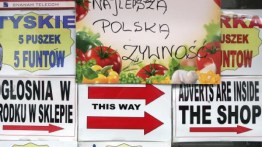
The hate is real Sir: It is clearly an exaggeration to call Britain a bigoted country (‘We are not a hateful nation’, 6 August), but downplaying the recent wave of xenophobic and racist incidents across the UK as ‘somebody shouting something nasty on a bus’ is equally wrong. Verbal abuse in itself is worthy of condemnation, yet the character of recorded harassment is actually much more serious. In the past few weeks, Poles in this country were shocked by vulgar graffiti (West London; Hertfordshire; Portsmouth) and hurtful leaflets (Cambridgeshire) urging them to ‘go home’ in most offensive ways possible, while a family in Plymouth fell victim to an arson attack.

Rome’s border policy

From our UK edition

Whether the EU commission knows what is good for it or not — always a tricky call — post-Brexit Britain should follow Roman practice in intelligently organising its borders. These were not meant to be barriers, but traversable, under Roman control. Take the Red Sea ports. Travellers to and from Egypt were given trackable passes, at a cost, to access both the roads and the ports. Everyone understood the system, and services sprang up along the routes to keep trade flowing. The very presence of Roman soldiers created mini-markets of their own for clothes, food and sex. An inscription records the hire of a prostitute, Procla, to a military outpost for 60 drachmas plus transaction and goods levy (higher than for women in general).