Iceland

A riveting show crammed with the kind of risky gags rarely heard on stage these days

From our UK edition

How To Survive Your Mother is a play based on a memoir by political dramatist Jonathan Maitland. He portrays himself in the show, and he muses on the wisdom of turning his manipulative, devious, sex-mad mother into a dramatic heroine. In the end, he’s swayed by ‘Edinburgh derangement syndrome’ as he calls it. ‘You’re diagnosed with terminal cancer and you think: “Great, there’s a show in this.”’ Maitland’s account of his rackety childhood is crammed with risky gags rarely heard on stage these days His mother, Bru, was a Jewish refugee from Haifa who posed as a Frenchwoman with Spanish roots to protect herself from the anti-Semitic bigotry. Her self-taught skills included seduction, bribery and fake suicide attempts.

Nordic dream or nightmare?: The Mark, by Frida Isberg, reviewed

From our UK edition

Imagine a society, a high-minded psychologist tells his curmudgeonly father, ‘in which people are like cars. They have to go in for inspection once a year’ in order to assess their emotional fitness for the shared highway of life. As for the ‘psychopathic percentage’ whose ‘moral disorders’ lead them to fail this spiritual MoT, never fear: state-funded therapy will get them on the road again. And should they refuse? Surely, as we learn later in The Mark, everyone longs to stand ‘on the right side of history’. The Nordic dream of close-knit, high-trust, mutually supportive welfare societies has always had its internal critics: mavericks, naysayers and backsliders, who prize autonomy beyond, even against, community.

Iceland’s scenery takes your breath away – but so do the prices

From our UK edition

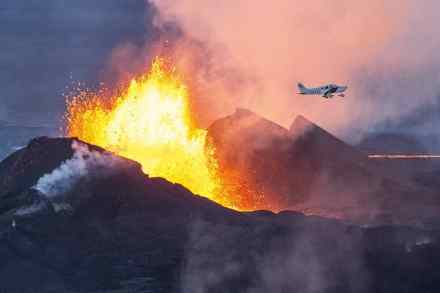
I’m writing this on the plane back from Iceland, a fact that fills me with relief. Not because I didn’t enjoy my trip to the land of fire and ice – far from it – but because there was a serious risk I might be stuck there indefinitely with Caroline and my three sons. In the 24 hours before our departure, nearly 4,000 earthquakes were detected in the southwestern region known as the Reykjanes peninsula, which is where the international airport is located. Such unusual seismic activity is often a sign that a volcano is about to erupt and that, in turn, can create an ash cloud that necessitates the grounding of all aircraft, as happened in 2011. There are worse places to be stranded, of course.

Thai-celand: how southeast Asian cuisine took over Reykjavik

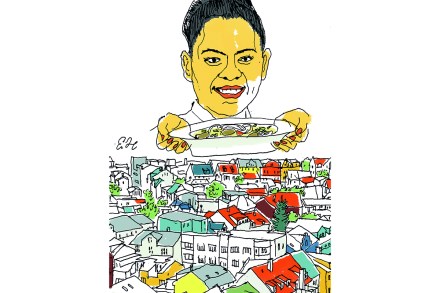
Last October I flew to Reykjavik for a spa weekend among the volcanic lagoons. It sounded blissful, but the reality was strange and, in some ways, downright alarming. This was back when people still cared about Covid, and no one seemed to care more about Covid than the Icelanders (even though the data suggested that barely anyone there had the virus). You might imagine their reaction when someone collapsed on an incoming plane. That someone was me. I didn’t have Covid and had multiple PCR tests to prove it. What I had was a bout of vertigo so bad that I initially thought the plane was crashing. I managed to tell the Icelandic stewards, “I’m fine, really, it’s just vertigo.” One of them said to the other, “We’ll give her the injection, pull her pants down.

reykjavik

My Icelandic holiday with Kevin and Perry

From our UK edition

I’m currently on holiday in Iceland. I say ‘holiday’, but I’m with my three teenage sons so it’s more like being a supply teacher on a school trip. The scenery looks like a series of illustrations in a geography textbook – volcano, tectonic plate, glacier – but so far the boys aren’t impressed. ‘Every day is the same,’ said 17-year-old Ludo. ‘We wake up, drive somewhere, go on a walk, take pictures of a waterfall or a lava field, then walk back again.’ This produced murmurs of agreement. I told them they’d enjoy the sightseeing more if they looked up from their phones occasionally, but I don’t think this cut through.

I failed my country at COP

From our UK edition

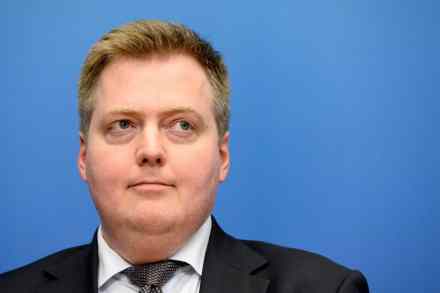
I’m on my way to Glasgow for COP26. It’s the first time I have been abroad since before Covid. Conveniently enough I had already decided to visit the UK for other reasons and that gives me a chance to travel to Edinburgh by train (there’s no accommodation available in Glasgow). I will be able to tell everyone that I arrived by train. Hopefully no-one will ask how I got from my island country in the first place (it wasn’t by sailboat). This will be my second COP conference. Previously I attended Paris 2015 as prime minister. Since then, I have publicly apologised for not having been more critical at the time.

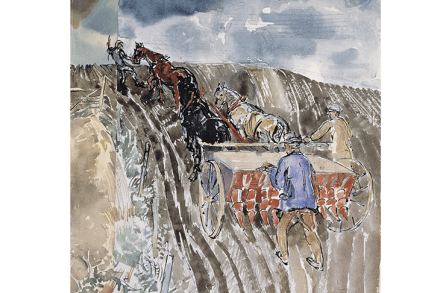
Ghosts in a landscape: farming life through the eyes of Thomas Hennell

From our UK edition

Thomas Hennell is one of that generation of painters born in 1903 whose collective achievements are such an adornment of modern British art. Among his contemporaries are Edward Bawden, Richard Eurich, John Piper, Eric Ravilious and Graham Sutherland. Some of these have been over-praised (Sutherland’s reputation was unhelpfully inflated for many years, then suffered a crash), others underrated, such as Eurich. In the current mood of reassessment, careers and deeds are being looked at again, and Hennell has benefited accordingly. Jessica Kilburn’s hefty book is very tangible evidence of this.

The Kondo effect in politics

The decluttering crusade of home-organizing guru Marie Kondo has taken on a life of its own. Kondo’s effort to shame us into tidying up our drawers, closets and desk spaces began as a harmless inanity. But it’s now intruding nefariously into every realm of existence. First, we were told that folding our underwear would spark joy in our lives. Now, we face a proliferation of magazine articles advising us to declutter ourselves of ‘unnecessary’ or ‘toxic’ friends. Clearly, not all friendships are healthy. But these assessments appear driven by market forces: they focus on what you can gain from a friend in terms of efficiencies and profit. Where does it stop?

kondo

I have never cared more about the price of milk in Iceland: The County reviewed

From our UK edition

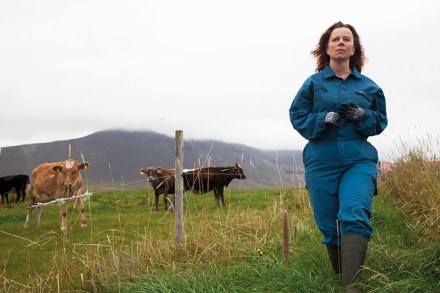
You may be asking yourself: have I reached that point in lockdown where I’m watching Icelandic dramas about the price of milk? Yes, you have, is the short answer. But let me qualify that with: if you are going to watch Icelandic dramas about the price of milk, The County is a good choice. And surprisingly involving. Or, to put it another way: I have never cared more about the price of milk in Iceland and it may be I’ll never care as much about the price of milk in Iceland again. Although you never know.

We should be watching Chinese meddling, not Russian

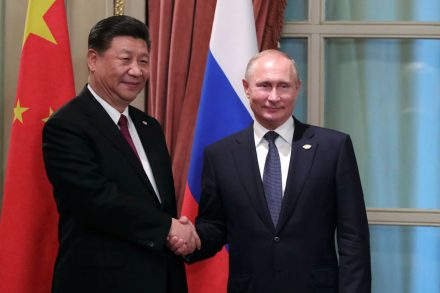
‘Russian influence’ is everywhere these days, especially if you’re a liberal. From the White House to Brexit, the Donbass to the Baltics, the specter of Russian expansionism is inescapable in the news. But have Western media identified the wrong zeitgeist? For a malevolent power, Russia is all too conspicuous. Real mastery of subterfuge entails a degree of subtlety. ‘Russia is very aggressive...up-in-your face,’ says Donald N. Jensen, of the Center for European Policy Analysis. ‘China seems to be a bit more discreet...even when it fails, you don’t really know it.’ Chinese meddling may go unnoticed in Europe and North America, but it is more conspicuous in Australia and New Zealand.

chinese meddling