Hungary

Baron Wenckheim’s Homecoming is a long, hard slog

From our UK edition

The Hungarian writer László Krasznahorkai, who sounds like a sneeze and reads like a fever, is on a mission to build our collective stamina. His novels have always resisted easy interpretation, with their page-long sentences and catastrophic air, and in his ‘most popular’ book, Satantango, the clanging language and doomy setting worked to great effect. Now Krasznahorkai, who won the Man Booker International Prize in 2015, has declared that that book was the first in a quartet, which is now completed with Baron Wenckheim’s Homecoming, his longest novel yet, translated by Ottilie Mulzet. ‘With this novel I can prove that I really wrote just one book in my life.
Hungary isn’t afraid to call ‘Christian persecution’ what it is

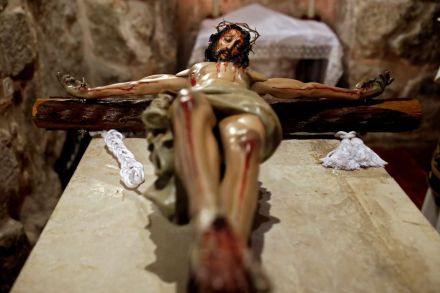
Following Donald Trump’s election, there was hope that the US would aid Christian communities overseas, especially in Iraq where the population of Christians was reduced by over 80 percent since the US invasion. The Obama administration was less receptive to a focus on persecuted Christians, often opting to use euphemistic terms. Christian persecution became known more as a series of sporadic, unrelated incidents rather than a phenomena. The US has invested significantly in helping rebuild Iraq, but the effectiveness of our aid has been limited, and some people on the ground in Iraq claim they never saw the entirety of the aid themselves.

hungary christians

Roger Scruton on Soros and Hungary

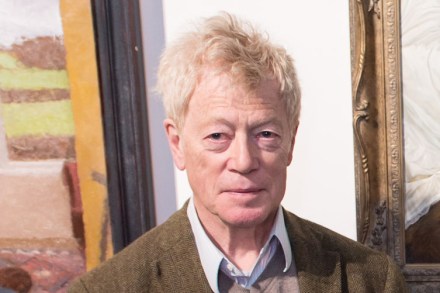
‘It’s complete nonsense,’ Sir Roger Scruton told me last November. ‘It’s all fine. It’s only social media, isn’t it?’We were talking after the British government had appointed Scruton, Britain’s most eminent public intellectual, as the unpaid chairman of the Building Better, Building Beautiful commission. The appointment had unleashed a wave of outrage from the hard left — which, this being the age of Jeremy Corbyn, is also Her Majesty’s Opposition. Scruton was assailed as a homophobe, an apologist for date rape and eugenics, and, in a touching display of interfaith harmony, as both anti-Semitic and an Islamophobic. All of the accusations selectively misrepresented his statements, sometimes to the point of fiction.

roger scruton soros hungary

Bibi blows up Israel’s Central European alliance

Nationalism is a supremely powerful force in politics, but it’s perennially difficult to forge lasting alliances between competing nationalisms – as this week’s news demonstrates yet again. No country has benefited more from the growing split between Brussels and the European Union’s formerly Communist member states than Israel. In Warsaw, Budapest, Prague, and Bratislava, Prime Minister Benjamin Netanyahu found receptive European audiences, which Israel needed as the EU has soured on Israel’s occupation policies towards the Palestinians and increasingly aggressive rhetoric towards Iran. Netanyahu invested in these new relationships, which were based in more than mere convenience.

bibi warsaw

Breaking his silence

From our UK edition

Arriving in Budapest, I receive a summons I cannot refuse. Gyorgy Kurtag wants to see me. Famously elusive, the last of the living avant-gardists is about to present his first opera at La Scala Milan this month and, if past form is anything to go by, he’s unlikely to utter much about it beyond a cryptic Magyar aphorism. Kurtag is 92 and his Scala opera — Fin de Partie, after Samuel Beckett’s Endgame — is a hefty 450 pages long, which may be as much music as he has written in half a lifetime. So why is this master miniaturist — famous for compressing his ideas down to a few chords — submitting a vast opera to the unforgiving glare of an Italian first-night audience?

Tory apologists for Viktor Orbán should be ashamed of themselves

From our UK edition

To think they said Brexit would cost us friends. The UK Government has found itself a new chum in Viktor Orbán, Hungarian prime minister and global alt-right pin-up. Last week, the European Parliament voted to initiate Article 7 proceedings against Hungary, citing its lurch towards authoritarianism. Fifteen Tory MEPs voted against while a further two abstained. Scotland’s Baroness Mobarik was the only one to break ranks. Makes you proud to be British. Article 7.

Tory MEPs were right not to denounce Viktor Orban

From our UK edition

You would never know it from the shrill media coverage, but Tory MEPs’ refusal to back the EU’s censure of Viktor Orban’s Hungary is one of the most principled things they have ever done. They are, of course, being denounced as Orban apologists, as cheerleaders for the authoritarian turn Hungary has taken under his prime ministership. Nonsense. They have taken a stand against authoritarianism. Against the authoritarianism of the European Union, whose technocratic arrogance has now reached such dizzy heights that it presumes the moral authority to punish nation states for doing what their own people, the electorate, have asked them to do. That is a far greater crime against democracy than any committed by Orban.

Hungarian rhapsody | 26 April 2018

From our UK edition

The wines of Tokaji run like a golden thread through Hungarian history. There are references to their nectar-like quality in the Hungarian national anthem. Imperial Tokaji, the world’s sweetest wine, has always been prized. As its name implies, much of it found its way to the Habsburgs’ cellars. Emperors often used it as birthday or Christmas presents for fellow monarchs. So I was delighted to taste some non-imperial bottles over dinner at the Hungarian embassy, courtesy of that impressive fellow Kristóf Szalay--Bobrovniczky, the ambassador, a good friend of President Orbán’s. Mr Orbán is much demonised. Along with President Trump and Brexit, he is seen to be a threat to the Fifth International: the pseudo-liberal bureaucratic one.

Viktor Orban and Hungary’s muzzled media

From our UK edition

There are several ingredients for a successful democracy: the rule of law, opposition parties working without harassment, and a free press able to discuss every issue from every angle. Viktor Orban won a landslide victory in Hungary’s elections last weekend, reflecting public support that is far wider than his critics allow. But was it the result of a free and fair debate? This week, the last serious independent Hungarian daily newspaper closed. Magyar Nemet — and its sister radio station Lanchid Radio — have been unable to recover from financial problems which have been exacerbated by government advertising being withdrawn from troublesome newspapers and ploughed into friendly ones.

Crisis of conscience

From our UK edition

In 1989, the year Soviet communism collapsed, John O’Sullivan, Margaret Thatcher’s former speechwriter, gave the world O’Sullivan’s First Law of Politics. ‘All organisations that are not actually right wing,’ he pronounced, ‘will over time become left wing.’ No one who watched Amnesty International’s descent from austere principle to cultural relativism can deny he spoke with a little truth. Yet if you listened carefully, you also caught notes of self-satisfaction and self-regard. Subversives corrupt impartial organisations, O’Sullivan continued. They rig the system and impose their prejudices against ‘private profit, business, making money, the current organisation of society and, by extension, the Western world’.

The Spectator Podcast: The fight for Europe

From our UK edition

On this week’s episode, we look at the emerging ambitions of the Visegrád Four in a new Europe. We also look at whether there’s a way out of the government’s current drift, and celebrate 70 years of radio’s finest quiz. This week’s cover story looks at growing friction between two European factions. On one side, the Macron and Merkel led federalists are looking for greater integration, whilst, on the other, the Visegrád Four are starting to reassert their anti-immigration stance. Will the alliance hold, asks John O’Sullivan in the magazine, and can it arrest the momentum of the EU project?

George Soros vs the nation state

From our UK edition

Freedom House is a remarkable and largely admirable organisation. Over the years it has done some great work challenging governments with a tendency towards the authoritarian. Yet its attacks on the government of Hungary are increasingly off-kilter. Regular readers will recall that the Hungarian government differs from the German government in believing that it is not desirable to invite the entire developing world to come and live in your country. The Hungarian government – led by Prime Minister Viktor Orban – also differs from the views of Hungary’s wealthiest son, George Soros, who along with the numerous NGOs that he funds has spent recent years undermining the borders of Europe, and specifically the borders of Hungary.

Life classes

From our UK edition

It has taken much of a celebrated literary life for Elif Batuman to produce a novel. At the beginning of her wonderful 2010 book The Possessed —a chimera of memoir, travelogue and literary criticism — she declares: I remember believing firmly that the best novels drew their material and inspiration exclusively from life... and that, as an aspiring novelist, I should therefore try not to read too many novels. Selin, the Turkish-American protagonist of her first novel, is engaged in gathering writerly experience at Harvard, reading novels and falling for Ivan, a Hungarian mathematics student with a girlfriend. The pair begin an online relationship at the dawn of email.

High life | 9 March 2017

From our UK edition

A lousy fortnight if ever there was one. Two great friends, Lord Belhaven and Stenton and Aleko Goulandris, had their 90th birthday celebrations, and I missed both shindigs because of this damn bug. Lord Belhaven’s was in London, at the Polish Club, but flying there was verboten. Robin Belhaven is an old Etonian, served as an officer in Northern Ireland, farmed in Scotland, and has four children, eight grandchildren and one great-grandchild. He spent 35 years in the House of Lords when that institution was a responsible arm of the government and not a cesspool full of smarmy lawyers.

High life | 16 February 2017

From our UK edition

Gstaad One’s unpopularity on account of calling it a night diminishes in direct proportion to the severity of the next morning’s hangover. I was literally booed by Geoffrey Moore and co. for asking the wife of a friend to drive me 200 yards to my chalet. Co., not Geoffrey, had other plans for the lady, and I will give you, the readers, two guesses what those plans were. It was 5.30 a.m., the friend’s wife did look awfully charming — desirable is closer to the truth — and co. was getting touchy-feely, so I opened my big mouth and asked her to drive me home. The next day, all sorts of people thanked me rather profusely for ending the party. Starting with her hubbie, who was home babysitting. (Fool.

High life | 3 November 2016

From our UK edition

Sixty years ago this week all hell broke loose: Soviet tanks rumbled into Budapest and put down a nationalist uprising in a very bloody manner. Down south Anglo-French paratroopers jumped into the Sinai and, in cahoots with the Israelis, took over the Suez Canal in a last gasp of colonialism by the Europeans. And in Washington DC a very peed-off President Eisenhower ordered the Anglo-French to go home or else. They went home and only the Israelis howled that Ike was an anti-Semite and many other things. And where was your intrepid foreign (future High life) correspondent while all this was going on? On an aeroplane flying from New York to Bermuda for a tennis tournament.

The new reality on immigration

From our UK edition

The good people of Hungary went to the polls on Sunday and voted by more than 98 per cent against accepting even a few hundred migrants, as per the European Union’s insistence. That poll result must have been gravid with nostalgia for Magyars over the age of about 35. They will remember that sort of election result being de rigueur, rather than astonishing. Indeed, in 1985 the Hungarian Socialist Workers Party succeeded in capturing 98.8 per cent of the popular vote — and even this was a bit of a disappointment, because in 1980 it had pulled in 99.3 per cent. On both occasions the ruling party was aided, of course, by the lack of an alternative on the ballot paper.

This is what a xenophobic referendum actually looks like

From our UK edition

A country votes against the EU in a referendum in which rabidly anti-immigrant sentiments are aired by senior politicians. That is Hungary, of course, where voters have just rejected -- with a majority of 98 per cent, albeit it on a turnout of 44 per cent, too low to make it binding  -- an EU plan for the country to house 1200 refugees. Now, perhaps, the Remain camp in Britain will stop trying to portray Britain as a nasty, xenophobic country out of step with European values and admit that actually we are really rather liberal in our attitudes towards migration. The only difference is that we had an in-out referendum on EU membership and no other country has yet done so.

Eden’s folly

From our UK edition

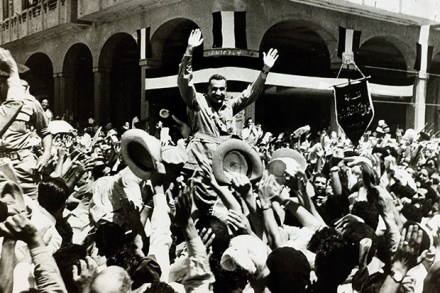
Until it was overtaken by the still more disastrous debacle in Iraq, the Suez Crisis of 1956 was widely judged to be Britain’s worst postwar foreign blunder. Not only, to use Talleyrand’s phrase, a crime, but an error of monumental proportions. The deceitful plot by Britain and France, in secret collusion with Israel, to invade Egypt disguised as peacemakers; restore the recently nationalised Suez Canal to western control; and overthrow Egypt’s charismatic nationalist leader Gamal Abdel Nasser into the bargain, went horribly and fatally wrong. Britain’s humiliating retreat, forced by a disapproving United States, marked the effective end of both the British and French empires, and raised the US to undisputed hegemony over the non-communist world.

Filming the Final Solution

From our UK edition

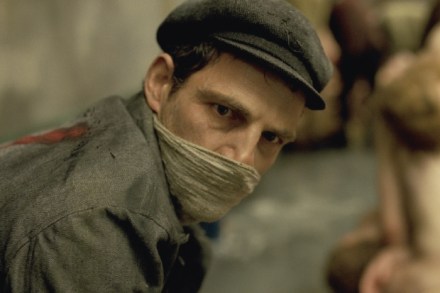
In July 1986, nine months before he died, I met the Italian author and Auschwitz survivor Primo Levi at his home in Turin. He was in shirtsleeves for the interview and the concentration camp tattoo 174517 was visible on his left forearm. (‘A typical German talent for classification,’ he tartly observed.) If This is a Man, Levi’s chronicle of survival, offers a warning to those who deliver facile judgments of condemnation: only those who have survived the Nazi camps have the right to forgive or condemn. Attempts to recreate the Final Solution on screen were mostly a ‘macabre indecency’, said Levi.