Human rights

Cameron breaks from the norm at PMQs

From our UK edition

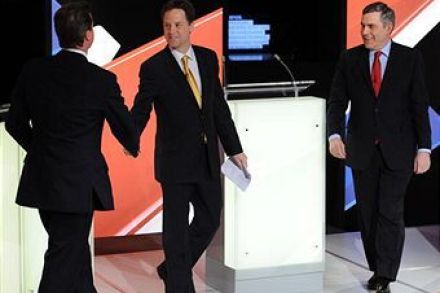
PMQs today contained a rare moment: the Prime Minister admitting that he wasn’t happy with government policy. Ed Miliband, who split his questions up this week, asked Cameron if he was happy with his position on forestry and Cameron replied, ‘the short answer to that is no.’ The answer rather drew the sting from the rest of Miliband’s questions on the topic. But it was a rather embarrassing admission for the PM to have to make.    Cameron made quite a lot of news at the despatch box this week. He accused Manchester City Council of making “politically driven” cuts, said that more regulations needed to be scrapped and announced that a commission on the British bill of rights is imminent.

From the archives: parliament versus the ECHR

From our UK edition

Yesterday, parliament asserted its supremacy before the European Court of Human Rights. As Ross Clark explains, it has been a long time coming. The Final Indignity, 10th November 2001 by Ross Clark It wasn't so long ago that the very mention of the words 'European Convention on Human Rights' in conservative circles was enough to provoke frothing at the mouth. Of all the horrors to emanate from the Continent, here was the final humiliation: British ministers ordered around by the bigwigs of European justice. No longer would we be able to beat our children or tell them that they can't wear earrings and Motorhead T-shirts to their Latin lessons. Murderers, rapists and all would be let loose on the streets, their incarceration ruled illegal on some technicality.

In their own words…

From our UK edition

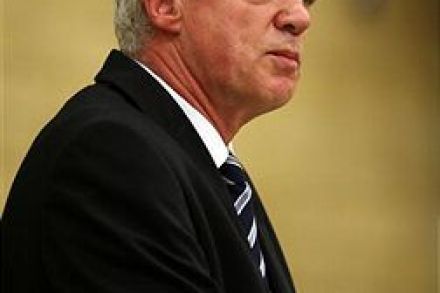
Parliament will debate a prisoner’s right to vote tonight, to satisfy the ECHR’s now infamous judgement. Jack Straw and David Davis, the progenitors of tonight’s discussion, have taken time to explain why they believe the ECHR does not have the right to dictate to sovereign states on such matters. Writing for Con Home, Davis has constructed an impassioned polemic, decrying the British government’s ‘pusillanimous culture of concession’. Essentially, Jack Straw is making the same argument, albeit with precise procedural insight. He writes (£): ‘But is there some contradiction between my support for the HRA and my criticism of the Strasbourg court’s judgment in this case? Not at all.

Parliament is expected to deny prisoners the right to vote

From our UK edition

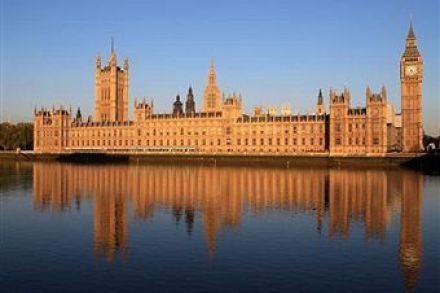
These are hard times for the government and there is no respite. Today, parliament will debate a prisoner’s right to vote, in accordance with the wishes of the resented European Court of Human Rights. The Guardian’s Patrick Wintour writes what many suspect: on the back of a free vote, the House will deny prisoners the right to vote in all cases and outlaw compensation claims. Such a result would seem a set-back for the government, which was thought to favour a limited franchise on prisoner voting. If it became law, then the government would apparently be at odds with the ECHR - precipitating an ignominious procession of grasping lags, searching for compensation at Strasbourg.

Davis and Straw unite against prisoner voting rights

From our UK edition

David Davis and Jack Straw have joined forces to resist the enforcement of prisoner voting rights, an emotive issue bequeathed to the hapless coalition by the previous government. Beside the obvious moral question concerning prisoners’ rights, Davis hopes to open a second front in the struggle over sovereignty with the European Union. He told Politics Home: ‘There are two main issues here. First is whether or not it is moral or even decent to give the vote to rapists, violent offenders or sex offenders. The second is whether it is proper for the European court to overrule a Parliament.’ Unless Davis has confused his articles, his second point is invalid. This decision has nothing to do with the European Court or the European Union.

The right has little cause for alarm

From our UK edition

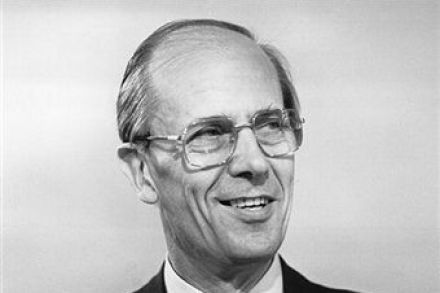
It is to his credit that nuance is a word inimical to Lord Tebbitt. The unashamedly independent voice of the past has written a cutting piece about the coalition, the Lib Dems and the Oldham East by-election. He says: ‘A Lib Dem win would tilt the Coalition even farther Left and away from Conservative policies.’ Many Tory ministers joke that they thought themselves right wing until meeting their Liberal colleague. This is a radical government that many on the right can cheer.

Laughing Mohammad Larijani, the Comical Ali of Iran

From our UK edition

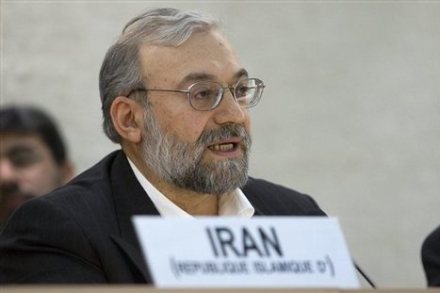
In the week when the Iranian regime forced Sakineh Mohammadi Ashtiani to goulishly re-enact the murder of her husband on TV, it is worth reading Newsweek's interview with Mohammad Javad Larijani, a regime insider. His answers call to mind Comical Ali, whose delusional denials of the US advance in Iraq made everyone realise how detached from reality Saddam Hussein's regime really was. First on the matter of torture, routinely said by the UN, former prisoners and defectors to be used by Iranian officials: "Torture is forbidden by the Constitution. Any law officer who tortures civilians will meet a very harsh punishment." Of course, he admits, the Iranian system could "need refinements," but over-all it is full of checks and balances.

The strange case of Turkey, Islamic history and V.S. Naipaul

From our UK edition

Nobel laureate V.S. Naipaul has pulled out of the European Writers’ Parliament in Istanbul, following pressure from Turkish writers who felt ‘uneasy’ about comments he had made about Islam in 2001. Naipaul compared Islam to colonialism, arguing that both had had ‘a calamitous effect on converted peoples. To be converted you have to destroy your past, destroy your history. You have to stamp on it, you have to say 'my ancestral culture does not exist, it doesn't matter.’ Naipaul’s comments concern the factual context of Islam’s expansion between the 7th and 17th centuries, hence the comparison with colonialism.

The Foreign Office responds

From our UK edition

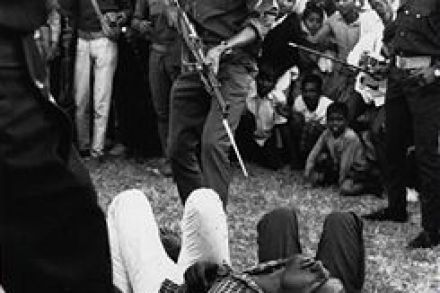
I have just received some answers from the Foreign Office about the Bangladesh war crimes tribunal. I asked if William Hague had sent a letter to his counterpart in Bangladesh saying that there were no war criminals from the 1971 independence war in Britain. A spokesman said that while they did not comment on leaked documents, the following points could be made with reference to the war crimes trials currently taking place in Bangladesh: 1) The UK wants to see all war criminals brought to justice.

Could Burma’s sham election bring real change?

From our UK edition

For the first time since 1990, Burma went to the polls. Though the final results have not been released, most regard the election as a sham meant to cement military rule, with complex election rules put in place to exclude opposition candidates as well as interference from the junta in the campaign and a ban on foreign reporting.   Senior General Than Shwe and his camouflage-clad cohorts are likely to get away with the electoral theft. Nearly all of Burma’s neighbours -– Thailand, India and China included -– are willing to ignore the regime’s failings to obtain commercial benefits.  As The Telegraph has reported, Chinese investment in Burma stands at over £5 billion; China is particularly interested in Burmese oil and gas.

When public safety is threatened, strikes should be banned

From our UK edition

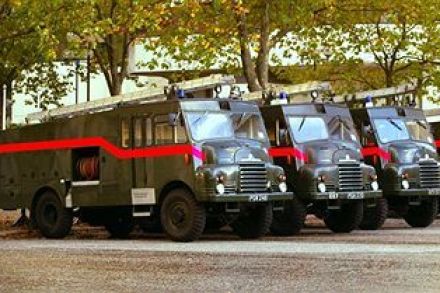
The Fire Brigade’s Union (FBU) have called for strike action in London during the busiest firefighting night of the year: Bonfire Night.  Attempts to renegotiate work patterns (already changed in several fire brigades but unchanged in London for thirty years) have been hysterically termed ‘sacking’ all London firefighters by the union.  Rather like the threatened British Airways strike during Christmas 2009, this is a clear attempt by a trade union to use its monopoly power to force an employer into accepting its terms by inflicting maximum possible damage on the general public.   This is clearly worse than a normal strike, however.  If, say, all Asda employees went on strike, we could shop at Tesco or another supermarket.

Preparing for a Nuclear Iran

From our UK edition

That's the message of the US's forthcoming $60bn arms-deal with Saudi Arabia. Or so says David Rothkopf anyway: [T]he reason that the U.S. government -- that would not have done a deal like this in the years right after 9/11 -- is willing and even a little eager to move ahead with the deal now is that the War on Terror is being overtaken among top U.S. concerns by the advent of a nuclear Iran.  Now, you may quibble by pointing out that Iran does not yet have nuclear weapons. But this is a purely academic argument. This deal is the latest example of behavior suggesting that the nuclearization of Iran is all over but for the bomb building in the eyes of U.S. and regional strategists. [...

The coalition’s inept EU referendum lock

From our UK edition

At least this government is honest. ‘There will be,’ Europe Minister David Lidington says, ‘no referendum on the transfer of competence or power from the UK to the EU during this Parliament’. The government will ensure that there are no more EU power transfer treaties; but, as Douglas Carswell, Tim Montgomerie, and Bill Cash all note, the Lisbon Treaty is self-ratifying. The EU has already picked the coalition’s lock and garnered new powers for itself – notably the extension of the EU arrest warrant. The EU could be an economic superblock with the muscle to influence the globe strategically and culturally. But its current political operation is unnecessary and deplorably un-democratic.

The body in the snow

From our UK edition

A word is missing from the subtitle of Jonathan Green’s shocking exposé: cowardice. A word is missing from the subtitle of Jonathan Green’s shocking exposé: cowardice. It shines out of his story of the murder of the 17-year-old Tibetan nun, Kelsang Namtso. It happened on 30 September 2006, at the base camp on Cho Oyu in Tibet, the sixth highest peak in the world. Forty teams of Westerners, who had paid up to $20,000 each for the trip, waited there for their turns to climb. To make the wait more comfortable, hundreds of yaks and porters had carried quantities of wine, sushi, TV films, pregnancy-testing kits, condoms and M&Ms to about 20,000 feet.

Gary McKinnon should convert to radical Islam

From our UK edition

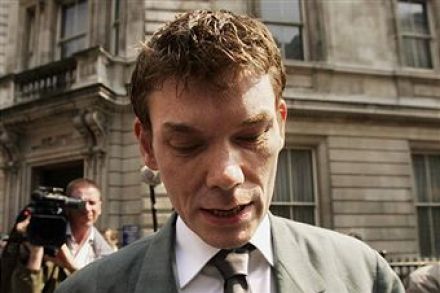
The European Court of Human Rights is an essential check on executive excess, but today it has perverted justice. It has halted Abu Hamza’s extradition to the US, where he was to be tried for colluding with al Qaeda. Its view was that Hamza would likely be subject to inhumane and degrading incarceration. In other words, the ECHR has decided that the US prison system is not compatible with the standards agreed by signatories to the European Convention on Human Rights. Fine. Except, of course, it has not. There is a pernicious double standard at work here. Gary McKinnon, the aspergers sufferer who hacked into the Pentagon’s computer systems, is to be deported to the US.

Sign of the times | 28 June 2010

From our UK edition

This week’s New Yorker has a little piece about Cherie Blair’s efforts to get an International Widows’ day recognised. Most of it is about Blair doing the diplomatic rounds, she compares the process to the one for trying to win the Olympics for London. But there is an interesting anecdote about what happened when the Blairs were both looking for chambers to join: “When Tony and I were looking for jobs, they said they had a boy and a girl and they couldn’t possibly take another girl, so I went to another chambers, and Tony was taken on.” It is easy sometimes to forget just how much things have changed in the past thirty odd years.

May calls for culture change towards LGB&T groups

From our UK edition

Theresa May has called for ‘culture change’ in wider society to ease the equality and acceptance of lesbian, gay, bi-sexual and transgender minorities. Abstractions are the executive’s favoured metier these days. I’ve read and re-read May’s article in Pink News and nowhere does she define ‘culture change’. The end product of a culture change towards LGB&T groups might be envisaged, but how is it initiated? The government cannot answer that question, beyond suggesting that supporting pride marches is positive. True, but society is more than a pride march. It exists in the daily confusion caused by ill-defined laws, such as who B&B owners let into their homes/businesses.

A Human Rights Minister?

From our UK edition

Britain’s role in protecting the downtrodden and protecting the weak has significant historical pedigree. The British role in abolishing the international slave trade was one of the first liberal interventions. And as Abigail Green's biography shows, Britain’s Sir Moses Montefiore was not just a pre-eminent Jewish figure of the nineteenth century, but his pioneering approach to the problem of Jewish persecution helped transform the international response to abuses of human rights. No party, though, is going to the election with the kind of commitment to promote human rights abroad as Robin Cook did when he unveiled his ideas for an “ethical” foreign policy. This is hardly a surprise.

The Gita Saghal Saga Continued

From our UK edition

I have no doubt that history will vindicate Gita Sahgal in her decision to challenge Amnesty International over its relationship with former Guantanamo detainee Moazzam Begg and his organisation Cage Prisoners.  She has now left her job, as The Times reports today. This will be a great loss to Amnesty, which has lost a deeply respected figure in international human rights, especially in the field of women's rights and the threat of authoritarian Islam.  I can't really better Oliver Kamm's analysis of how damaging this is for Amnesty: "Its critics charge that it has diluted its defence of universal human rights by allying with a group that rejects that principle.

What should be in the British Bill of Rights?

From our UK edition

The success or failure of Cameron’s EU policy rests in part on the promised British Bill of Rights. What is clear is that Tories are unclear what should be included in it. One question that is yet to be answered is whether aspects of the constitution should be entrenched? Writing on the Blue Blog today, Michael Howard writes: 'Any decision about these rights requires a balancing of competing rights. The fundamental question is who should be responsible for striking that balance: elected MP’s or unelected judges? On terrorism, Parliament twice, after great debate, reached its view. Yet twice the judges have held that Parliament got it wrong.