Human rights

Cameron needs to take this opportunity

From our UK edition

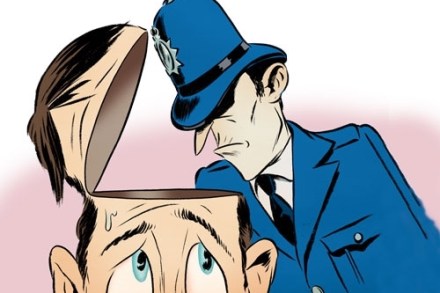
Libya has elbowed the riots off the front page. But, in the medium-term, how Cameron responds to them remains one of the big tests of his premiership. In the Evening Standard today, Tim Montgomerie vents the frustrations of those Tories who fear that Cameron is missing his chance. Tim’s complaint is that Cameron has actually done — as opposed to said — very little and that the chance to use this moment to push through a whole bunch of big, necessary changes is being missed. With every day that passes, action on — say — the Human Rights Act becomes less likely as the Liberal Democrats become more dug in.

Human rights wrangle

From our UK edition

A set-to has broken out this morning over the Human Rights Act. David Cameron has declared that he is going to fight the Human Rights Act and its interpretation. Cameron writes: ‘The British people have fought and died for people’s rights to freedom and dignity but they did not fight so that people did not have to take full responsibility for their actions. So though it won’t be easy, though it will mean taking on parts of the establishment, I am determined we get a grip on the misrepresentation of human rights. We are looking at creating our own British Bill of Rights.

Riot sentencing row brews

From our UK edition

David Cameron promised that looters would feel the full force of the law. Courts have been sitting round the clock holding defendants on remand and issuing stern sentences. This is causing disquiet in some circles. Lib Dem MPs complain that the government has overacted, incapable of resisting the temptation to take draconian decisions without adequate scrutiny. Tessa Munt told the Guardian that the government’s approach “smacks of headline grabbing by Conservatives, not calm, rational policy-making.” Lady Hamwee also told the paper that it would be a “great pity if what [the justice secretary] Ken Clarke has been doing – finding a better way of sentencing – was to be undone.

Massacre in Hama hastens the need to tackle Assad

From our UK edition

Syrian President Bashar Al Assad has praised his troops for ‘foiling the enemies’ of his country. Some enemies. 140 civilians are said to have died in a pre-Ramadan crackdown on protesters, adding to the toll of 1,600 civilians who have been killed since anti-government demonstrations began in mid-March. Details of the events in Hama are unclear because journalists have been kept out of Syria. But the pattern of events is familiar: protests against the Assad regime emerge; the army moves in to kill demonstrators; more protests then take place, which leads to more killings. Meanwhile, the international community stands by.

Stopping Syria

From our UK edition

Syria is still ablaze and the West seems unable to do douse the flames. And the risk of the Assad regime committing even greater violence will increase when the world's media moves on. The reasons for Western impotence are manifold. First, for a long time Western leaders thought they could reason with Assad and therefore shied away from direct pressure. When they decided to act, they discovered that Assad is immune to European pressure because Syria does little trade with Europe. But, crucially, many Syrians are either loyal to the regime or fear triggering disintegration of the sort they have seen in neighbouring Lebanon and Iran. Finally, unlike Libya, the Syrian regime is not hated by fellow Arab states.

The danger of unbalanced trade with China

From our UK edition

The Chinese premier seems to like cars; the Chinese in general seem to like cars. China has bought MG in Britain and Volvo in Sweden, to which it has just added Saab. If the Chinese can make European car companies viable, then what's the problem? Theoretically nothing: trade will help the Chinese and Europeans alike. But, as Robert Peston made clear in his questioning of Wen Jiabao, trade remains unbalanced. For example, European companies are excluded from public procurement contracts in China. It is also worth noting that China’s purchase of Spanish and Greek bonds over the past year, coupled with their promise to buy from Hungary, have made it a bilateral lender of last resort for politicians in indebted countries.

You couldn’t make it up: Crook freed from jail to look after his five kids

From our UK edition

Sometimes I wonder if the judiciary and the human rights culture are just trying to make Richard Littlejohn’s columns look understated. Today’s story in the Daily Mail about how a convicted criminal has been freed from prison because of the effect that his incarceration was having on his children is in real ‘you couldn’t make it up’ territory. Wayne Bishop, a father of five, had been sentenced to eight months behinds bars after pleading guilty to burglary and dangerous driving. But he has now been freed after judges worried about the effect of his imprisonment on his childcare arrangements given that he and his partner have split up and Bishop has now married another woman.

Dylan urged to stop blowing with the wind

From our UK edition

As one famous artist vanished in Beijing, another appeared. Bob Dylan has begun a tour of China in the same week as Ai Weiwei became the most prominent victim of Beijing’s current repression drive. Ai has been unlawfully incarcerated for what the authorities describe as ‘economic crimes’, and the cry has gone out for his release. Except that the cry has been more of a whimper. Western governments have largely ignored Beijing’s clampdown, which began in February as democratic activism spread from Cairo to Chinese websites. No trade sanctions or UN Resolutions are being issued here, just stern communiqués. Some human rights activists have called on Bob Dylan’s celebrity to condemn the Chinese government outright.

The threat to a British liberty

From our UK edition

It’s a funny old world. I have now been contacted by two journalists informing me that Bedfordshire Police are investigating The Spectator. Why? Because of the Melanie Philips blog where she referred to the “moral depravity” of “the Arabs” who killed the Fogel family in Israel. CoffeeHousers can judge for themselves if they agree or disagree with her language and views – but should this be illegal?  The Guardian has written this story up, claiming The Spectator is being investigated by the Press Complaints Commission. This is untrue. The PCC tell me that a complaint has been lodged, but that’s as far as it has gone. They investigate only if they believe there is a serious prospect that their code has been breached, and it hasn't.

Clegg’s coup

From our UK edition

Libya is not the only scene of conflict today. Nick Clegg has just won a powerful victory over the Conservatives, appointing a Bill of Rights commission which is certain to leave the ECHR intact. When you see the names Philippe Sands, Helena Kennedy and Lord Lester on the list — even alongside Tories — you know that this review is over before it has begun. Clegg is a firm believer in Europe, and has played his hand very well — outmanoeuvering the Conservatives who thought that a British Bill of Rights should supplant edicts from Strasbourg. Upshot: there may still be a Bill of Rights, containing various declarations inserted by the Tories on the panel. But what the BoR says will matter not one jot.

The British Bill of Rights stalls

From our UK edition

A British Bill of Rights has long been the Tory leadership’s sticking plaster solution to the problems posed by the ECHR. The idea is that a British Bill of Rights would give this country a greater margin of appreciation in interpreting the convention. But this morning this plan is in tatters.   The long-awaited commission on the British Bill of Rights is clearly going nowhere.  Any commission which includes Lord Lester and Helena Kennedy, two of the Lib Dem appointees to it, isn’t going to improve the situation.   The failure of this commission even before it has started is a reminder that this problem isn’t going to be solved in coalition.

Government to appeal on prisoner votes

From our UK edition

PoliticsHome reports that the government is to ask the ECHR to reconsider its verdict in the prisoner voting rights case. The website says: ‘In a response to a parliamentary question from Labour MP Gordon Marsden, Cabinet Office Under-Secretary Mark Harper said: "We believe that the court should look again at the principles in "Hirst" which outlaws a blanket ban on prisoners voting, particularly given the recent debate in the House of Commons."’ This is unsurprising. Last month, the government asked its lawyers to advise on the ramifications of noncompliance. The lawyers were unequivocal: the repercussions of such defiance was diplomatically impossible and extremely expensive.

Toppling Mad Dog

From our UK edition

Should Gaddafi be pushed? That is the question diplomats and policy makers are beginning to ask. The UN has imposed travel restrictions and frozen Gaddafi’s assets. But Gaddafi is resisting the hangman’s noose; the loss of his Mayfair property empire is the merest of inconveniences. And still he fights on. There is now a growing humanitarian case for direct military intervention by Western powers. However, there are plenty of arguments against even introducing a no-fly zone. Gideon Rachman makes some of them in today’s FT: ‘A few of the problems are practical. Some military observers say that a no-fly zone would be of limited use in Libya, since Col Gaddafi seems to be mainly relying on ground forces.

How young Arabs saved the old West

From our UK edition

Three months ago the future looked bleak for the West. The countries that once dominated the world, invented capitalism, articulated mankind's universal desire for freedom and defended it against all enemies looked destined for an impoverished future squeezed by the authoritarian capitalists of the East and unsure about the righteousness of its ideological foundation. Even one-time liberals, whose life has been shaped in a struggle for human rights embraced China and its state-backed progress. Now, thanks to the pro-democracy protesters in the Middle East, the West is back. Not that it backed the democratic movements and now stands to reap the benefits.

Clarke rebukes May for her comments on sex offenders’ register ruling as Tory split over human rights grows

From our UK edition

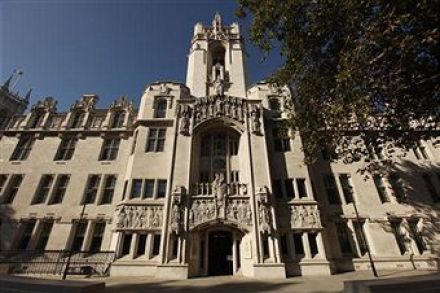
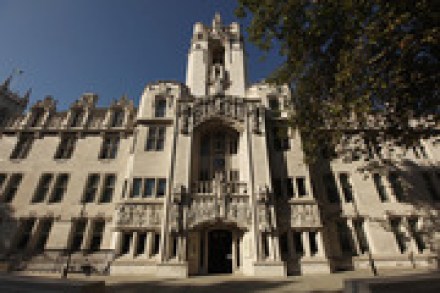
The Conservative side of the coalition is being increasingly split by the issue of the European Convention on Human Rights. After the Supreme Court in London declared that human rights legislation required that sex offenders had to be given a chance to take their names off the register, the Home Secretary and the Prime Minister were appalled. In a statement to the Commons, May made some trenchant criticisms of the court ruling. This, I understand, prompted a furious letter from Clarke, the Justice Secretary, to May reminding her that she was constitutionally obliged to accept the independence of the judiciary. The letter was copied to Downing Street as the Prime Minister himself had used very similar language to May.

Uproar on Arab Street

From our UK edition

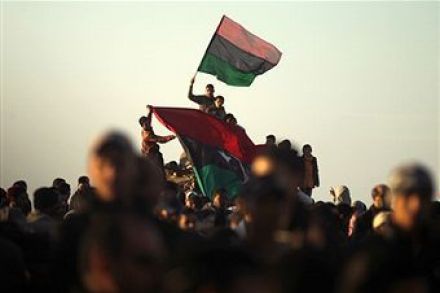
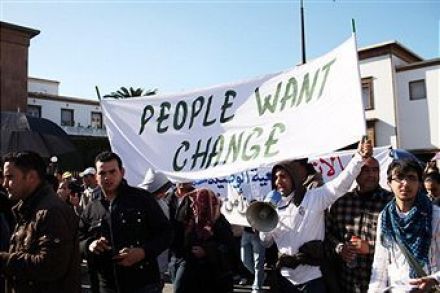
Deaths continue to mark the protests in Bahrain and Libya. Reports are inaccurate because communications have been broken, especially in Libya. YouTube is, again, invaluable. https://www.youtube.com/watch?v=4fP387pzEAA https://www.youtube.com/watch?

On the basis of this legal advice, the government is not planning to defy the ECHR

From our UK edition

As I wrote this morning, the Times has obtained a copy of a government legal memo (written before last week’s prisoners’ debate in parliament) examining non-compliance with the ECHR’s infamous judgment. The newspaper argues that the government plans to defy the Court; and there are plenty rumours swirling around Westminster to that effect, which is hardly surprising given that the Times chanced upon this document. But it’s mostly hot air. The government lawyers actually advised against non-compliance on four separate grounds and revealed that British officials are working towards compliance. First, here are the recommendations of the advice: 1).

It’s a knock out: judicial activism versus the sovereignty of parliament

From our UK edition

The prisoner voting debate is coming to a head, and Dave has turned once too often. The Times has received (£) what it describes as a government legal memo, urging the government to defy the demands of the European Court of Human Rights. After last week’s parliamentary debate, the government’s lawyers calculate that the ECHR can only put ‘political pressure rather than judicial pressure’ on British institutions. This is a seminal moment: political will has not been met by administrative won’t. But would non-compliance succeed?

It is not just the Strasbourg Court that is a problem on human rights

From our UK edition

As we wait for the result of tonight’s ping pong between the Lords and the Commons over the forty percent threshold, there is one point worth noting about the row over the court ruling on the sex offenders’ register. The court that ruled that sex offenders sentenced to two and a half years cannot be placed on the sex offenders’ register for life was the British Supreme Court taking its cue from the European Convention on Human Right. This shows that merely pulling out of the jurisdiction of the Strasbourg Court will not be enough to end these human rights cases. The only guaranteed solution would be to remove the convention itself from British law. The coalition will never go that far, the Lib Dems would never stomach it.

Parliament is not sovereign

From our UK edition

Enough is enough. The British Bill of Rights is set to return: a consequence of the government’s running battle with parliament over the European Convention on Human Rights. Recent days have been filled with clues and suggestions of imminent reform: Dominic Grieve, a former advocate of the ECHR, went so far as to assert that Britain may leave the convention. Cameron let slip the news that a Bill Of Rights commission is to be convened at PMQs; at the time he was answering a question about the Supreme Court’s controversial sex offenders’ register decision. There are no details as to what the commission will consider, but Theresa May aired the guiding philosophy during her statement on the sex offenders’ register.