Housing

What will happen to Millennials when they retire?

From our UK edition

Recently, a rather agitated Tory MP came to me and asked why on earth his party wasn't talking more about pensions. It was an important message to voters, he argued, managing to stay agitated about an issue that normally sends people off to sleep. This MP thought that highlighting the importance of a sound economic policy to public sector workers' pensions would be a good way of persuading them that the Conservatives are on their side. He has a good point: the Tories could do with working out how to talk to public sector employees, given their current tendency to vote Labour, and given the importance that many of those workers place on their pensions.


Hobbit houses and 3-D homes

From our UK edition

Since 2006, someone called Kirsten Dirksen has been posting weekly videos on YouTube about ‘simple living, self-sufficiency, small (and tiny) homes, backyard gardens (and livestock), alternative transport, DIY, craftsmanship and philosophies of life’. But don’t let that put you off. Basically, Dirksen makes short films about people’s quirky homes: ‘Tiny Parisian rooftop terrace transforms for work and leisure’, ‘Extreme transformer home in Hong Kong’, etc. Fear not: this not some shoestring Grand Designs. There is little or no enthusing, there are no vacuous summings-up, there is no false jeopardy. The videos vary in length: some of them last for less than ten minutes, others for close to an hour. Many are in Spanish (with subtitles).

Letters | 15 March 2018

From our UK edition

Growing our own Sir: Rod Liddle is clearly right that ‘the people of Europe do not want any more immigration on the scale we have seen in the past five years’ and that this is one of the reasons for the rise in the populist vote (‘The populist revolution has only just begun’, 10 March). However, the people of Europe do want more cleaners, fruitpickers and vegetable harvesters, not to mention care home workers, paramedics, nurses and doctors. We in the UK need more teachers of science, maths and languages.

How Theresa May’s reforming ministers are constrained

From our UK edition

When Theresa May gave her big housing speech today, in front of a rather strange fake brick backdrop that made the Prime Minister appear to be emerging from a chimney, she was trying to speak to two audiences. The first was those who believe, as she says she does, that the housing crisis is one of the biggest barriers to social justice in this country. The second was those who may agree with the first sentiment in abstract, but who are very worried about inappropriate development and destruction of our green and pleasant land. It's a tricky game, playing good-cop, bad-cop all by yourself, but that's what the Prime Minister had to do in order to announce anything at all on housing.

Letters | 15 February 2018

From our UK edition

Suffragette setbacks Sir: Jane Ridley (‘Women on the warpath’, Books, 10 February) claims that Millicent Fawcett and her suffragists had ‘got nowhere’ by the time the militant suffragettes came on the scene in 1903. In fact Fawcett’s law-abiding movement, with a membership of some 50,000 (far more than the quarrelling Pankhursts ever managed), had won round the majority of MPs by 1897. Between that date and final victory 20 years later, there were always more MPs in favour of women’s suffrage than against it, though the gap shrank during the years of the suffragette campaign. Its violence has to be high on the list of factors that delayed victory.

Sea fever

From our UK edition

Looking at the sketchbook of William Whitelock Lloyd, a soldier-artist who joined a P&O liner after surviving the Anglo-Zulu War, I’m reminded why I avoid cruises. On board this India-bound ship were: a ‘man who talks a great deal of yachting shop and collapses at the first breeze of wind’, ‘a successful Colonist’, and ‘the victim of mal de mer who lives on smelling salts’. It would be just my luck to be stuck in the cabin between ‘One of our Flirts’, the busty lady with pretty eyes, and what Lloyd affectionately called ‘Our Foghorns (automatic)’ — two bawling babies. By the late 19th century, ocean liners attracted all sorts, from emigrants seeking a new life in the US to curious poseurs.

There’s no housing shortage. It would be easier if there were

From our UK edition

Britain does not have a housing shortage. We have a problem with the cost not the availability of homes. This can’t be solved by building more houses, because it is not caused by an insufficiency of houses. I’m no economist. My understanding of the dismal science is rudimentary. I may be shot down in flames as an ignoramus. But here goes. Residential property has become a kind of currency, prized more for value than utility; and its role as a financial asset is messing with its ability to perform the function of actually housing people. Straining to increase the supply of housing will no more restrain price than straining to increase gold production would make much difference to the price of gold.

Labour is doing little to solve London’s housing problems

From our UK edition

It’s often said that Britain has a housing crisis. But actually, it’s much more of a London housing crisis. Despite notable improvements under the current Government, we are still building 70,000 fewer homes per year than is required by the level of household demand. But when you break those figures down by region, it turns out that 40,000 of those homes are in London. In a new report for the Centre for Policy Studies, 'Homes for Everyone', I analysed up the total cumulative shortfall in housing demand since 2000, region by region. The gap in London is an eye-watering 343,436 homes – more than three times higher than the 95,957 in the South-East, which was the runner-up in terms of housing shortfall.

Stamp duty was already a mess – but we just made it worse

From our UK edition

We could have given them free Spotify subscriptions. Or Just Eat vouchers. Instead, the government’s pitch to Jezza-loving twenty-somethings was a cut in stamp duty for first-time buyers. The levy on buying a home will be abolished completely up to £300,000, and, for the trainee bankers and tech moguls buying in the better parts of London, the first three hundred grand when you are spending half a million will be let off the tax. On the surface, that might seem like a good wheeze. If young people are angry that they can’t get a first foot on the housing ladder, then it will now be a little easier for them. It comes with a cost, however. It takes a housing policy that was already a mess, and achieves the almost unimaginable feat of making it even worse. Take stamp duty.

There is no simple fix for Britain’s ‘broken’ housing market

From our UK edition

You're probably sick of hearing that Britain is in the midst of a housing crisis – we've all heard it said so many times. Over the last few months, Theresa May has been focusing on the topic; claiming that our housing market is ‘broken’, promising to take ‘personal charge’ of the problem. ‘We must get back into the business of building the good quality new homes for people who need them most,’ she said yesterday. On the face of it, the latest figures released by the ONS seem positive. They show that housing supply in England saw a net increase of 217,350 last year; a 15% increase on the previous year’s numbers, and the highest figure for ten years.

Will the Tories really grasp the nettle on two of the biggest domestic crises?

From our UK edition

Two of the biggest unsolved domestic crises in this country are surely social care and housing. Both have creaked from ‘in trouble’ to ‘already in crisis’ without much in the way of serious policy or money from successive governments. Today, ministers turned their attention to both matters, making rather different announcements on how they might deal with them. First up, social care.

Theresa May’s political problems on housebuilding might not be as big as she thinks

From our UK edition

Does Theresa May want to build more homes? The problems that the Prime Minister faces on this matter were summed up very neatly by two different Tory backbenchers at Prime Minister’s Questions today. She was asked by Tom Tughendhat whether she would ‘take the chance to build more homes’, to which she replied that ‘my hon. friend makes a very important point about investing in infrastructure, particularly in housing. We are doing exactly that, which is why we have seen more than a quarter of a trillion pounds in infrastructure spending since 2010’, though she didn’t specifically mention housing. Later, Theresa Villiers asked the Prime Minister to ‘assure the House that the Government she leads will never weaken protection for the green belt’.

Hammond can build his way out of trouble

From our UK edition

Sometimes in life the biggest risk you can take is to play it safe. This is the predicament of Philip Hammond as he approaches the Budget next month. If he adopts a safety-first approach, it will almost certainly go wrong and he’ll be forced into a credibility-draining U-turn, as he was in March. His best hope is to be bold, and to hope this generates enough momentum to carry him over any bumps in the road. The two longest-serving chancellors of recent times have relished the theatrics of Budget Day. Both Gordon Brown and George Osborne loved pulling a rabbit out of the hat at the last minute, wrongfooting the opposition and grabbing the headlines. Hammond isn’t like that.

If the Tories want to survive they must build more houses

From our UK edition

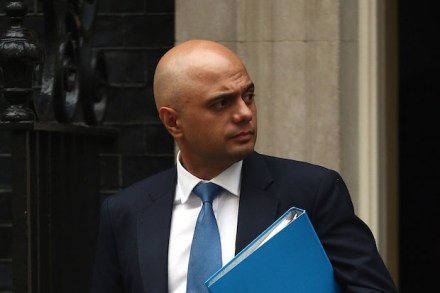
Too many Tories have a sense of inevitable defeat at the next general election. They can see what the problems are but are fatalistic about their ability to solve them before 2022. Sajid Javid isn’t one of these Tories. He quickly grasped that the election result changed the internal Tory debate about housing policy and has been pushing for more radicalism ever since. On Sunday, he went on Andrew Marr to argue that the government should borrow to build. Javid’s argument is the same he made when he was backing Stephen Crabb for leader in 2016, interest rates are so low that it makes sense for government to borrow to invest in infrastructure. There are those who will be uncomfortable about the idea of the government borrowing even more.

Cabinet urge Hammond to be bold on housing in the Budget

From our UK edition

With the next European Council not scheduled until December, political attention now turns to next month’s Budget. As I say in The Sun this morning, there are signs that the government is getting to the right place on housing. I understand that when Cabinet discussed the Budget this week, a frequent refrain from ministers was the need to be bold on housing. One ally of the Chancellor tells me, ‘Housing will be the big centrepiece of it’. I understand from government sources that the Budget is likely to back both land release and the government directly commissioning houses. This means the government would free up public sector land and then get housebuilders to build thousands of homes on it.

Why we need more than Help to Buy to fix the housing market

From our UK edition

The Conservative Party conference kicked off with news that the government plans to earmark an additional £10 billion for the Help to Buy scheme to support 135,000 home buyers. Theresa May’s extension to David Cameron’s flagship housing policy, which has helped over 320,000 buyers since its launch in 2013, is part of a raft of eye-catching measures to win over voters under 45 who deserted the Conservatives in the last election. With house prices now almost eight times the average income and many struggling to afford a home, housing has become a critical political issue. The increase in cash is a clear attempt to appeal to the young hoping to get on the housing ladder. But is this short-term measure enough to fix the broken housing market?

With average house prices now eight times the average wage, affordable housing remains a dream

From our UK edition

Housing – and specifically the dearth of reasonably priced housing – is an issue that crops up again and again in the political conversation. Young people are being priced out of the housing market; even where new housing is being built, very little of it could be classed as ‘affordable’. So today’s news that the average house price is now eight times the average wage will, probably come as little surprise. House prices have been increasing exponentially over the last few decades; in 2000, the average house was 3.96 times the average income, and even since 2007 the average house price has increased by 19%. The fact that it isn’t a surprise doesn’t mean that it isn’t something we should be concerned about, however.

Quantitative easing has made houses hopelessly unaffordable

From our UK edition

Financial crises tend to see asset prices collapsing, making housing more affordable. But it’s been different this time because the authorities in the UK, and elsewhere, countered the crisis with low interest rates and quantitative easing. By slashing the cost of borrowing and flooding the system with liquidity, these policies set out to - and succeeded in - inflating asset prices. So we have seen the UK stock market and housing market rising at roughly the same amount in the last ten years. Taken together with weak wage growth, the result is that housing in the UK (as in many other countries) has become less affordable. So what has been the result of these post-crash policies? How overvalued is UK housing - and how does it compare to house prices elsewhere?

The Tories need houses, not memes, to win over the young

From our UK edition

The Tory party has a new youth wing called Activate to try to win over the kids with 'memes' - I believe they're called - similar to the way that Momentum has built a sort of cult around Jeremy Corbyn. This is in response to the dismal recent Conservative youth vote, which bodes ill for the party. As a party member rather optimistically put it, ‘we’ll only be fine when a Conservative politician can go to Glastonbury and not be booed’. https://twitter.com/Activate_uk_net/status/902284187687780353 Yeah, I wouldn't be too hopeful on that one to be honest.

Why driverless showers are key to the housing crisis

From our UK edition

Although it is commonly assumed that faster-than-sound passenger travel died with Concorde, this isn’t quite true: it overlooks the Caledonian Sleeper. With a few whiskies inside you, this is as close as you can get to teleportation. Yes, according to the timetable it takes about eight-and-a-half hours between Perth and London, but as you are asleep for eight of them, this makes for a supersonic speed of 900 miles per conscious hour. Quite simply, if you are asleep, or otherwise productively or pleasurably engaged, travel time isn’t that important. And if you accept this principle, it becomes clear that Google and Tesla’s Elon Musk have missed an opportunity to really innovate with their ideas for self-driving cars.