House of lords

First they came for Mandelson…

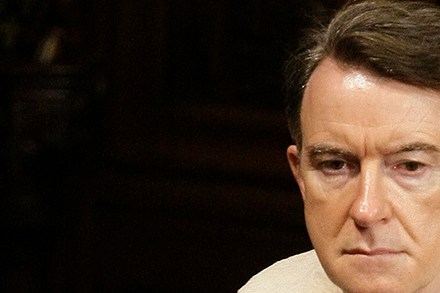
At the time of writing, I haven’t seen the King’s Speech, but it’s a safe bet it will include a bill to enable wayward peers to be stripped of their titles. The point, of course, is so that Keir Starmer, if he’s still PM by then, can show us just how much he loathes Peter Mandelson. It’s the equivalent of Loyalists after the Restoration exhuming Cromwell’s corpse so they could ‘execute’ him and stick his head on a spike in Westminster Hall. But because Mandelson hasn’t been found guilty of a crime – and is unlikely to be – the bar for removing a title will have to be quite low. It will inevitably be some version of ‘bringing the Lords into disrepute’.

What the Two Fat Ladies taught us about Britain

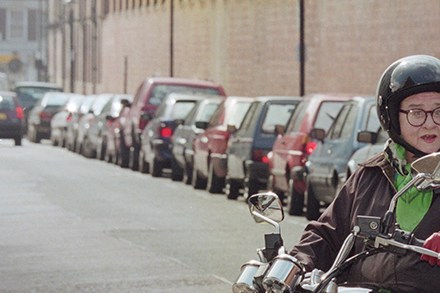
‘Grab that crab, Clarissa!/ Eat that meat, Jennifer!’ It was with these words – the start of their self-sung theme tune – that Two Fat Ladies first burst on to our screens 30 years ago. Jennifer Paterson and Clarissa Dickson Wright were exceptionally unlikely stars. Both heavy drinkers and smokers, they had slightly fallen into cooking careers on the edge of the British Establishment. Jennifer used to be the cook at The Spectator, creating cream-laden dishes for staff while necking wine. Clarissa developed quinine poisoning from consuming around six pints of gin and tonic a day. Jennifer died in 1999; Clarissa in 2014. Clarissa was sober by the time Two Fat Ladies was filmed, but she had been seriously affected by her love of booze.

The end of the peer show

16 min listen

Hereditary peers have left their red leather benches for the final time. The House of Lords (Hereditary Peers) Act became law earlier this year, which removes all hereditary peers' right to speak and vote in Parliament by virtue of their family ties. Critics have described their role as indefensible, but others accuse Labour of political point-scoring and vandalising the upper house – removing a 'living part of Britain's constitutional inheritance'. James Heale and Megan McElroy discuss – joined by Lord Strathclyde and Lord Courtenay.

The end of the peer show

The ‘sensible’ class is losing control of the House of Lords

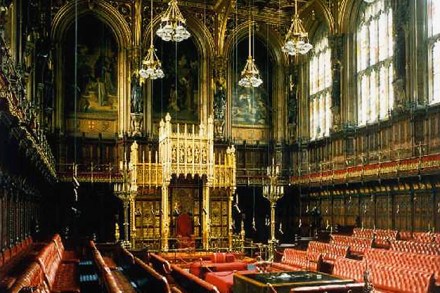
The House of Lords is often described as ‘the best private members’ club in London’. Certainly, it has an appearance more impressive than White’s, a menu more subsidised than Boodle’s and a membership more aristocratic – in the modern sense – than Pratt’s. The most recent vandalism of ejecting the actual hereditary peers has been the final act in making the House of Lords the bastion of our new aristocracy: the same people who run our Oxbridge colleges and sit on councils of this or that and who occupy the same comfortable thought-world as many of our bishops and academics and judges.

The noble work of chairlift diplomacy

In 1956, three British MPs encountered a group of Swiss politicians in the bar of the Hotel Fluela in Davos and after a few drinks challenged them to a ski race. A timed slalom contest took place the following day, with the three-person Swiss team beating the Brits by a combined four seconds. Not willing to take this lying down, the MPs insisted on a rematch the following year and thus was born the Anglo-Swiss Parliamentary Ski Week, which celebrated its 70th anniversary last week. I heard about it from my friend Dan Hannan shortly after I became a peer, and immediately put my name down, imagining it to be a massive freebie. Not so. The Graubunden canton provides you with a free lift pass, and the local ski school, which organises the races, throws in some complimentary guides.

Letters: Don’t underestimate Ed Miliband’s malign influence

Leave the US to it Sir: I was struck by the dichotomy of your 21 March issue. Christopher Caldwell describes President Donald Trump’s world-affecting miscalculation in attacking Iran (‘The end of Trumpism’), while the editorial exhorts us to climb aboard this runaway train to ‘finish the job’. The conflux of multinational involvement in this fiasco is already reminiscent of the tumbling dominoes of August 1914. Underlined by three colliding religions, the scale is now much larger and touches the entire planet. The Americans, for whom the ‘special relationship’ is skin-deep, made this bed and should lie in it, not us. J.B.

Will books soon become extinct?

I am glad that Radio 4 is producing a series called How Reading Made Us, presented by the subtle, super-literate Times columnist James Marriott. I must declare an interest. Roughly 98 per cent of my earnings over 45 years have depended on the fact that plenty of people like reading. Now we are thinking harder, however, about the fact that form affects substance. The idea of an encyclopaedia, for example, as developed (from classical roots) in the 18th century, was that all needful knowledge on a particular subject could be assembled and consulted in a book or series of books. With AI, there is little need for this form. The form of a book, which often seemed so compendious, can now seem cumbersome. Fiction, too, is affected by form.

The House of Lords’ Valkyries fighting for assisted suicide

It seems counter-intuitive to say that the House of Lords is more representative than the House of Commons. Yet in the extended reading of the assisted suicide bill, it is clear the Upper House is surprisingly reflective of the reality of the nation. Nominally, the bill is being piloted by Lord Falconer, the formerly cuddly ex-housemate of Tony Blair. Falconer has consistently sought to water down amendments and concessions secured during the Commons debate. During last week’s Lords debate, he cited ‘somebody called Sarah Cox’ – who just happens to be the former president of the Association for Palliative Medicine (APM) and gave evidence to the bill committee last year. This didn’t prevent Lord Falconer from misrepresenting her testimony, prompting a complaint from the APM.

How to befriend Sudan’s guerilla commanders 

Juba, South Sudan After the 43°C heat of the day in Juba, sundown brings a merciful reprieve. My dearest friend Ken pours me a dram of Glen Deveron, without ice or water, and I realise it’s going to be a long evening with the man from Midlothian. In Juba, it turns out, one can find the finest single malt whiskies, thanks to intrepid Eritreans who run the local grog shops. After a couple of glasses, our conversation goes back to the time we were together in the same burning heat some years back, in the border town of Bentiu, planning our logistics for a journey north into the Nuba mountains. I had hired Ken as a fixer on the TV film I was making with a producer named Danny.

Step forward the undeserving: it’s honours season again

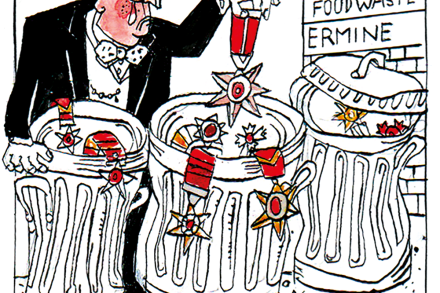
Once Christmas Day’s out of the way and we’re stuck in that no man’s land between one year and the next – known, tweely, as ‘Twixmas’ or, if you’re posh, the ‘interregnum’ – one thing guaranteed to make the front pages is the announcement of the New Year’s Honours List. News of the worthy – and not-so-worthy – recipients will be released, and we’ll get to see who’s been elevated to the Lords, knighted or handed one of the lesser gongs. Among the very deserving recipients will be those who make you think: hang on a minute – how did that happen? When news broke that former prime minister Tony Blair was to be made a Knight Companion, more than a million people signed a petition calling for the honour to be blocked.

My House of Lords dinner disaster

It was just a straightforward dinner in the bosom of the House of Lords, talking to members of the Jockey Club. What could possibly go wrong? When I rashly accepted with gay abandon the invitation to speak to them after dinner, I’d forgotten that I’d been quite punchy about the club over the past decade in the Daily Telegraph. Forgotten, that is, until I arrived at the Victoria Tower Gardens gate to the welcoming grunt of: ‘Well, you’ve been bloody rude about us in the past, so let’s see what you’ve got to say for yourself now.’ I could see one of the more senior members of the club was itching to give me a good whack with his walking stick.

Farage goes for the Lords

15 min listen

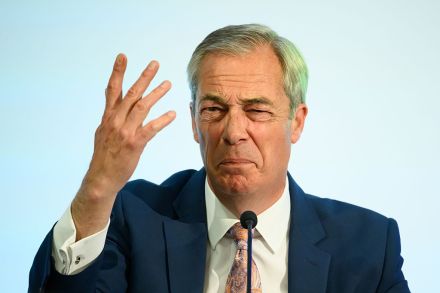
The big news today is of course the bilateral between Donald Trump and Vladimir Putin in Alaska. We should know by around 8 p.m. whether they have successfully negotiated an end to the war in Ukraine – and at what cost – but in the meantime Westminster is abuzz with the news that Nigel Farage is going for the Lords. This morning the Times splashes on a letter from Nigel Farage to the Prime Minister, Keir Starmer, in which he demands that Starmer allow him to nominate Reform peers to the House of Lords. It is not a totally unreasonable request either, with the Greens and the DUP represented in the chamber and Farage has gone after Starmer for ‘democratic disparity’.

Letters: Let the King choose the Archbishop of Canterbury

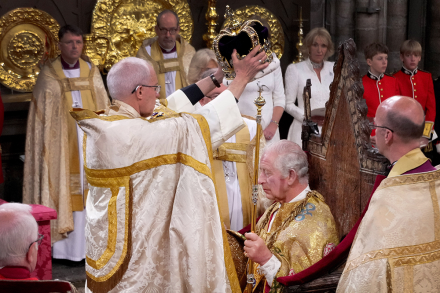
Supreme idea Sir: My colleague Fergus Butler-Gallie is right about the deficiencies of the Church of England’s system for filling the See of Canterbury (‘Canterbury fail’, 12 July). May I make a modest proposal? Place untrammelled power of appointment in the hands of the sovereign. If there be no providence in Anglican polity we should become Catholics or dissenters. But if we think God is still working his purpose out through the Church by law established, we should have the courage of that conviction. Qualms about monarchs shaping the Church? It was Cyrus who brought the people of Israel back to Judea. We probably would not have the Nicene Creed without Constantine’s muscular intervention. And it cuts both ways: remember who puts the crown on the King’s head.

Peerless: the purge of the hereditaries

The House of Lords is very old, but not quite continuous. In 1649, shortly after the execution of King Charles I, the Cromwellian House of Commons passed an act which said: The Commons of England assembled in parliament, finding by too long experience, that the House of Lords is useless and dangerous to the People of England… have thought fit to Ordain and Enact… That from henceforth the House of Lords in parliament, shall be and is hereby wholly abolished and taken away. This measure was nullified, however, by the Restoration in 1660. The parliaments of King Charles II, and all parliaments since, have included the House of Lords. The hereditaries served their country loyally: 59 were killed in the two world wars, as were 316 of their sons.

Good Lords: the House is losing some of the best

Keir Starmer has not been the luckiest general. But, in one respect, he has bested Napoleon. The Duke of Wellington will shortly be purged from parliament, two centuries after Waterloo. Like his ancestor, Charles Wellesley has led a life of public service. For that, he will shortly receive the sack as part of the greatest purge of active lawmakers since Oliver Cromwell. All this so Starmer can make way for the likes of Tom Watson, Sue Gray and Richard Hermer. Among the hereditary peers are Olympians and entrepreneurs, artists and academics Among the hereditary peers are Olympians and entrepreneurs, artists and academics. Some are genuine blue bloods, others political animals.

Pride continues to crumble

In the canteen of the House of Lords last week, a friendly server asked me if I’d like some ‘Pride pudding’. This turned out to be a rainbow-coloured crumble created in honour of Pride month. ‘Er, no thanks,’ I said, and then noticed a large ‘Progress Pride’ flag behind the counter. Oh dear, I thought. That’ll set the cat among the pigeons. Sure enough, a couple of hours later the GC Cons Peers’ WhatsApp group erupted. This is made up of those dinosaurs who style themselves ‘gender critical’ – i.e. they believe sex is biological, binary and immutable. For the uninitiated, the Progress Pride flag features a large, multicoloured chevron superimposed on the standard rainbow layout.

Letters: Bring back mutton

Man out of time Sir: That Mary Wakefield left Rowan Williams ‘with my questions for the most part unresolved’ will come as no surprise to his former students, myself included (‘The ABC of faith’, 19 April). As a ‘mature’ student at Cambridge, there was something very inspiring about Williams the academic, but also comfortingly peaceful about the man; someone always on the journey of discovery and therefore reluctant on many issues to be dogmatic or final about them. His genuine surprise at how the real world operated one easily forgave; his naive approach to other issues, such as Islam, was dangerous but never disingenuous. As an Arabist I did find this hugely irritating.

Trump is giving us a taste of our own medicine

It seems the US State Department sees an impediment to free speech as an impediment to free trade with Britain. It cites the recent incident in which a woman, Livia Tossici-Bolt, was arrested for holding up a sign as she prayed alone and silently near a Bournemouth abortion clinic. It says it is ‘monitoring’ the case. Many here will dismiss this intrusion as a typically loopy product of the Trump era. In a sense, it is. It is also a spurious justification for American tariffs which are happening anyway. But it should teach us something about how others see us. It is commonplace for British governments of both parties to object to the policies of other countries, notably in the Middle East and Africa, in relation to LGBT+ rights.

How to be a Lord

At the end of my first day at the House of Lords, I staggered out with so many books and leaflets and three-ring binders I could barely see over the top. These were the official rules, what Walter Bagehot would have called the ‘dignified’ part of the constitution. But on top of these are the unwritten rules, which are twice as voluminous. Some people compare parliament to Hogwarts, and it’s true that there’s a ‘secret’ entrance in Westminster tube station. But Harry Potter didn’t get as many things wrong as me in his first term. Admittedly, some of the rules I’ve had difficulty mastering are pretty basic.

Should bishops be booted out of the Lords?

18 min listen

The House of Lords contains 26 Church of England archbishops and bishops who possess an automatic right to sit and vote in the House, as established by ancient usage and by statute. But for how much longer? Labour have big plans for the Lords and have been pushing ahead with their crackdown on hereditary peers. But this week we learnt that Tory MP Gavin Williamson will table an amendment calling for them to reconsider the role of bishops as well. Gavin says that a clergy-free Lords would be more representative of modern Britain and is expecting to gain cross-party support, including from the likes of Jeremy Corbyn. The Spectator’s features editor William Moore thinks this is ‘institutional vandalism’ and opens the door to the removal of faith from parliament.