Hong kong

Portrait of the week: Chief Rabbi speaks out, Uber loses its licence and police draw tasers at the cinema

From our UK edition

Home The Chief Rabbi, Ephraim Mirvis, intervened in the election campaign by declaring that anti-Semitism was a ‘poison — sanctioned from the very top’ of the Labour party, whose claim to have dealt with cases was a ‘mendacious fiction’.The Archbishop of Canterbury, the Most Rev Justin Welby, said: ‘That the Chief Rabbi should be compelled to make such an unprecedented statement at this time ought to alert us to the deep sense of insecurity and fear felt by many British Jews.’ Jeremy Corbyn, the Labour leader, insisted that ‘rapid and effective’ action had been taken against offenders, and refused to apologise. Chris Moncrieff, a longtime lobby correspondent of the Press Association, died aged 88.

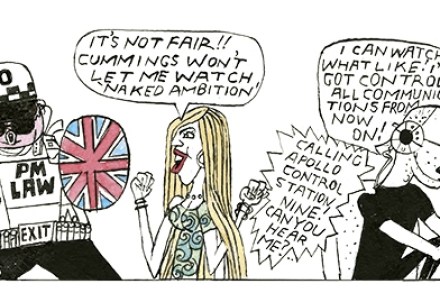
Does safety-first Boris Johnson have any ambitions on the world stage?

From our UK edition

There is a large vacuum at the heart of this general election campaign. Aside from the topic of our relations with the EU, and Nicola Sturgeon’s statement that she would decline to press a nuclear button which is never going to be hers to press in any case, no leader has had anything of interest to say on foreign policy. This is not for want of matters to discuss. The elections in Hong Kong at the weekend presented an ideal opportunity to bring up foreign policy. A small political earthquake occurred in a former British colony, with reformers triumphing at the polls just as they had drawn huge support on the streets.

Portrait of the week: The leaders’ debate, the Duke’s interview and the gilet jaunes’ birthday

From our UK edition

Home In a television debate Boris Johnson, the Prime Minister, was jeered by the studio audience when he was asked about the importance of truth and Jeremy Corbyn, the leader of the opposition, was jeered when he refused nine times to say whether he thought Britain should leave the EU. Neither dealt a knock-out blow and polls ranked them as neck and neck. The Liberal Democrats failed in an appeal to the High Court to include their leader Jo Swinson in the debate. But polls by YouGov indicated that the more voters saw of Miss Swinson, the less they liked her. Labour promised everyone free internet broadband, by nationalising Openreach and other parts of BT.

Letters: The Politically Homeless Party are now a force to be reckoned with

From our UK edition

Nowhere to turn Sir: Like Tanya Gold and Matthew Parris (9 November), I too am feeling politically homeless. Over the decades my vote has wandered along the mainstream party spectrum but today that seems wider than ever and its constituents increasingly unappealing. A vote for the Conservatives would be to endorse utter incompetence in government of several years, whereas Labour’s neo-Marxist tendencies are not to be countenanced in power. As a Remainer, in ordinary times I might, as previously, be attracted to the Liberal Democrats, but their policy on revocation makes them no longer democrats. It is disingenuous of Matthew Parris to not worry about this just because they will never be in a position to implement it.

Brave front: The pro-democracy guerrilla fighters taking on Hong Kong’s riot police

From our UK edition

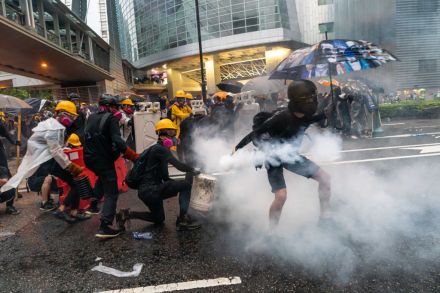
 Hong Kong Mo Ming zig-zagged through the tear-gas. He ran across a central Hong Kong flyover in a low crouch he learned from the shoot-’em-up video game Counter-Strike. It was 1 October, China’s National Day, and the confrontations in Hong Kong were in their 17th week. I followed him as he picked a path through the thickening fog, slingshot at the ready for a counterstrike of his own against the police’s water cannon — their most formidable weapon, which sprays protesters with blue, irritant-laced water. It fired just short of our position, and we made it across to the far side, where other pro-democracy fighters had retreated.

Portrait of the week: Tory conference, John Lewis cuts jobs and Duchess of Sussex sues

From our UK edition

Home Boris Johnson, the Prime Minister, presented the EU with a proposed withdrawal agreement. It entailed Northern Ireland remaining for a large part in the EU single market, along with Ireland, until January 2025, with the European Court retaining jurisdiction during that time. After that, the Northern Ireland Assembly would be able to choose whether to remain in the single market. In the meantime, there would be a border with Great Britain in the Irish Sea and, with none of the United Kingdom in the customs union, another, invisible border with Ireland, with checks made away from the border on goods in transit. Dominic Cummings said: ‘If they reject our offer, that’s it.’ Eighteen Scottish pine martens were released in the Forest of Dean.

I saw the violent Hong Kong protests

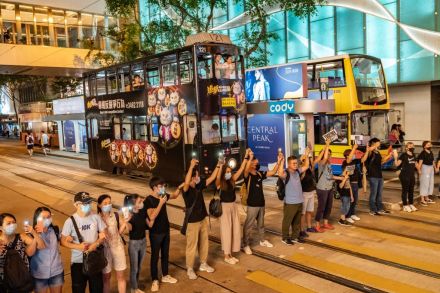
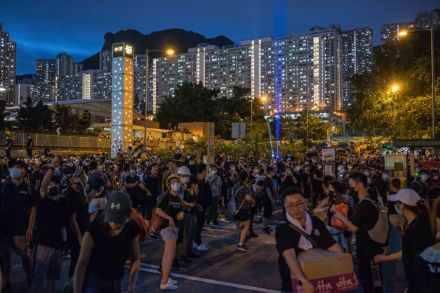
This weekend saw the most violent clashes yet in Hong Kong between demonstrators and riot police. On Sunday, as mass protests entered their 12th week, Hong Kong police deployed water cannons, tear gas and rubber bullets, and a policeman pointed a gun at a protester and the press. Meanwhile, dissidents threw bricks and grates that they had dug out from the street at riot police. They returned volleys of tear gas canisters with tennis rackets, threw homemade petrol bombs and Molotov cocktails, and used  lasers to thwart facial recognition cameras.

hong kong

The cosmic combination of Hong Kong, Brexit and the trade war

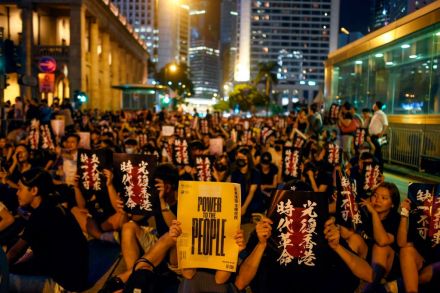
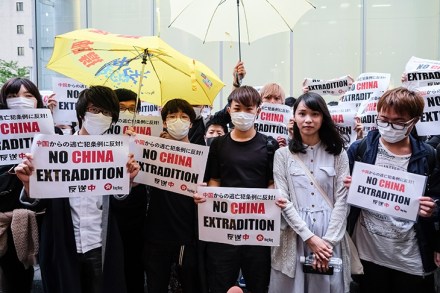
Over the past several months, we have witnessed remarkable courage in the streets of Hong Kong. What began as limited protest against a single act of pro-Beijing legislation now has the markings of existential struggle, if not revolution. As the people of Hong Kong understand, the city government’s proposed extradition bill — enabling removal of its citizens to mainland China for trial — was not an isolated event. It was, instead, a sign of things to come, the gradual encroachment of Beijing upon the rights and freedoms promised Hong Kong for 50 years in the 1997 Basic Law. These constitutional guarantees — negotiated with the United Kingdom before it transferred the city — have come steadily under attack as the clock ticks ineluctably towards midnight.

hong kong

Why you can’t let Brexit affect your life

From our UK edition

A couple with a first baby sought my advice: they had accepted a low offer for their cramped London flat and bid the asking price for a nice house in commuterland. But they need a bigger mortgage and if Brexit leads to a property crash, they could face negative equity and financial stress. Should they call the whole thing off? Emphatically I said they should not: buying a family home is a long-term choice, rarely regretted, in which fluctuating value matters far less than whether you love the house and whether (as in their case, I gathered) income is sufficient to support the mortgage. Conventional wisdom, perhaps, but I’m pleased to see the nation thinking the same way: the property website Rightmove reports a 6.

Trump must act on Hong Kong before it’s too late

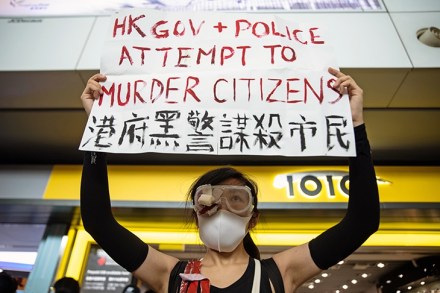
The central question regarding the Hong Kong protests is not whether a crackdown is imminent — it’s already happening — but its final form. After more than 60 days of unrest in Hong Kong, Chinese leader Xi Jinping seeks to bring the city under control as quickly as possible, and without using the military. Rather than repeat the 1989 Tiananmen Square Massacre, Xi wants the repression to occur through aggressive law enforcement and severe punishment, while not yielding an inch to the protesters’ demands. Chinese state propaganda has ominously escalated its rhetoric. The protests are now labeled a ‘color revolution’, and their violence as ‘terrorism'.

hong kong

Portrait of the Week – 15 August 2019

From our UK edition

Home Boris Johnson, the Prime Minister, proposed an extra 10,000 prison places and the expansion of stop-and-search powers. PC Stuart Outten, 28, was cut in the head with a machete after he stopped a van in Leyton, east London, in the early hours; Muhammed Rodwan, 56, of Luton, was charged with attempted murder. While trying to make an arrest, PC Gareth Phillips, 42, was run over in Moseley, Birmingham, by someone driving his own car; Mubashar Hussain, 29, was charged with attempted murder. The RAF is to allow recruits to wear beards. John Bercow, the Speaker, said that he thought parliament could stop Britain leaving the EU without an agreement.

The Spectator’s Notes | 15 August 2019

From our UK edition

We seem to be building up to a second Tiananmen Square, 30 years after the first. This time the venue is Hong Kong. As then, the Chinese government longs to kill protestors, but it hesitates because it fears global reaction. It therefore matters greatly that the ‘rules-based international order’ strongly assert that breaking the 1984 Sino-British Agreement would put China beyond the pale. No international discussion of Brexit is complete without a reverent invocation of the Good Friday Agreement (which in fact has almost nothing to do with EU membership). The Hong Kong Agreement should command such reverence, and its pledge of ‘One country: two systems’ should be the test of whether China is a law-abiding international partner.

Will Hong Kong’s revolution come West?

A specter is haunting the world — the specter of a new kind of revolution. The Hong Kong protesters’ technology and tactics have baffled the Chinese authorities, leaving them apparently powerless to restore order, except by extreme and counter-productive violence. Hong Kong's revolutionary template will be adopted by all groups wishing to destabilize existing orders. The Hong Kong riots have unfolded despite the most intrusive surveillance state ever created. The Chinese government gathers information on every citizen, and is working to assign each a social credit score that will determine who may buy a house, get a promotion, or move to a different city.

hong kong

Portrait of the week | 11 July 2019

From our UK edition

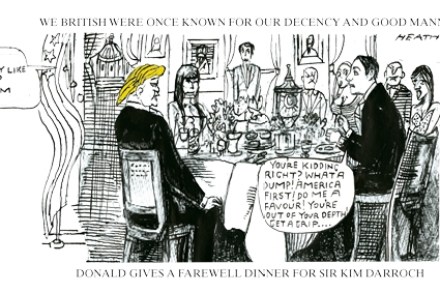
Home Sir Kim Darroch resigned as British ambassador to Washington after the Mail on Sunday published disobliging emails he had sent between 2017 and now, which said things like: ‘We don’t really believe this administration is going to become substantially more normal; less dysfunctional; less unpredictable; less faction-riven; less diplomatically clumsy and inept.’ In response President Donald Trump said: ‘We’re not big fans of that man.’ Next day, Trump added that he had told Theresa May, the Prime Minister, how to manage Brexit, ‘but she went her own foolish way — was unable to get it done. A disaster!’.

Portrait of the week | 13 June 2019

From our UK edition

Home Michael Gove, the Environment Secretary, a candidate for the Conservative leadership, admitted he had used cocaine several times 20 years ago. ‘I deeply regret the mistake that I made,’ he said. ‘It was a crime.’ He also said: ‘Certainly when I was working as a journalist I didn’t imagine I would go into politics.’ His admission came as the Daily Mail published extracts from a biography on Gove by Owen Bennett, due to be released next month, that relates an earlier admission of cocaine use to party colleagues. Ten candidates for the leadership started the race after Sam Gyimah withdrew: Michael Gove, Matt Hancock, Mark Harper, Jeremy Hunt, Sajid Javid, Boris Johnson, Andrea Leadsom, Esther McVey, Dominic Raab and Rory Stewart.

Hong Kong fury

From our UK edition

Whatever the authorities in Beijing say, the anger on the streets of Hong Kong isn’t synthetic, nor is it stirred up by ‘foreign forces’. The serious, dedicated atmosphere of 2014’s umbrella protest, which lasted 79 days, is back, only this time with more violence. Of course, the vast majority of Hong Kongers won’t be personally threatened by the passing of the extradition law — which allows Beijing to try suspects who, as matters stand, cannot be rendered across the border — but legal changes like this eat away at everyone’s security. At first, no doubt, those extradited to the mainland will be rapists and murderers. But later the prime candidates for extradition will be people who have infuriated Beijing by their public statements.

Letters | 12 October 2017

From our UK edition

Let’s talk about guns Sir: I was surprised that the cover stories on the recent shootings in Las Vegas (‘Say nothing’, 7 October) did not address the issue of gun control. The point surely is that if weapons are readily available, and not universally disapproved of, sooner or later someone will use them. There doesn’t have to be a specific motive, religious or otherwise, and often there is no point in looking for one. There is no question that for some people, using guns and explosives gives a thrill which they probably do not find elsewhere — and the more powerful and rapid-firing the weapon, the greater the thrill.

Letters | 27 July 2017

From our UK edition

Bugs bite back Sir: Matthew Parris is quite right to say that we Leavers would prefer independence in reduced circumstances to affluent federalism (‘Dear Leavebugs, it’s time to admit your mistake’, 22 July). But he is wrong to suggest that our preference is a guilty secret, or that it should be. Many of us despaired at the narrowness of both referendum campaigns, which made no attempt at addressing our ‘spiritual’ concerns about EU membership, or indeed the equally spiritual hopes of the Remainers. Spiritual, moral and cultural questions are at the root of all politics and economics, and any debate which leaves them out is empty.

Stitches in time

From our UK edition

When Martha Ann Ricks was 76 she travelled from her home in Liberia to London to meet Queen Victoria. The daughter of a slave, who had purchased freedom for his family from his American owner and taken them to west Africa, she wanted to honour the Queen whom she believed had played a pivotal role in abolishing slavery. ‘She stoops,’ Ricks told a reporter from the Pall Mall Gazette of that meeting in a corridor at Windsor Castle on 16 July 1892, ‘and I don’t stoop though I’m older than her… But she has had troubles, great troubles. No wonder her shoulders are bent.’ Ricks considered herself fortunate that aged 13 she had been taken from the Tennessee plantation where she had been born and had thereafter lived as a free person.

Let’s make sure our fishermen are protected against Brexit tit-for-tat

From our UK edition

I voted Remain last year for two reasons. First, however irritating I found some aspects of the EU, I could not vote for the chaos I believed would follow a Leave victory. From the accession of Theresa May to the night of the general election, that looked like an excess of pessimism; now it looks like wise foresight. The second prong was an analysis of my own and my neighbours’ economic circumstances: in what sense was EU membership actually making us worse off? In my own case, not at all; local shops, hospitality outlets and tourist attractions, likewise. Subsidised hill farmers and fatter farming cats on the flatlands? Not really, even though broader frustration with Brussels made many of them vocal Brexiteers.