History

A date with Venus in Tahiti

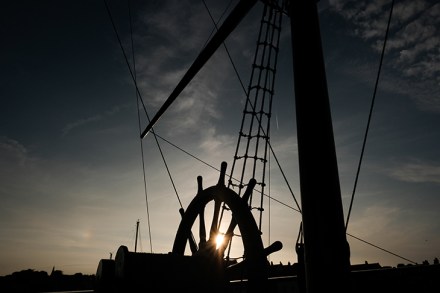
There is something about the Transit of Venus that touches the imagination in ways that are not all to do with astronomy. The last Transit occurred in 2012, and if nobody who watched it will ever see another, the sight of that small black dot, making its almost imperceptible progress across the disc of the sun, offered, across the span of 243 years, an oddly moving connection with the scientists and sailors who quartered the globe and, sometimes, risked their lives in 1769 to attempt the first comprehensive observations of the event. There is no shortage any more of ‘global events’ — a good, old fashioned footballing brawl between England

endeavour

The artist who breathes Technicolor life into historic photographs

There is something of The Wizard of Oz about Marina Amaral’s photographs. She whisks us from black-and-white Kansas to shimmering Technicolor Oz. When Howard Carter leans over Tutankhamun’s open sarcophagus (1922), he does so in the glare of pharaonic gold. A photograph of fallen American soldiers on the Gettysburg battlefield (1863) shocks the more when we see the colour of the blood soaking through shirts. The Javanese dancers who performed at the Exposition Universelle in Paris (1889) are gorgeous in madder pinks, jades and golds. I’ve seen this picture a dozen times, rolled out to illustrate the influence of ‘exotic’ dancers on artists and choreographers, but I’d never considered that

Russia’s obsession with securing a warm-water port changed the history of Central Asia

In the 13th century, having overrun and terrorised Europe as far as Budapest, and in the process possibly bringing with them the flea which caused the Black Death, the heirs to Genghis Khan and the Golden Horde had also conquered territory to the east as far as the Korean peninsular. The assiduous Swiss scholar and explorer Christoph Baumer chronicles the ensuing sagas of the remaining individual khanates in great detail. But by the 16th century it is clear that although a few pockets still flourished, producing impressive buildings and works of art, these erstwhile mighty nomadic clans had sunk to a point where they had disappeared from the consciousness of

The stubborn old Hanoverians saw new Gunpowder Plots everywhere

Once won, rights and freedoms are taken for granted. We all find it difficult to imagine life before the Married Women’s Property Act, when everything belonging to a wife — goods, chattels, children — automatically became the sole property of her husband. Those born since the 1960s can’t really envisage what it was like for practising homosexuals in those days. By a similar token, the mind can scarcely take in the fact that in Penal times, Catholics could not buy or sell land; or that it was an imprisonable offence for Catholics to run a school. It was a legal offence to dress as a monk or a nun out

Vive la Left Bank libération!

We all have our favourite period of Parisian history, be it the Revolution, the Belle Époque or the swinging 1960s (the cool French version, with Jean-Paul Belmondo and Françoise Hardy). Agnès Poirier, the author of this kaleidoscopic cultural history, certainly has hers: the turbulent 1940s, which saw the French capital endure the hardships of Nazi occupation before throwing off this yoke and embracing freedom in every aspect — sexual, political and intellectual. Leading the way was that maligned couple, Jean-Paul Sartre, the philosopher, political activist and father of existentialism, and Simone de Beauvoir, the brilliant pioneer feminist, who was his life partner, if often errant lover. Poirier lists an impressive