Herd immunity

Crush the science

Something is rotten at the University of Guelph. Just what deceased creature has gotten stuck under the floorboards remains unclear, but a strong odor of something that’s not right assails the nostrils when one reads the open letter recently penned by Dr Byram Bridle, an immunologist and tenured professor at the University of Guelph in Ontario, Canada, addressed to the president of the university. What has happened at Guelph is a useful case study for everyone, because vaccine mandates are spreading like the plague they aim to cure.
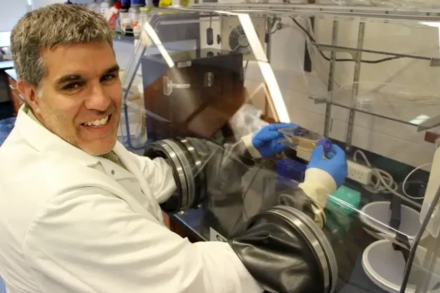
Dr Byram Bridle (University of Guelph)

The mystery of natural COVID immunity

The Seychelles has become a place to watch. Known as the world’s most vaccinated nation, ahead of even Israel, a third wave of COVID is hitting the archipelago despite the fact that over 60 percent of its population has been fully vaccinated — and nearly 70 percent have received at least one shot. In April the Seychelles was hopeful it was soon to reach herd immunity. But now 456 new cases reported over three days (the population is approximately 98,000) has cooled optimism there — especially since a third of the new cases were fully vaccinated (the remainder had received only one shot or were unvaccinated). It’s perhaps too soon to draw conclusions, but it doesn’t look like good news for those hoping widespread vaccination will bring about herd immunity.

immunity

Did I catch Covid from a naked-rumped tomb bat?

From our UK edition

Laikipia Until I promised to slaughter a fat-tailed sheep with a goat thrown in for a feast, the farm cowhands looked doubtful about going for their vaccinations. ‘Come on, it won’t hurt you,’ I cajoled. A panther-like man I’ve seen pursuing bandits with a rifle and reckless courage announced that he was frightened. The others nodded and rubbed their left arms. But at the offer of meat and sizzling fat over an open fire, everybody cheered up. Time was running short. A village clinic two hours away in Maasai country had phoned to say its supply of doses was sitting there unused and would I urgently muster some people?

If we want herd immunity, we need mass testing

From our UK edition

At the start of the pandemic, we talked a lot about herd (or community) immunity. But talking about the journey to herd immunity became toxic as it was variously linked to high infection rates, sacrificing the elderly, and the NHS becoming overwhelmed. The debate on herd immunity was restarted last week by Professor Karl Friston, of University College London, who told the Daily Telegraph that the 73.4 per cent vaccinated reached on Monday meant that 'based upon contact rates at the beginning of the pandemic and estimated transmission risk, this is nearly at the herd immunity threshold.' This is an outlying view: other academics questioned this analysis. Matt Hancock said that the government will continue to watch the real-world data.

Has this Brazilian city reached herd immunity without lockdown?

From our UK edition

Throughout the Covid crisis, the international response to the disease has rested on a simple assumption: that none of us have any resistance to it, being caused by a novel virus. Therefore, if allowed to let rip through the population, the virus would exponentially spread until around 60 – 70 per cent of us had been infected and herd immunity was reached. This was the assumption behind Neil Ferguson’s paper in March, claiming that Covid-19 would kill 500,000 Britons if nothing was done and 250,000 of us if the government carried on with the limited mitigation polices it was then following. Yet real world data has challenged this assumption.

Trump picks a Swedish model

Donald Trump is moving toward a Swedish model. His vitality sustained by regular doses of hydroxychloroquine, President Prophylaxis is pushing hard for re-entry. His goal? Normality or, this being the Trump presidency, the next best thing. And that, as Trump so succinctly put it, means ‘a lot of death’.Our future is Swedish. Not naked saunas and reindeer stew, but the Swedish model: herd immunity against COVID-19. The Swedes went their own way when, as in Ingmar Bergman’s chucklefest The Seventh Seal, the plague swept up from the south. Being hardy northerners, they pursued their own corona-strategy and continued to live as normally as possible.

swedish model

COVID-19: the bluffer’s guide

COVID-19 may have prevented us from going to bars and talking nonsense, but there’s nothing to stop us drinking at home and talking nonsense on Zoom. Problem is, COVID information is multiplying faster than a virus on a vagrant’s tongue. Here’s 11 tips for bluffing your way through the greatest challenge in our lifetimes: sounding like you know what’s going on and what to do next. 1) ‘I think I had it in December’‘What do they know of COVID who only COVID know?’ Rudyard Kipling might have asked if he’d licked a pole on the New York subway and spent a few days in bed. Remember that bug you had last December, January or February and thought was food poisoning or a head cold?

covid

Herd immunity may only need 10-20 per cent of people to be infected

From our UK edition

Since mid-March there has been an assumption that herd immunity against Covid-19 would not be achieved until around 60 per cent of the population has been infected. It is a figure which gave rise to the now-famous paper by Professor Neil Ferguson of Imperial College, which claimed that a herd immunity policy (which the government denies ever following) would result in the deaths of 250,000 people in Britain. That figure has been challenged by scientists who have questioned some of the assumptions behind it – for example, it assumed a mortality rate of 0.9 per cent which Imperial College itself has since revised downwards to 0.66 per cent, and some believe is lower still. But today comes another challenge.

Should we be testing everyone in Britain?

My friend ‘D’ is an instantly recognizable type in the Middle East: the middleman. He’s always chasing the next deal, always about to make millions. One scheme was to build a London Eye in a flyblown town in the Levant. Another was to buy a ‘Trump sex tape’ for $10 million. His latest scheme is to get the British government to buy coronavirus test kits from Turkey. This could be the big score: for biotech companies, testing is a new goldrush. And though there’s a touch of Del Boy about my friend, he’s right about the need for test kits. In fact, to get out of the crisis caused by the coronavirus, we might have to test on an immense, unprecedented, almost unimaginable scale.

testing

Could the lockdown have side-effects no one has considered?

‘Nothing makes sense in biology, except in the light of evolution,’ the splendidly named biologist Theodosius Dobzhansky wrote in 1973. It’s a good rule of thumb. Despite near-miraculous advances in medical science we remain biological beings, subject to biological laws. None is more central to our understanding of disease than evolution. Yet this theory remains poorly understood and poorly utilized in medicine. And an evolutionary perspective raises important questions about the drastic action we have been taking to confront COVID-19.Most doctors are too busy dealing with the day-to-day deluge of cases to have much time for what they may consider abstruse academic ideas.

effects

The madness of #ToryGenocide

From our UK edition

The hashtag #torygenocide was trending on Twitter all day Sunday. This is because seemingly rational people have got it into their heads that Boris Johnson is using the Covid-19 outbreak to orchestrate a social cull in the UK. There is a debate over the wisdom of the strategy the government has been advised to take by the chief scientific adviser. Robert Peston asks a question about testing that, if I’m honest, makes me wonder about the wisdom of how we’re going about this. Still, I am not a scientist. I don’t know whether Downing Street has taken the right or the wrong approach. I’m happy for others to have that debate. This is not that. This is not a scholarly exchange on the merits of ‘herd immunity’ or social distancing.

How ‘herd immunity’ can help fight coronavirus

From our UK edition

This is an edited transcript of the interview with the chief scientific advisor Sir Patrick Vallance on the Today programme this morning.Justin Webb: We can talk now to Sir Patrick Vallance, who is the government's chief scientific advisor and is on the line. Good morning to you.Sir Patrick Vallance: Good morning.JW: Could we start with sports events, which is what causes a lot of people to raise their eyebrows. And obviously we have the Cheltenham Festival, the big rugby match in Cardiff, 75,000 people tomorrow. What's your thinking, at the moment, that they should go ahead?