Harper lee

Another collection of Harper Lee’s writings arises

From our US edition

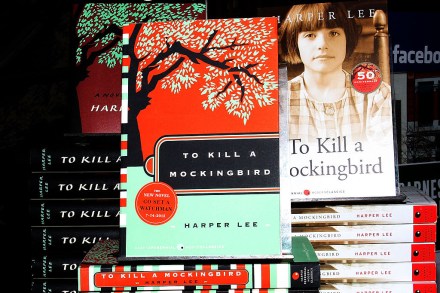
Harper Lee’s To Kill a Mockingbird hardly needs an introduction, as I expect everyone in the world has read it, or has seen the film starring Gregory Peck. (If you haven’t read it, perhaps you should.) Lee, incidentally, went to visit the film set, and had this to say about Peck: “an inspired performance. In some mysterious way, Gregory Peck’s Atticus Finch transcended illusion.” If that seems a tad clichéd and not especially insightful, then I’m afraid to say that this is the general tenor of the nonfiction pieces in The Land of Sweet Forever, alongside eight previously unseen short stories. Go Set a Watchman, a novel which was largely viewed as To Kill a Mockingbird in embryo, appeared ten years ago, to not much acclaim.
Cancelling To Kill a Mockingbird is a step too far

It often feels like we're living through the revenge of the talentless. Cancel culture is essentially a war of no-marks against high achievers. Think of all those faceless furious people on Twitter who want the Harry Potter books thrown in the dumpster of history just because JK Rowling thinks biological sex is real. These people can barely string a tweet together, never mind write eight books that entrance millions. Or think of the armies of literalist bores who demand the scalp of some comic who once made an iffy joke. I bet those people have never made anyone laugh. At least not intentionally. And now we learn that a schoolteacher in Edinburgh has decided he wants to stop teaching To Kill A Mockingbird and Of Mice and Men because apparently they are outdated and offensive.

To Kill a Mockingbird would probably not find a publisher in the age of #MeToo

From our US edition

On Tuesday, after a six-month long poll in which four million Americans voted, Harper Lee’s To Kill a Mockingbird was voted the US’s best-loved novel. Mockingbird is so often at the summit of such polls or described as a book ‘every adult should read before they die’ that another win is no surprise. Lee, who stopped writing fiction and giving interviews almost as soon as the novel became a phenomenon, struggled for the rest of her life with the scale of its success. First published in 1960, as the civil rights movement hit its stride, Lee’s anti-racist novel has been handcuffed to liberalism for the last 50 years. An uncharitable reading of Mockingbird would see it as a childishly progressive fantasy.

to kill a mockingbird