Habsburgs

A weary trek in the steps of Garibaldi and his Redshirts

By the time he died in 1882 at the age of 74, Giuseppe Garibaldi had freed the Italian peninsula from its abhorred Habsburg and Bourbon rulers and united all Italy under the liberally inclined House of Savoy. With his whiskery good looks and wardrobe of red blouses, he was the ideal vehicle for romantic notions of free nationality. When he visited London in 1864, crowds flocked to greet the Risorgimento liberator as he got off the train at Nine Elms. A new football club, Nottingham Forest, adopted Garibaldi red as its colour and a ‘squashed fly’ biscuit was named after him. In Queen Victoria’s estimation, though, Garibaldi was an outlaw figure who threatened to subvert the established order. ‘Garibaldi – thank God – is gone!’ she declared on his departure.
Magnificent: V&A’s Marie Antoinette Style reviewed

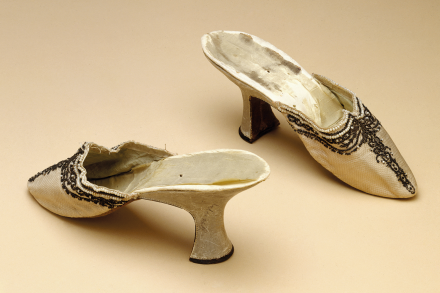
This exhibition will be busy. You’ll shuffle behind fellow pilgrims. But it’ll be worthwhile. It’s a tour de force that tells the story of Marie Antoinette’s 17 years on the throne with detail, focus and flair. There are 34 items here that she owned personally – opulent, carefree objects that resonate with impending disaster. These precious items need protecting from light, and in the first room curator Sarah Grant cleverly runs with this, evoking the candlelit ambience of a Versailles ball by hanging silver baubles from the ceiling and covering the walls with smoked mirrors. Here we have a taste of Marie Antoinette’s wardrobe – its annual budget peaking at £1.

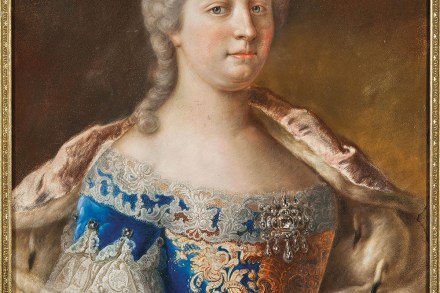
The enlightened rule of the Empress Maria Theresa

The role of personality and charm in running a state is one theme of Richard Bassett’s superb book, the first English biography of the Empress Maria Theresa since Edward Crankshaw’s in 1969. The different parts of the Habsburg monarchy – Austria, Tyrol, Bohemia, Hungary, Croatia and Milan – had little in common except dynasty, geography and Catholicism. Yet, partly owing to Maria Theresa’s force of character, this complex tapestry of nationalities remained a great power After she came to the throne in 1740, she felt ‘forsaken by the whole world’. Encouraged by France, Austria’s neighbours Prussia, Saxony and Bavaria invaded the monarchy in order to divide it between them.

How ever did the inbred Habsburgs control their vast empire?

In 1960, Felipe Fernández-Armesto and Manuel Lucena Giraldo tell us, Lucian Freud went to the Goya Museum in Castres in search of a particular painting. He wanted to create portraits that were character studies and ‘not mere likenesses’, and Goya’s collective portrait ‘La Real Compañía de Filipinas’,a study in human nullity that represented ‘absolutely nothing’, was just what he was looking for. Fernández-Armesto explains: The work belongs in the tradition of what might be called Spanish ‘anti-portraiture’, from Velázquez’s ‘Las Meninas’ to Goya’s own devastatingly candid royal family group, ‘Familia de Carlos IV’, moral as well as physical delineations of regal vacuity.

Emperor for three years: the doomed reign of Maximilian I of Mexico

On 8 April 1864 an Austrian archduke with a penchant for daydreaming agreed to be emperor of Mexico. As Edward Shawcross describes in his majestic history The Last Emperor of Mexico, the process to install Maximilian of Habsburg began two and half years earlier. The plan was proposed by a determined clique of Mexican Conservatives and developed by Napoleon III, the scheming emperor of France. The Conservatives, who had just lost a four-year civil war, wanted to repeal the Liberal constitution that confiscated the assets and privileges of the Catholic church. They saw Maximilian as a symbol of the imperial family that had brought the faith to Mexico. Napoleon III, who wanted to expand French influence and trade, saw a potential puppet.