Guilt

Why Hitler’s suave architect escaped the noose at Nuremberg

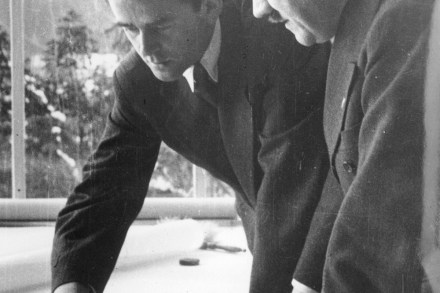
At the Nuremberg trial of the main Nazi war criminals, one man stood out: Hitler’s favourite architect and later armaments minister, Albert Speer. He cut a gentlemanly figure in a gallery of rogues. The strutting, smirking Hermann Goering reminded Rebecca West, who attended the trial, of ‘a tout in a Paris café offering some tourists a chance to see a black mass’. Julius Streicher, the Jew-baiting brute, was like ‘a dirty old man of the sort who gives trouble in parks’. On the same bench, all declaring their innocence in the face of overwhelming evidence of monstrous crimes, were the lantern-jawed SS leader Ernst Kaltenbrünner, the sour-faced ex-champagne salesman Joachim

Caught between Hitler and Bomber Command – the Berliners’ cruel predicament

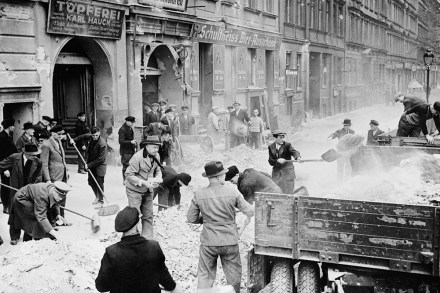
Can you be a true, thoroughgoing patriot and still want your country to lose in a war? It’s a dilemma that faced countless thoughtful people in the past century who lived under totalitarian regimes, and I know is torturing many Russians today. It’s the stark question at the centre of Ian Buruma’s subtly nuanced and beautifully written book about the lives of Berliners in the second world war as their city was being destroyed by a combination of aerial bombardment and the manic cruelty of their own leaders. Buruma follows disparate groups of Germans – some ardent Nazis, a very few silent dissidents, a small number of surviving Jews and

John Updike’s letters overflow with lust, ambition, guilt and shame

When John Updike died in 2009, aged 76, he left behind the last great paper trail. Novelist, short story writer, poet, essayist and art critic, he published with unstoppable fluidity in every genre. The sheer tonnage of his 60-odd books has now been augmented by A Life in Letters, a comparatively small sampling of the 25,000 or so epistles he sent out over the course of his life. This unwieldy volume serves up about 700 of them. I say he wrote with unstoppable fluidity (it was David Foster Wallace who dangled the question ‘Has the son of a bitch ever had one unpublished thought?’), but I should add that the

The importance of feeling shame

In several homilies, the late Pope Francis spoke of the ‘grace of feeling shame’. What a strange idea! Nobody wants to feel shame. Adam and Eve, after all, first felt shame only after being expelled from the Garden of Eden. Shame was God’s punishment: they felt ashamed of what had never troubled them before, namely their nakedness and their sexual desires. But what the Pope meant, I think, is absolutely salutary for our age. Shamelessness is ubiquitous. It is the accelerant of social media that encourages us to narcissistically fire up our victimhood to a gimcrack blaze. It is why so many of us are chained to the brazen idea

Anonymous caller: This Plague of Souls, by Mike McCormack, reviewed

Mike McCormack is much garlanded. He won the Rooney Prize for Irish Literature with his first collection of stories; the Goldsmith’s Prize followed in 2016, along with the Irish Book of the Year Award and the International Dublin Literary Award, for his novel Solar Bones. A book-length, single- sentence analysis of a man’s life, that story sprang off the page with the force of a blow.  This Plague of Souls, his fifth novel, is more distanced. Not a story with a beginning, middle and end, it circles in widening gyres, swooping now and then on to a tightly focused moment as its ambiguous hero tries to make sense of an