Greenland

The Trumpian appeal of a Trojan horse

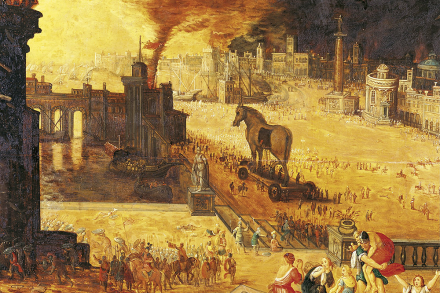
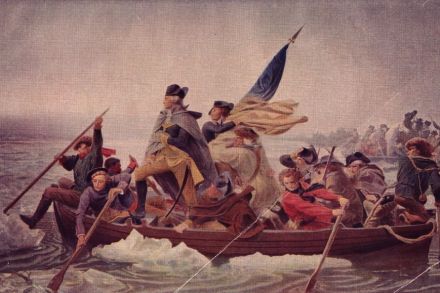
Given the tonnage of missiles launched at Iran, it seems remarkable how relatively few Iranians have been killed. But the Americans have no interest in wasting multi-million-dollar ordnance on pain-in-the-ass innocent bystanders. However, Donald Trump is now considering a land invasion. That would have been unwise, as the ancients knew. Understanding all about the problems of land assaults against defended cities, the ancients often preferred to lay siege. That could be a long and wearisome business and did not necessarily guarantee success. Troy was besieged for ten years, but it took the trick of the wooden horse to take it. So when the Persian king Darius (c. 514 bc) had

Portrait of the week: Jenrick sacked, Chinese super-embassy approved and Trump makes a grab for Greenland

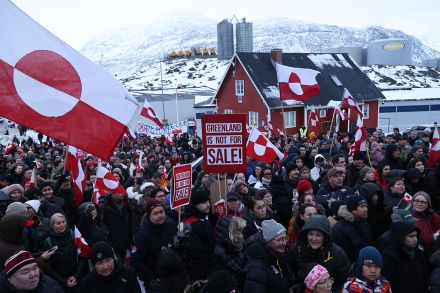
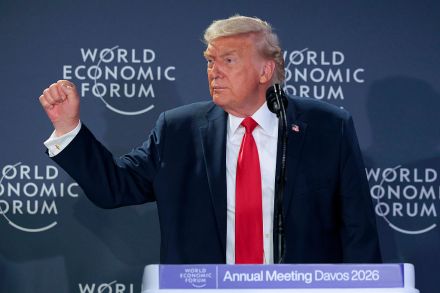
Home President Donald Trump of the United States made Britain and other countries dance to his tune. Sir Keir Starmer, telephoning him about Greenland, said: ‘Applying tariffs on allies for pursuing the collective security of Nato allies is wrong.’ Mr Trump had said he would impose tariffs on Britain, Denmark, Finland, France, Germany, the Netherlands, Norway and Sweden until ‘such time as a Deal is reached for [the US’s] Complete and Total purchase of Greenland’. Then Mr Trump posted remarks on social media saying Britain’s gift to Mauritius of the Chagos Islands, including the base at Diego Garcia, was ‘an act of GREAT STUPIDITY’. He added: ‘China and Russia have

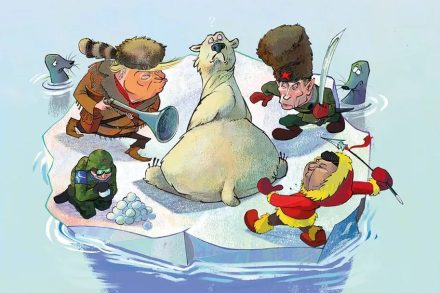
Arctic role: what does Trump really want from Greenland?

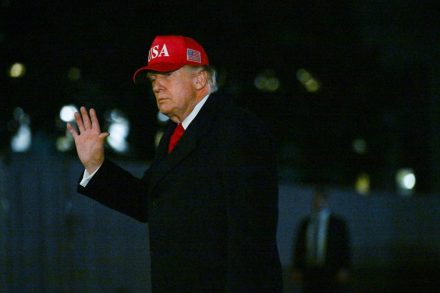
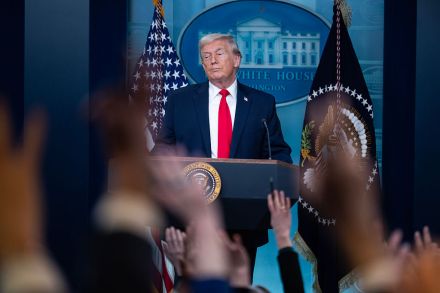
Donald Trump has probably not read Machiavelli, even the short one, The Prince. Machiavelli’s most famous advice was that it’s better for a prince to be feared than loved. But above all, he said, a ruler should strive not to be hated. Nobody likes a bully. The US President, however, clearly doesn’t care about any of this in his attempt to intimidate Denmark into handing over Greenland.  Why does Trump want Greenland? A clue lay in his meeting at the White House last week with the Florida Panthers ice hockey team. The team lined up for a photo: red ties and muscle-bound torsos bursting out of suit jackets, Trump in

Greenland: why Europe needs to ‘grow up’ | with Tim Marshall

15 min listen

Donald Trump has thrown another diplomatic hand grenade. This weekend, the President threatened sweeping tariffs on countries backing Greenland’s independence – a move that has rattled European capitals and reignited questions about America’s global strategy. Is this about Arctic security, rare earth minerals, or something more personal? As tensions rise, how should Britain respond? Can diplomacy defuse Trump’s latest escalation, or does this mark a deeper shift in US–European relations – and the future of Nato itself? James Heale speaks to Tim Shipman and Tim Marshall, foreign affairs analyst and author of Prisoners of Geography. Produced by Megan McElroy and Oscar Edmondson.

Greenland: why Europe needs to 'grow up' | with Tim Marshall

The truth about Britain’s claim to Greenland

Every time Donald Trump repeats his threats towards Greenland, a familiar claim does the rounds that the UK has ‘first dibs’ should Denmark ever choose to sell the territory. Most versions of this story trace back to comments by Tom Hoyem, who served as Denmark’s last minister for Greenland in the 1980s. The claim gained traction again after Trump’s recent threats about acquiring the island, saying ‘one way or the other, we’re going to have Greenland’. These threats – which have now been accompanied by additional tariffs on countries including the UK – are being taken so seriously that the Danish and Greenlandic foreign ministers met US vice president J.D. Vance

A buyer’s guide to Greenland

I recently wrote a book countenancing the idea that the United States could buy Greenland, and I have received some very interesting responses. Some are perplexed at the utility of an Australian assessment of Greenland geostrategy (I’m from Canberra); others have admonished me personally for ‘willing into reality’ US ownership of Greenland. All I did was offer a buyer’s guide to an alluring piece of real estate – background that anyone laying claim to this land should know. Lesson 1: America and Denmark have history  Greenland has tantalised Washington since at least 1867.  These guys have serious history. Territory between Denmark and the US has changed hands previously – Washington nabbed

Give Trump’s realism a chance

In one place at least, the reaction to Donald Trump’s threats to annex Greenland, Canada and the Panama Canal has been one of unequivocal joy. That is Russia – and for obvious reasons. Most Russians have long seen US language about the ‘rules-based order’ as a mere mask for US empire and US national interests. In their view, Trump has now removed the mask. Even more importantly, for the Russian establishment Trump’s words are a confirmation that he and Vladimir Putin see international affairs in very much the same way: as a matter of spheres of influence, transactionalism, and the ruthless defence of national interests. During the Ukrainian revolution and

How the US military became world experts on the environment

In 1941, as it entered the second world war, the US Army barely bested Bulgaria’s for size and combat readiness. Nor did US forces have very much idea of what conditions were like in their new theatres of operation. In the winter of 1942, hot-weather gear and lightweight machinery landed in the deserts of North Africa where hot and dry conditions were assumed to persist throughout the year. Men froze half to death, even as their digging equipment foundered in winter mud. Sand, Snow and Stardust is the story of how the US military shed its ignorance and, by harnessing logistical intelligence and environmental knowledge, turned America into a global

Why Trump bullies Nato

President-elect Donald Trump has in recent years talked about ‘buying’ Greenland. Until recently his comments attracted little attention but recently he shocked the world by threatening the use of economic coercion or military force to fulfil his wish. Male gorillas in the forests of west Africa engage in chest-beating to see off their rivals but Nato, to which the Kingdom of Denmark has belonged since its foundation in 1949, is meant to be a zoo park in which all the wardens sign up for a working partnership. What is behind this public breach in diplomatic etiquette? Americans can point to earlier times when they expanded their territory by purchase, not

Why are the sailors who first braved the Atlantic so often ignored?

It is easy to assume that there is not much to be said about the history of the Atlantic before 12 October 1492, when Christopher Columbus reached the Bahamas. In 2005, the Harvard historian Bernard Bailyn published a little book entitled Atlantic History: Concept and Contours which said absolutely nothing about what happened before Columbus, whom he barely mentioned. Atlantic history meant for Bailyn, and the growing mass of Atlantic historians, the story of modern contacts between the four continents that face the Atlantic, especially the nefarious slave trade linking Africa to the Americas. Earlier centuries were seen as the fishing-ground of fantasists, who looked for ancient Egyptians or Irish