Graham greene

Tuscan escapades: Villa Coco, by Andrew Sean Greer, reviewed

From our UK edition

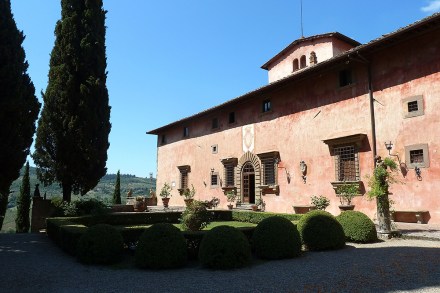
The comic novelist Andrew Sean Greer won the Pulitzer Prize for Less, a chronicle of the longings and humiliations of modern life. But now, he suspects, we’d all like an escape. ‘Whatever happened to the charm novel?’ he asks in his new outing, thinking of the lighter works of Nancy Mitford and Graham Greene. Since they are apparently out of fashion, he has decided to write his own. Villa Coco follows a young American archivist, hired to catalogue the antiques in Tuscany of an aged baronessa, known to her friends as ‘Coco’, only to find himself drawn into increasingly absurd adventures instead. He arrives in late summer, with all the American fantasies of Italy in tow: ‘A confection of movies and food... pasta and accordions and Leonardo and cheese.

Scarred by the past

From our UK edition

In Indonesia in 1965–6 half a million communists and supposed communist sympathisers were murdered by a range of civilian and paramilitary organisations under the direction of the army. This is the setting for Louise Doughty’s grim, ambitious novel. John Harper is a young operative in Jakarta, working for a Dutch private intelligence operation, providing information for corporations and doing covert work for various governments, chiefly the American. The title refers to the polluted water of Jakarta’s canals, but also to the water of the country’s paddy fields. To the news-attentive reader there is also the echo of the Blackwater private security operation that got into trouble in Iraq.

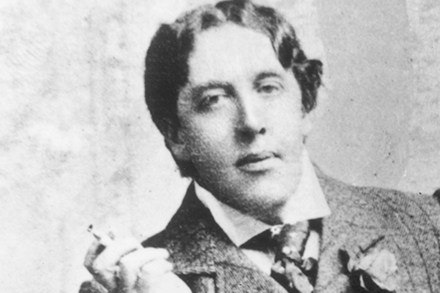
What do Oscar Wilde, Gwen John and Evelyn Waugh have in common?

From our UK edition

Religious conversions do not, for the most part, make for good anecdotes. An exception can be found in Patricia Lockwood’s memoir Priestdaddy, which describes the author’s father Greg’s road to Damascus experience in a nuclear submarine off the coast of Norway, where he watched The Exorcist 72 times: That eerie, pea-soup light was pouring down, and all around him men in sailor suits were getting the bejesus scared out of them, and the bejesus flew into my father like a dart into a bull’s eye. It was, Greg boasted, ‘the deepest conversion on record’.

Rattigan’s films are as important as his plays

From our UK edition

A campaign is under way to rename the West End’s Duchess Theatre after the playwright Terence Rattigan. Supported as it is by the likes of Judi Dench and Rattigan Society president David Suchet, there’s evidently a desire to right a historical wrong. Author of classics such as The Browning Version, The Winslow Boy and Separate Tables, Rattigan was known for his poise, melancholy and restraint, all of which put him at odds with the coterie of upstart writers of the 1950s – still amusingly known as the Angry Young Men. It’s an oft-repeated chapter of theatre history that arch-kitchen-sinkers such as John Osborne made the environment virtually impossible for Rattigan to work in. Rattigan joked about it at the 1956 opening of Look Back in Anger.

Hotel Oloffson is ruined – and so is Haiti

From our UK edition

Earlier this month, in Haiti’s tatterdemalion capital of Port-au-Prince, armed gangs burned down the Hotel Oloffson. As news of the attack spread, both Haitians and foreigners mourned the loss of one of the most beautiful gingerbread mansions in the Caribbean. Thinly disguised as the Hotel Trianon in Graham Greene’s 1966 novel The Comedians, the Oloffson had served as a meeting place for writers, journalists, actors and artists of every stripe and nationality. Past guests include Nöel Coward, John Gielgud, Marlon Brando, Tennessee Williams, Jacqueline Onassis and Mick Jagger (who wrote ‘Emotional Rescue’ there). Laughably, a room had been named after me as the author of a book on Haiti.

Norman Lewis – a restless adventurer with a passion for broken-down places

From our UK edition

The travel writer Norman Lewis, the son of a Welsh psychic medium, died in Essex in 2003 at the age of 94. In his darkly comic autobiography, Jackdaw Cake, he relates how, in 1937, his mother built a spiritualist church in the north London suburb of Enfield as a sort of Taj Mahal memorial to her late husband (who was a retail pharmacist as well as a psychic). Enfield is not a likely pocket of the paranormal, but the Enfield Beacon of Light is still going strong. During its table-rapping and other spook-dabbling sessions no one is allowed to make jokes about striking a happy medium. Spiritualism is dead serious. Lewis’s humdrum upbringing in Edwardian Enfield – aspidistras, astral-planing – was far removed from the social privilege of most literary travellers.

Ford Madox Ford and the decline of the American WASP

“I don’t know how many times in nearly forty years I have come back to this novel,” Graham Greene said of Ford Madox Ford’s The Good Soldier, published shortly after the outbreak of the First World War. The fiction of both English authors — both converts to Catholicism — share a deep cynicism towards modernity and a depiction of the English establishment as decadent and in decline. The Good Soldier, whose original title The Saddest Story was canned by the publisher because it would render the book “unsaleable” during World War I, tells the tale of two married couples, one British (British Army Captain Edward Ashburnham and his wife Leonora) and the other American (John and Florence Dowell). Both pairs are, on the face of it, young, prosperous, and happy.

The stark horror of Barbara Comyns’s fiction was all too autobiographical

From our UK edition

Barbara Comyns’s reputation rises and falls like a Mexican wave, making her one of the most rediscovered novelists of recent times. She’s credited with anticipating Angela Carter and for being in the vanguard of tackling themes of traumatic dissociation and the realities of childbirth. Yet younger, trendier writers have regularly eclipsed her. Aged 29, Barbara was broke: a single mother who’d weathered affairs, an abortion and a suicide attempt Every fan remembers their first Comyns novel: the visceral jolt of black humour, the suckerpunch of stark horror. Knowing that she drew from life, we have longed for a biography, and hooray, it’s finally here.

Life is a game of cards: Burning Angel and Other Stories, by Lawrence Osborne, reviewed

From our UK edition

This compelling and unnerving collection of stories is Lawrence Osborne’s first, coming in the wake of recent critically acclaimed novels – including The Forgiven, adapted into a film – and earlier works of memoir, essays and travelogue. Born in England, currently residing in Bangkok, Osborne has earned comparisons with Graham Greene for his portraits of flawed white characters in foreign settings, and Patricia Highsmith, thanks to the menacing noir atmosphere. These nine stories, written over the past decade, do not disappoint. Osborne removes his protagonists – English or American, on the young side of middle age – from their native environments and transplants them into exotic, perilous locations.

The Index of Prohibited Books makes a fine reading list

From our UK edition

In a classic paradox of bureaucracy, the Index of Forbidden Books only really hit its stride when its original task became impossible. By the 17th century, Robin Vose relates in his new history of the Index Librorum Prohibitorum – established 1559, venerated and cursed for four centuries as ‘the Index’ – it was broadly accepted that censoring literature, senso stricto, was no longer possible. The ubiquity of printers, the ease of transportation and concealment and the sheer number of new books all made most texts available, most of the time, to those with time and cash to spare. The Index of Forbidden Books couldn’t, practically speaking, forbid.

The novels that became instant classics

From our UK edition

In the world of books, a modern classic is an altogether more slippery thing than a classic: it must walk a line between freshness and durability; reflect the current age but hope to outlast it. For individual publishers, given many 20th-century writers are still in copyright, a modern classics list will necessarily be partial. However, few such partial lists are as complete as Penguin Modern Classics (PMCs), founded in 1961 four years after Penguin’s general editor A.S.B. Glover said: ‘We don’t want — without outstandingly good reasons — to start any new series such as “Modern Classics”.

It’s all in a name: the stories behind book dedications

Don’t skip over the dedications in books. They can be as illuminating as the stories they precede and shine an intriguing light on the author’s private life and loves: Jane Austen and Edmund Spenser [caption id="attachment_9876775" align="alignnone" width="739"] Family portrait of Jane Austen[/caption] The dedication to Jane Austen’s Emma reads: ‘To His Royal Highness The Prince Regent, This Work Is By His Royal Highness’s Permission, Most Respectfully Dedicated, By His Royal Highness’s Dutiful And Obedient Humble Servant, The Author.’ The Prince Regent was George Augustus Frederick, uncle of Queen Victoria and the eldest of George III’s children. He was self-indulgent and excessive.

book dedications

From Middlemarch to Mickey Mouse: a short history of The Spectator’s books and arts pages

From our UK edition

The old masters: how well they understood. John Betjeman’s architecture column ran for just over three years in the mid-1950s. Yet during that short run he experienced the moment that comes, sooner or later, to every regular writer in The Spectator’s arts pages. ‘It is maddening the way people corner one and make one discuss politics at the moment,’ he wrote on 23 November 1956, clearly as bored of the Suez crisis as the rest of us were, until recently, by Brexit: Because I write in this paper, people assume that I share its Editor’s views about Suez… But I don’t know what the views of this paper about Suez are, because I never read the political stuff in front.

Franco’s exhumation could help decide the Spanish election

From our UK edition

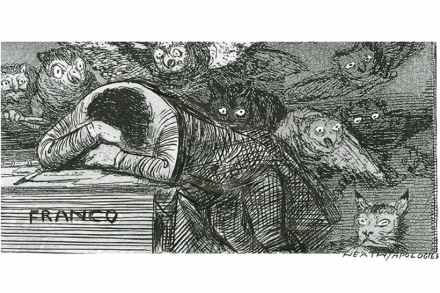
I was no sooner in Madrid than General Franco was exhumed from his mausoleum not far from El Escorial. An air force helicopter ferried his remains from the Valley of the Fallen, where a gigantic stone cross marks the dictator’s grave as well as that of 34,000 Spanish Civil War dead. For four decades the dictator had lain beneath a 1.5 ton granite slab. No longer. As eight of his descendants shouldered the coffin to the helicopter, shouts went up of ‘Viva España! Viva Franco!’ from Falangist diehards behind a police cordon. Franco was reinterred the same day alongside his wife, Carmen Polo, in a family pantheon 20 miles away.

The way we were

From our UK edition

‘The Spectator, having quite recently been a very bad magazine, is at present a very good one.’ Those gratifying words began a full-dress leading article in the Times on 22 September 1978, headed ‘On the Side of Liberty’. Its occasion was this magazine’s sesquicentenary, which we celebrated with a grand ball at the Lyceum Theatre, and much else besides. Although I can’t possibly be objective, I think that the praise was deserved. The revival of The Spectator 40 years ago was wonderful: it assured what had been the very insecure future of the paper, and it was the time of my life.

The city of ugly love

From our UK edition

Cuba’s gorgeous, crumbling capital has always been a testing ground for writers. That heady combination of revolution, cocktails, sex and unpainted mansions seems somehow to set literary pulses racing. Trollope, Hemingway and Graham Greene all described it with verve, but there’s also plenty of dross. The city certainly charmed me, and, a few years ago, I thought I’d add to the pulp with my own contribution. I started courting London’s Cubans, and even had the ambassador to lunch. But despite some intriguing gossip (e.g. that Che Guevara was no fun at parties, and utterly deadpan), I abandoned the whole idea. It seemed to me that Havana was about to change forever, and that whatever I wrote would be old hat before the ink was dry.

Looking up an old friend

From our UK edition

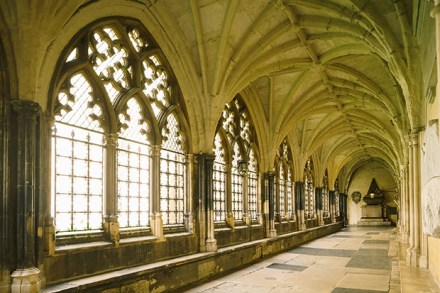
As far as I know, there’s no word in the English language for feeling both terrified and smug at the same time. That’s how I felt when I gave a recent talk to my old school, Westminster, from the pulpit in Westminster Abbey. The talk was about how guilty I felt at taking the Westminster Abbey for granted when I was a boy there in the 1980s — the abbey being the school chapel. I worked out that I’d been to the abbey 400 times when I was at school. Well, to be precise, that’s 400 minus the number of times I bunked abbey — which I began to do regularly in the sixth form. How could I have chosen not to go to one of the world’s greatest churches? I’m now obsessed with old buildings and monuments.

The lives of the artists — and other mysteries

From our UK edition

Benjamin Wood’s first novel, The Bellwether Revivals, was published in 2012, picked up good reviews, was shortlisted for the Costa First Novel Award and the Commonwealth Book Prize and has become a bestseller in France — a promising start to a literary career, in other words. Wood’s new novel The Ecliptic is both an attempt to consolidate the success of his debut and also a meditation, among other things, on how to sustain such a career over decades while producing original and important art. On an island off the coast of Istanbul lies Portmantle, a remote community for painters, writers and musicians.

Michael Arditti is the Graham Greene of our time

From our UK edition

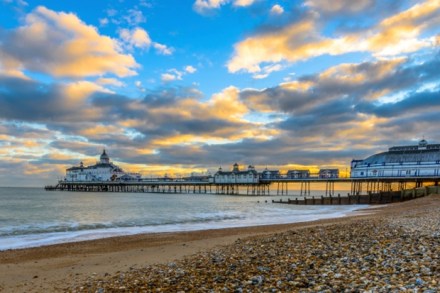
Duncan Neville is an unlikely hero for a novel. Approaching 50, divorced and the butt of his teenage son Jamie’s utter contempt, Duncan is also the eloquent yet mild-mannered editor of the Francombe Mercury, a local newspaper on its last legs. Francombe too has seen better days, not least since its pier burnt down in 2013 (an event covered fulsomely in the Mercury). While Duncan negotiates a good take-over deal for Mercury staff and their pensions, he’s also trying to prevent the ruined pier from being developed into a sex theme park by his schoolboy nemesis Geoffrey Weedon. The fact that Duncan’s ex-wife Linda is married to Geoffrey’s brother doesn’t help. Thank goodness then for Ellen, a new arrival to Francombe after the jailing of her fraudster husband.

My addiction to literary pilgrimage is akin to masturbation

From our UK edition

The hotel and its bright tan prayer rug of a beach were one. In the early morning the distant image of Cannes, the pink and cream of old fortifications, the purple Alp that bounded Italy, were cast across the water and lay quivering in the ripples and rings sent up by sea-plants through the clear shallows. Recognise it? F. Scott Fitzgerald’s Tender is the Night. First page. Hollywood starlet Rosemary Hoyt and her mentoring mother take ground-floor rooms at a quiet beachside Antibes hotel. Rosemary wanders out and on to the aforementioned beach, takes off her bathing robe, wades into a ‘blue as laundry water’ sea, then ‘laid her face on the water and swam a choppy four-beat crawl out to the raft’.