Government

A mandarin for the moment

From our UK edition

Most people probably greeted Liam Fox sacking of Sir Bill Jeffrey, alongside that of the Chief of Defence Staff in that Sunday Times interview with one word - who? The department’s Permanent Under-Secretary –- or PUS -- is a pretty unassuming figure especially sat next to the be-medalled soldiers he works with. Few people outside of Whitehall knew who he was before his defenestration; few will remember his name even today. But there is more at work here than one man's professional demeanor. Britons, despite being reared on the power of officials by TV shows like "Yes Minister", do not know and do not care about anonymous power-brokers such as Sir Bill. Only when a scandal grows out of all proportion do they become known.

All in all, a pretty good day for the government

From our UK edition

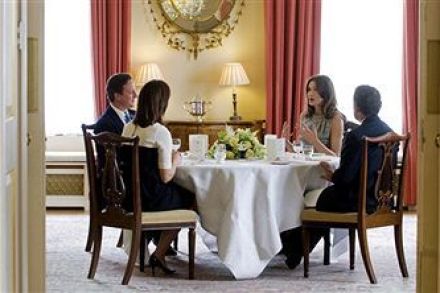
I doubt David Cameron will have many better days in government than this. Considering the government cancelled a hospital project yesterday, today has passed as one long photo-op, free of incident. It began with Theresa May banning a radical Islamist cleric, Zakir Naik, displaying a resolve that eluded her immediate predecessors. The papers were full of Cameron’s ‘coup’ in Brussels yesterday; the only major news story that might have unnerved Cameron was the FT’s research into Tory immigration policy, which the FT calculates will hit growth and raise taxes. It was too esoteric to hit the TV screens, so too the cuts in arts funding. It must have been a happy breakfast in No 10 this morning.

Worrying developments

From our UK edition

Paul Waugh has news that the Treasury asked a broadcaster to sign a written legal agreement that they would not ask any questions about the OBR’s announcement. Well, some of the figures embarrassed Osborne but surely it wasn’t that bad? As Paul notes, this may be a case of the Civil Service taking advantage of ministers’ inexperience but even so. Equally, the government has adopted the practice of its predecessor and issued statements to the press before stating them to the House. Carry on like this and we'll join the axis of evil. New politics please. UPDATE: Turns out not to have been so worrying.

The Commons’ bizarre new chemistry

From our UK edition

It still looks like your TV set is on a horizontal flip when you see Cameron at the government dispatch box. Even more disorientating to see Chris Huhne on the front bench and Nick Clegg beside Cameron - making supportive facial gestures on areas he agrees with (pupil premium), and looking quizzical on areas on which he does not (marriage). Cameron’s performance shows that Britain has just had a tremendous upgrade in the eloquence of its Prime Minister: his performance was no better than as Leader of the Opposition, but still at a high standard. Without Brown’s henchmen leading Labour, their backbenchers were disorientated. But still rather numerous: Labour has 258 MPs, more MPs than any party which has not gone on to win the next election.

Is scorched earth politics now a thing of the past?

From our UK edition

Is the new government marching across scorched earth?  They certainly claim so, and now they seem to have the civil service backing them up.  Speaking to the Beeb this afternoon, Jonathan Baume, the leader of a civil service union, said that senior civil servants had written "letters of direction" to Labour ministers in concern at the spending decisions they took in the final months of their government.  As Baume put it: "It's not a decision that is taken very often to ask for such a letter of direction, which is why it is regarded something of a nuclear option. So when it happens it tends to be a big spending decision, where the civil service believes this is not the right thing to do." Good to know, even if only in retrospect.

Frank Field would complete the Tories’ welfare reform jigsaw

From our UK edition

So now the coalition stretches as far as Labour, with the news that Frank Field is being lined up as an anti-poverty advisor for the government.  In itself, this is an encouraging development: Field is one of decent men of Westminster – committed, informed and passionate.  But when you look at it beside the Tories' other appointments in this area, then it really becomes exciting.  Field, IDS, Grayling and Lord Freud – all are deeply knowledgable about the welfare reform agenda, to the point where it's difficult to think of many more impressive teams in recent political history.  So perhaps there is hope for this most difficult of policy areas, after all.

The equality dilemma

From our UK edition

Spare a thought for poor Theresa May. Judging by the reaction so far, she now faces the unenviable task of shouldering almost everyone’s preconceptions about Tory women in government – with Caroline Spelman, Baroness Warsi and the lower-profile Cheryl Gillan for back-up. She will no doubt continue to disappoint feminists and irritate reactionaries, and she will do so while responsible for the notoriously unwieldy Home Office, which has rapidly taken over from the Department of Health as the ministry where political careers go to die. Representation in politics does matter. It is not unreasonable to claim, as Katharine Viner did in Thursday’s Guardian, that “democracies simply don't work unless they represent those they govern”.

When will the government be mugged by reality?

From our UK edition

One of the most interesting questions is whether the Tories and the Lib Dems will be able to move from the talking points to the action points. Besides Ken Clarke, Francis Maude and William Hague none of the ministers have any previous government experience. They know government from the outside, from the sidelines, from parliamentary questions but not from the inside. It will be really interesting to see how the Cameron-Clegg government copes not just with the issues where they can set the agenda - like police reform - but where the Goverment is mugged daily by reality - like Pakistan or Yemen. I suspect they will find Labour acted not so much out of incompetence but in desperation. They will also find that because a government wills something does not make it so.

Government, Russian-style

From our UK edition

Правительство, в русском стиле Britain is being governed by a duumvirate. Britons may not understand how two-headed government works; but Russians should have no trouble at all. They have long been accustomed to a two-headed form of government. Perhaps at the next UK-Russian summit, the quartet of Cameron, Clegg, Putin and Medvedev can swap tips. Clegg’s importance to the Conservative-Liberal government will transform the previously honorific role of deputy Prime Minister. He will retain the right to fire Liberal Democrat ministers, if not directly then by threatening to remove their party whip.

Reform? Looks more like gerrymandering

From our UK edition

Much ado about this 55 percent proposal – whereby that proportion of the House, rather than just over 50 percent, would be required to vote down a government – and rightly so.  But, as so often, Iain Martin says all that needs to be said.  Here's a snippet from his must-read post: "It is rather stretching things to try and present this piece of proposed gerrymandering as 'Political Reform.' It is actually designed to ensure that even a walk-out of the whole Lib Dem parliamentary group couldn't actually bring down this government. This would weaken parliament and strengthen the hand of the executive considerably - when it is only weeks since both parties were talking of doing the opposite.

Let the reforms begin today

From our UK edition

David Cameron and Nick Clegg want their coalition government to be seen as a reforming government. They can begin showing their seriousness today, as they fill out the junior ministerial posts in their government. Rather than appoint a slew of ministers, parliamentary secretaries etc, they should keep to one Secretary of State and one junior minister for each Department. Don’t listen to me; take the advice of such radicals as Sir John Major and Lord Douglas Hurd, who wrote in The Times in June 2009: "There are too many ministers. The total could be reduced by about a third. Only Cabinet ministers need parliamentary private secretaries. The Treasury should remain with two ministers, both in the Cabinet ....

Reasons for real hope amid the misplaced optimism

From our UK edition

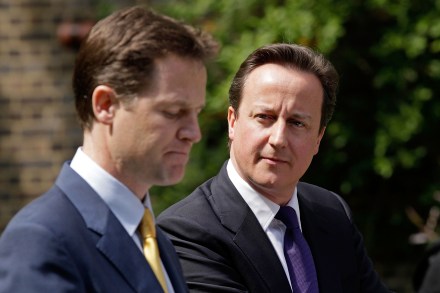
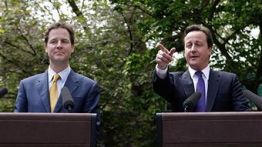
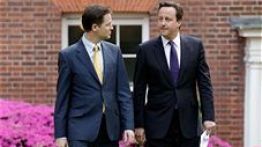
Today's civil partnership between two men who look uncannily like each other will, I suspect, be remembered as a festival of misplaced optimism. Cameron overdid it a little, making out that this was his ideal outcome. It seems rude to point it out, but there were two podiums in that rose garden because he flunked the election (see Tim Montgomerie's superlative report for details). The cost of his failure to win is having to do a deal with Nick Clegg. The country didn't vote for a new politics: the Lib Dems did worse than last time, so polls show most voters would have preferred Cameron to have formed a minority government. This is an alliance designed to stop Cameron fighting an election again soon, and repeating last week's jarring experience.

The coalition passes the easy bit with flying colours

From our UK edition

The first press conference of this new era was a definite success. The body language between Cameron and Clegg was good. When Clegg called Cameron ‘Dave’ it sounded very natural. Cameron’s argument was that the two parties could have come to a confidence and supply agreement but that would have been ‘uninspiring’ and could have broken down at any time. What the Prime Minister didn’t mention is that the coalition agreement ties the Lib Dems into cuts as well as providing stable government. Clegg was excellent, as in the debates he is helped by being a little bit taller than Cameron. He defused any tension when Andy Bell reminded Cameron that he had dismissed him as his favourite joke with a bit of humour.

The coalition agreement at a glance

From our UK edition

I have just had a quick read through the coalition agreement and a few things jumped out at me. First, this new government will not abolish Lord Mandelson. The agreement states that while the parties are committed to a wholly or mainly elected Lords ‘likely there will be a grandfathering system for current Peers’.   The Tory manifesto commits a Conservative government to introducing ‘new rules so that legislation referring specifically to England, or to England and Wales, cannot be enacted without the consent of MPs representing constituencies of those countries.’ The coalition agreement has watered this commitment down significantly. The new government will merely ‘establish a commission to consider the ‘West Lothian question’.

Sense reigns, as the Tories redefine their health spending pledge

From our UK edition

Here's another sensible development for the day: the Tories have diluted their pledge to keep on increasing health spending.  As the FT's Alex Barker reports, the Lib-Con political settlement is going to contain these words: 'We will increase NHS spending in every year of the parliament.' So what's the difference?  Well, the previous pledge was to increase health spending in real terms each year - whereas this new formulation suggests that cash spending will increase, but that there will be cuts once you account for inflation.  Sure, it doesn't smash the ringfence down completely.  But it's still progress so far as the fiscal crisis is concerned.  Score one up for Nick Clegg & Co.

The government takes shape

From our UK edition

Here are some details of the LibCon deal, and my brief comments: 1. Clegg as Deputy PM. It’s a non-job, but a senior one – it means Clegg will take PMQs in Cameron’s absence, and will defend all those nasty cuts (sharing the blame for these cuts is the main rationale for coalition). This follows the 1999 Lib-Lab deal in Scotland, where Jim Wallace was made Deputy First Minister to everyone’s surprise. 2. Laws replaces Gove in education. This has not been confirmed yet, and I will not believe it until I see it. Of all of tonight's moves this is potentially the most concerning – especially for all those (including myself) who had said that the Gove schools policy was the best single reason to vote Tory.

The waiting game | 11 May 2010

From our UK edition

Westminster is working itself into a frenzy as we wait for the official announcements, statements and rituals of state which will surely come in the next few hours.   The very latest is that Cabinet ministers are saying Brown will go either tonight or tomorrow morning; Vince Cable has suggested a Lib-Con deal is "very close"; and all the noises are about a full coalition, perhaps with Nick Clegg as deputy Prime Minister. But enough of that: we shall soon have something more concrete to grasp than all the rumours and helicopter imagery.  And it will be nothing less than the end of 13 years of Labour government.

Lib-Con deal in the bag

From our UK edition

The Lib Dems are holding a meeting of both their MPs and the Federal Executive at 7.30pm. It is now widely expected that this meeting will approve a coalition deal with the Conservatives. Those who have taken the temperature of the Lib Dem Federal Executive say that approval is in the bag.

Whatever happens, Clegg has sullied his credibility with the Tories

From our UK edition

Let's not get ahead of ourselves: some sort of deal between the Lib Dems and the Tories is still a distinct possibility, even if negotiations have been rocked by the events of yesterday. But whether it goes through or not, Clegg has seriously dented his credibility in Tory circles. Backbenchers who were warming to the idea of a formal Lib-Con coalition a few days ago – if only to scupper Labour's hopes – are now dead set against it. The very notion of Clegg as Home Secretary is becoming a collective anathema. The question now is whether – failing a Lib-Lab coalition – the Tory leadership is more inclined towards a confidence and supply deal than they were before.