Glasgow

A No vote will create a schism between the voters of Scotland and its artists and writers

From our UK edition

With the Scottish independence referendum drawing closer, two Newsweek Europe magazine correspondents and friends – Finlay Young (Scotsman), and Simon Akam (Englishman) - travelled the length of the United Kingdom together. They tried to get to the bottom of the independence debate, interviewing politicians, writers, artists, activists, and 'ordinary' citizens en route. In this excerpt from their unique dual-narrative 20,000 word account Scotsman Englishman, they meet two well-known Glasgow artists in favour of Yes, author Alasdair Gray and Belle & Sebastian songwriter Stuart Murdoch.
Scotland could never prosper under the SNP, because they don’t understand business

From our UK edition

No-nonsense businesspeople will be very much what’s needed in the aftermath of the Scottish Catastrophe, as it will surely come to be known whichever way the vote has fallen. No nation, independent or semi-autonomous, can hope to prosper on the basis of the wild welfare promises of the SNP, unsupported by any plan to attract investment and stimulate growth. Only a resurgent private sector can drag Scotland out of the tax-and-spend peat bog into which this referendum has driven it deeper than ever — and that will take quite some grit on the part of entrepreneurs, given the fundamental hostility of both the SNP and Scottish Labour. But grit —even granite ruthlessness — is a characteristic shared by the outstanding Scottish business builders of the past.

Yes Scotland are running a sneaky campaign

From our UK edition

Here's a clever poster from the 'Yes' campaign. It was handed to me by an activist outside Glasgow Central Station who was asking people if they wanted 'more information for the referendum'. She wasn't wearing any Yes badges, and the outside of the leaflet doesn't give the game away either: And inside there is still no 'Yes' branding, but it's quite obvious from the design what sort of conclusion you're being led to: Which then leads to the centre of this leaflet, which folds out to make an A1 poster: It's a clever way of killing two birds with one stone: you hook someone in who might not pick up a 'Yes' branded leaflet, then if you've managed to make your case effectively, they've got a poster to stick in their window to spread the word.

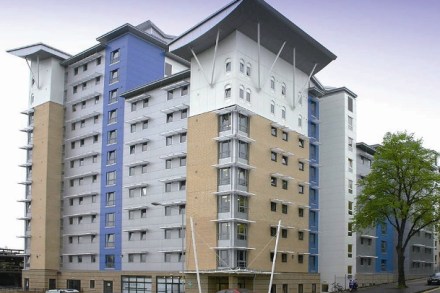
Will we learn to love our ugly houses?

From our UK edition

What are the root causes of Britain’s housing crisis? The Philosophers’ Mail – which has copied the format of MailOnline but I suspect is not aiming at quite the same demographic – recently offered an alternative to the usual explanations. That most people are opposed not to building more houses, but to building ugly houses, and that this accounts for most of what we dismiss as a nimbyism that prevents much-needed development. As they put it: 'Most of the large housing developments built in the South East of England in the last 25 years share one common and (in this context) generally undiscussed feature: they are very ugly. Or, to be more precise, they are far uglier than the countryside they have replaced.

2 billion reasons to take shooting seriously

From our UK edition

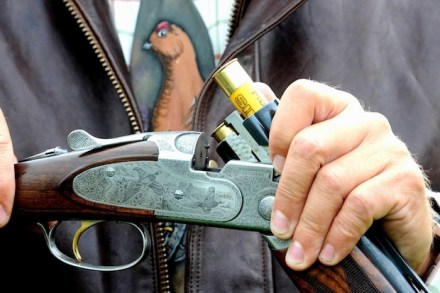
When I told our blogs editor about an independent survey claiming that shooting was worth £2 billion to the rural economy, he didn't believe me. 'Are you sure it's not £2 million, Camilla?' But no. I duly went and checked for him, and £2 billion is indeed the figure. The amount spent on shooting (£2.5bn), is almost ten per cent of the total amount spent annually on outdoor recreation, which has been measured at £27 billion. The problem with shooting, as with many other rural or field sports, is people's perception. Fair enough — after all, not many people have their own grouse moor.

Who cares whether English commentators like or respect Scotland?

From our UK edition

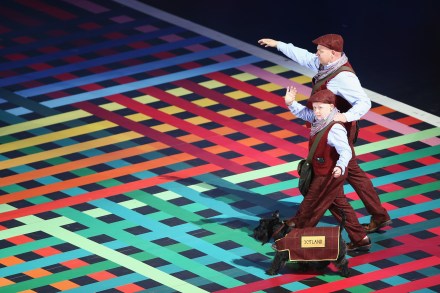
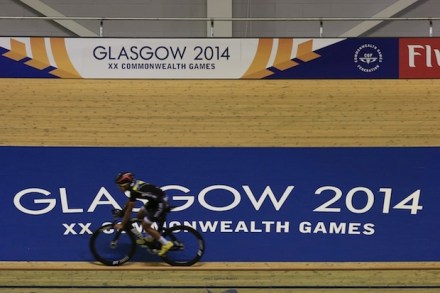
Because the Commonwealth Games are a thing and because newspapers need to fill their pages every day it is natural, even unavoidable, that they have in recent days been stuffed with pundits pontificating on the political significance of the games. Being a mere and humble freelance hack I wrote one such piece for the Daily Mail earlier this week even though I also stand by my suspicion that the political implications of these games are much too easily and keenly exaggerated. But that does not mean all such commentary is worthless or lacking interest. Here, for instance, is Lesley Riddoch writing in today's edition of the Scotsman: [A] subtle and powerful political point has been made with every waking moment of these Games.

The political implications of the Commonwealth Games in Glasgow

From our UK edition

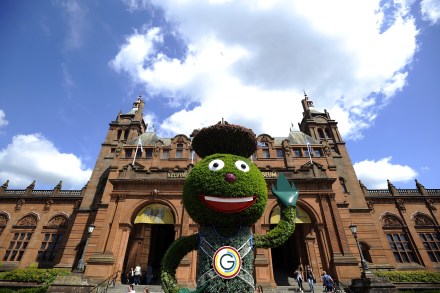
Several people have asked me to write something about the politics and potential implications of the Commonwealth Games which open tonight in Glasgow. As is sometimes the case, I am happy to oblige. There aren't any. To think otherwise is to insult the great Scottish public. I am often prepared to do this, not least because it often needs to be done but in this instance, and not for the first time, the people are liable to be more sensible than the pundits. Back in the day, it was sometimes claimed that the campaign for (modest) home rule in 1979 was scuppered by Scotland's woeful (yet epic!) misadventure in the 1978 World Cup. I've always thought that theory insulted the electorate.

There’s no contradiction between cheering on Scotland and voting for the union

From our UK edition

In choosing this September for the Scottish referendum on independence, the SNP was presumably hoping Scots voters would be basking in the glory of a successful Commonwealth Games. There is every reason to hope that the games, which opened in Glasgow this week, will emulate the London Olympics for organisational skill and, moreover, will help to sell an often-maligned city to the world. But why does it follow that Scotland needs to be independent of the UK to organise and enjoy such an event? If these games had been marred by pettifogging bureaucracy or financial constraints imposed by Whitehall, or if someone in London had trampled on Glasgow’s bid and put forward London or Birmingham instead, there would be every reason for Scots to feel aggrieved.

Team Scotland’s Commonwealth Games uniforms are a headache waiting to happen

From our UK edition

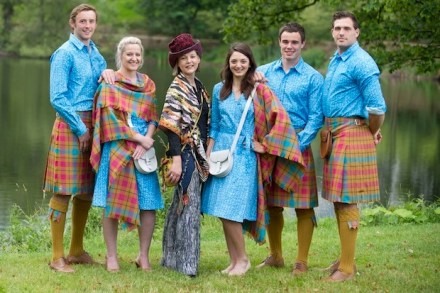
If you want a laugh, and I suspect you do, take a look at the Team Scotland parade uniform for the 2014 Glasgow Commonwealth Games. It’s awful. A kilt that looks like a picnic blanket (note to English: not all kilts look like picnic blankets) and a lurid blue shirt that looks like a headache waiting to happen. It’s an astonishing colour, at once mottled and shiny, like an old Magic Eye drawing. If you stare at it for long enough, and allow your eyes to go funny, you can totally make out exactly why you don’t live in Glasgow. Scotland being Scotland, and this being now, all of this stuff matters hugely. Poor Salmond must be furious. I mean, he’s not going to go and pose for a group photo with that lot, is he? It would be a disaster.

I can’t recall a time when the destruction of a structure made so many people so distressed

From our UK edition

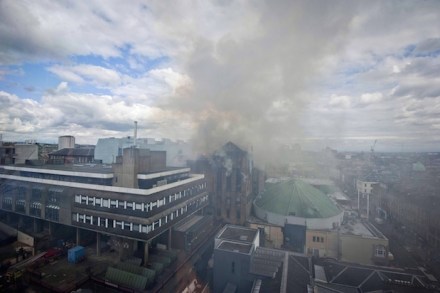
It really is rotten luck, and also cruelly ironic. Just as Glasgow was done debating how best to demolish its hideous Red Road flats, its most beautiful building, Glasgow School of Art, goes up in smoke. No one hurt, apparently, which is a relief, but an awful lot of artwork lost, a unique archive and a precious library. However it’s the actual building which everyone seems most upset about. Indeed, I can’t recall a time when the destruction of a single structure made so many people so distressed. It shows we can love or hate a building, like a person. It shows architecture really matters. So why does Charles Rennie Mackintosh’s masterpiece matter so much?

In pictures: Fire engulfs Glasgow School of Art

From our UK edition

The footage of fire tearing through the Mackintosh building of the Glasgow School of Art on Renfrew Street is more than unnerving. [caption id="attachment_8786321" align="aligncenter" width="520"] The best known interior of the School of Art is the library[/caption] Though it’s too early to say how much damage has been caused to the building, it is evident that much of the original architecture has been destroyed. [caption id="attachment_878614" align="aligncenter" width="520"] (Photo: @STVGlasgow)[/caption] No building is replaceable, but this one is particularly precious. It is without doubt the most important building Charles Rennie Mackintosh (1868-1928) designed.

Scots and English are the same people, with different accents. Why pretend otherwise?

From our UK edition

[audioplayer src="http://traffic.libsyn.com/spectator/TheViewFrom22_10_April_2014_v4.mp3" title="Fraser Nelson and Angus Robertson debate Scottish independence" startat=32] Listen [/audioplayer]Sometimes it is easy to understand why countries break up. Some founder on the rocks of their internal contradictions. Others are historical conveniences that have simply run their course. Czechoslovakia was an artificial construct, a country with two languages and cultures, which split soon after the Iron Curtain fell. The division of Cyprus in 1974 marked the end of the fraternity between the island’s Turks and Greeks. The partition of India was driven by trouble between its Hindus and Muslims.

Our infatuation with high-rise housing has been catastrophic. Good riddance to the Red Road flats

From our UK edition

‘If you meet anyone in a pub or at a party who says he is an architect,’ advised Auberon Waugh, ‘punch him in the face.’ Typically, the late, great Spectator columnist articulated an important truth: modern architects have scarred our cityscapes with some truly horrendous buildings, none more so than Glasgow’s notorious Red Road flats. What better way to mark the opening of this summer’s Commonwealth Games than to blow them up? Five of the six blocks will be blown up on 23 July. These five are already empty. The sixth, which currently houses asylum seekers, is due for demolition at a later date.

Under the Skin: one second of tits to every three minutes of glen

From our UK edition

‘I thought it was supposed to go on for another half hour!’ said a man in the foyer on the way out. ‘When the alien got burnt to death I thought thank fuck for that.’ Before you get annoyed with me for giving away the ending, let me explain that this is one of those films where plot takes a back seat. More than that, it’s been tied up, gagged and locked in the boot. I can’t stand it when people give away the ends of films, which is why I never read reviews before going to the cinema. Too many reviewers have no respect for plot.

Riding back from Scotland with Ron Burgundy in the privy

From our UK edition

When the ticket collector asked to see my ticket, I took the opportunity to ask what time my connection left Birmingham New Street. ‘Are you travelling onwards with the Vag?’ he said. ‘Excuse me?’ I said. ‘The Vag! Virgin!’ he said, irritated by my ignorance. I laughed at him. His expression remained official. He touched the screen on his portable machine and presented me with a card printed with the information. Then I went to the lavatory, one of those spacious ones with a curved door that slides back with a hiss at the touch of a button. As I lifted the seat, a voice said, ‘This is Ron Burgundy speaking. Welcome to the train throne, or, as the Brits call it, the privy.’ I looked around in surprise, trying to locate the loudspeaker.

George Galloway’s one-man mission to save the Union

From our UK edition

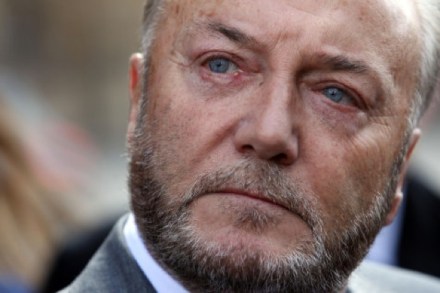
George Galloway is unhappy. One of his interlocutors on Twitter has told him to ‘Fuck off back to England’. Gorgeous George is in Glasgow for the first in a series of roadshows in which he sets out his case for Scotland remaining part of the Union and he’s not going anywhere. Not today, not tomorrow, not ever. Not even to England. This will disappoint his many critics. But Galloway has a new, higher calling: saving whatever remains of the British left. To do that he must first save Britain. Which means persuading his fellow Scots they should remain a part of the United Kingdom. Like a latter-day Othello, he loves us not wisely but too well.

I see no ships (on the Clyde)

From our UK edition

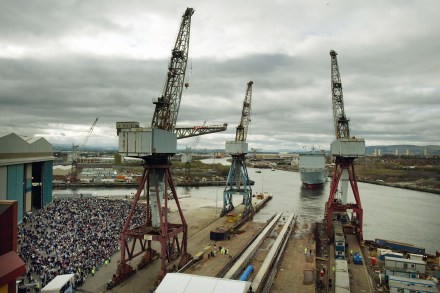
The sorry truth of the matter is that Glasgow has been in decline for a century. 1913 was the city's greatest year. Then it produced a third of the railway locomotives and a fifth of the steel manufactured anywhere in Britain. Most of all, it built ships. Big ships and many of them. A ship was launched, on average,  every day that year. In 1913, 23% of the entire world's production of ships (by tonnage) was built and launched on the river Clyde. It was an astonishing achievement and the high-water mark of Scottish industrial prowess. Ship-building, more than any other industry, became part of Glasgow's essence. The locomotives and the steel and the cars and the sewing machines might all disappear but so long as ships were still built on the Clyde something would remain.

Kirsty Wark’s diary: On the Caledonian sleeper, the new Donna Tartt, and a week of Edinburgh shows

From our UK edition

There isn’t a Scottish politician in living memory who hasn’t been on the Caledonian Sleeper. I always imagined Donald Dewar folding himself up in his berth, he was so tall. He was notoriously sniffy about the company he kept in the bar and once recounted the horror he felt when — stuck in snow — he was forced to fraternise with practically the rest of the Labour front bench for 22 hours somewhere south of Carlisle. Journalists tend to be more comradely. The other night, I took the sleeper in tow with an old family friend, the BBC reporter Allan Little. Over Glenfiddich and cheese we exchanged scurrilous gossip and book recommendations before, just north of Watford, he made his long way back to the Edinburgh end of the train.

Laidlaw by William McIlvanney – review

From our UK edition

Laidlaw was first published in 1977, 36 years back from now, 38 on from The Big Sleep. Like Chandler’s classic it has survived the passage of time. William McIlvanney did for Glasgow what Chandler had done for Los Angeles, giving the city its fictional identity. Hemingway used to say that all American literature came out of Huckleberry Finn; all Scottish crime writing — ‘tartan noir’ — comes out of Laidlaw. Two years before Laidlaw McIlvanney had won the Whitbread Prize for fiction with Docherty, a novel set in a mining community. This established him as the best Scottish novelist of his generation, and some of his admirers were dismayed when he followed it with a crime novel.

The greatest scandal in Britain is the failure to give poor children a proper education.

From our UK edition

Earlier this week, I was part of a panel on Newsnight Scotland discussing the latest - some would say, belated - efforts designed to improve Glasgow's dismally underachieving state schools. That they need improvement is beyond doubt. In Scotland's largest city, only 7% of state-educated pupils leave school with five good Higher passes. In Scotland as a whole a mere 220 children from the poorest 20% of neighbourhoods achieved three As at Higher (the minimum grades required for admission to leading universities such as St Andrews). As I said on the programme, this should be considered a national scandal. More than that, a disgrace. (Like Fraser, I wish more people were angry about these things.) To be fair, Glasgow City Council is trying.