Glasgow

A river runs through it

From our UK edition

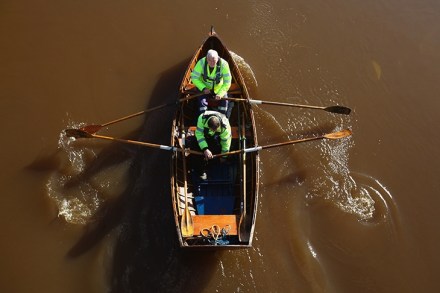
It sounds like something out of Dickens or a novel by Thackeray, a classic case of high-minded Victorian philanthropy, but the Glasgow Humane Society was actually set up much earlier, in 1790 (just after the revolutionary fervour in France demanded liberty, fraternity, equality), to protect human life in the city and especially on the river Clyde. It still exists and Glasgow claims to be the only city in the world to have a full-time officer dedicated to rescuing people from drowning. Back when it began the river and its banks were hectic with shipbuilding, trade and manufacturing. Now the city is almost ashamed of its river; no big ships, hardly any industry, little trade, and no longer a source of wealth and jobs. It has ‘turned its back on the Clyde’.
A soldier’s-eye view

From our UK edition

The first world war paintings of Paul Nash are so vivid and emotive that they have come to embody, as readily as any photograph, the horrendous, bitter misery of the trenches. His blighted landscapes represent the destruction of a generation of soldiers, men who were blasted apart as carelessly as the bomb-shattered mud in ‘The Mule Track’ (1918) or the reproachful twists of blackened wood and pocked land in ‘Wire’ (1918/9). These works are fixtures in our visual understanding of that war. It is strange, then, to see an exhibition of first world war art that excludes Nash, his brother John, and indeed any of the other artists we associate with the period. No Otto Dix or Max Beckmann, no Sydney Carline, William Orpen or John Singer Sargent. But, one little C.R.W.

Why dismiss a Catholic priest for being Catholic?

From our UK edition

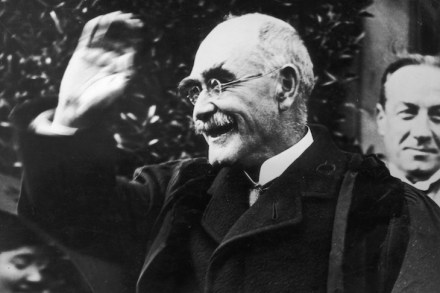
They’re just kids! What’s your problem? This has become the default reaction of a whole raft of clever people to anyone who gets hot under the collar about the fashion for students banning things in universities: speakers, ideas, books. It was ever this way, they say, and besides, sometimes the kids are right. The little episode of righteous vandalism at Manchester last week was a case in point. Students painted over a mural of Kipling’s ‘If’ in the newly renovated union building, on the grounds that he ‘dehumanised people of colour’. Kipling was a racist, they insisted, a man of Empire. Out came the whitewash and on top of it went ‘Still I Rise’ by the American civil-rights activist Maya Angelou. Newspaper columnists raged.

On the buses | 12 July 2018

From our UK edition

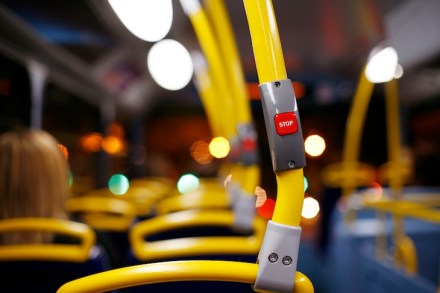
When did you last take the bus? If you don’t live in London, probably not for ages. In her two-part series for Radio 4, Mind the Gap, Lynsey Hanley set out to demonstrate just how difficult it is to access public transport outside the capital. In Skelmersdale, billed in the 1960s as a place of opportunity, a new town where everything would work better to make life easy for everyone, rich, middling and poor, no rail connection was built into the plan and now there are very few buses to get around. So bad is it that the council has had to set up a subsidised taxi scheme (euphemistically known as ‘the demand responsive transport system’) so that workers without cars can get to those offices, shops and factories no longer on a bus route.

Glasgow School of Art is much more than just an art college

From our UK edition

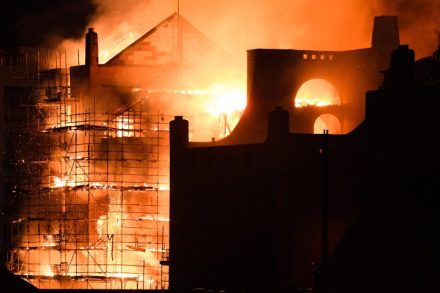
Let’s be clear. This is not Grenfell. The word ‘tragedy’ may be all over the news, Twitter may be full of despair, but no architectural loss can compare with the deaths of seventy-two people. Nevertheless, the response to the latest devastating fire at Glasgow School of Art really is visceral and profound, just as it was four years ago when part of the building that included Charles Rennie Mackintosh’s world famous art nouveau library, first burned down. The Mack, as the old section of the art school is known, is more than a building, more than an institution; it’s one of the cultural threads that runs through Glasgow, or at least through a wide slice of Glaswegian society.

Low life | 12 October 2017

From our UK edition

Early on Friday morning I flew from the north of Iceland to Reykjavik, from Reykjavik to Heathrow, then I hopped aboard the night sleeper from Euston to Glasgow Central to attend the wedding of Catriona’s eldest daughter, held the next day at the Winter Gardens of the People’s Palace on Glasgow Green. Three years ago, Catriona separated from her husband after a 30-year-long union. The separation was not amicable and is as yet unsettled. Apart from a glimpse at a graduation, the wedding was the first time they had been in the same room for three years. I was invited to the reception but not to the ceremony. As the new man in Catriona’s life, I imagined I would be a cynosure when I walked through the door that evening.

Barometer | 27 July 2017

From our UK edition

But me no butts Boris Johnson, being taught a Maori head-to-head greeting, joked that it might be ‘misinterpreted in a pub in Glasgow’. But did he offend the wrong city? In 2007 the OED appealed for details on the origin of ‘Glasgow kiss’, meaning a headbutt. Then, its earliest known first use was in the Financial Times in 1987, whereas ‘Liverpool kiss’ (meaning the same thing) was traced back to 1944. The appeal pushed back the Glasgow first use, but only by five years to 1982, when the Daily Mirror said: ‘Glasgow has its own way of welcoming people... there is a broken bottle gripped in the first of greeting. Or there’s the Glasgow kiss — a sharp whack on the nose with the forehead.

Low life | 11 May 2017

From our UK edition

I was sitting between mother and daughter on the sofa, and we were having a ‘wee night’ as Glaswegians put it. Having a wee night roughly means ‘celebrating’. Yesterday the daughter finished the final exam of her English degree. On the low table in front of us were three gin and tonics, two packets of fags, a souvenir ashtray from Dracula’s castle in Transylvania, a packet of transparent French cigarette papers, a plastic syringe with hash oil rammed up one end, a disposable lighter, a portable Bluetooth speaker, and an open laptop. Mother and daughter were taking it in turns to choose music videos on YouTube.

Local elections: Labour lose control of Glasgow council for first time in 40 years

From our UK edition

Labour’s performance in the local elections is going from bad to worse. The party has, for the first time in four decades, lost overall control of Glasgow Council. Not too long ago, the city’s council would have been a banker for Labour. Under Jeremy Corbyn, it’s a different picture. Labour needed to win 43 seats on the council to keep control. But having stood only 43 candidates in this election, they needed every single one to come through. That hasn't happened and the party's performance in Glasgow is likely to be the nadir in a dismal local election campaign. Labour’s pain isn’t the only story to come out of the results in Glasgow though. The SNP have increased the number of seats and could take overall control of the council.

Fade to grey

From our UK edition

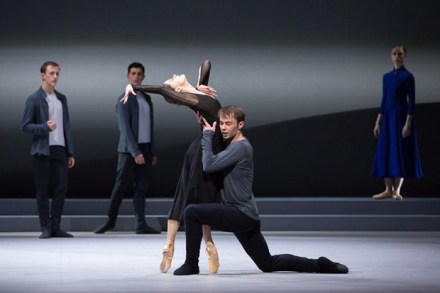
Every ballet company wants a box-office earner. But why Scottish Ballet’s leader Christopher Hampson kept on at David Dawson until he agreed to do a new Swan Lake is difficult to understand given the meh results. Dawson is a polite, undemonstrative choreographer, and his lack of enthusiasm has rather predictably produced an asthenic result. Obviously, abandon thoughts of white swans, or royalty, or Matthew Bourne’s brilliant, vaudevillian 1995 rewrite. This is, literally, a grey production in every way — or rather greyed-out, as if it were the ghost of something that was functional but is now impotent.

Rued awakening

From our UK edition

It’s always promising when the orchestra won’t fit on the stage. For the UK première, some 97 years after it was written, of the Danish composer Rued Langgaard’s Sixth Symphony (The Heaven-Rending), the BBC Scottish Symphony Orchestra filled every available inch of platform space, with four additional trumpeters perched in the choir seats. Everything was set for what the conductor Thomas Dausgaard described, pre-concert, as a ‘cosmic struggle between good and evil’. And god knows, it certainly made a fantastic noise. In a venue as compact as Glasgow City Halls, the onslaught of two sets of timpani had an almost physical impact. You felt the air wobble.

Painters triumph at Glasgow International – even though installations dominate

From our UK edition

Glasgow International Glasgow, until 25 April 2016 Kelvin Hall is a semi-derelict monument to the fag-end of Glasgow’s great art deco adventure. Built during the city’s industrial prime as an exhibition hall, it is now a building site, undergoing refurbishment. This has not stopped the Glasgow International art festival, the loose theme of which is the legacy of industry, from using it as a venue for two of the 78 exhibitions currently running across the city. Visitors must therefore navigate dilapidated stairwells and boarded up doorways to find the two rooms of art huddled in the front of the building. In the foyer is a show by Australian painter Helen Johnson.

Artist gets £15,000 of public funds to live in Glasgow and eat chips

From our UK edition

The Glasgow Effect is a term given by epidemiologists and sociologists to describe the disproportionate levels of ill health and early death in Scotland’s second city. Disproportionate, because even when the usual factors of poverty are accounted for, Glasgow exceeds expectation. People in Glasgow have the lowest life expectancy in Scotland but even the wretched figures given for the city as a whole mask appalling local discrepancies. In 2008, a study for the Centre for Social Justice found that a white male in the Calton area of the city could expect to live until the age of 54, some twenty seven years less than his Bearsden counterpart.

Giving Turner Prize to Assemble is like giving Booker to Thomas Piketty

From our UK edition

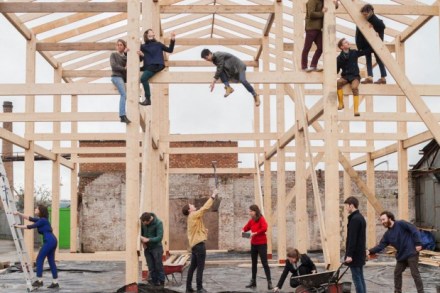
Within the first ten minutes of last night’s televised Turner Prize ceremony, someone had twice declared that the award was a ‘concept’. I must say, this was news to me: I’d always believed it was an award for contemporary art that existed to create a buzz around young artists who otherwise couldn’t get arrested. More often than not, one of the nominees is chosen to manufacture a bit of controversy – hardly the most noble objective, but it can make for a good half hour of telly. Kim Gordon forgetting what year we were in aside, what we got instead was in no sense good TV, but then that’s not really the point.

A lofty, lusty Laureate

From our UK edition

These Collected Poems, published halfway through Carol Ann Duffy’s time as poet laureate, make clear that she is a true Romantic poet in the tradition of Byron, Wordsworth, Elizabeth Barrett Browning, Anne Ridler and Elizabeth Bishop. In his introduction to Lyrical Ballads, Wordsworth defined Romantic poetry as ‘the spontaneous overflow of powerful feelings’. And these pages do indeed overflow. I have known Carol Ann Duffy since the late 1970s when her father, Frank Duffy, an AUEW shop steward, was the Labour parliamentary candidate in Stafford, the neighbouring constituency to mine, in Leek. Born in Glasgow in 1955, and educated in Stafford, Duffy left home in the 1970s to read philosophy at Liverpool University.

Glasgow

From our UK edition

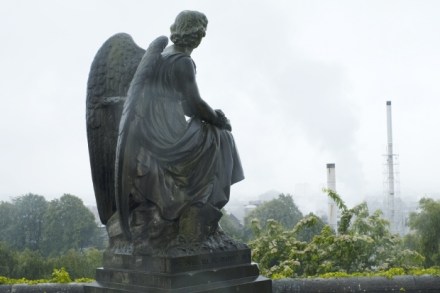
A wet walk in a Glaswegian graveyard might not be your idea of fun, but then you might not have spent the past two hours in the Glasgow Science Centre. Endure that, and see the sodden Necropolis stroll swell in allure. The Science Centre is one of the emblems of the new Glasgow. Rising from the old docklands on the south side of the Clyde, beside the BBC at Pacific Quay, it is one of the shouty new buildings leading the regeneration of the old shipbuilding areas. These buildings and their outlying friends still look like awkward blow-ins here, isolated blobs of glitter studding the wasteland. There’s not yet much sense of any connection with Govan Road, 200 yards to the west, but people are certainly coming here from somewhere for something, and in their multitudes.

Barometer | 9 April 2015

From our UK edition

The Scottish way of death Nicola Sturgeon said the SNP would block a rise in the state pension age on the grounds that it would be unfair to Scots, who don’t live as long as the English. — The idea that the Scots die early was fuelled by a study by the Glasgow Centre for Population Health in 2006, which found male life expectancy in the Calton area of Glasgow to be 54: less than in many developing countries. — The figure, derived from statistics collected between 1998 and 2002, was exaggerated by the presence of a large number of hostels in the Calton taking in drug addicts from other areas. Life expectancy in Glasgow as whole last year was 73 for men and 78.5 for women, the lowest for any council area in Britain but not by much. In Blackpool it is 74.3 for males.

My plan for Question Time: mug up and fail anyway

From our UK edition

I was invited on Question Time this week, which gave me a few sleepless nights. Natalie Bennett’s disastrous interview on LBC was a reminder that appearing on a current affairs programme in this febrile pre-election environment can be a bit of a minefield. Admittedly, I’m not the leader of a political party but that’s no guarantee I won’t make a fool of myself — a moment that will be preserved for ever on YouTube. There are no opportunities for glory on Question Time, but plenty for embarrassment. The most you can hope for is to get through the experience in one piece. By now you may well have seen what happened — but I am writing this on Tuesday evening, full of nerves. My biggest fear is that someone might ask a ‘funny’ question.

The long ordeal of Mackintosh’s Glasgow School of Art

From our UK edition

I was working on the final edit of my book — a fictionalised account of the year Charles Rennie Mackintosh spent in Suffolk — when news came in that his most famous architectural creation, The Glasgow School of Art, was on fire. My heart lurched. This was an unimaginable tragedy, not just for Glasgow, but for Britain. Students were weeping in the street. I struggled not to cry myself. Poor old Mac (as the Suffolk locals called him). He’d had enough bad luck already. Charles Rennie Mackintosh was a student at the Glasgow School of Art in 1895 when a competition to design a new art school was announced.

Keep calm and address Ebola: a brief history of pandemics at The Spectator

From our UK edition

Ebola clinics in many parts of West Africa are full, so more and more people are being told to stay at home and take Paracetamol and fluids if they become infected. It means if someone in your family gets Ebola, you all have to stay in the house, which is effectively a death sentence. At the moment, the disease is killing 70 per cent of the people it infects, but that’s likely to go up. People who need other medical treatment can’t get it, and in Sierra Leone 40 per cent of farmland has been abandoned. Western governments are building secure military encampments for health workers, fearing civil unrest and angry mobs. In 1898, there were plague riots in India after authorities brought in sanitary measures, including quarantine camps.