George vi

Springwood is a waste of time

From our UK edition

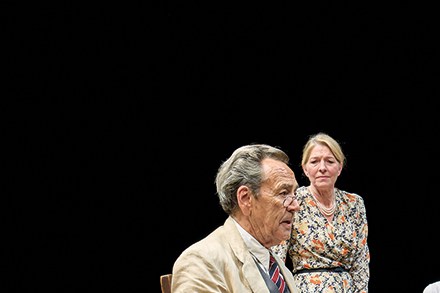
Springwood, set in June 1939, looks at a series of tricky meetings between the American president FDR and George VI at the Roosevelts’ family retreat in upstate New York. George and Queen Elizabeth are guests at the poky old house and although they complain to each other about their sleeping quarters they hide their dismay from their hosts. The writer-director, Richard Nelson, evidently despises the main characters apart from FDR (Robert Lindsay) who comes across as a genial old buffer addicted to whisky. The dialogue is divided into easy-to-handle segments. First, we get the history bit. FDR tells George that the US ought to join Britain in the coming war but pro-German sentiment is very strong and the majority of Americans may support Hitler. Then we get the therapy bit.
The vexed relationship of Winston Churchill and George V

From our UK edition

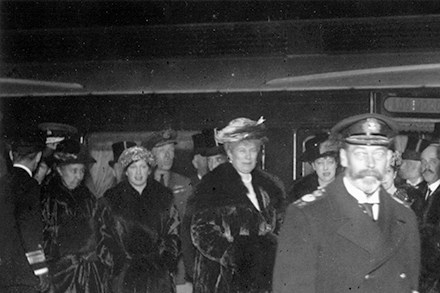
It is ironic that although Winston Churchill revered the concept of monarchy – his wife Clementine joked that he was the last believer in the Divine Right of Kings – half of the six monarchs under whom he served had anything but reverence for him.  He never met Queen Victoria, who signed his officer’s commission but died when Churchill was 26. He had a complicated relationship with Edward VII. As Prince of Wales, in 1876 Edward had been blackmailed by Winston’s father Lord Randolph Churchill, and had later slept with Winston’s mother, Jennie Jerome, after Lord Randolph’s death.

The exquisitely dull life of Elizabeth II, expert on cap badges

The dogs, horses, diamonds, furs, full-length evening gowns of lace and pearls; private jets and limousines; the ever-present jostling retinue; the push and shove of photographers and the clamour of crowds – Elizabeth Taylor and Elizabeth II had a lot in common, each taking themselves very seriously and needing to be seen to be believed. Whereas the Hollywood actress was majestic mainly in her vulgarity and brashness, however, the late Queen, as is evident in this pair of biographies, did her level best to be reticent, even non-existent. The best known of her few recorded utterances are ‘Oh really?’ and ‘Are you sure?’. She had a tendency to stare at a person with ‘absolutely no expression’, or at best ‘an expression of controlled irritation’.

Resolute, dignified and intelligent: Elizabeth II inspired loyalty from the start

From our UK edition

It was George VI who first called his extended family ‘the Firm’. Today, with so many injuries and key players on the bench, it might better be known as ‘the Team’ – and one struggling to avoid relegation. It’s what you might call a reign in pain. So it’s a good time for Alexander Larman to publish this appreciative, but not sycophantic, conclusion to his royal trilogy. Its predecessors were The Crown in Crisis (2020) and The Windsors at War, published last year. The latest volume concerns the period between VE Day in 1945 and the coronation of the late Queen Elizabeth in 1953 when, in Larman’s telling, the royal family successfully rebranded itself after more than a decade of crises, both internal and external.

Was the Queen Mother ever really funny?

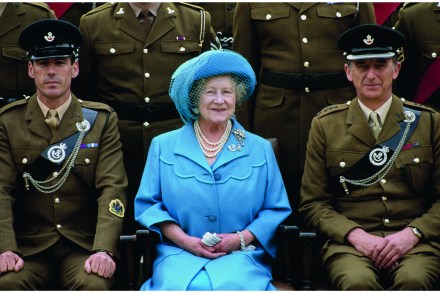
Was the Queen Mother ever really funny? She was clearly extremely good company: an attentive listener, full of enthusiasm and affection, right up until her death, aged 101, in 2002. She was also the ideal queen for an unconfident George VI, undermined by his stutter and caught unawares by his accession to the throne, thanks to the abdication of his appallingly selfish brother, Edward VIII. The only time I ever saw the Queen Mother — when she was eighty, at her Clarence House home — I was only eight, but I remember her clearly. A tiny figure, she beamed away, spreading goodwill among strangers when so many people that age have lost mobility, let alone the ability to cheer up other people. Grumpy George V had thought much the same of her charm nearly sixty years earlier.

queen mother

The Queen’s dedication to service was learnt at her father’s knee

From our UK edition

If you have ever thought that there cannot be anything new to say or to learn about the Queen, you have not yet read Robert Hardman’s revelatory new biography of her in this, her astonishing Platinum Jubilee year. Hardman has spent the past 30 years researching and understanding the British monarchy, and he writes with an extraordinary fount of knowledge but, even more important, with a heartfelt appreciation of what has been called ‘the genius of constitutional monarchy’ and for the members of the family who implement it. He has interviewed everyone possible, including Prince Philip’s German great-niece and almost everyone else on the German side of the family, of whom the Prince took great care – as he did with every aspect of his life.

A dutiful exercise carried out in a rush

From our UK edition

Like department stores, empires and encyclopaedias, the multi-volume narrative national history is an invention of the later 18th century. It reaches its apogee, promising to bring everything important within a single enclosure, in the 19th and early 20th century. After that, ambitious examples appear to be fighting against a general lack of enthusiasm. Most of these works are little read now, from David Hume’s 1750s The History of England all the way through to Winston Churchill’s idiosyncratic A History of the English-Speaking Peoples in the 1950s. The grand sweep has a tendency to define the significant in advance.