George osborne

Osborne’s inoculation strategy has worked

From our UK edition

Several of tomorrow’s newspapers lead on the IFS’ conclusion that those on the lowest income will suffer most from the cuts. This charge is problematic for the conclusion but far less problematic than it would have been if we hadn’t spent so much of the last few weeks discussing George Osborne’s decision to remove child benefit from families with a higher rate taxpayer in them. That change, however unpopular it may have been with normally Tory voters, inoculated the coalition against the charge that it was trying to balance the budget on the backs of the poor. Osborne’s preparation of the ground has not, though, stopped the Lib Dems slipping down to 10 percent in the polls.
IFS: The Spending Review was regressive – sorta

From our UK edition

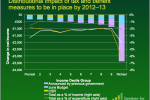
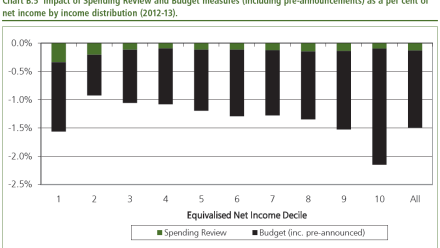
The second half of the IFS briefing was all about the distributional effect of the Spending Review. And you know what that means: decile charts – and lots and lots of them. As it happens, there were some areas of agreement between the IFS and the Treasury figures. Both, for instance, say that the welfare measures set out in yesterday's Spending Review will affect the least well-off the most. But there was one main area of disagreement. The Treasury says that its combined tax and welfare measures up to 2012-13 will be broadly progressive. The IFS says that they will be regressive. This is exactly the same issue that cropped up in August, when the IFS was commissioned to write a report by the End Child Poverty Campaign.

The ‘progressive’ debate re-opens

From our UK edition

Busy times indeed for the numbercrunchers and policy wonks. I'm at what is, in effect, the Institute for Fiscal Studies' third post-Budget briefing of the year: one for Darling's final Budget, one for the Emergency Budget and one, now, for the Spending Review. We're half-way through, but we've already been served a hefty chunk of meat: the IFS's analysis of what yesterday's Spending Review meant for public spending and for welfare. So far, there are mixed tidings for the coalition. The IFS's acting director Carl Emmerson - who is filling in now that Robert Chote has departed for the OBR - set the tone with his opening remarks. "By 2015," he pointed out, "departmental spending will be lower under this government than it would have been under Labour".

The morning after the day before

From our UK edition

The last time the doomsayers were proved so wrong was when the Hadron Collider didn’t blow us all up. Osborne’s cuts have come and life, the universe and everything continue insouciantly. In fact, the cuts were nowhere near as deep as many expected. As the graphic above proves (courtesy of ConHome), the press reaction is cordial, which was the best the Osborne could hope for. The Times (£) and the Guardian express concern about fairness, based on decile graphs that suggest the poor will receive less direct income from the state; and the Telegraph grumbles about the ‘squeezed middle’.

More to Osborne’s plan than gambling

From our UK edition

Paul Mason's review of the cuts for Newsnight last night (from 10:20 into the video here) was one of the most powerful critiques of Osborne from the left. His package majored on Osborne's decision to cut a further £11 billion from welfare and pensions, to soften the departmental cuts. Adopting a rather funereal tone, Mason declared that, "if you are poor, your life is about to change". He produced a decile graph, showing the poorest are hit second hardest. It foreshadowed this morning's Guardian cover: "Axe falls on the poor". Danny Alexander was fed to Paxo: "You said you would not balance your budget on the backs of the poor - when did you change your mind?" (Alexander performed very well - stunningly, even, given what he was doing only six months ago).

The Tory response to Osborne’s Spending Review

From our UK edition

George Osborne was well received by the 1922 committee of Tory backbenchers when he addressed them on the spending review earlier. There was much thumping of desks, the traditional sign of approval at meetings of the ‘22.   Talking to Tory MPs this afternoon, they are pretty happy with the package. They are glad that the money being taken out of the welfare budget means that the departmental cuts are less than expected. Overall, they think the package is politically sellable and has denied Labour that many targets.   One concern is about how local councils, including Conservative ones, might react to a 28 percent cut in their funding from central government.

A long way to go

From our UK edition

George Osborne has probably done enough to ensure that the public finances are back on track and that the national debt will not run out of control.   He has, however, taken only the first step on the road to reducing the size of the state. The government will spend the same proportion of national income in 2015 as it did in 2007. In other words, the size of the state will be no smaller when David Cameron goes to the country than when Gordon Brown left the Treasury.   Much more could have been done and low-hanging fruit has been left on the tree. Child benefit should have been scrapped for 16-19 year olds. Universal payments to pensioners (winter-fuel allowance, free TV licences and free bus travel) and the aid budget have been left untouched or increased.

Not as deep as expected

From our UK edition

The cuts are not as bad as expected because the government has managed to make AME, annually managed expenditure, take much of the strain. The coalition is finding another £7bn from welfare to go with the £10bn of savings announced in the Budget. There is also another £3.5bn coming out of other bits of AME, more than half of which comes from the planned changes to public sector pensions. The child benefit change is also raising significantly more revenue than originally announced. This is because at the time of the announcement at Tory conference the coalition was planning to end child benefit at 16. This is now not happening.

Ten points about the Spending Review

From our UK edition

In the end, George Osborne didn't flinch. The Chancellor is a clever political operator – too clever, sometimes – but the result is a cuts package that has surprisingly broad popular support. And this has been achieved, in part, by including measures that strike the likes of me as economically unwise. So much of this budget was known in advance that we didn't find out much new today. The below points are my thoughts not on the overall package – which I strongly support – but the pieces of it that we learned today: 1) Total state spending is falling by 3.3 percent in real terms over the next four years, at a lower level than the 3.7 percent forecast in the Budget.

The departmental cuts

From our UK edition

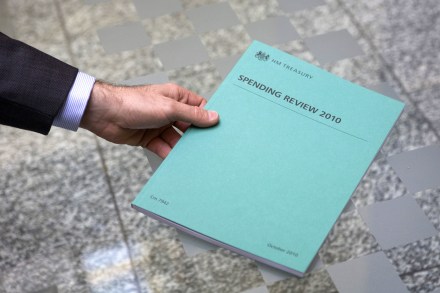
The Spending Review document is available here, but we've collected the cuts facing some of the main departments in the table below. This is not the complete picture of Osborne's announcements today: much of the action takes place in the separate social security budget, but we'll have more on that shortly.

Spending review live blog 

From our UK edition

1350, PH: And that's Johnson finished now. Osborne is responding, but we'll leave the live blog there. Plenty more coverage on Coffee House soon. 1348, PH: Johnson claims that Osborne's final point about 19 percent departmental cuts is misleading. He goes on to say that Labour would now cut departmental budgets by half the amount. 1346, PH: Labour's method for deflecting the increase in the NHS budget is taking shape: Johnson claims that it will be swallowed by a "wasteful" reorganisation of the service. 1342, PH: Now Johnson is focussing on the figure of 490,000 public sector job losses. He says that welfare cuts will make it harder for them to find employment. 1342, PH: More gags than graphs from Johnson, at the moment.

Osborne vows to play straight

From our UK edition

George Osborne’s statement is, I hear, about 40 minutes long. I also hear that there is no obfuscation in it about what is being cut. The coalition is determined that no one can accuse them of trying to disguise what they are up to. Given what we have learned from pre-briefing, the cuts must be just massive in the departments we haven’t heard anything about yet. There is word this morning that the legal aid budget is going to be being reduced by far more than was expected even at the weekend. It appears that legal aid is one of the things that took the hit as the Treasury tried to find some other money to make the numbers for the fairness premium and the defence review add up.

On the eve of the cuts

From our UK edition

In economic terms, the role of the Comprehensive Spending Review is a fairly straightforward one: to set Departmental Expenditure Limits for every government department, and outline some of the policy measures that will be undertaken to keep spending within those limits.   Fraser Nelson has already ably summarised the real impact that the spending review will have on public expenditure, so I won’t go into that here. Suffice it to say that, yes, the cuts are significant but, no, they aren’t nearly as severe as the BBC would have us believe.    But just as interesting as the cold, hard numbers themselves is what they will tell us about the government’s wider agenda.

Generous settlements mean gigantic cuts elsewhere

From our UK edition

I hear that the Department of Transport’s settlement is another one that is not as bad as expected. The capital statement is, apparently, positively reasonable. George Osborne’s commitment to infrastructure spending has meant that a good number of transport projects have been saved. On rail fares, I hear they will indeed go up significantly. But not by as much as the doomsday 30 to 40 percent scenario reported in the Sunday papers. Nearly all the settlements we have heard about so far have been less bad than expected. There must be, given that Osborne is sticking to the cuts schedule set out in the budget, some departments that are going to have to absorb absolutely massive cuts.

Putting the cuts into context

From our UK edition

Having been accused of being a “pain denier” by Tim Montgomerie yesterday, I’d like to quickly defend myself. In my News of the World column, I sought to put this in some perspective. I put in the fact that has been reported nowhere: that we know what the cuts will be. Total cuts to government spending will be 3.7 percent, spread over four years. It is debt interest which forces departmental cuts down to an average of 13 percent, again spread over four years. There will of course be real pain, for thousands of workers facing redundancy. For commuters facing a huge 30 percent rail fare increase.

Fox in the dock?

From our UK edition

Split-stories have their own momentum. As soon as you know that a certain secretary of state is in the dog house with Downing Street, you start seeing things through that prism. So when I saw that the press release on the government’s new national security strategy contained quotes from the PM, the Foreign Secretary, the Home Secretary and the Development Secretary, but not the Defence Secretary, I immediately regarded it – and perhaps wrongly – as part of the Westminster Fox hunt.   Liam Fox’s appearance on the Politics Show on Sunday was ill-advised.

Alan Johnson’s economic gamble

From our UK edition

The most shameless line of Alan Johnson's big speech came at the beginning. "Being in opposition does not mean pretending to be in government," he averred, "we will not be producting a shadow spending review." Which would be fair enough, were it not for one simple fact: the Brown government didn't produce a spending review when one was due, last year, either. In which case, Labour's new economic policy is much like their old one. They are sticking by the Alistair Darling plan to halve the deficit over this Parliament, which is encouraging given some of the alternatives. Yet there is still not much detail about how this might actually be achieved. As he has done over the past few days, Johnson riffed on about increasing the taxes on banks.

The presentational battle begins in earnest – as the double-dip warnings wind down

From our UK edition

Rule 97 in the Practitioner's Guide to Westminster Politics: if you want to get a message out pronto, then corral a bunch of impressive names into writing a letter to a national newspaper. We saw the tactic used by both Labour and the Tories before the election. And we see it again today, with a letter in the Telegraph, drafted by the Tory peer Lord Wolfson and signed by 35 business leaders, pushing George Osborne to "press ahead with his plans to reduce the deficit". And you know what? He may just do that. In truth, these kinds of letters are hardly a bad thing for the government, however stage-managed they might be. As the week of the spending review kicks in, the headline that people will see is: "Cut now or pay later, say business leaders".