George osborne

Osborne’s conjuring trick

From our UK edition

Earlier today, the government unveiled Project Merlin, its attempt to link executive pay in banks to institutional lending, whilst driving down bonuses and increasing the Treasury's revenue take. Here are its key components: Osborne welcomed ‘the most transparent pay regime in the world.  Executive pay will be linked to targets for gross lending; remuneration for the top ten highest paid staff in each financial institution will be subject to the approval their board’s remuneration committee; in 2012, all large banks will have to publish payment details for members of their board and the 8 most high paid staff members. He then promised a new deal for small business lending.

Osborne bests the Man With A Past

From our UK edition

Balls is a bit like a vampire – he has bite, but he works best in the darkness. In the House of Commons, with those lights shining on him, his powers drain. George Osborne had the better of him in their brief exchanges at Treasury Questions. Balls led on the snow joke. But Osborne had pre-empted that earlier, when he first stood up. Balls teased him about going to Klosters in the winter, but these things only work in newspapers where you can run a picture of Osborne in ski gear. It leaves the House cold.   The key Osborne line was that Balls is “the man with a past” – and how. It was said with just the right touch of menace. And he had a fairly decent gag: that Eds Miliband and Balls both “know what's it's like to be people's second choice.

What has Osborne done today?

From our UK edition

In October last year, Osborne announced a new levy on banks’ balance sheets. It was 0.05 percent for this calendar year, before rising to 0.075 percent from 2012 onwards. But, today, the Chancellor has announced that the ‘introductory’ rate has been abolished – so banks will be charged the 0.075 percent rate on all liabilities. Here's my nine-point Q&A, by way of delivering my take: 1) So, a retrospective tax? Not quite. He’s imposing a 0.05 per cent rate on balance sheets in January and February. But he’ll up the charge to 0.1 percent for March and April to compensate. It will go back to 0.075 percent in May. This is a move clearly intended to generate revenue, rather than change behaviour. 2) How much will he nab?

Osborne quells some dissent with his latest ruse

From our UK edition

This morning’s newspapers would have made grim reading for the government. The Department for Transport has been forced to reverse its helicopter privatisation plan, there are doubts that the baccalaureate will suit Michael Gove’s education reforms and diverse packs of hounds have converged on the Big Society fox – and this is a cruel bloodsport.  But, the master tactician has struck again. George Osborne’s sudden decision to raise an extra £800m through this year's banking levy has relieved some pressure from the government. This is a minor operation by the standards of Osborne’s previous political coups, but it diverts attention and illustrates that the government is making some progress in the arduous slog against the banks.

Osborne v Balls at Treasury questions

From our UK edition

Tomorrow is the first Osborne Balls Treasury Questions clash. It should be a fiery encounter. There’s little love lost between the two men, they are both aggressive despatch box performers  and the two of them know that their clash over the economy is likely to be the major factor in determining the next election result. Balls has a fair amount of material to work with: the disappointing growth—or, more accurately, non-growth—figures for the final quarter of last year, the limited success of the national insurance holiday for new small companies and the failure to publish a growth plan.

The laddie is for turning

From our UK edition

In opposition, one of David Cameron’s strengths was the speed at which he dumped bad ideas. But, now, he is starting to acquire a habit for U-Turns – especially those called for by minor celebs. We’ve seen Scottish school milk, NHS Direct, BookStart, school sport – and soon, I suspect, forests, World Service cuts and (the biggie) NHS reform. A depressing pattern is emerging: anyone with a decent two-day campaign and a splattering of celebrities can probably force a concession out of the government. I make this case in my News of the World column (£) today. Here is a summary of my main argument. 1. Cameron seems to be pioneering the Celeb-induced U-Turn.

Ten things you need to know about the IFS Green Budget

From our UK edition

An exciting day for policy freaks and numbers geeks: the Institute for Fiscal Studies has released its latest Green Budget, an annual survey of the state of the public finances. But if you can't face wading through the complete 329-page document, here's our quick ten-point summary of its main conclusions: 1) IFS forecasts "slightly lower" growth than the OBR. As this comparison shows: 2) But they're more optimistic about borrowing. According to the IFS, borrowing won't be as high as the government expects. The differences between their forecasts and the OBR's are only minimal, but they're there all the same: 3) The tax and spend forecast.

Osborne’s tax headache

From our UK edition

No doubt about it, George Osborne is being pulled in two directions ahead of the Budget. There are those, such as the Lib Dems, who would have him reduce taxes for the least well-off. There are those, such as Boris, who would have him reduce taxes for higher earners. As I suggested yesterday, this debate pivots around two particular measures: raising the personal allowance and cutting the 50p rate. Rachel Sylvester develops the story in a typically insightful column (£) for the Times today. It quotes an "ally of the Chancellor" to the effect that Osborne is minded more to raise the personal allowance than to cut 50p. "Not many Tories want to reverse the 50p top rate," says her source, "We are big fans of raising the threshold and would see that as the priority.

What are Osborne’s options?

From our UK edition

One of the most eyecatching political reports of the weekend was squirrelled away on page 16 (£) of the Sunday Times. It's worth clipping out for the scrapbook, even now. In it, Marie Woolf reveals some of the fiscal sweeteners that Osborne might sprinkle into the Budget. There are two particularly noteworthy passages: i) Raising the personal allowance. "The income tax threshold is already set to increase by £1,000 to £7,457 from April 1. However, Osborne is expected to raise it by about a further £500. Details of the additional concession are still being worked on, but it marks a victory for the Liberal Democrats, who have been arguing within government for tax cuts for the poor." ii) Holding off on 50p.

The coalition feels the squeeze

From our UK edition

The Institute for Fiscal Studies are out prowling the airwaves again, and they bring happy and unhappy tidings for the coalition. On the happier side, at least presentationally speaking, is their assessment that, "those being hit the very hardest [by tax and benefit changes] are those on [a] higher level of earnings" – just as Cameron and Clegg suggest. But far less marketable is the IFS's claim that 750,000 people will be pulled into the 40 per cent rate of tax as a result of the threshold being reduced from £37,400 to £35,001 this April.   To be fair to the government, they have at least been upfront about this tax change.

Ed Balls won’t answer the important questions

From our UK edition

So Ed Balls has made his decision. In articles and a TV interview today, he has decided that, instead of apologising for his part in bringing Britain to the state it's in today, he will deny what he did. It was the consensus that Britain had the biggest deficit in the G7 going into the crisis, because that's what the facts show. Contrary to Balls' assertions, Britain ran a structural deficit for the seven years running up to the crisis – the figures are right there in Labour's own Budget red books. And it's the consensus that Labour left the biggest deficit since the war, since it's a fact. Given Balls' role in creating these two disasters, he should try owning up, not covering up.

Boris: George knows I’m right

From our UK edition

David Cameron and George Osborne must have hoped that their message from Davos today would be broadcast unimpeded. It is, after all, a blunt message, designed to smash through all the radio chatter: we must continue with deficit reduction, there is no alternative, etc. But, inconveniently for them, there are other voices saying what we must do – among them Boris Johnson. The Mayor of London's interview with the Telegraph is at once typical and quite intriguing. Typical, because he holds aloft the same standards as always. "I understand 50p tax politically," he says, "but there has got to be a sense of where we are going and where we want to be as a country.

What to make of the GDP fall?

From our UK edition

"Recession here we come, a snow-dabbed double-dip" tweeted Faisal Islam, Channel Four's economics editor. He summed up much of the hysterical reaction. It may spoil a good story, but here is what I suspect the broadcasters won't tell you today. 1. Erratic GDP swings are common when recovering from a recession. Remember how stunned everyone was with the surging quarter three data? Now, we're all shocked by plunging quarter four figures. I'd advise CoffeeHousers to treat these two imposters just the same. After the 80s recession, quarterly growth rates swung between -0.7 percent and 1.5 percent. Following the ERM-induced recession in the 90s, growth rates swung between -0.2 percent and 0.5 percent. A swallow does not make a summer.

Outgoing head of the CBI slams the government on growth

From our UK edition

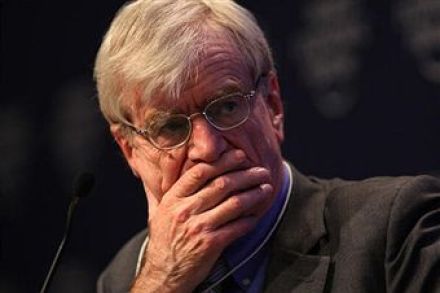
Richard Lambert has launched an uncompromising but constructive assault on the government’s growth strategy, or lack of it. He said: “The government is…talking about growth in an enthusiastic and thoughtful way… But it’s failed so far to articulate in big picture terms its vision of what the UK economy might become under its stewardship. “What I feel is that a number of their initiatives – I’m thinking of the immigration cap, I’m thinking about their move on the default retirement age, about the carbon reduction commitment - have actually made it harder for companies, or less likely for companies to employ people. And what we want, actually, is a sense of direction, a sense of ambition.

DD’s classy intervention

From our UK edition

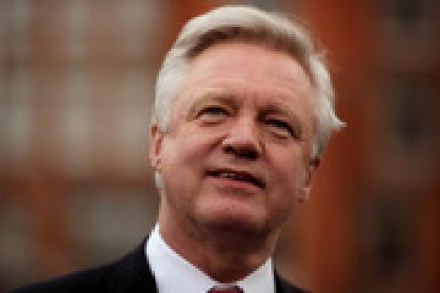
David Davis’ interview on Jon Pienaar’s show this evening has revived the debate about whether or not it matters how posh the Cameron top table is. Andy Coulson was the most senior person there who understood what it is actually like to work your way up the ladder and with him gone that experience is missing. But what matters far more than the personalities involved is the policy outcomes. As I said in the Mail on Sunday, the most important thing for Cameron to do is to deliver for these voters. To cut their taxes and give them public services that offer them value for money.

Sizing up the runners and riders to replace Coulson

From our UK edition

I suspect the identity of the Prime Minister's next director of communications is of far more interest to those who work in Westminster than those in the country at large. But the identity of Coulson's successor will reveal something about the balance of power in the coalition and at the Cameron court. I'm told that the Tories are in no rush to make the appointment, they'd rather take their time and try and find the right person. Despite what Nick Clegg said on Marr this morning, I'm informed that this will be very much a Tory-run selection process. Those in the know say that as with the Coulson appointment, George Osborne will play the crucial role.

Exposing the con man

From our UK edition

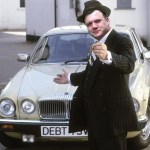
  To the chagrin of CoffeeHousers, I have long rated Ed Balls and his abilities. He has a degree of brilliance, albeit tragically deployed in the services of a destructive economic agenda. But as we welcome him back, it’s worth reminding ourselves that his abilities are of a specific type. He understands economics (even though he did PPE) but his speciality is in creative accounting. His only tactic is to spend, borrow and cover both up by cooking the books. He is a trickster, not an economist. More Arthur Daley than Arthur Laffer. In my News of the World column today (£) I say he is dangerous to Labour as well as the Tories, perhaps more so. But it’s worth recapping what we’re dealing with.

The Tories waste no time in getting stuck into Balls

From our UK edition

One thing worth noting before we discuss Balls’ appointment is that the reasons Johnson have resigned are personal. It is not about his competence or otherwise. The Tories are wasting no time in getting stuck into Ed Balls. One just said to me, ‘the man who created this economic mess is back. He designed the fiscal rules that failed, he designed the FSA that failed…’ Certainly, the Tory attempt to make Labour’s economic record the premier political issue has just become a lot easier. Balls will be a more aggressive opponent for Osborne. But I suspect that he will prefer facing Balls to Yvette Cooper.

Renaissance Balls

From our UK edition

Balls is back. The author of Gordon Brown's economic policies for 15 years. The man who bears more responsibility for anyone else - other than Brown - for the asset bubble and the consequent crash. But I suspect that, right now, Theresa May is doing cartwheels and George Osborne cursing. Balls, for all his many drawbacks, is the most ferocious attack dog there is. His brilliance (and I hate using that word) at using numbers as weapons far surprassed anything the Tories could manage in Opposition. His policies are reckless: to borrow, and to hell with the consequences. His modus operandi is to launch around-the-clock attacks. He has powerful media contacts, and uses them to full effect. He is the most able fighter in Labour's frontbench, as he proved in the leadership contest.

Balls replaces Alan Johnson

From our UK edition

Ed Miliband has just taken the biggest risk of his leadership in appointing Ed Balls as his shadow Chancellor. Balls’ is not a man who take orders and his view on the deficit is noticeably different from Ed Miliband’s. He is also the person most closely associated with Gordon Brown’s economic record. George Osborne will relish this fight. During the vacuum between Ed Miliband winning the leadership and the shadow Cabinet elections, Osborne prepared for facing Balls. He told friends, ‘we’ve circled around each other long enough. It is time to get on with it now.