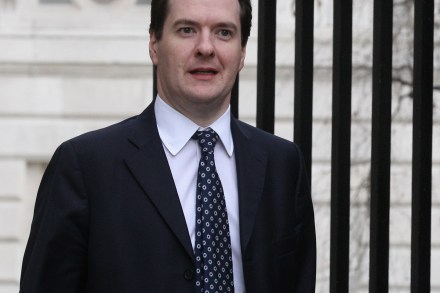
George osborne

Osborne’s new, softer cuts

From our UK edition

George Osborne has today done some massive juggling. It wasn't a Budget for jobs after all, but a Budget to help people cope with the soaring cost of living. North Sea oil companies and banks were stung for various income, fuel and corporation tax cuts. The Chancellor spotted — immediately — that cost of living was the No.1 issue and turned on a sixpence. His skills as a politician were again demonstrated. But let's not fool ourselves. Fiscally, today's is not a big Budget. What movement there has been is to make the cuts programme even milder than it already was. The "total cuts" figure is, oddly, not printed in the Budget. Perhaps because it's so embarrassingly small. After the Autumn Statement, it was 5 per cent over four years. Now it's back to 3.
Osborne’s white rabbit

From our UK edition

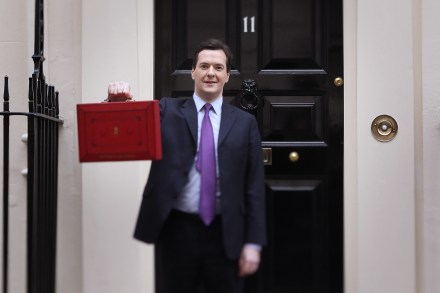
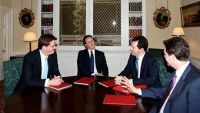
We can expect at least one rabbit out of the hat in George Osborne’s Budget speech. The Chancellor is a canny enough operator to have held at least one big announcement back. Already this morning, we have had news that all councils will freeze or reduce their council tax next year. But I expect there is one more on fuel to come in the speech itself, possibly the suspension of the fuel duty escalator for this parliament. This move would be expensive but it would also say I feel your pain and stop Osborne having to come back to the price of petrol every year. For Ed Miliband, today will be a test of his ability to think on his feet.

The levers that Osborne might pull

From our UK edition

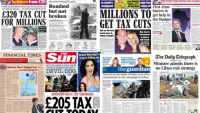
Cutting taxes for the low-paid is the most useful thing Osborne can do in what will, I suspect, be a distinctly unmemorable budget. The Mail and The Sun both have competing figures — £205 and £320 — for the annual rebate. Given that the average Brit is paying £310 more due to Osborne's VAT rise in January, one might forgive taxpayers for not punching the air. And anyone on more than £25k a year is still face a higher tax burden than they did three months ago. But the beauty of Budget day (as Osborne knows) is that you have can just present one side of the ledger. You can show the 'give', not mention the 'take' and end up with front pages similar to those which Pete mentioned earlier.

Budget morning

From our UK edition

George Osborne couldn't really have expected a much better set of newspaper covers than the one before him this morning. Despite the dreary background picture – war, confusion, higher inflation, lower growth, the ruinous state of the public finances, etc – a handful of papers are leading on the goodies in his Budget, and specifically the £600 rise in the personal allowance that James mentioned last night. Judging by the movements of the grapevine, this will come into effect in April 2012, and will benefit more people than will the £1,000 rise already announced for this April.

Budget eve

From our UK edition

In stark contrast to 2003, when Gordon Brown delivered his Budget on the same day that Baghdad fell, the Treasury is phlegmatic about the Budget being overshadowed by Britain’s involvement in a conflict overseas. But the signs are that this will be, within the obvious fiscal constraints, an ambitious Budget. Tonight, we have had confirmation of a raise in the income tax allowance to £8,000, something that will please the Lib Dems . Tomorrow, we’ll almost certainly get at least one unexpected rabbit out of the hat. What we do know is that the Budget and the growth review will be built around four things: deregulation, planning reform, tax simplification and targeted investment.

Three principles that should underpin the Budget

From our UK edition

As I see it, there should be three simple principles underpinning George Osborne's Budget tomorrow. Let's take them one by one: 1) Variations in household wealth mean that policies aimed at affecting the wider economy will often have unpredictable political effects. Economists have a tendency to imply that changes in GDP affect everyone uniformly, but this isn’t the case. What’s more, journalists are quick to highlight extreme case studies that make good stories, but they can misrepresent the actual picture. Policy will do a lot to influence the economic climate, but the local economic weather will be more relevant to taxpayers. At the same time, the recovery can’t be managed through Whitehall.

Spiralling inflation continues to squeeze some more than others

From our UK edition

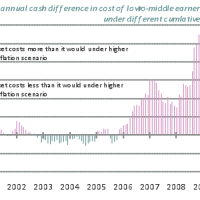
The February inflation figures spell more bad news for living standards in the UK. With average weekly earnings growth standing at just 2.2 per cent, millions of workers continue to get poorer in real terms. However, differences in the make-up of typical "shopping baskets" mean that the spending implications of inflation vary by income group. Since 2007, inflation has been driven primarily by increases in food and fuel prices. Given that such staples account for a larger share of weekly expenditure among lower income households than among higher income ones, the impact is felt more acutely in the lower half of the income distribution.

Allowing growth, not forcing it

From our UK edition

What is a “Budget for Growth,” and how can one be delivered? These questions have been preoccupying civil servants across Whitehall, policy folk in think tanks, and the press since the coalition announced in November that it would be reporting back on its “Growth Review” in the 2011 Budget. While foreign events rightly moved discussion of the impending Budget further back in last weekend’s papers, there was extensive coverage of the potential for targeted tax cuts and reliefs and incentives targeted at particular industries or sectors. The obvious problem with a number of these is that they cost money, and this is something the coalition does not have in spades. However, even if it did, should it be spending money trying to deliver growth to the economy?

Your five-point guide to tomorrow’s Budget

From our UK edition

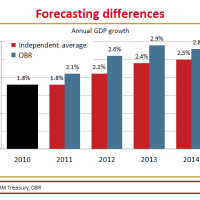
From rescue to recovery — that's how George Osborne is selling his Budget ahead of its release tomorrow. But what might we see beyond the rhetoric? Here's a five-point guide for CoffeeHousers:   1) Growth. It almost feels like a tradition now: a new Budget, and a new set of forecasts from the Office for Budget Responsibility. Chief among them will be what the OBR says about growth. Its previous forecast for 2011, made last November, was for 2.1 per cent growth in 2011 — but that will almost certainly be downgraded after the mini-slump in the fourth quarter of last year. As this graph shows, the average of the 39 forecasts collected by the Treasury is now at 1.

Inflationary troubles ahead of Osborne’s Budget

From our UK edition

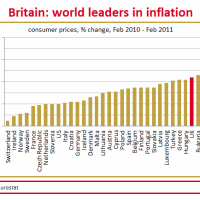
Unwelcome news for George Osborne: he will tomorrow present his Budget against a backdrop of the highest inflation for 20 years. The RPI index — what the nation called “inflation” until Brown changed the definition — is 5.5 per cent. It hasn't been this bad since the aftermath of the ERM crisis, an unhappy comparison for the Tories. The CPI index is up to 4.4 per. And those who deploy the usual arguments about global food prices are spiking might wonder: why is Britain now even worse off than Greece?     Even the Zimbabwean media is laughing at us (their inflation is now considerably lower than ours). It's shocking, but not surprising.

Here’s how Osborne should reduce the tax gap

From our UK edition

Some commentators have argued that the right way to reduce the deficit is to take on large scale tax avoidance rather than public spending. The argument goes that large companies are shirking their responsibilities, while families and small businesses carry the burden of rescuing the public finances.  Yet the evidence on who is actually avoiding tax does not support this. For example, HMRC data show that three-quarters of the £40 billion tax gap (the difference between the amount collected and the amount that should be collected) is due to VAT, Income Tax, National Insurance and Capital Gains Tax. Reducing the tax gap not only requires a focus on the big end of town but on the activities of many families and small to medium enterprises.

Why Osborne is so interested in merging income tax and National Insurance

From our UK edition

When trying to understand George Osborne Budgets, you need to bear in mind the mantra that he and his team live by: in opposition you move to the centre, in government you move the centre. It is this desire to move the centre ground that lies behind Osborne’s keenness to merge income tax and national insurance. As I say in the Mail on Sunday, the thinking behind it is that if people were more aware of how much tax they really paid, they’d be more inclined to vote for low-tax parties. At the moment, National Insurance is one of the taxes people are least aware of as it is simply deducted from their pay cheque. It is no coincidence that the most unpopular taxes—council tax, inheritance tax—are the ones that voters are most aware of paying.

The allies converge on Gaddafi

From our UK edition

George Osborne appeared on the Andrew Marr show this morning to introduce the Pledge of his Budget magic trick. But Marr and his viewers wanted talk about the show of military strength over Libya. Osborne reiterated that the government is committed to enforcing the UN Resolution and had no plans to deploy ground troops at this stage. He refused to rule out the use of British ground forces in the future. Privately, officials are trying to dispel the perception that the UN Resolution forbids the use of Special Forces commandos to assist the bombing campaign. The Resolution does not permit an occupation, but it would be very surprising if covert operations were not already being planned against Gaddafi's military installations and logistical infrastructure.

George Osborne’s Budget magic trick

From our UK edition

Spare a thought for George Osborne and Danny Alexander. They had their own budgetary magic show planned for Wednesday, and were yet again planning to be the Paul Daniels and Debbie McGhee of British politics. Now, it looks like they’re going to be competing with exploding Libyan MiGs for the national attention. This Budget was, as James says in his cover story this week, the government’s great hope for getting itself back on track. Grabbing the newspaper headlines, resetting the narrative etc. Now, the budget will be overshadowed by war. These Tomahawks don’t come cheap and Osborne has pitifully few cards to play.

The world according to Alistair Darling

From our UK edition

There was a time when  "http://blogs.wsj.com/iainmartin/2010/04/30/alistair-darling-labours-caretaker-leader-in-waiting/">commentators on the right thought that Alistair Darling may become Labour leader, such was the respect he commanded. Alone among Brown’s Cabinet, Darling rose above the ideological opportunism and infighting to emerge with his reputation enhanced. Darling is ready to tell of his part in New Labour’s downfall. This morning’s Independent "http://www.independent.co.uk/news/people/profiles/alistair-darling-we-were-two-hours-from-the-cashpoints-running-dry-2245350.html">previews the book by interviewing the former chancellor.

Another Budget snippet

From our UK edition

Benedict Brogan's latest post is built around an observation from Jo Johnson on the 50p rate, yet it is Brogan's own observation that gets a place in our Budget scrapbook: "Some people I have spoken to think George Osborne might be sufficiently worried about the growing exodus of entrepreneurs to put down a marker on 50p in the Budget next week." Whether this "marker" transpires — and what it might look like, if it does — is something we shall have to wait for. In the meantime, it's worth noting that Labour have already set a marker on 50p: that it will have to remain for the duration of this parliament, at least. There is a clear opportunity for Osborne to define himself, and the coalition, against that.

Actually, there’s some solace for Miliband in today’s poll

From our UK edition

Much excitement, today, about the fact that Ed Miliband is just as unpopular as Nick Clegg. A pre-Budget package by Ispos-MORI contains the finding that both party leaders are actively disliked by 51 per cent of the public. It's a striking result, particularly after the tuition fee furore — yet, sadly, it isn't new. It actually comes from the political monitor that Ipsos MORI released in January. They didn't ask the question for their March political monitor. So far as the Clegg-Miliband divide goes, the latest Ipsos MORI figures actually have this to offer us: net satisfaction with Miliband's performance as party leader is at -5 per cent, whereas it's at -22 per cent for Nick Clegg. So, not great for either leader, but considerably better for MiliE.

Osborne’s grand merger?

From our UK edition

George Osborne's Budget — his plan to deliver us from “rescue to recovery," apparently — is less than a week away, and the wildfire of speculation is taking hold. Perhaps the most intriguing titbit in today's papers is one that also appeared in the Express last Saturday: that Osborne is considering merging income tax and national insurance. This is a measure that the Office for Tax Simplification recommended in a report last week, suggesting that it would ease the administrative burden on small businesses. Yet that simply echoes a viewpoint that stretches back decades.