George osborne

Our monetary policy needs sorting — and quick

From our UK edition

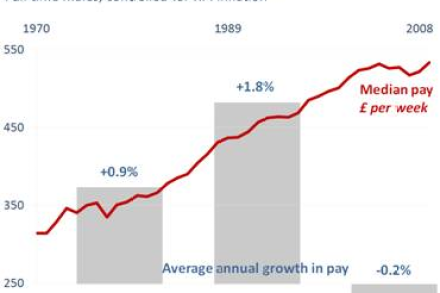
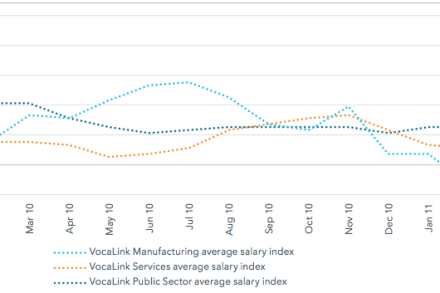
Today’s decision to leave base rates at an emergency 0.5 per cent — the lowest since the Bank of England was founded in 1694 — shows how Britain is running out of options. Not even Mervyn King would deny that Britain has an inflation problem: global prices may be up, but the UK seems to have been hit worse than almost any major economy, as I blogged yesterday. With food prices up by 6.3 per cent and CPI inflation by 4.1 per cent, what’s happening to prices? The below graph, again out today from a FTSE350 survey, suggests that pay is up by just 0.5 per cent in the private sector. And it’s even worse in the manufacturing sector.   You could argue that one should not compound this pain by jacking up debt interest.
High tax Britain

From our UK edition

The government says that the forthcoming budget is going to be all about growth. And rightly so: the economy is still in the doldrums, and without much stronger growth than we are currently witnessing, the coalition has no hope whatsoever of balancing the budget by 2015. But few of the measures being trailed in advance are likely to have much effect, so long as Britain is stuck with a highly uncompetitive tax regime.    International tax surveys highlight just how bad our comparative situation has become. According to KPMG, out of the 86 largest economies in the world, we now have the fourth highest top rate of tax.

Labour’s inflation pitch

From our UK edition

Curiouser and curiouser. We in Coffee House have been saying for some time now that – whatever Mervyn King thinks – Britain has the worst inflation in the Western World apart from Greece. An OECD report out today shows we’ve got it worse than most eastern countries too. Korea, Turkey and Estonia are the only eastern nations with higher inflation: But what strikes me most about today is that food prices are soaring here, to an extent far worse than the rest of the world. This is what voters notice most: putting food on the table is very expensive. As Micawber might put it: annual food price inflation 6.3 per cent, annual wage inflation 2.5 per cent, result: misery. And plenty of it.

Some context for those police cuts

From our UK edition

What's it to be? Take a pay cut, or lose your job? That, as David suggested earlier, is the question being posed by Theresa May to police forces – and it's a question that they cannot shirk. With the police budget being cut by 4 per cent a year, there have to be reductions of one sort or another. And if they don't come from pay restraint – along the broad outlines of Tom Winsor's review today – then there will no doubt have to be extra job losses. This is the argument that George Osborne set out in his 2009 conference speech, only now it's being deployed from government. Not that there won't be job losses as well. Conveniently enough, a memo from the Association of Chief Police Officers puts a number on it all, and has been leaked to the Guardian.

Why Ed Miliband’s getting it right on the cost of living

From our UK edition

George Osborne's budget, due in two weeks' time, will be billed as an agenda for growth. This is welcome, but a year late. The burning agenda now is the cost of living. It was our cover story for The Spectator last October: why fret about mild 1 percent-a-year cuts, we asked, when the real killer will be prices? Petrol at 130p a litre is only the most visible sign of this. Other horrors confront shoppers in the supermarket - salmon fillets up by a third, potatoes and butter by a quarter. When Alan Duncan speculated that petrol could hit 200p, he was on the right scent. While the BBC is talking about cuts and Osborne is talking about jobs, Ed Miliband is now talking about the cost of living - even helping to launch a Commission on the Cost of Living.

Osborne’s political economy

From our UK edition

George Osborne’s speech to the Tory spring conference today showed the classic left-right way in which he wants to frame the political debate about the economy ahead of the Budget on the 23rd of March.  In a move straight out of the election-winning centre-right playbook of the 80s, he attacked Balls and Miliband as “Two left-wing politicians who don't understand anyone who wants to get up and get on, anyone who want a better life for their family, anyone who want to create wealth, and start a business, and create jobs, and leave something to their children.

Fuel for the fire

From our UK edition

On any normal day, a missive from Tim Farron to George Osborne – urging him to axe the planned rise in fuel duty – would be striking enough. On a day when the Lib Dems finished sixth in a by-election, it has a whole lot more piquancy to it. I'm not saying that the Next Lib Dem Leader™ is trying to cause trouble, or even hastening to shore up support. He has, after all, been dutiful in defence of the coalition this morning, and he has been highlighting fuel costs for some time now. But Lib Dem backbenchers clearly have some demands for the government – and now's the time for this one. Farron's point is that the Treasury can use some of it's stronger-than-expected incomings to stave off the hike.

Hunt’s rising star

From our UK edition

The decision on News Corp's take-over of BSkyB has thrust Jeremy Hunt into the spotlight. The culture secretary is many Tories' bet to be the next leader of the party. Hunt is ambitious even by political standards: during the Brown bounce he canvassed opinion as to whether he should stand in the Tory leadership contest that would follow an election defeat, and has a John Major like ability to make factions in the party feel like he is one of them. Add to this, a good television manner and one can see why people think he'll go far. One of the odd things about politics is that there is no heir apparent to Cameron in the Tory party. Hague used to be considered the obvious emergency replacement. But that is no longer true.

Promoting Cameron from a party leader to a national leader

From our UK edition

Danny Finkelstein’s paean of praise (£) to Andrew Cooper, the PM’s new director of political strategy, contains several interesting lines.  Finkelstein says that his former flat mate’s biggest challenge is, ‘Devising a strategy for changes in the NHS so that a critical political battle isn’t lost disastrously’. This is yet another indication of how nervous Osborne and co are about Lansley’s reforms and reopening the NHS as a political issue. The second is him reporting that Cooper will tell ‘Cameron to be a national leader, rather than a party politician. Especially in the Commons.

Osborne goes on the offensive

From our UK edition

Attack, attack, attack. That's the temper of George Osborne's article for the Guardian this morning, which sets about Labour's economic credibility with a ferocious sort of glee. Perhaps the best passage is where he asks how many times Labour can spend their ubiquitous "bank tax," but this is more pertinent to the recent debate: "Where does all this leave Ed Miliband's newfound enthusiasm for the "squeezed middle"? Let's pass over his failure in every interview to define it – his last effort included around 90% of taxpayers. Where we can all agree is that these are difficult times for family incomes. There are two root causes. One is global: rises in food and commodity prices.

Three charts that complicate a simple focus on growth

From our UK edition

GDP growth figures have become the barometer of choice for commentators trying to tell the political weather – a good measure of how the public will eventually fall in the faceoff between Osborne and Balls. The story goes that a return to sustained growth will mean a return to rising living standards.  That means a vindication of the government’s position, and a victory for the Chancellor. As a simple story, that makes sense if the pressures now facing Britain’s households are straightforwardly growth-related – if, in other words, we’re in a post-recession hangover that will vanish when growth returns. But there’s now mounting evidence of a deeper problem for living standards in the UK economy. Take the chart below.

Why Ed Balls shouldn’t brag if the OBR downgrades its growth forecasts

From our UK edition

Some speculation (£) today that the Office for Budget Responsibility will shortly downgrade its 2011 growth forecast – and hence the growth forecast in next month's Budget. If so, then you can expect Ed Balls to crow on and on about it. He did, after all, prime the attack in his recent clash with George Osborne across the dispatch box: "With consumer confidence falling, with inflation rising, with no bank lending agreement, no plan for jobs, no plan for growth, no plan B - does he really expect us to believe he can meet this forecast for economic growth this year or will he have to stand here at the Budget in six weeks' time and downgrade his very first growth forecast?

It’s the Q1 2011 growth figures that matter now

From our UK edition

The Office for National Statistics' preliminary figures for Q4 growth, released a few weeks ago, were a curious beast. They they were, suggesting that because of a snow-laden December our economy had started shrinking again, to the tune of -0.5 per cent. And yet so many other indicators were doing rather nicely: from activity in the services sector to the Exchequer's tax take. Many people, myself included, suspected it was only a matter of time before the ONS revised that -0.5 figure into more positive territory. Now time has passed, and the ONS has just revised the Q4 figure downwards, not upwards. Their preliminary figure wasn't quite right, they say. It should have been -0.6 per cent. Given that the snow was thought to reduce GDP growth by 0.

What price a fuel duty stabiliser?

From our UK edition

Last we heard, the government was considering what it should, and could, do to suppress rising fuel prices. I wonder whether they have now pencilled something into March's Red Book. You see, after a swell of speculative fear triggered by events in the Middle East, the cost of oil is going up, up, up. Brent Crude touched $120 a barrel yesterday, the highest price since August 2008, although it eventually settled to around $111. Some observers predict it will soon exceed the previous record price of $150. Naturally, this threatens to unstitch the delicate fabric of the global economy – drastically rising oil prices could bring pervasive stagflation in their wake. But there are also more parochial concerns, not least what all this means for motorists.

The 50p tax in action

From our UK edition

Today, we have seen the 50p tax in action: reflected in January’s bumper tax receipts. A jubilant John Rentoul has just tweeted: “Where is Fraser Nelson when you need him? The 50p income tax rate has brought in a ton of money. He said it would probably reduce revenue.” He is absolutely right – but not for the reasons he thinks. Were John self-employed, he’d know that the tax paid last month was in respect of the 2009-10 tax year – when the top rate of tax was 40p. Of course, many of the super-rich are on PAYE – but that has happened since last April. It doesn't explain a January uplift. Today’s surprise tax haul can be partly explained by the fact that folk sucked forward their income, to avoid the 50p rate.

Osborne shouldn’t spend the extra money

From our UK edition

Lucky old George Osborne. The British economy is not in "meltdown," but churning out tax revenue like a fruit machine. Figures out from the ONS today show that the tax haul for January alone was £58.4 billion – pushing the public finances into a surplus £3.7 billion for that month (an almighty £3.6 billion more than expected). If this rate continues (no reason why not, seeing as we're all getting drunk on Mervyn King's underpriced debt again), then Citi estimates he will have £8 billion more to play with than expected in the current financial year. So what will he do? Osborne's decision will tell us plenty about what type of Chancellor he is.

British jobs for whom?

From our UK edition

Immigration isn’t a topic much discussed nowadays, because it’s one where the Tories and Lib Dems don’t agree. That’s a shame. Because there’s an urgent problem to be fixed in the British labour market: that every time the economy grows, it sucks in immigrant workers. If this dysfunction continues, it will finish Cameron. The News of the World (where yours truly is a columnist (£)) has today looked at the latest figures for this. I reprint them for CoffeeHousers below. They show that during that disastrous fourth quarter in 2010, where the economy shrank by 0.5 percent, the number of employed British-born people fell by 110,000. As grim as you’d expect. But the number of foreign-born workers actually rose – by 7,000.

The coming coalition compromise on the banks

From our UK edition

One of the questions that most fascinates Westminster is what would make Vince Cable walk out of the coalition Cabinet. Cable might be a diminished figure and have lost standing on the Lib Dem left by pushing through the tuition fees hike, but his departure would still shift the tectonic plates of politics. As James Kirkup blogs today, banking reform, or the lack thereof, is the most likely cause of Cable going nuclear. Cable is a firm believer that retail and investment banking need to be separated, a view that he pretty much reiterated on Marr this morning. Osborne and the Treasury are far more cautious on this front. Everyone in government is waiting to see what the Vickers Review recommends.

Clarke: Middle England hasn’t got a clue

From our UK edition

Ken Clarke’s political career has had the resilience of a cockroach, but even he now seems to be cracking. Tim Montgomerie has shot a vicious broadside at Clarke's dated politics in today’s Mail. And Clarke, for his part, has given an interview to the Telegraph, where he gives a convincing impression of a man completely out of touch. Clarke concedes (just) that the ECHR needs reform, but he defends its supreme jurisdiction: ‘Some people are very angry [about prisoner voting], but we should be able to resolve that. The jurisdiction of the [European] court remains the fraught issue. I don’t see how we can say that we don’t obey courts if we don’t want to.

Despite the difficulties, Project Merlin isn’t at all bad

From our UK edition

Bankers make estate agents look popular and so any government deal with bankers that doesn’t involve kicking them is politically tricky. The Treasury, acutely aware of the politics of all this, are very keen to stress that the government ‘played hardball’ with Barclays, HSBC, Lloyds and RBS in the Project Merlin talks. The actual deal is not a bad one. The promised £10 billion pound increase in lending to small businesses is better than expected. On bonuses, the banks have got off relatively easily. But crucially the bonus pool will be smaller than last year and bank head’s bonuses will be dependent on meeting lending targets for small businesses.