George osborne

The minimum wage is broken – here’s how to fix it

From our UK edition

While welcoming George Osborne’s emphasis this week on raising employment, I have some caveats about his target – to have the highest employment rate in the G7. This isn’t hugely challenging. Those in employment currently amount to 71.2 per cent of the UK population of working age, well ahead of Italy (55.5 per cent), France (64.1 per cent) and even the USA (67.4 per cent). Germany, at 73.5 per cent, is the current table-topper and the one Mr Osborne aims to overtake. Aggregates like this, though, are dodgy to interpret and are affected by differences in age cohort size and other factors.
Why not fine those who waste the NHS’s resources?

From our UK edition

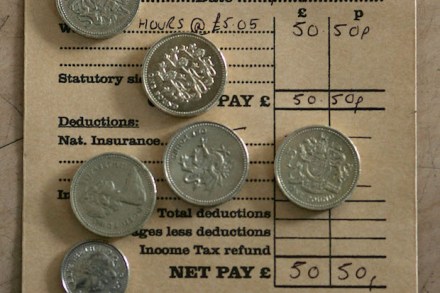
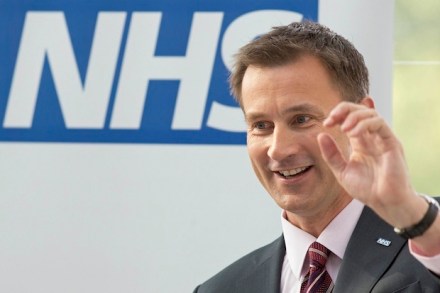
What do I want from the budget, I was asked. So I had a think. One plea was for no more pasty taxes, which I argued distracted from the more serious changes that would actually affect most people. So Osborne decided to cut the Bingo Tax, and we ended up with #bingogate. Someone obviously hadn't been paying attention at the back. But among what I like to think of as the more serious requests to the Chancellor, I suggested the implementation of a charge of, say, £10, each time a person missed an NHS appointment. The Chancellor didn't listen to me then, either. (Well, to be fair, why should he?) But I see that a think tank has released a study, co-authored by former Labour health minister Lord Warner, which recommends charging a £10 monthly fee for use of the NHS.

The Conservatives’ moral mission: jobs, jobs, jobs

From our UK edition

Remember Labour’s defining mission: ‘education, education, education’? Yesterday we had the Conservative equivalent ‘jobs, jobs, jobs’. In what some might see as an important day in the development of the mission of the Conservative Party, the Chancellor pledged the goal of Full Employment: ‘Today I’m making a new commitment. A commitment to fight for Full Employment in Britain, making jobs a central goal of our economic plan.’ What does this mean in practice? It suggests that cutting taxation and cutting the deficit is all about creating the conditions for work, not that tax cuts, and balancing the books are ends in themselves. It creates a moral imperative for economic reform which is not just about rolling back the size of the state.

Osborne offers optimistic promise to ‘blue collar’ voters

From our UK edition

George Osborne's commitment today that the Conservatives will fight for full employment in Britain is another way for the Chancellor to make an iconic gesture towards 'blue collar' voters who might still feel left behind by Britain's recovery (he can find a useful guide on other things to do in the pages of today's Sun). The first was a rise in the minimum wage, long fought over by Conservatives as a measure which could damage employment, but embraced by the Chancellor as a way of showing that the recovery is for the many, not just the few. Today's commitment in the Chancellor's speech - which was initially billed as Osborne describing Britain as 'starting to walk tall in the world - was an attempt to show that walking tall can include those at the bottom as well.

George Osborne’s ‘fight for full employment’ speech – full text

From our UK edition

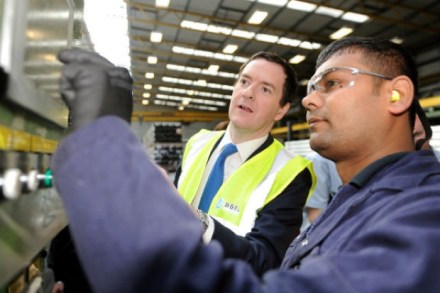
In a speech given at Tilbury Port in Essex, Chancellor George Osborne hailed cuts to business and personal taxes this week as the ‘biggest in two decades’ – and committed to ‘fight for full employment in Britain’. Here's what he said:- Thank you for coming here to Tilbury Port, this morning. We’re all here at the start of the most important week of changes to our tax system for a generation. These are the biggest cuts to personal and business taxes for two decades, and we’re making our benefit system more affordable and fairer too. Changes which will affect the lives of millions of people. Whether you are working or looking for work; whether you’re starting your own business or hiring someone new - these changes will help.

The Tories are repeatedly reminding voters of their achievements – finally

From our UK edition

It's no surprise that the Conservatives want to take the credit for the tax cuts in the Budget, or that the Lib Dems are rather peeved about this. The Chancellor will make a speech today in which he describes Britain as 'starting to walk tall in the world' and drive home what he sees as a series of key government achievements on 'reshoring' and the rise in the personal allowance of income tax, which comes into effect this week. Nick Clegg, meanwhile, is giving his monthly press conference where he will argue that the Conservatives are trying to 'steal' his own party's prize ideas. Those two men can tussle about in the Westminster bubble for credit (though to be fair to the Lib Dems, they do seem to be winning the battle).

Osborne and Alexander deny Scotland could keep the pound

From our UK edition

After Nick Watt's stunning scoop this morning on an unnamed minister saying that an independent Scotland could keep the pound after all, George Osborne and Danny Alexander have released this joint statement: 'A currency union will not work because it would not be in Scotland’s interests and would not be in the UK’s interests. Scotland would have no control over mortgage rates, and would be binding its hands on tax and funding for vital public services. The Scottish Government are proposing to divorce the rest of the UK but want to keep the joint bank account and credit card. The UK would not put its taxpayers at risk of bailing out a foreign country and its banks. Parliament wouldn’t pass it, and the people wouldn’t accept it.

Why I’ll join the silver stampede to cash in a pension

From our UK edition

At the beginning of the last decade, a young man who claimed to be my ‘premier banker’ paid me a visit. He was accompanied by his boss, evidently there to assess the junior’s performance. Once upon a time — at least in popular imagination — bank managers were kindly, cautious, long-term advisers, but by the turn of the new century they had become shameless product-pushers with targets to fill, and it was obvious from the body language of both visitors that this poor chap had to sell me something by the end of the call or his job was on the line. So I took his ‘advice’, signed for a stakeholder pension — and never saw either of them again.

Today’s inflation fall means the Tories can have their interest rate cake and eat it too

From our UK edition

Today's inflation figures bring more good news for the government. CPI inflation is now down at 1.7 per cent, the lowest rate in four years and below the Bank of England's target – so making it less  likely that interest rates will rise before the next election. Inflation as measured by RPI is 2.7 per cent, down from last month's 2.6 per cent. With Osborne's pensioner bonds, which will offer 4 per cent return, the Tories can now have their interest rate cake and eat it. Adding to the buoyant mood in coalition circles is that Labour still hasn't worked out its critique of the Budget. I'm told that Labour have not yet informed the government whips which Budget resolutions they intend to vote against. Normally, this information would have been relayed last night.

Budget 2014: a torpedo Budget which will split the Shadow Cabinet

From our UK edition

Last week’s budget has transformed the political landscape. The welfare cap, new savings and pensions freedoms and ‘NISA’s, have all been much commented on. So too other micro measures, like the very welcome continued investment in science and innovation for the innovation economy, and support for exports. But I think the events of Wednesday went far beyond entrenching the defining key fiscal reforms of ‘Osbornomics’. It laid down the dividing lines on which we will fight, and can win, the next election. And as we saw in the Chamber on Budget day it has brilliantly exposed the growing tensions between Ed Balls and Milliband, who couldn’t agree how to respond. This is a slow-fuse torpedo Budget which has holed Labour amidships.

Budget 2014: what Osborne didn’t tell us about the crunch to come

From our UK edition

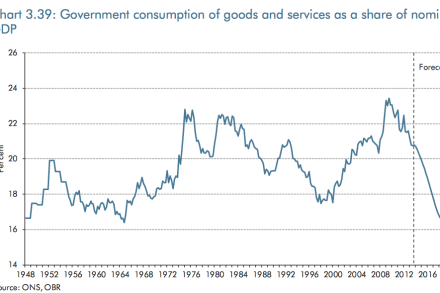
Getting to the truth of a Budget is far easier under George Osborne's new system. His creation, the Office for Budget Responsibility, now writes its own report  (pdf here) and it's like having your own mole in the Treasury flag up what the Chancellor would rather gloss over*. I read its report over the weekend - it's too rich a document to skim on Budget day. I found a few charts that CoffeeHousers may be interested in. The graphs are all about Osborne's decision to defer tough decisions - what James Forsyth brilliantly called his Saint Augustine tendency: give me fiscal discipline, Oh Lord - but not yet.

Portrait of the week | 20 March 2014

From our UK edition

Home In the Budget, George Osborne, the Chancellor of the Exchequer, said that the economy was working but the job was far from done. He expected further falls in unemployment and wages rising faster than prices this year. The economy, he suggested, would return this year to its size in 2008. Before the Budget, Nick Clegg, the Deputy Prime Minister, said that as many as 1.9 million working families could receive a tax-free childcare allowance worth up to £2,000 per child. Mr Osborne had announced that the help-to-buy scheme for new homes would be extended until 2020. He also let it be known that a garden city of 15,000 dwellings would be built near Gravesend on the high-speed line from the Channel.

It’s time for the state to trust adults with their own money

From our UK edition

The changes that George Osborne announced to pensions yesterday were so big that there was always going to be a backlash. Sure enough, the IFS and various others have today voiced concerns about the scheme. The essential complaint is that if you let people take charge of their own pension pots, they might spend their money too quickly. This is an argument that George Osborne should relish taking on. Trusting people with their own money is a fundamentally Tory idea. It is also slightly absurd to suggest that people who have been diligent enough to build up a pension pot over their working life are suddenly going to become spendthrifts in retirement.

Podcast: Buying your way into the establishment and Osborne’s 2014 budget

From our UK edition

How easy is it to buy your way into the British establishment? On this week’s View from 22 podcast, Harry Mount and journalist Ben Judah discuss whether Britain has become a bankrupt country. Why are so many Russians throwing hordes to cash to buy their way into new Britain? How are Prince Charles and Tony Blair involved? And is it a good thing that the establishment is regenerating itself? Fraser Nelson, James Forsyth and Isabel Hardman also analyse George Osborne’s fourth budget — what the announcements mean, the winners and losers, how the Chancellor has carefully targeted Ukip, the significant changes for pensioners and Ed Miliband’s meek response.

George Osborne’s Budget elephant trap is still open and waiting for Labour

From our UK edition

Yesterday the Opposition didn't really do all that much opposing. Labour announced it was going to vote in favour of George Osborne's AME welfare cap, with Ed Balls arguing that Ed Miliband had set this out in a speech last year anyway. This cap was supposed to be an elephant trap for Labour, but Labour initially appeared to have tip-toed around the edge without falling in. But Osborne has set a secondary snare for the party: the 'bedroom tax'. The Conservatives are keen to point out that restoring the 'spare room subsidy' would lead to a £465 million welfare spending rise in 2015/16, and want Labour to answer how they could avoid breaching the welfare cap.

Budget 2014: Who benefits from Osborne’s savings revolution?

From our UK edition

The most obvious beneficiaries of George Osborne's savings package are pensioners. They now can buy government bonds with an interest rate of 2.8% for an annual bond and an annual rate of 4% for a three year bond, making up for how low the Bank of England base rate is. But it is not just pensioners who benefit. The fact that people no longer have to buy an annuity will benefit those coming up to retirement most. Those planning for retirement know that they now have far more flexibility about how they structure their retirement. While increasing the ISA limit to £15,000 helps those trying to save up a deposit for a house or a flat. These changes also mean that Osborne can have his cake and eat it when it comes to interest rates.

Budget 2014: Has Osborne come up with a silver bullet for dealing with Ukip?

From our UK edition

The Budget today contained a host of measures that'll benefit the silver savers; those in, or coming up to, retirement. From January next month, pensioners will be able to buy pension bonds that offer a 2.8 per cent interest rate for a one year bond and a 4 per cent annual rate for a three year bond. This is far better than the rate available on the high street and will cost the government £170 million in 2015-16. It should assuage the pain, and anger, that many pensioners have felt at the government's deliberate policy of keeping interest rates as low as possible. Considering that defections from the Tories to Ukip have been particularly high among the over 60s, one has to imagine that this will have an electoral impact.

Budget 2014: Osborne’s Budget banter

From our UK edition

The Budget has, in recent years, been more tears than laughter, more pain than gain. Yet the upturn in Britain’s economic fortunes has put the Chancellor, whose ‘5 and 2’ diet has had a dramatic effect on his waistline, in a buoyant mood. Osborne's wit – famously sharp in private – shone through in public this afternoon. He began slowly, by teasing Ed Balls. He reminded the chamber of Labour’s dire financial record, which elicited his first laugh: 'Or, as the Shadow Chancellor put it: "some mistakes were made".' Boom-tish.