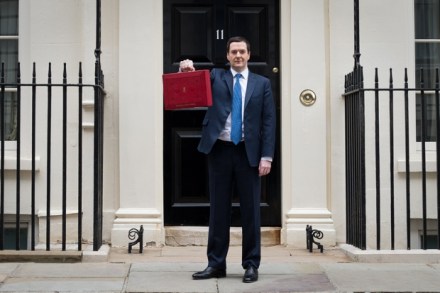
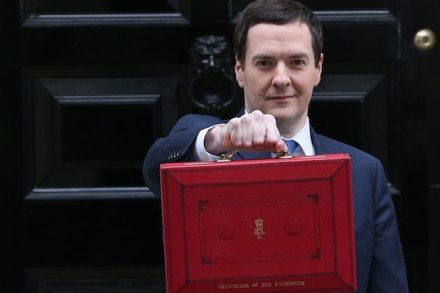
George osborne

George Osborne’s speech in six graphs

From our UK edition

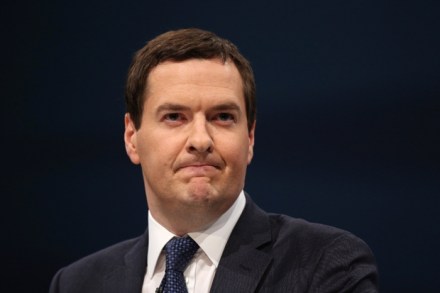
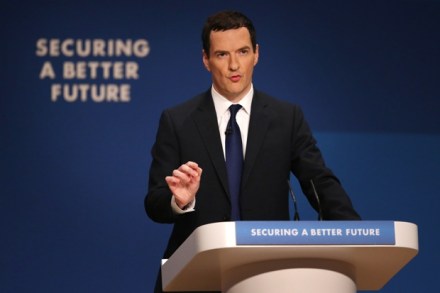
George Osborne normally shines at Tory conferences. A historian by training, Osborne knows the power of narrative and he had a clear one for the activists today: the recovery started when he took office and its progress has been extraordinary. Many of his claims were well-founded, some less so. Here’s my selection. Let’s start with his statement that ‘Britain is the fastest-growing most job-creating most deficit-reducing country on earth. Britain we did this together.
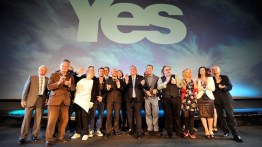
What George Osborne should learn from the Scottish ‘yes’ campaign

From our UK edition

George Osborne will give his speech in a few minutes, and we’ll analyse it straight after. But I’d like to pick up on something he said this morning on Radio 4. It was an aside, a claim that For the first time in my lifetime, the march of the separatists in Scotland has been reversed This is, of course, not quite true – the SNP have been pushed into reverse many times. Depressingly they tend to bounce back, stronger than ever. After devolution, it looked as if their fox had been shot. After Salmond quit the first time, they looked like a quaint irrelevance.

George Osborne’s task: to make his party enthusiastic about government

From our UK edition

There's a funny mood at this Tory conference. It has more energy than the Labour conference, but partly that energy is anger at Mark Reckless' defection, rather than enthusiasm. MPs and advisers are jittery that another defection will come at another terribly inconvenient moment. A third MP leaving the party will suggest real momentum. So George Osborne's task when he speaks a little later this morning is to turn the energy that's buzzing about the hall into enthusiasm for government. The Labour conference, for all its desire to get the Tories out of office, lacked that sincere excitement about the idea of the party being in charge. The Tories need to show that they're not running out of ideas or exhausted by government, but are keen for a majority government.

Seven things you need to know about George Osborne’s abolition of the pensions death tax

From our UK edition

The good news on pensions just keeps on coming. Today, at the Conservative Party Conference in Birmingham, George Osborne will today announce the abolition of the draconian 55 per cent pension death tax. There'll be no inheritance or income tax if funds passed on as pension. There had been expectations of this being cut, perhaps to 40 per cent, but the Chancellor has decided to abolish this altogether. I gather this wasn't due to be announced until the Autumn Statement on 3 December, but the Chancellor has brought the news forward to gather some positive headlines. A chunk of his speech has been trailed: "People who have worked and saved all their lives will be able to pass on their hard-earned pensions to their families tax free.

Tom Bower’s Diary: Resuming hostilities with Richard Branson

From our UK edition

This week marks another milestone in my 15-year battle with Richard Branson. Ever since he unsuccessfully sued me in 1999 to prevent the publication of my first damning biography, we have exchanged shots. His anointment on Sunday as Britain’s most admired businessman coincides with my appearances to promote Branson: Behind the Mask, my second book. Inevitably, the book sparked his fury, summarised in a 29-page letter of complaint. Our war is now focused on whether Virgin Galactic, his Heath Robinson rocket, will ever carry him 62 miles into the border of space. For ten years his regular predictions of imminent take-off have proven wrong. Last Christmas he announced he would fly this month with his son and daughter. I derided his forecast. Now he says take-off will be next March.

Why the Tories can’t really criticise Rachel Reeves on debt

From our UK edition

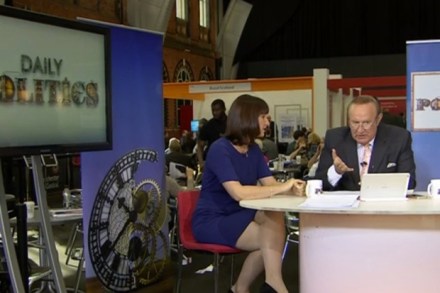
Rachel Reeves’ interview on BBC Daily Politics may have been excruciating at times (below), but was it really the ‘car crash’ that the Tories are today claiming? Matthew Hancock is crowing that she pointed out the conditions necessary for reducing debt. She said:- 'We are planning to get the national debt down, which means you have to be running a surplus to be able to do that. If you are going to have national debt falling you have to have a surplus overall... To get debt falling you have to have a surplus on overall spending.’  Whether wittingly or not, Reeves went further than Ed Balls. She said she wants a "surplus overall," as distant from the surplus on the chunk of the budget defined as 'current spending'. This is the same as the Tory policy.

The real reason behind the BBC’s kicking of Nick Prettejohn

From our UK edition

This is an extract from this week's Spectator. Subscribe here: Hats off to Rona Fairhead, the former Financial Times executive who will succeed Lord Patten as chairman of the BBC Trust. It requires a brave spirit to take on this poisonously politicised role — and Fairhead starts with the disadvantage that everyone thinks they know the roll call of candidates who might have been preferred but declined to apply, including her own former boss Dame Marjorie Scardino, for whose job as head of Pearson, the FT’s parent, Fairhead was passed over last year.

If you want a lesson in how not to run an economy, take the Eurostar

From our UK edition

For the last five years, politicians of all shades have been banging on about how we should adopt this or that aspect of German economic policy. George Osborne argued in 2011: ‘We want to learn the lessons of the successful Mittelstand model, which has operated in Germany for many decades.’ Only a few weeks ago, Vince Cable argued: ‘Britain has not been as good as competitors like Germany in turning ideas into wealth creation.’ The German economy seems to be widely admired, despite lagging behind Britain’s for nearly a generation. It is true that Germany had a better post-crash period than the UK, but its financial sector was smaller and many of its problems were hidden from view.

The nine lives of Freya, the Chancellor’s cat

From our UK edition

News just in that George Osborne's cat, Freya, was hit by a car outside Downing Street last night, and is currently at the vet's. Freya is famous for her love of hunting rodents. Indeed, she was promoted above Larry, the Camerons' cat, as Downing Street's 'chief mouser' because Larry preferred lounging around (his master calls it 'chillaxing') to hunting. But Freya's passion has made her wander off-piste in pursuit of prey. Earlier this year she made headlines when she was found patrolling the streets of Vauxhall. And when the Osbornes were living in Notting Hill, Freya went missing for almost three years before being discovered residing a few streets away. Freya sounds like a cat with her fair share of lives.

Sorry, but trains can’t really replace welfare lines

From our UK edition

George Osborne proposed an attractive idea this week: that spending on state benefits should be diverted into new infrastructure in the North. His conceit was that while welfare spending produces no economic return, spending public money on new high-speed railways and the like will inevitably boost the economy. We can’t fault the former assertion: that paying people to be idle is a drain on the public purse. But we take issue with the notion that infrastructure will always serve to boost the economy.

How the FOBs, FOGs and FOTs could trip themselves up in the Tory leadership fight

From our UK edition

FOB, FOG or FOT? Which one are you? In this week's Spectator, Harry Mount examines the machinations of the Friends of Boris as they set their star man up for a return to Parliament and a future Tory leadership bid against the Friends of George and the Friends of Theresa. It's worth reminding all three contenders, though, that these long-drawn out contests between party big beasts rarely lead to those big beasts actually taking the leadership. David Davis, Michael Portillo, Ken Clarke and Michael Heseltine could all tell a few tales on that front.

Here comes Boris! The next Tory leadership fight has just begun

From our UK edition

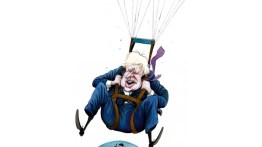
[audioplayer src="http://traffic.libsyn.com/spectator/TheViewFrom22_07_August_2014_v4.mp3" title="Harry Mount and Isabel Hardman discuss Boris's parliamentary campaign" fullwidth="no"] The View from 22 podcast [/audioplayer]So Boris has made his great leap. The blond king over the water has revealed his plans to cross the river, return to Parliament and assume what he believes is his rightful destiny — to be Prime Minister of the United Kingdom. The first signs came with his uncharacteristically Eurosceptic speech this week. Yes, he said, Britain could — perhaps should — leave Europe, if it couldn’t negotiate more favourable terms. This set him at odds with David Cameron and sent a ripple of excitement through the Tory grass roots.

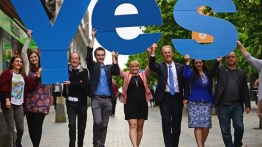
Secret oil fields! Skewed polls! The Yes campaign is losing the plot

From our UK edition

 Edinburgh When the histories of the Scottish independence debate are written, 13 February 2014 will be seen as a crucial date in the story. It was then that George Osborne suggested that no Westminster government, of any party, could countenance a currency union with an independent Scotland. Such an arrangement might be good for Scotland but it would make little sense for the rump United Kingdom. And with that observation, boom went much of the nationalists’ economic credibility. Osborne and his accomplice Alistair Darling might seem an improbable double act (though Osborne’s record in office bears a passing resemblance to Darling’s plans had Labour won) but together they might just have saved the Union.

Team Boris vs Team Osborne — the first skirmish

From our UK edition

Today was set to be a boring day in Westminster. Sajid Javid, a courtier to George Osborne, was billed to give (yet another) speech about how the economy is going ‘gangbusters’ and why evil Labour would trash the recovery. Dutiful hacks were pottering off to the Centre for Policy Studies, the venue for Javid’s speech, when news broke of Boris Johnson’s ‘off the cuff’ announcement that he might stand in 2015 after all. This political hand grenade blew the government’s media plan completely apart. Javid was spotted calling CCHQ for a line to take on the Boris comeback. He duly took to the podium and prepared for questions that would have nothing to with George Osborne’s ‘long-term economic plan’.

Osborne’s choice: important projects or welfare

From our UK edition

George Osborne can't quite help himself. Today he's continuing his Northern charm offensive, which has been impressively choreographed. He gave a speech back in June in which he said he wanted to create a 'Northern powerhouse', involving cities working together. Just a few weeks later, a group of councils in the North pops up with a plan to improve transport links across the region. Ta da! But the Chancellor couldn't quite resist, when he was asked about the merits of this plan on the Today programme, making another strategic, political move, and linking welfare spending to the debate about regenerating the North.

David Cameron’s voteless recovery

From our UK edition

The economy has recovered, and is steadily growing. That much is now clear. It has long been assumed that this will help the Conservative Party’s electoral fortunes. The logic goes that, having steered the country through difficult economic times, a grateful public will come out in their droves to thank them for it. But politics is never that simple, and the public are rarely so willing to give credit to politicians. While it may seem perverse to suggest that economic growth is harming the Tories’ electoral chances, continuing good news about the economy is making it less of an electoral issue. Voters are beginning to ask: ‘what next?’ David Cameron and the Conservatives are experiencing a voteless recovery.

George Osborne’s taxing dilemma

From our UK edition

Some of what David Smith, author of the essential Economic Outlook column in the Sunday Times, says today will be salve to George Osborne: ‘…the government intended to spend £722bn in the 2013-14 fiscal year. In fact, it spent £714bn. Spending has been lower each year than set out in 2010. Current spending was originally intended to be £679bn in 2013-14. In fact, it was £668bn. Unusually for any government, spending has come in comfortably within budget. There has been no slippage.’ Other parts will not: ‘Where there has been slippage is in tax receipts, which have been weaker than expected.

Don’t get too excited about Britain’s economic recovery. It’s built on shaky ground

From our UK edition

[audioplayer src="http://traffic.libsyn.com/spectator/TheViewFrom22_24_July_2014_v4.mp3" title="Liam Halligan and Adam Memon discuss whether another financial crisis is on the way"] Listen [/audioplayer]When I think about global stock markets these days, the image that springs to mind is the final scene of The Italian Job— the 1969 original, not the tacky 2003 remake. ‘Hang on a minute, lads,’ says Charlie Croker, Michael Caine’s heistmaster-in-chief, as he and his rogue brethren balance precariously in a bus loaded with gold on the edge of an Alpine cliff. ‘I’ve got a great idea.’ The film ends ambiguously, of course.

Forecasting is a mug’s game – but I was right about the economic revival

From our UK edition

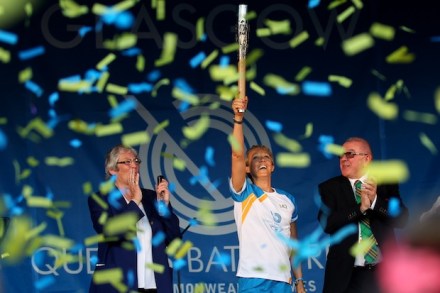
‘Perhaps I should shift my prediction to 23 July 2014,’ I wrote in April 2012. ‘That’s the opening of the Commonwealth Games in Glasgow, and we must all start thinking positively about it.’ I was talking about the moment when the nation would at last shake off its economic gloom, which I had previously pinned to the opening of the London Olympics. But that spring we fell back into negative GDP territory (avoiding a technical two-quarter ‘double dip’ only when the first-quarter result was revised upwards to zero) and I felt obliged to ‘elasticate my timetable’. Since the beginning of last year we have had 18 months of robust growth — but pundits less cheerful than me have continued to report a persistent absence of feelgood.

George Osborne’s grey-haired gamble

From our UK edition

George Osborne has been in retail mode this morning, selling his pension reforms and explaining how pensioners can unlock their life’s savings. The Chancellor has said that the Treasury will work with the Citizen’s Advice Bureau, Age UK and other organisations to provide pensioners with the best possible impartial guidance to transform their retirement. Interested parties can consult the Treasury for more details. listen to ‘Osborne: Russia sanctions would be an 'economic hit' for the UK’ on Audioboo Osborne went on to add that this was what the pension reforms are ‘all about’.