George osborne

Why has Peter Thiel dumped his AI stocks?

From our UK edition

How, I wonder, did a shortlist of candidates to succeed Sir Mark Tucker as chairman of HSBC come into the public domain? The three names ‘exclusively’ revealed by Sky News, if they really are the final contenders, ought to be a secret kept between a board committee led by senior independent director Ann Godbehere and the headhunters on the job, named as MWM Consulting. Two of the three – Kevin Sneader from Goldman Sachs and Naguib Kheraj, formerly of Barclays and Standard Chartered – might feature in a round-up of usual suspects. But the third is the former chancellor George Osborne, who has no public-­company chairmanship experience and is, to say the least, a Marmite figure.

How Charles III became the richest monarch in modern history

From our UK edition

Valentine Low is an old-school royal journalist; less muckraking reporter, more Establishment eye (the Times for 15 years) across our nation’s oldest institution. It is his disarming charm (I’ve had the pleasure of televised royal parley with him) that has guaranteed him access to the great and occasionally ghastly in the higher echelons of British society. His previous book, the innocuously titled Courtiers, published just at the point of the Sussexes’ scandal-ridden departure, skipped nimbly over accusations of bullying and impropriety and became a bestseller. Expectations were high for Power and the Palace. The publisher insisted on an NDA. I waded through tranches of 19th-century history in the knowledge that Low’s gilt-edged gossip would not eventually disappoint.

Owning an Airbnb is hell

From our UK edition

I know it can be difficult to have sympathy for anybody who owns a holiday let, but for me and my wife August is often a war between us and the holiday guests from hell. It’s an open season of refund-seeking, blackmailing guests and wild children whose parents think we operate a kids’ club in our gardens. And it’s only getting worse. We got a flavour the week that schools broke up late last month, when a group of eight adults calmly sat on the terrace in the sun, swilling cans of beer and prosecco as their pack of six children began picking up heavy pebble gravel and throwing the stones at the windows of my elderly parents’ barn.

A tale of two parties

This is a tale of two London parties. They say something about London society, status, power, fame and fun — but I’m not sure what exactly. Party one was what I call a Power Party. It was full of famous faces from the upper echelons of British politics and media. I spotted chancellor of the Exchequer Rachel Reeves talking to the former Tory chancellor George Osborne and the former foreign secretary David Miliband. Party two was what I call a Pulchritude Party — a dazzling array of beautiful women and handsome men. There was a mix of young writers, journalists, lawyers, filmmakers and artists. It did not have the high social wattage of name recognition that the Power Party had — but it had beauty and youth on its side.

parties

Is Rachel Reeves turning into George Osborne?

From our UK edition

18 min listen

Labour is supposed to be going for growth, so Keir Starmer and Rachel Reeves will be disappointed with the news today that the economy unexpectedly shrank in October, and for the second month in a row. Rachel Reeves's mood seems to have visibly changed in the last month or so, is she having her George Osborne moment? And can she turn things around, or have the dynamics of the Labour–UK plc relationship changed irreversibly?  James Heale speaks to Katy Balls and Isabel Hardman. Produced by Patrick Gibbons and Oscar Edmondson.

One damned thing after another: Britain’s crisis-ridden century so far

From our UK edition

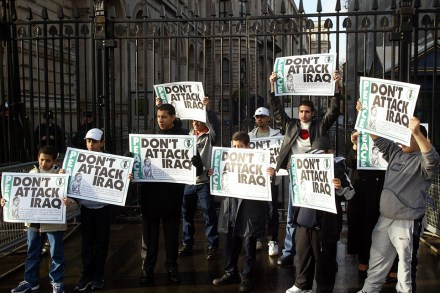
Asked about the greatest challenges he faced as prime minister, Harold Macmillan is said to have replied: ‘Events, dear boy, events.’ The first quarter of this century has seen no shortage of events that have blown prime ministers off course. There was Tony Blair by 9/11 and the resulting war in Iraq; Gordon Brown by the financial crisis of 2007-8; David Cameron and Theresa May by Brexit; and Boris Johnson by Covid. With the exception of May, none of these people had any inkling, on taking office, of the bolts from the blue that would ultimately define their premierships.

How depressing when people over-identify with their ethnicity

From our UK edition

I am a Jew. I live in a council estate in London where considerably more than half of my neighbours are Muslims. These people aren’t my friends, but we get along fine: I pick up their parcels; we coordinate complaints to the council about the strange, blue-tinged fluid that sometimes drips from everyone’s ceilings, as if someone in the penthouse had decided to fill their flat with jelly. Elsewhere, our distant cousins are doing terrible things to each other. It’s increasingly hard to imagine a world in which these distant cousins can live together, intermingled but mostly minding their own business – but that’s exactly what we do every day in London. Over the past six months I’ve started feeling extremely grateful for that.

Enjoyable and informative but where’s the drama? Political Currency reviewed

From our UK edition

The first episode of George Osborne and Ed Balls’s new podcast, Political Currency, opened with an old clip of the pair arguing across the despatch box. Osborne had described his latest Budget as ‘steady as she goes’ and Balls was having none of it. ‘What kind of ship does he think he’s on, the Titanic?’ If producers hoped that the duo would bring something of this, er, biting dynamic to their podcast, they were in for a surprise. The opening number saw little in the way of sparring between the former opponents. Seated in a studio in east London, they spent most of the time doing what so many in their milieu are doing at the moment, chummily sharing their views and frustrations and trying to squeeze some entertainment out of it.

Rory Stewart is a fish out of water

From our UK edition

Rory Stewart is one of that almost extinct species in the modern Conservative party, a one-nation Tory. He is also – or was (until Boris Johnson kicked him out) – a politician with hinterland. He had been places and done things before getting himself elected in his late thirties, entering parliament in 2010. Disillusion rapidly set in: Too much of our time was absorbed in gossip about the promotion of one colleague or the scandal engulfing another. Even four weeks in, I sensed more impotence, suspicion, envy, resentment, claustrophobia and schadenfreude than I had seen in any other profession. It is made clear to him from the outset that rebellion was fatal to ambition.

George Osborne’s midlife crisis

From our UK edition

There should be a term in anthropology for what happens to a certain type of Tory male in middle age. The type who after decades of espousing often unpopular causes suddenly attempts to ingratiate himself with the masses. Ordinarily this breakdown expresses itself in a desire to legalise drugs, but it can take other forms. If you become the chairman of the British Museum, there is one rather obvious way to try to please people Anyway, the moment that George Osborne was made chairman of the British Museum I expected what has come to pass. Osborne has long been a prime candidate for a Tory midlife crisis. He always had too much of the ‘pleaser’ about his personality, despite not being remotely pleasing.

Can robots replace journalists?

The case against Kamala’s coke The latest twist in the White House cocaine saga sees NBC News clarify that the substance was found in an entrance area “near where some vehicles, like the vice president’s limo or SUV, park.” But Cockburn isn’t convinced of Kamala’s credibility as a possible culprit. Just listen to the Veep at the Essence Festival this week: https://twitter.com/Breaking911/status/1677092627567595521 Well, I think culture is... it is a reflection of our moment in our time. Right. And... and... and... present culture is the way we express how we’re feeling about the moment. And... and we should always find times to express how we feel about the moment. That is a reflection of joy because, ev- you know. It comes in the morning (laugh).

robots journalists

British Museum keeps the Chinese golden era alive

From our UK edition

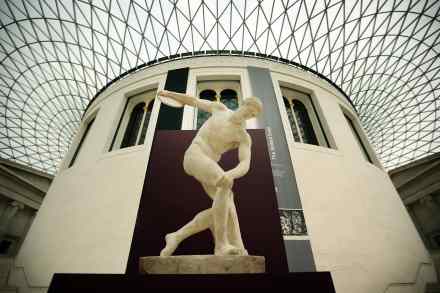
It's been a bit of a bad week for the British Museum. High temperatures forced staff to close the site early on Monday and Tuesday, damaging revenue flow and prompting renewed criticism of its BP sponsorship deal. Then today Sadiq Khan – the museum's own local mayor – called on the government to find a way of sharing the highly-prized Elgin Marbles with Greece. In such circumstances, the British Museum needs all the friends it can get. So it was no surprise therefore that two new names have been appointed as directors of the British Museum Friends, which serve as trustees of its collection. One of them is private equity chief Weijian Shan, who joins the star-studded board alongside the likes of Grayson Perry, Mary Beard and, er, chairman George Osborne.

What shape is the Treasury in now?

From our UK edition

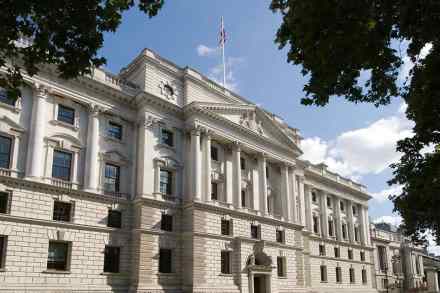
Don’t bring a bottle. Your chances of finding a party in full swing down those chilly corridors are close to zero. At most, you might hear the sound of a distant flute playing a courante by Lully. As Sir Howard Davies puts it in this insider’s view, which manages to be both authoritative and quite cheeky: The Treasury does not cultivate a warm and cuddly working environment. You may well not know if your immediate boss has a spouse or partner, and would certainly never meet them if they exist. Social events are at a premium. Yet this notoriously ascetic culture is not in the least hierarchical.

All talk and no trousers: is Oxford really to blame for Brexit?

From our UK edition

Attacks on British elitism usually talk about Oxbridge, but Simon Kuper argues that it is specifically Oxford that is the problem, which has provided 11 (out of 15) prime ministers since the war. So what’s the explanation? Kuper thinks it’s all the fault of the Oxford Union, which fosters chaps who are clever at debating without particularly caring which side they are on. As a result, they acquire enough rhetorical skills to enable them to beat opponents who rely on thoughtful, fact-based arguments. Such arguments are ‘boring’, and being boring in the Oxford Union is the worst crime you can commit. This wouldn’t matter if it were confined to undergraduates but, Kuper argues, the Union is often the rehearsal for, and gateway to, a Westminster career.

What Rishi Sunak could learn from George Osborne

From our UK edition

I was walking last week from Canary Wharf tube station to my flat in east London – not far, little more than a mile, and the walk follows the Thames on the north side, away from traffic: lovely. But as I headed for the river, I saw trouble. A thick curtain of rain had descended over Blackheath across the Thames, and the wind was blowing strongly from that direction. The storm had not yet reached Greenwich, still clear, but the curtain was moving. After Greenwich the rainstorm would cross the river – and hit me. Umbrella-less, I quickened my pace. Few others seemed to have noticed. People were ambling around, some sitting at outside tables at restaurants, some chatting on park benches.

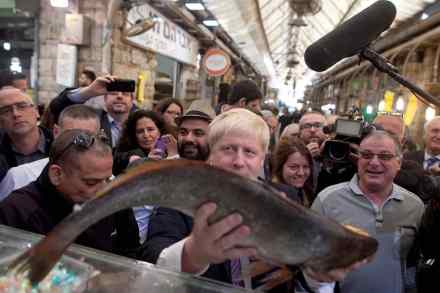
Boris Johnson’s Israel entanglement

From our UK edition

Over Christmas, Steerpike was just one of those enjoying the memoirs of doughty Brexit street-fighter Mark Francois. Some 4,000 copies have now been sold, according to the Essex MP, whom Mr S encountered at a favourite Westminster haunt last week.  And book sales are not the only cause for the self-styled 'Spartan' to be celebrating, as Francois (successfully) proposed on New Years' Eve to longtime girlfriend Olivia Sanders, the mayor of Brentwood and one half of the Posh and Becks of Essex politics. What better way to mark the first anniversary of the end of the Brexit transition period?

Osborne’s wallpaper firm blames Brexit

From our UK edition

George Osborne hasn't been shy to take the occasional pop at Boris Johnson's government and now the reason why seems clear. His family firm Osborne & Little's annual accounts up until 31 March have just been published and they don't make for entirely happy reading. The leading wallpaper manufacturer has been forced to report a pre-tax loss of £106,000, down from last year's profit of £1.4 million, with Brexit cited as having an 'immediate adverse effect on profits.'  Boris Johnson's successful efforts to take the UK out of the EU on 1 January 2021 caused the company 'unforeseen costs' amounting to an extra £400,000, thanks in part to increased shipping charges and higher duties on goods.

Osborne masters the politics of art

From our UK edition

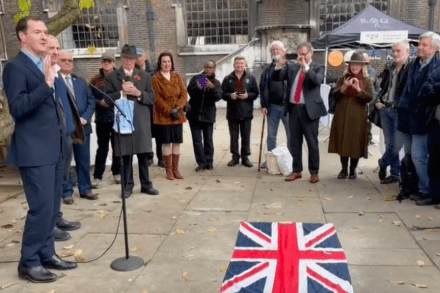
As MPs spent the afternoon debating second jobs, a former colleague who knows all about the subject was holding court elsewhere. George Osborne, the part time banker and full time mischief-maker, was unveiling a plaque in Piccadilly to the legendary caricaturist James Gillray – a satirist who would no doubt have had great fun with the former Chancellor. Wearing one of his many, many hats, Osborne – in his capacity as chairman of the British Museum – told the assembled crowds of his love of the great British tradition of print cartoons, remarking:  As a teenager I used to go to Camden Passage to the antique shops there to try and get hold of some Gillray prints.

Emily Sheffield out as Evening Standard editor

From our UK edition

Oh dear. It was less than six months ago that Mr S was remarking on the number of onetime George Osborne acolytes now ensconced at the Evening Standard . But the winds of change now appear to be blowing through the corridors of Northcliffe House as owner Lord Lebedev has today unceremoniously axed the paper's editor Emily Sheffield after just 15 months in the role.An email was sent out to Standard hacks this morning, informing them all that Sheffield was stepping down by 'mutual agreement' along with the obligatory platitudes for her 'role in turning the Evening Standard Digital First.' The former Vogue writer gets a column in the paper as a consolation prize, with publisher Charlotte Ross assuming the role of acting editor.

Changing fortunes for the Osborne family

From our UK edition

George Osborne might be famous for collecting jobs but is he having any success with them? Since leaving the Treasury in July 2016, the onetime master of British politics seems to have acquired a reverse Midas touch. Having quit as an MP at the 2017 election – when Theresa May’s setbacks meant he could have been first in line to succeed her – Osborne has tried his hand at various gigs with, err, varying degrees of success. As editor of the Evening Standard, Osborne’s reign witnessed falling circulating, dozens of job cuts and losses which ran into the tens of millions.