Gene editing

How China is out-innovating the West

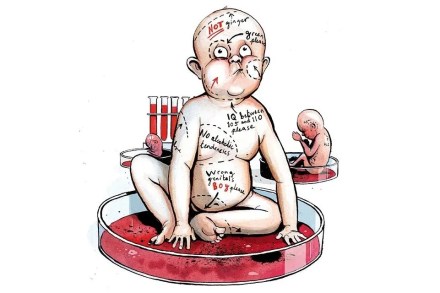
The world received a jolt in 2018 – and it wasn’t from a Silicon Valley whiz or a lab at MIT. It came from Shenzhen, China, where a lanky, unassuming biochemist named He Jiankui did the unthinkable. Using the newly discovered CRISPR-Cas9 toolkit, and asking no one’s permission, He edited the genes of Lulu and Nana, twin baby girls, so that both were born immune to HIV. The scientific establishment gasped, jaws dropped and the moralists clutched their pearls. “Monstrous!” the bioethicists cried. “I was just horrified,” said Jennifer Doudna, who won the 2020 Nobel Prize in Chemistry for inventing the CRISPR gene-editing technique.

Why won’t western scientists condemn Wuhan?

“I am officially launching my new company: Cathy Medicine. We will eradicate diseases in future generations through germline gene editing.” This is one of several strongly – and strangely – worded tweets sent in recent weeks from the X account of He Jiankui, a Chinese scientist who served a three-year prison sentence for gene-editing two human embryos. Those embryos are now people: seven-year old twin girls living under the pseudonyms Lulu and Nana. “Good morning bitches,” Dr. He wrote on April 16. “How many embryos have you gene edited today?” “Get in luddite, we’re going gene editing,” he added the next day. He also wrote: “I literally went to prison for this shit.” Is it the real Dr. He? The journalist Antonio Regalado, who first broke the story of Dr.

scientists

Gene editing tech is a gamble with our future

In the past year, scientists have used gene editing techniques enabled by a technology called CRISPR to grow eye retinas, treat cancer, and create twin babies. CRISPR stands for Clustered Regularly Interspaced Short Palindromic Repeats, a group of DNA sequences found in the genomes of organisms like bacteria and archaea. Essentially, CRISPR is a gene editing tool that can be used for everything from curing previously incurable diseases to creating bigger tomatoes or leaner bacon. Offering the hope that body parts may be built from scratch, CRISPR raises the possibility that our bodies will never wear out.

gene editing