Gender

The fact no one likes to admit: many gay men could just have easily been straight

From our UK edition

Long-suffering Spectator readers deserve a seasonal break from yet another Remoaner diatribe from me. My last on this page, making the outrageous suggestion that the populace may sometimes be wrong, is now being brandished by online Leaver-readers of my Times column as proof that I am in fact a fascist; so there isn’t anywhere much to go from there. Instead, I turn to sex. There is little time left for me to write about sex as the thoughts of a septuagenarian on this subject (I turn 70 this year) may soon meet only a shudder. But I have a theory which I have the audacity to think important.
Women are abused in the name of ‘trans rights’. But do MPs care?

From our UK edition

There are some things that pretty much everyone in politics and public life agrees on. Ask any politician about any contentious, heated debate and they’ll immediately talk about the need for respectful debate, for all views to be heard calmly and in a civilised manner. They’ll say that there is no place for harassment and abuse and bullying and threats, because this is Britain, a mature democracy where everyone gets to express their views about things like politics and the law without fear. Except that’s not entirely true. There are some people who aren’t allowed to speak freely, who cannot express their views about things like politics and the law without being abused and threatened and, from time to time, assaulted.

Even Oxford University can’t save Jenni Murray from the transgender activist mob

From our UK edition

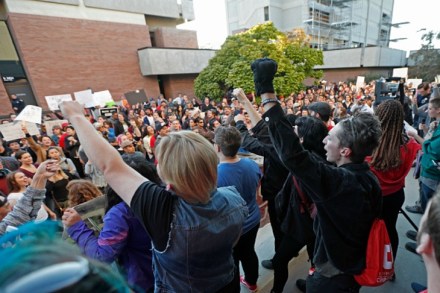
Here we go again. Perhaps there should be a template for journalists writing about transgender issues and the treatment of women with the “wrong” opinions. The template would look something like this: A small group of noisy, angry people, many of them male, have demanded that [Insert woman’s name] not be allowed to speak/ appear/ have a job/ do anything because [woman] once said things the small group of people didn’t like or agree with.

Life & Arts Podcast: Heather Mac Donald on how race and gender pandering corrupts universities

From our UK edition

This week on the Spectator USA Life & Arts podcast, I’m casting the pod with Heather Mac Donald. A scholar at the Manhattan Institute, Heather is the author of The Diversity Delusion: How Race and Gender Pandering Corrupt the University and Undermine Our Culture, a scathing and accurate critique of just about everything that’s gone wrong with American higher education. In her previous book, The War on Cops, Heather tried, she says, “to give voice to the millions of law-abiding minority residents of high-crime areas who support the police and are desperate for more law enforcement protection.

Mumsnet and the British media aren’t ‘transphobic’

From our UK edition

Is the British media transphobic? Yes, according to a writer in the Outline, a US publication, who accuses the Times and the Guardian of rampant bigotry in the row about gender. Several prominent British feminists are also singled out for alleged ‘hate-peddling’. The logic here is muddled but is worth unpicking. The author appears to claim that the views of British feminists like Helen Lewis (who has urged caution over the Government’s proposal to reform the Gender Recognition Act) are somehow comparable to the Trump administration, which is – according to the New York Times – seeking to remove legal protections for transgender individuals. This is a complete misunderstanding of both debates.

Tech doesn’t have a gender problem

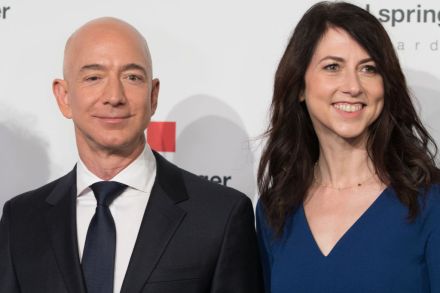
The tech sector, we are forever being told, has a gender problem. Recently, for example, Women in Technology International reported that only a quarter of US information technology workers are women – something which it was quick to claim was a result of ‘unconscious bias’. How else, it invited us to ask ourselves, can the proportion of women in technology be so low when women receive 57 percent of college degrees and nearly half of professional degrees in law, medicine, and the physical sciences? Worse, we are led to think, the bias is inbred in the machines themselves.

jeff bezos wife mackenzie bezos tech women gender

Not all transsexuals think ‘trans women are women’

From our UK edition

When equalities minister Penny Mordaunt launched the consultation on reforming the Gender Recognition Act she declared that “trans women are women”. Whether anyone really believes this remains to be seen. Yet our political leaders are willing to endorse this Orwellian thinking, and when it comes to the transgender debate, objective truth plays second fiddle to political expediency. For me, the discussion about gender identification is personal. Not only as someone who firmly believes in the concept of birth-sex as a fact of nature (as a science teacher, I have no choice there) but as a transsexual myself, having undergone a meaningful gender transition supported by medical interventions.

What Britain can learn from America’s bathroom battles

From our UK edition

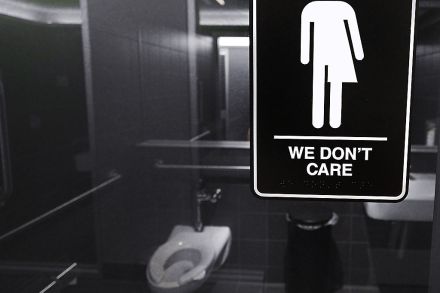
James Kirkup’s article (‘The march of trans rights’) discussed many of the complexities created by the issue, and rightly so. It also briefly mentioned the ‘bathroom battles’ in the United States. Such episodes illustrate the practical problems with legislating against such societal developments — new laws often do not solve but escalate the issue. In North Carolina in 2016, legislation was introduced to prevent transgender individuals from using particular bathrooms. The policing of this law presented practical issues. It would be impossible to guard every gender-specific public bathroom in the state. Either it would require a significant increase in police numbers, or be up to the business to enact the law.

The cautionary tale of Karen White, the transgender rapist

From our UK edition

Karen White is a rapist and child abuser who has committed several acts of sexual violence against vulnerable people. One of the women Karen White raped was pregnant. Karen White is now going to spend a long time in jail. Next week, a Government consultation on reforming the Gender Recognition Act 2004 will end. That’s the law that allows someone, for example, born male to be legally recognised as female, under certain conditions: you have to show you’ve lived in your new gender for two years, and a doctor has to certify that you have gender dysphoria or another condition that underpins your transition. Some people think those conditions should be relaxed.

Low life | 4 October 2018

From our UK edition

Once the house move was completed, Catriona’s oldest and best Scottish friends, two of them, came to stay for a week. Now that Catriona lives in France they see each other but infrequently. A seven-day female catch-up feast did not appeal to me. Neither would a shadowy male presence about the house appeal much to them, I imagined. An unenlightened point of view, perhaps. But gender is more sharply defined in Scotland than south of the border. The lassies are proud of their lads’ outrageous, even ludicrous, masculinity, but they sympathise with each other more. Scottish gender begs to differ. So I planned to bugger off back to England the day after they arrived and leave them to it.

How I was hounded off campus for saying ‘women don’t have penises’

From our UK edition

What harm can it do saying that women don't have penises? Quite a lot, actually, if my experience is anything to go on. After sharing a statement with that message on Twitter, along with a screenshot from a Spectator article, the backlash was swift. Less than a month after sending that tweet, I had lost my position as president-elect of Humanist Students as well as my role as assistant editor of Durham University’s philosophy society’s undergraduate journal, Critique. I was also given the boot as co-editor-in-chief of Durham University’s online student magazine, the Bubble. All for saying something that many people would surely agree with. The reaction against me was extreme, yet it was far from exceptional.

How John McDonnell wooed Mumsnet

From our UK edition

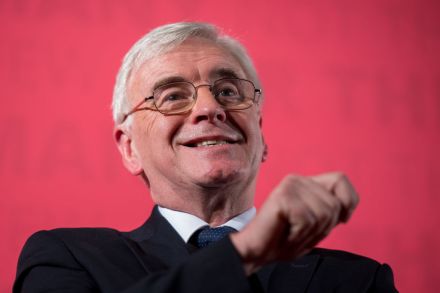
As so often these days, if you want real political insight, go to Mumsnet. In a web chat there today, John McDonnell has offered extensive proof that – whatever you think of his politics and policies – he is an extremely professional and skilful political communicator. Mumsnet, as Gordon Brown, Nick Clegg and countless others will remember, is about the toughest gig out there: you’re faced with a bombardment of questions ranging from traditional political analysis to deeply personal issues and of course humour, much of it biscuit-related. Striking the right tone is very, very hard. These days, Mumsnet is even harder for politicians because an awful lot of users there are (quite reasonably) very angry with politicians over transgender issues.

How John McDonnell wooed Mumsnet | 18 September 2018

From our UK edition

As so often these days, if you want real political insight, go to Mumsnet. In a web chat there today, John McDonnell has offered extensive proof that – whatever you think of his politics and policies – he is an extremely professional and skilful political communicator. Mumsnet, as Gordon Brown, Nick Clegg and countless others will remember, is about the toughest gig out there: you’re faced with a bombardment of questions ranging from traditional political analysis to deeply personal issues and of course humour, much of it biscuit-related. Striking the right tone is very, very hard. These days, Mumsnet is even harder for politicians because an awful lot of users there are (quite reasonably) very angry with politicians over transgender issues.

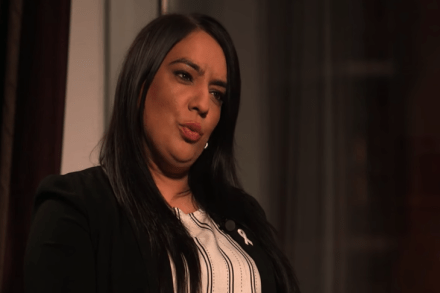
Naz Shah needs to make up her mind about abortion

From our UK edition

There are a couple of things I just don’t get. Maybe someone of liberal mind can explain them. Didn’t equalities minister Penny Mordaunt back in July throw her weight behind Theresa May’s promise to make it much easier to reassign your own gender? Of the current process (which requires you, for example, to provide medical evidence before being allowed to redefine yourself as a woman) she said: 'It is overly bureaucratic and it's highly medicalised with people making decisions about you who have never met you.' In other words, it’s your life and your decision as to which gender you wish to identify with – the state should keep its nose out and leave you alone.

Why was a transgender rapist put in a women’s prison?

From our UK edition

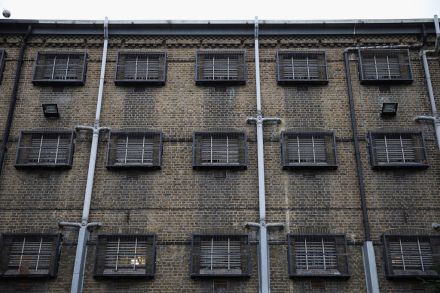
If you were deciding where to house a convicted sex offender accused of repeatedly raping a woman, where’s the last place on earth you would put that person? How about a building full of vulnerable women, many of whom had previously suffered sexual assault and abuse? A building locked and secured so that those women could not get out and could not get away from that convicted sex offender? This is not a thought experiment. This is not a clever debating point. This is a simple factual description of something that happened in England in the last year. This is the case of Karen White, a multiple rapist who was placed in a women’s prison. Karen White was born male, and was previously known as Stephen Wood and/or David Thompson.

How Caroline Lucas fell foul of the transgender thought police | 4 September 2018

From our UK edition

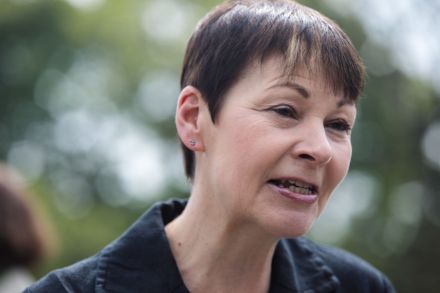
Last week, it emerged that Linda Bellos, veteran feminist of the Old Left, faces legal action for having said the wrong thing about transgender people who hit women. This week’s transgender thought-criminal is Caroline Lucas, co-leader of the Green Party. Someone who might well be considered impeccably on-message on gender issues is accused of being that most terrible thing, a Trans-Exclusionary Radical Feminist, and is being punished accordingly. Lucas leads a party that is deeply devoted to the orthodoxy of transgenderism and the unquestionable mantra that “transwomen are women”.

Aimee Challenor and the danger of transgender politics

From our UK edition

Aimee Challenor – in case you haven’t heard – has just stepped down as equalities spokesperson for the Green Party. I say Aimee – he was, until the age of 16, Ashley, whereupon he decided to challenge his gender by going to the school prom in a dress. From this point his career took a dynamic turn, as he became a Green Party candidate (spurned, alas, by the electorate), a runner for deputy leadership of the party, a member of Stonewall’s Trans Advisory Group, leader of Coventry Pride and subject of upbeat pieces in the Guardian as the fresh face of transgenderism. 'Yes, I’m trans, but I’m a Green Party politician and proud of it', was the headline of one such profile.

Why can’t lefties tolerate a transsexual conservative?

From our UK edition

I am a conservative. I believe everyone in society does best when government takes a light touch. I believe in low taxes, less regulation, the rule of law, national sovereignty, strong borders, individual liberty, personal responsibility, meritocracy, tolerance to people’s differences, and traditional family values. I am also a transsexual woman. But those on the left regard me as a Judas. And they do so because I don’t fit conveniently into their insatiable and pathological need to stereotype everyone. To them, the very notion that a trans woman – because we are “different” and a “minority group” – could be anything other than a Mao-quoting, Che-Guevara-T-shirt-wearing, red-flag-waving socialist is sacrilegious. They call me a traitor.

What data does not tell us

From our UK edition

In late 1973 the graduate admissions department at UC Berkeley discovered that for the forthcoming year it had awarded places to 44 per cent of male applicants and only 35 per cent of women. Concerned about possible lawsuits or bad publicity, they approached Peter Bickel, a professor of statistics, to analyse the data in more detail. Looking for patterns of prejudice, Bickel broke down the data by university department. He was suddenly presented with a contradictory picture. Department data suggested Berkeley was mostly even-handed in admissions. Stranger still — though a minority of departments exhibited some gender bias, it was more likely to be a preference towards female candidates than the other way about. Eh? How so? I mean a 44:35 ratio seems clear-cut, no?

Is the BBC scared of the transgender debate? | 15 August 2018

From our UK edition

I like the BBC. I like the idea of a national broadcaster and I like a lot of BBC output. I admire many BBC journalists – the Corporation employs some of the very best. I am not a Beeb-basher, not least since so many of the people who bang on relentlessly about the BBC’s supposed biases are stupid or horrible or both. I say these things because for all my affection for it, this is an article about an area where the BBC is sometimes getting things wrong. Some recent BBC coverage of transgender issues fails to meet the usual standards of its journalism. Those failings, in turn, raise some wider questions for the BBC on this topic. The first piece that isn’t up to scratch is this Reality Check about transgender prisoners, published earlier this week.