Gender

The BBC’s new female panel show is patronising to women

From our UK edition

Where’s the F in News, new on Radio 4, is ‘an energetic, intelligent female-anchored show with a female panel’, according to its BBC description, of ‘fresh and funny challenges’. I listened to the latest episode. The panel of two comedians, one restaurateur and the Labour MP Jess Phillips were unanimous in their prejudices. The subjects were: vegetarianism (good, unless producing food that tastes like meat), Brexit (bad), Jacob Rees-Mogg (bad), Theresa May (bad/robot), parliamentary traditions (bad), Sir Christopher Chope (bad), new Girl Guide badges (good because they’ve abolished the ones for ironing and vermin control and introduced ones for ‘protesting’).
The limits of Stonewall’s tolerance | 31 July 2018

From our UK edition

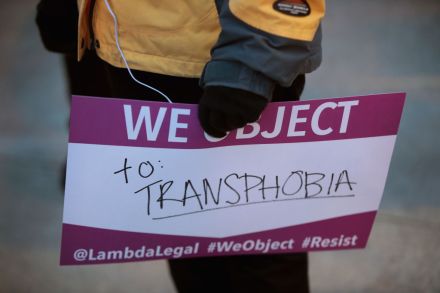
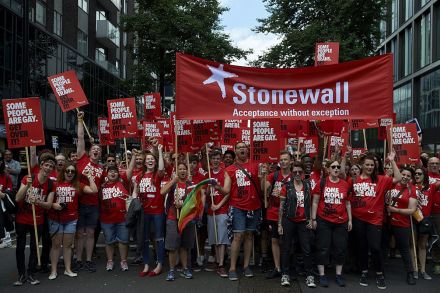
‘Acceptance without exception’ is the aspirational slogan emblazoned across the website, merchandise and literature of Stonewall, the UK’s largest LGBT charity.  The problem is that there are exceptions. Those who are not accepted include those who refuse to believe that a person can change their sex simply by saying: ‘I identify as.’ The fractious nature of the LGBT alliance – and Stonewall's intolerance for dissenting voices within the community – is becoming increasingly clear. At this year's London Pride, a group of protestors from ‘Get the ‘L’ Out’ made their feelings known by marching to the front of the parade with banners, including one reading ‘Transactivism Erases Lesbians.

Are female prisoners at risk from transgender inmates?

From our UK edition

Earlier this week, it was reported that an inmate in HM Prison New Hall, a women’s prison, had been charged with sexually assaulting four female inmates. According to the Sun, the inmate is transgender. Born male and still possessing male anatomy including male genitals, she now identifies as female. Because of that “identification”, the inmate was housed in the female prison estate; in broad terms, the Ministry of Justice says that transgender prisoners should be housed in the part of the prison system that corresponds to their gender identity.  That policy has many implications, one of which is that it is possible for a person with male anatomy, hormones and outlook, to be confined in prison with inmates who are anatomically female.

Labour and Tories finally see the truth about the gender debate

From our UK edition

You might not have noticed that yesterday the Government announced possible changes to the Gender Recognition Act. That’s what ministers wanted: the announcement was carefully made late in the day and was partly obscured by an earlier promise to ban “conversion therapy” that tries to stop gay people being gay. Why did the Government bury its transgender announcement? The approach was very different last autumn when the Prime Minister herself fronted a prominent media drive which Tory spinners said showed that the Conservatives were inclining towards a system of “self-identified” gender.

Why are women who discuss gender getting bomb threats?

From our UK edition

Last night, some women got together in a room to talk about law and politics and sex and gender. The meeting, in Hastings, was organised by a group called A Woman’s Place UK, which is concerned about the way politics and public debate is developing with regard to the legal rights of transgender people and women. This stuff is complicated and, to many people, obscure. I’ve written about these issues quite a bit here, and while quite a lot of people seem keen to read about the transgender debate, I’m under no illusions that this has broken through into wider public consciousness.

The Catch 22 of Labour’s gender policy

From our UK edition

Earlier this week, I wrote about David Lewis, a Labour member who was allowed to stand for election as a constituency women’s officer on the basis that he identifies as a woman under some circumstances. That report seems to have drawn some attention, not least from Labour HQ. David Lewis was told on Tuesday night that he has been suspended from the party and cannot therefore stand for election as Basingstoke CLP women’s officer. I’ll try to unravel the implications of that in a moment, but first I want to say something about David Lewis and the general debate around this case. As is usual with debates around gender, a lot of people have strong feelings about this case, and have expressed them bluntly.

The silencing of the lesbians

From our UK edition

Even I’m a bit surprised by this and I’m writing it, but this is an article about lesbians. I’m writing about lesbians because some of them believe they are currently the subject of political failure. They believe that the people, organisations and institutions that are supposed to speak and stand up for them and their interests are not doing so. I think those concerns are reasonable and should be addressed. A political system that’s supposed to represent the views of everyone in it really isn’t working for the women I’m talking about here. This is, of course, about gender and the debate around gender and sex. Quite a lot of the people who have questions and concerns about law and practice around transgender issues are lesbians.

Why are some MPs trying to shut down the transgender debate?

From our UK edition

Even if you don’t know who Stephen Doughty MP is, if you’re vaguely familiar with the history of New Labour, you’ll know his story: Oxford, a job for a senior Labour politician and a brief spell working in charities. Then selection for a safe seat in his early 30s, thanks to a combination of talent and friends in the right places. Now 38 and having resigned from Jeremy Corbyn’s front bench over, well, Jeremy Corbyn, Doughty sits on the Home Affairs Committee, which, among other things, is inquiring into hate crime, and its causes. To that end, the committee last week took evidence from a bunch of newspaper editors about the way their papers covered groups including British Muslims and transgender people.

If Mumsnet can stand up for free speech, why can’t MPs?

From our UK edition

OK, I admit I’m a bit of a Mumsnet groupie, but this needs to be said: Justine Roberts is great. Roberts is the founder of Mumsnet who has this week come out fighting for free speech and sensible political discussion, both of which are at risk in the debate about gender laws. Why Mumsnet? Because a website previously best known for chat about childcare, biscuits and something called a penis beaker has developed an important role in an important political debate.

Fear and loathing grips the gender debate

From our UK edition

Since I started writing about issues of sex and gender here a few weeks ago, I have made all sorts of new acquaintances; a lot of people are interested in this topic, it seems. Many of the people I’ve been in touch with are women who worry about the direction of politics, policy and even popular culture when it comes to gender and sex. And many of them are frightened. Frightened of what happens if the law is changed to let people born male become legally female simply on the strength of their own declaration. Frightened that the word “woman” will become meaningless and allow the legal rights and protections currently granted to women to be eroded and erased. Frightened to meet to discuss these concerns. Frightened even to speak about them.

Minding the gender gap

From our UK edition

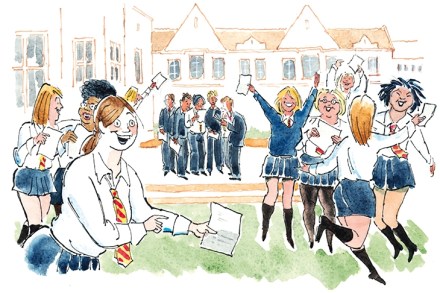
Boys are behind girls: at primary school, secondary school and at university. In the UK, white working-class boys have long been at the bottom of the heap in terms of attainment, but these days boys of all backgrounds are underperforming relative to girls. Last year, girls got two-thirds of the new top grade 9 scores at GCSE, while just 32 per cent of boys applied for university, compared with 44 per cent of girls. It’s not just in Britain either. Across the OECD countries, a study has found that 15-year-old boys are 50 per cent more likely than girls to fail to meet the baseline standards in reading, maths and science. So the question is why? How do boys and girls differ in their approach to learning? And what are schools doing to help boys learn effectively?

Tackling the gender pay gap could leave us all worse off

From our UK edition

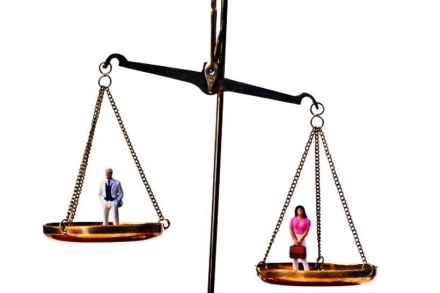
It's International Women’s Day. As feminists rush to detail the many disadvantages still facing women (yes, all women, everywhere) we’ll no doubt hear a great deal about the gender pay gap. In that regard, International Women’s Day is a bit like every other day of the year. But let’s go with it. According to the Office for National Statistics, the gap between the median hourly earnings of men and women working full time is 9.1 per cent. The Fawcett Society prefers the mean figure of 14.1 per cent. Actually, they’d like us to focus on the gap between the total average earnings of men compared to women – about 18.4 per cent. Whatever.

The real war on women

From our UK edition

How hard is it for women to talk freely about sex, gender and the law? Not very, I used to think. I’d heard about a few no-platforming incidents on campuses, where speakers including Germaine Greer were blocked from appearing because of their views. What I hadn’t realised was just how far the problem has spread. In the past few months, I’ve discovered firsthand that political debate is narrowing for everyone — and that fear and intimidation are being used increasingly to curtail free speech. I am one of a small group of women who get together to discuss proposed changes in the law on sex and gender. We’re called Woman’s Place UK. But because of the content of our discussions, certain activists want us closed down.

The violent misogyny of the gender debate

From our UK edition

Journalists and politicians talk a lot about freedom of speech, and rightly so, because the ability to express thoughts and opinions without fear or restraint is the foundation of democracy. We must be free to question, free to doubt, or we are not free at all. But for journalists and politicians, 'freedom of speech' can feel a bit of an abstract concept, a debating point not a matter of personal safety. We talk about curbs on free speech as things that make it harder for us to do what we do – write and talk. We rarely think about them in terms of physical fear. So a couple of weeks ago, when I wrote here about the way fear is chilling the debate about Britain’s laws on sex and gender, I really meant the fear of reputational damage.

Can we have an honest debate about gender?

From our UK edition

This article is about gender and the law. When I asked several friends, politicians and journalists, about writing it, they all said the same: don’t. It will go badly for you. And that is why I’m writing this. In fact, that’s what I’m writing about: fear. The fear that persuades some people they can’t say what they think about something, or even ask questions about it. Fear that prevents proper discussion of public policy and the public interest. Fear that chills debate. I’ve been a journalist for 20 years. I belong to no party and I have no allegiances or affiliations. I don’t have an agenda or an axe to grind.

A very minor prophet

From our UK edition

Now that I seem to have become a prophet of doom, I wonder whether I should have been a guru instead. Doom doesn’t sell. Bookshops hide my books in back rooms. My recorded harangues and TV appearances reach a few thousand dedicated YouTube enthusiasts. But Dr Jordan B. Peterson, supposedly as reactionary as I am, speaks to millions. His new book 12 Rules for Life: An Antidote to Chaos adorns the front table of every Waterstones. Annoyingly, friends of mine recommend his lectures to me, people on Twitter tell me incessantly that I ‘must’ explore his work. They become positively rude if I express reluctance. How has he done this? Is he a cult? Should I too be a cult? Is it the way to reach minds otherwise closed to conservative thought?

State of independence

From our UK edition

When the BBC’s Arabic-language network went out on air for the first time 80 years ago, on 3 January 1938, its mission was to provide ‘reliable news’ to a region that was being fed German and Italian ‘propaganda’ via short-wave transmissions from those countries. News is still its main focus, says Bassam Andari, news-gathering editor for the Arabic service, who has been with the corporation since 1994, arriving in London from Lebanon. He grew up listening to the station during the civil war in that country in the 1970s. ‘My mother would switch the radio on to the BBC every morning to find out what was happening in the world, not just in Lebanon,’ he recalls.

Girls on film

From our UK edition

To mark the 100th anniversary of women’s suffrage — if a little oddly — Channel 4 on Tuesday brought us a special girls-only edition of The Secret Life of Five-Year-Olds. The cast were a mix of new faces and old hands from previous series: among them Jet who, like a primary-school version of a traditional Hollywood actress, has been playing a five-year-old on the show since 2016. Still, you can see why the producers keep calling — because, by now, Jet has got the tomboy role required of her down pat. ‘It’s hard to make friends with just girls,’ she declared early on, hitting the word ‘girls’ with exactly the right degree of scornful emphasis.

The Tesco equal pay claim sets a dangerous precedent

From our UK edition

I have decided that my work is of equal value to that of Claudia Schiffer and that therefore in future I should be paid the same as her. Why not? Okay, we don’t quite do the same thing, but we both get up in the morning, go out and do what we do as best we can. Yet she is paid more than I am, which is indefensible. That is pretty much the basis of the claim by 100 female Tesco shop floor workers who have launched an action against the supermarket claiming that they should be paid the same as men who work in the store’s warehouses. It is discrimination, they say, because their work is of ‘equal value’. It is estimated that, if successful, Tesco could face claims for up to six years’ of back pay for 200,000 workers – amounting to as much as £4bn.

Dancing queen

From our UK edition

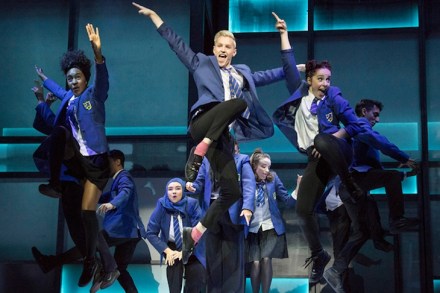
Everybody’s Talking About Jamie opened at the Sheffield Crucible in February for a standard three-week run. The show is based on a BBC documentary, Jamie: Drag Queen at 16, about a working-class lad who attended his school prom in a scarlet frock. Director Jonathan Butterell saw the potential to create a replica Billy Elliot and he brought in two co-writers to turn the material into a comic musical. Word of mouth was excellent and the show received immediate offers for a West End transfer. The action starts in a Sheffield comp where a class of 16-year-olds are being given career advice by a computer. Blond misfit Jamie is encouraged to train as a forklift-truck driver. But he has other ideas. With his mum’s help he sets off in search of his inner self as a gender-fluid diva.