Gender

Can a conclave be secretive? 

From our UK edition

During the conclave the BBC headlines kept on calling it ‘secretive’. The effect on my husband each time was much like that of a child kicking the back of his seat on an aeroplane. He was annoyed. I could tell by the way he shouted. Secretive is a pejorative adjective. The ending -ive implies a permanent or habitual quality. I suppose the people who wrote the news bulletins wanted to make it clear that the existence of the conclave was not a secret. But that is not how secret would be used. After all, we benefit from the secret ballot in Britain, but it is not the holding of the election that is secret, just the mark made on our ballot paper.

letters

Letters from Spectator readers, June 2024

The rise of reverse gaslighting Sir — To an otherwise excellent article, I have a small correction. In 1860, the Southern states did not keep Lincoln off the ballot. Unlike today, where voting ballots are printed by the states, in 1860, voters were not presented with official ballots at polling stations that allowed them to check off which candidate they were voting for. Instead, a nineteenth-century ballot or “political ticket” was a slip of paper, provided by each party, listing their candidates for whatever offices were up for election. This allowed voters to easily “vote the ticket” for their party without having to know the names of every candidate and office.

Why don’t men ask questions?

From our UK edition

I’ll bet most women under 50 in relationships with men have found themselves wondering when on earth the man is going to get round to asking them a question. The man gets home. We ask about his meetings, his lunch, his colleagues, showing empathy and imaginative curiosity. Then we wait in vain for our turn. That sounds too passive. ‘Waiting in vain’ doesn’t begin to summon the way mild pique turns first to incredulity, then actual rage and despair at the man’s apparent lack of interest. ‘Tears are pooling on your collarbones again,’ my husband used to observe quite regularly on date nights in our courting days. ‘Is it because I should be asking a question?’ I soon learned not to say yes.

The gender frenzy has wrecked language

From our UK edition

‘I regard this as a single-sex space,’ said my husband as I perched in his study, on the arm of a chair which was piled with books, trying to find out if he’d eat monkfish if provided with it. I doubt the Supreme Court will come to his aid, but gender frenzy has left some puzzling wreckage in the language. The Times recently reported that a drunken architect took a meat cleaver and pursued a teenager, ‘who locked themself into the bathroom’. The writer did not want to specify the teenager’s sex, but did want to keep him or her singular. Another author in the Guardian wrote about ‘how an abuser finds themselves classified in this way’.

The hidden violence behind the trans ruling

From our UK edition

It is ten months since the then merely aspirant education secretary Bridget Phillipson addressed the important issue of where transgender people should go for a quick slash. Bridget was very much of the opinion that if you had a gender recognition certificate, then you should make for the cubicle which matched with whatever it said on that piece of paper, because it’s the ‘humane approach’. She added: ‘But I would expect that if you were someone that had gone through that formal process of recognition you are, to all intents and purposes, for legal purposes, regarded as being in a different gender, regardless of the sex into which you were born.’ This week, Bridget changed her mind.

How trans ideology paved the way for motherless babies

The future is technological, and this includes human reproduction. In Silicon Valley, a very particular sort of technological pro-natalism is emerging – not a movement to try to persuade ordinary people to have families so much as a push to create genetically superior children. The way they see it, the future of human reproduction is – and should be – increasingly technological. There’s a vast amount of money moving into the reproduction industry. Interestingly, the big players here are often the same people who have been ruthlessly pushing gender ideology – the insane idea that you can change your sex at will. Why would this be? What is the connection between the fad of transgenderism and tech-fatalism?

Let men do the housework!

From our UK edition

Why are women still allowed to do housework? The question used to bother me during the years of my marriage when housework became a running sore between us. Perhaps the friction was inevitable. I was born in revolutionary times, the 1960s, and my mother taught me and my siblings to cook, clean and wash up for ourselves. We turned out as independent, self-sufficient adults. I would never ask a woman to make me a cup of coffee any more than I’d ask a bumblebee to build me a lighthouse. And doing jobs around the house suits my life as a writer. During the day I take frequent mini-breaks and do chores while my mind empties itself of clutter and my batteries recharge. Then I return to my laptop, renewed and refreshed. It’s like meditation – but with concrete results. Clean carpets.

How to get your husband to do the vacuuming

From our UK edition

This column nearly didn’t happen. Just as I sat down to write, disaster! My dishwasher lost its connection to the internet. This meant I could no longer view real-time feedback about its water consumption on the app. Nor could I start my dishwasher remotely from my office, timing it perfectly so it would be ending the drying cycle when I got home. This facility is, of course, almost entirely pointless. I use it all the time. Thus I was nearly resigned to cancelling this column in order to spend the next six hours fixing the problem. Fortunately, resetting the router fixed the glitch straight away, which is why you are reading this now. I am obsessed with this nonsense. I recently spent half an hour ‘upgrading the firmware’ on my lavatory.

Migration mystery, Ipso’s trans muddle & are you a ‘trad dad’?

From our UK edition

46 min listen

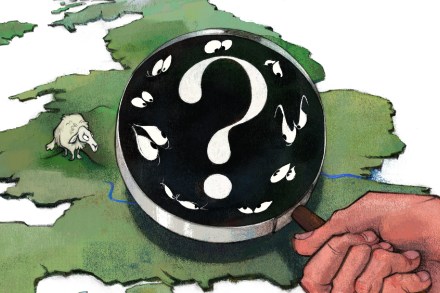
This week: why don’t we know how many people are in Britain?How many people live in the UK? It’s a straightforward question, yet the answer eludes some of the nation’s brightest statistical minds, writes Sam Bidwell for the cover this week. Whenever official figures are tested against real-world data, the population is almost always undercounted. For example, in England alone, nearly 64 million patients are registered with GP practices – higher than the Office for National Statistics (ONS)'s estimated population of 58 million. Sam argues there are serious consequences for our society at large, including for tax, housing and our utilities. Who is to blame for this data deficiency? And why is Britain so bad at tackling illegal migration?

What Trump’s executive orders will do

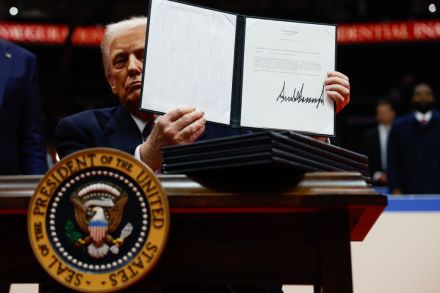
The newly sworn-in President Trump had a busy inaugural day. Between swearing into office and waving a saber around while dancing to “YMCA” at an inaugural ball, he also signed several executive orders and proclamations. After signing his cabinet and other nominations, President Trump’s first order of business was to proclaim that all flags should be flown at full staff for this and all future inauguration days. Following the inaugural parade, President Trump signed a bevy of additional executive documents as thousands of his supporters cheered.

My wife earns more than me – and it doesn’t feel great

From our UK edition

This is the article I have thought about writing for years, but I have always ended up asking what would be the point. And how annoying that some people would call it ‘brave’, meaning shameful. I’ve always earned a lot less money than my wife. There, I’ve said it. Is that still a big deal these days, a difficult thing to admit? Yes and no – and the ambiguity is rather interesting. Our culture claims to be liberated from old stereotypes about gender roles. But is it hell. Even its progressive urban elite is ruled by stubborn visceral traditionalism when it comes to gender and money. I’m prompted to share these thoughts by a news story.

How the Democrats Bud Lighted their brand

Last spring, a marketing grunt at Bud Light sent TikTok star Dylan Mulvaney, a trans woman, custom cans of beer featuring her picture. As intended, Mulvaney posted about the beer on social media, igniting a firestorm and a boycott of the brand. Men revolted. Bars stopped serving it. Bud Light lost its status as the top-selling beer in America; it’s only back up to number three today. I became aware of the left’s man problem when I wrote for Playboy back in 2015. When I’d ask my audience to submit their thoughts about hair loss, erectile dysfunction or dating, I would often receive thousand-word screeds, with a “thank you for actually caring” theme. Thank you for listening. Thank you for writing about men like we matter.

budweiser

The ONS finally admits to flawed trans population statistics

From our UK edition

The Office for National Statistics (ONS) has finally admitted that the 2021 census figures on the transgender population of England and Wales are irredeemably flawed. They no longer count as ‘accredited official statistics’. This is the first time that data from the decennial census – the backbone of British statistics since 1801 – has been downgraded. This humiliating climb-down came just a week before the Office for Statistics Regulation published its final review on these statistics. This review had been provoked by my critique of the census transgender figures, publicized in the Spectator last year.

Labour’s outrageous attack on academic free speech

From our UK edition

In an extraordinary outburst, a government source has described the new Higher Education (Freedom of Speech) Act, introduced by the Conservatives, as a ‘hate-speech charter’. This is an outrageous distortion of the new laws that aim to guarantee free speech within universities. The best that can be said about that phrase is that, so long as we retain free speech, people are free to describe it that way. But doing so raises worrying doubts about what the new government thinks free speech means.   Universities have a special role in the promotion of free speech. They are, or should be, places where those teaching and those taught can try out ideas, some of which may on closer examination turn out to be misconceived.

Unmissable – for professors of gender studies: Alma Mater, at the Almeida Theatre, reviewed

From our UK edition

Alma Mater is a topical melodrama set on a university campus. The new principal, Jo, (amusingly played by Justine Mitchell) is a radical feminist who recalls the bitter struggles of the 1980s when she strove to put women on an equal footing with men. Her task now is to address the college’s reputation for ‘binge-drinking, partying and casual sex’. To ingratiate herself with the students she makes a speech full of swear words which greatly impresses the first years, apparently. Then a nightmare unfolds. A naive Welsh fresher, Paige, attends a fancy dress party where she’s sexually assaulted by a handsome older student. Drink was involved. Paige admits that she blacked out during the incident and the accused has no recollection of what happened.

Labour’s women problem

From our UK edition

14 min listen

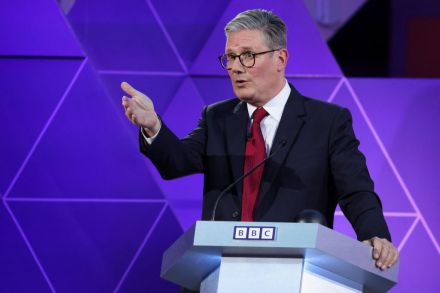
The gender debate has become increasingly difficult for the Labour Party as the election campaign has rumbled on. JK Rowling has now agreed to meet with Labour to discuss gender transition policy, after writing in The Times that she'd struggle to vote for the party after feeling dismissed by them. After the election, will gender become an increasingly difficult issue for Keir Starmer?

The American Ornithological Society’s war on the past

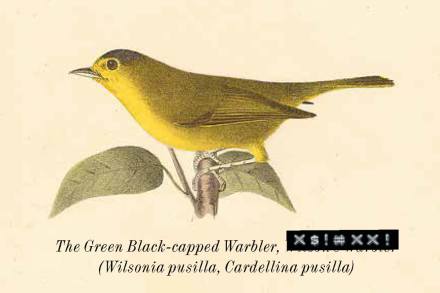
Say you’re easing along a meadow stream, upslope but not steep, somewhere in the Rockies. It’s a morning in spring, the mountains ahead still mostly snowy against a blue sky. A bird sings, giving itself away in a clump of alder. New to birding, you’re naive but full of hope, and through the binoculars you find a thing with feathers, small and olive with yellow breast and black cap. A Wilson’s warbler, says the field guide with its nifty pictures, and you feel the satisfaction of putting a name to a part of the profusion of nature. You’re out there — need it be said? — for the peace, and the bird, deftly identified, is a totem of tranquility.

ornithological

When was the first televised election debate?

From our UK edition

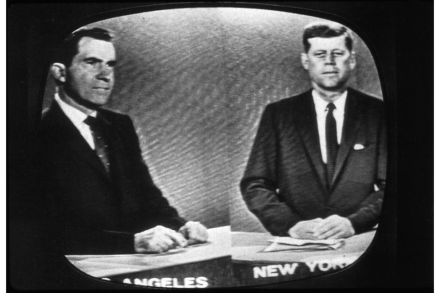
TV clashes The concept of a televised election debate is often believed to have begun with the one held between John F. Kennedy and Richard Nixon before the 1960 US presidential election – an innovation not repeated until 1976. (The first televised election debate in the UK didn’t take place until the 2010 general election.) Yet its history can really be traced back to 4 November 1956 when, days before Americans were invited to choose between President Eisenhower and Democratic candidate Adlai Stevenson II, the CBS News show Face the Nation held a half-hour debate between Eleanor Roosevelt, representing the Democrats, and Margaret Chase Smith, representing the Republicans.

The rise of reverse gaslighting

We live now in an age of reverse gaslighting. Ordinary gaslighting — the term was popularized by the 1944 movie Gaslight — describes a process of psychological manipulation whose goal is to make ordinary people question their sanity. Reverse gaslighting, by contrast, aims to convince us that insane realities are perfectly normal. Imagine: practically the entire population quarantines itself because a couple of government bureaucrats tell them to. Everyone starts wearing little paper masks as patents of their capitulation and, secondarily, as badges of their virtue.

gaslighting
women

The ups and downs of the long road toward workplace parity

In late 2019, for the first time ever, American women outnumbered men in the college-educated labor force. Women now earn bachelor’s degrees and doctorates at a higher rate than their male counterparts, and they account for more than 56 percent of law students. They lead more than 10 percent of Fortune 500 companies. Has the United States come a long way in equalizing opportunities for men and women? Definitely. Do we still have a long way to go? Absolutely, says Josie Cox in Women Money Power, her compelling analysis of the ups and downs of the long road toward workplace parity.