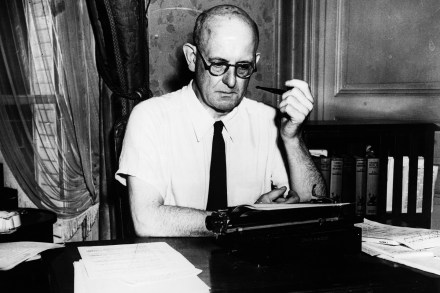
G.k. chesterton

Americans will believe in anything

The US has not known social and domestic peace since the start of the present decade, and it is unlikely that it will know it again for the foreseeable future. This is because it has ceased to be a country at all, assuming that nationhood implies fundamental unity, which America no longer has. When novelist John Dos Passos wrote in the late 1930s, “All right, we are two countries,” the boundary he had in mind was economic, separating the rich from the poor. Today the obvious divide is political, between left and right. But what seems obvious is not always true, as in this case.

Are angels real?

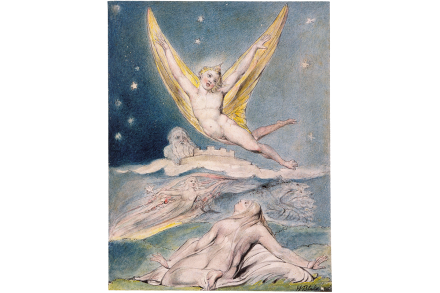
One day while out walking, William Blake saw angels sitting in the trees: “bright angelic wings bespangled every bough like stars.” He was eight years old. His fascination – some have called it an obsession – with angels lasted for the rest of his life. When he sat to have his portrait painted by Thomas Phillips, the two men began to argue about who painted a better angel, Michelangelo or Raphael. Phillips, not unreasonably, suggested that since Blake had never seen even an engraving by Michelangelo, he was not qualified to give an opinion on the matter. “But I speak from the opinion of a friend who could not be mistaken,” replied Blake. “And who may he be, I pray?” asked Phillips. “The Archangel Gabriel, sir.

What do Oscar Wilde, Gwen John and Evelyn Waugh have in common?

From our UK edition

Religious conversions do not, for the most part, make for good anecdotes. An exception can be found in Patricia Lockwood’s memoir Priestdaddy, which describes the author’s father Greg’s road to Damascus experience in a nuclear submarine off the coast of Norway, where he watched The Exorcist 72 times: That eerie, pea-soup light was pouring down, and all around him men in sailor suits were getting the bejesus scared out of them, and the bejesus flew into my father like a dart into a bull’s eye. It was, Greg boasted, ‘the deepest conversion on record’.

Please stop making Alien movies

From our UK edition

In the Alien films, a xenomorph is a monstrous, all-consuming life form that exists only to make more and more copies of itself. Once the first xenomorph appears, it’s only a matter of time until all those gleaming chrome walls will be covered in creepy black goo and the humans suspended lifeless from the ceiling in webs of slime with their chests ripped open. The xenomorphs are not curious about the world. They don’t care that they’re in a spaceship in the middle of outer space. As far as they’re concerned, we’re all just warm bodies in which to incubate their young. The only thing they want to do is make more and more and more and more of themselves.

The English were never an overtly religious lot

From our UK edition

Generalisations about national characteristics are open to question. Nevertheless, the overwhelming impression one gets from reading the major works of English literature, or from studying the famous English men and women of politics, the military or the academic world, is that the English have not been an especially religious lot. Or, if you think that a strange judgment of a nation that produced the finest Gothic cathedrals in Europe and the hymns of Charles Wesley, then you could rephrase it and say that they have not generally worn their religious feelings on their sleeve. Jane Austen’s hilarious novels do not quite prepare us for her letters in which she confesses her sympathy for evangelicalism.

The left’s politics of catastrophe

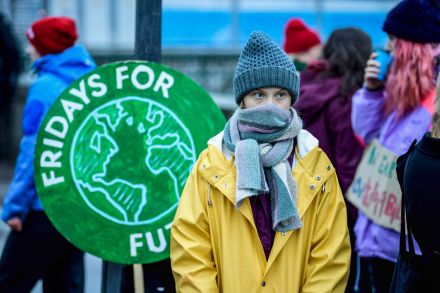
Having a close, lifelong acquaintance with the animal kingdom, from small reptiles and farm animals to dogs and cats of the large and domestic varieties, I disagree with G.K. Chesterton’s casual statement that the more one gets to know animals, the greater the distance between them and human beings appears. My own experience suggests the opposite. Chesterton had obviously not considered herd animals such as cattle, with their keen instinct for panic that Homo sapiens, taken as a species, so often exhibits. Humanity’s current panic — of global extent, though demonstrated in exaggerated form in the West — touched off by the phenomenon of “climate change” is only the latest historical manifestation of an endemic human trait.

iowa

Giorgia Meloni should inspire American conservatives

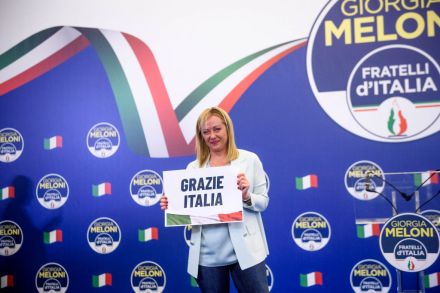
Giorgia Meloni and her Brothers of Italy party were swept into power in elections this weekend, a development that the media complex in America greeted with all the subtlety of a bird smacking into a sliding door. The New York Times managed to call her a “fascist” 28 times in a single article. Meloni stands to become Italy’s first female prime minister — but I suppose it’s only good for women to break glass ceilings if they’re the correct kind of women.

Conservatives should embrace urbanism

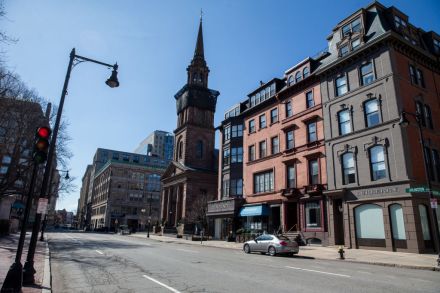
I consider myself an urbanist — despite the fact I lean to the right. Or perhaps, in my case, because of it. But what exactly is “urbanism”? It’s a new term that carries a lot of different meanings. It might indicate acclaim for the big, blue, coastal cities, the sort that conservatives dislike. It might denote a wonky focus on things like zoning, setbacks, street widths and other aspects of urban design or engineering. It might also bring to mind moralizing, busybody progressivism. My take on it is more informal and less partisan: an awareness of the built environment as an independent variable in human behavior, and a desire that our built environments be conducive to commerce and community at a human scale. I think that’s conservative.

urbanism

Amy Poehler and Maya Rudolph’s funeral for satire

‘A man is angry at a libel because it is false, but at a satire because it is true,’ wrote G.K. Chesterton. Democrats seem to understand that point, though sometimes they are a little overeager to show they can laugh at themselves. Take the virtual Democratic fundraiser on Monday night. Vice presidential nominee Kamala Harris was joined by 2016 Democratic nominee Hillary Clinton, along with — get this — Maya Rudolph and Amy Poehler, who play them on Saturday Night Live! Readers were presumably as stunned as Cockburn to learn that wealthy thespians enjoy sharing a stage with Democratic leaders.

satire

A ticket to Rye

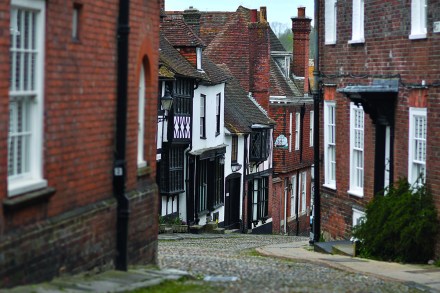
Earlier this year, before we went into lockdown, my wife and I set off on our final, farewell trip to Rye. I may go again, one day, but I know she never will. This quaint, archaic seaside town where we’d spent so many happy holidays had become a painful place for her. She was glad to say goodbye. I wanted to make a weekend of it, like we always used to, but she didn’t want to stick around. Her dad had died and her mom was in a nursing home. We’d come to clear out their house before the new owners moved in. It was her parents who had introduced me to Rye, 24 years ago. They’d just retired and needed a new adventure. The National Trust needed some new tenants for Lamb House, a grand old house in Rye where Henry James used to live.

rye

Adapting Wodehouse for the radio is a challenge – but the BBC has succeeded brilliantly

From our UK edition

Everyone knows a Lord Emsworth. Mine lives south of the river and wears caterpillars in his hair and wine on his shirt and has just occasionally written for this magazine. That doesn’t much narrow it down. When you look at him, you understand a little better why P. G. Wodehouse is topping the lists of authors to read during lockdown. It’s not just that the books are funny. With an Emsworth or a Bertie Wooster you’re guaranteed that idling and dithering will land you somewhere. Even if it is in the soup. Adapted for Radio 4 this fortnight, Leave it to Psmith, the second in Wodehouse’s Blandings series, sees the dithering Earl invite a prospective thief into his home after mistaking him for a Canadian poet.