Free speech

Europe is its own worst enemy

Vice President J.D. Vance’s speech condemning Europe’s abandonment of basic western values was a seminal moment in US-European relations. It provoked immediate praise from American conservatives and disparagement from European leaders, including German Chancellor Olaf Scholz. Critics and admirers both recognized the significance of Vance’s message. The February 14 speech, which Mr. Vance gave on his first trip abroad as vice president, yielded millions of views on X and spawned dozens of op-eds in response. At the Munich Security Conference – typically a venue to discuss defense spending and the like – Mr Vance told the entire European leadership class that they themselves are the biggest threat to European security.

Why does Britain think it can censor Gab?

A dramatic escalation has happened in the information war between the US and Europe. Ofcom, the British media regulator that fancies itself as a global censor, has made a move. Ofcom sent a formal demand to Gab – an American social media platform with no legal presence in Britain – threatening it with ruinous fines unless it complied with the UK’s Online Safety Act. Gab’s reply to Ofcom was not polite. It was cold, clinical and lethal. Through its lawyers, Gab told Ofcom – with legal precision and unmistakable clarity – to get lost. This isn’t some polite regulatory disagreement.

gab

Are thought crimes now a deportable offense?

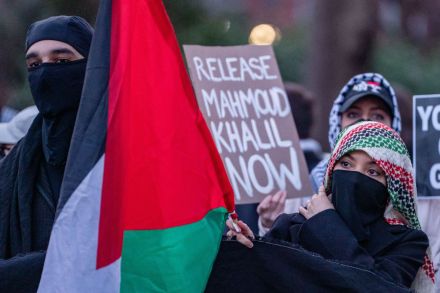
In his inaugural address, Donald Trump promised to safeguard the First Amendment. “After years and years of illegal and unconstitutional federal efforts to restrict free expression, I also will sign an Executive Order to immediately stop all government censorship and bring back free speech to America,” he said. This was music to my ears — but with the recent arrest of Mahmoud Khalil, a Palestinian green-card holder who organized student protests at Columbia University, the administration is demonstrating that First Amendment protections don’t apply when it comes to criticizing Israel’s conduct in the Gaza conflict. I support the deportation of foreign nationals who are in the country illegally or have committed crimes.

Columbia exemplifies the failure of universities

Yesterday, with growing sadness, I read a wonderful book about teaching and learning, written by one of the great teachers of the past century. Why the sadness? Because the author, Gilbert Highet, was a revered professor at Columbia in the Fifties and Sixties. It is impossible to read his paean to learning, written a half-century ago, without weeping for what his university has become. When Highet wrote of learning, he meant absorbing from history’s greatest minds, from Plato, Aristotle, Thucydides, Virgil, Cicero, Machiavelli, Hobbes and Locke, and teaching their lessons to students who wished to learn from them. Reading Highet’s words a half century later, we realize he was speaking of another time and place — virtually another university.

columbia

Freedom of speech in the UK is very, very under threat

With all the transatlantic back-and-forth over Ukraine, and J.D. Vance’s contentious remarks on Fox News about some “random country that hasn’t fought a war in thirty or forty years,” it’s easy to forget that just three weeks ago, the vice president gave a landmark address about free speech in Europe and Britain, in particular. Last week, when Keir Starmer visited Washington, DC, Vance raised his concerns more directly with the prime minister about “infringements on free speech … that affect American technology companies and by extension American citizens.

Liz Truss calls for a ‘Trump revolution in Britain’

National Harbor, Maryland Former British prime minister Liz Truss began her speech at CPAC today by declaring that America has just entered its golden age with the election of President Trump. Britain, however, is in its dark age, she said: “Let’s be honest, Britain isn't working.” Truss’s concerns for the current state of the UK and Europe mirrored those expressed in Vice President J.D. Vance’s speech in Munich last week. She touched on attacks on free speech in the UK, the rise of Pakistani grooming gangs and the inability of the British government to do anything about the rise in illegal immigration.

jd vance

VP Vance touts border security, energy and humor at CPAC

Vice President J.D. Vance took to the Conservative Political Action Committee stage moments ago for a sit-down interview with Mercedes Schlapp.   In his signature earnest-yet-easy style, Vance reiterated his boss’s main, shared goals one month into the new administration: secure the southern border and grow the economy by unleashing American energy. While casting plenty of blame on the Biden administration throughout his talk, Vance touted the Trump administration’s early accomplishments; border crossings are already down 90 percent, he said, and “we’re just getting started.” In response to a question about fixing the economy, Vance said the key is, “Drill, baby, drill.

How Mark Zuckerberg became based… by Brazilian jiu-jitsu

In the storied Fast & Furious movie franchise, now eleven films strong, there’s a tradition of the villain from one movie becoming a member of Vin Diesel’s street-racing international shenanigans gang in the next. Luke Hobbs (The Rock) is sent to hunt down Dominic Toretto before asking for his help to track Deckard Shaw (Jason Statham), who is also adopted, while Jakob Toretto (John Cena), long-lost brother to Dom, redeems himself from assassinating their father in a sabotaged stock car by helping defuse a rogue weapons system that would cause all of civilization’s computers to collapse. You know, normal family stuff: wreaking havoc on the crew before being welcomed back with a Corona at a backyard barbecue.

jiu-jitsu zuckerberg
kosa

The royals coming after American free speech

The British royals are coming after American free speech, just days before Donald Trump is set to take office as president for the second time. Prince Harry and Meghan Markle expressed outrage that Meta, owner of Facebook and Instagram, changed policy to rely on community notes versus a dedicated fact-checking department. Ironically, the pair suggested Meta’s policy change “directly undermines free speech.” How exactly? Because, according to Harry and Meghan, Mark Zuckerberg is, allegedly, prioritizing those using social media “to spread hate, lies and division.

Spectator story debunking Elon Musk ‘alt account’ theory banned on X

A reporter has been restricted from posting on Elon Musk’s X for thirty days due to an article she wrote which The Spectator published over the weekend. The story itself has also been censored on X — you cannot post it on the site — with the reason given that it is “potentially harmful.” Here’s what happened. For months, there has been a social-media rumor that Elon Musk was operating an “alt account” under the pseudonym “Adrian Dittmann.” A number of users on the site were circulating it to make fun of Musk. Some media outlets — Newsweek, the New Republic, the Daily Mail — wrote up stories covering the rumor. None sought to examine its veracity.  Jacqueline Sweet, a contributor to The Spectator, began investigating the claims in late December.

AI

Lady Chatterley’s Lover in an era of free speech

"Sexual intercourse began in nineteen sixty-three… between the end of the Chatterley ban and the Beatles’ first LP." So wrote Philip Larkin in his much-quoted poem "Annus Mirabilis." Sixty years later, while the Beatles’ Please Please Me is not entirely synonymous with matters sexual, there is still a fascination with DH Lawrence’s most famous book, Lady Chatterley’s Lover. It remains both a boundary-pushing erotic landmark and, now that the controversy behind it has long passed, a deeply affecting novel that is both romantic and Romantic in its reach.

The classroom panopticon

Is it ironic to give a prize for encouraging “open discussion and debate in the classroom” and “creating an environment where all perspectives can be heard” in the name of William F. Buckley Jr.? Although best known today as the founder of National Review and longtime host of Firing Line, Buckley first came to prominence in 1951 with the publication of his book God and Man at Yale, subtitled: The Superstitions of “Academic Freedom.ˮ Buckley’s secular and secularized Protestant critics might well have considered the firmly Catholic young man, twenty-five years old at the time the book appeared, an apologist for something they regarded as superstition. But Buckley did not mean the term as a compliment when he applied it to academic freedom.

classroom

Coercion and coddling take campus

On October 7, 2023, I was the chairman of the political science department at a large public university, but not for long. I did what I presumed universities are for, encouraging students to talk with professors about big questions and important issues of the day. So on October 18, I held a faculty-student discussion with a Middle East expert. I opened the event by stating some facts: that a terrorist organization committed to the death of Jews had attacked Israel, raping and murdering many young people at a peace concert and seizing hostages. I said that these events raised deep moral questions about what should be done in response, regarding the destruction of Hamas and the fate of thousands of noncombatant Palestinians. Discuss. The discussion did not go well.

campus

Salman Rushdie’s memoir is a devastating and powerful account of near-death

In late summer 2022, at the Chautauqua Institute in upstate New York, the celebrated novelist Sir Salman Rushdie was stabbed many times as he was about to give a lecture, the subject of which, ironically, was keeping authors safe. The attack sent shockwaves throughout the literary establishment, and the world. It seemed as if civilization itself was under threat, as if our fundamental freedoms to create, associate and speak as we wish were defunct, reduced to the point of a knife. His new memoir, Knife, examines the attack and its implications for him, and for such freedoms generally.

Rushdie

USC’s suppression of the anti-Israel valedictorian is unacceptable

University of Southern California’s 2024 valedictorian, Asna Tabassum, will not be allowed to deliver a speech at the university's commencement ceremony due to, according to the school’s provost, security concerns. The cancellation comes following a wave of criticism over what groups such as US-nonprofit StopAntisemitism labeled “her authoring [of] an antisemitic social media post on her Instagram account.” This is a textbook attack on the principle of free expression in the name of security. The move is designed to avoid controversy and save face by unjustly silencing those whose beliefs and speech differs from that of other, often more powerful, groups.  You don’t have to agree with Tabassum. You may well see her position on Israel-Palestine as radical and impractical.

asna tabassum usc

The virtue-signaling behind the renaming of the Middlebury College chapel

Early on the morning of September 27, 2021, Middlebury College president Laurie Patton had a stone bearing the name of the campus chapel removed from the building. It was done deftly. I don’t imagine she showed up with her own hammer and chisel, but the campus groundsmen executed her orders. Later that day, Patton and the chairman of the board of trustees sent out a message to the community announcing that they had de-named Mead Memorial Chapel, which henceforth would be known simply as Middlebury Chapel. The de-naming was a stealth operation. Outside of a small circle, no one knew it was coming.  Picture a small liberal arts college tucked away in the American hinterland. Picture on the crest of a hill a white marble church with an impressive spire flanked by academic halls.

middlebury college chapel

Elon is offering us a raw deal with X

Elon Musk, the owner of X — once known as Twitter, may she rest in peace — is making Americans an offer that they must refuse. When he purchased the social media platform last year for a whopping $44 billion, he led us to believe he was doing it in order to save free speech, an ideal in regard to which he said was an absolutist. Today, what he is actually offering instead is a censorship regime slightly more friendly to the right than his predecessor. It’s a recipe for disaster. Back during the bad old Twitter days of Jack Dorsey, most of us had a fairly consistent idea of how the site should moderate its content.

elon musk

How to stop law students from blocking free speech

When a federal appellate judge speaks at a major law school, he should expect tough questions from a learned audience. He should not expect to be shouted down. When he tries to speak but is heckled, jeered and disrupted, he should expect a university administrator to step in, read the students the riot act and restore order. He shouldn’t expect that administrator to sympathize with the disruptive students and let the trouble continue, as the feckless bureaucrat at Stanford Law School did.   Her shameful behavior is hardly unique. It’s characteristic of mid-level bureaucrats hired to push “Diversity, Equity and Inclusion” at universities across the country. They show very little concern for free speech, alternative views or robust debate.

stanford law students

Congress’s Twitter hearings show Democrats are done with free speech

A long time ago in a galaxy far, far away, free speech was primarily defended by civil libertarians and the Democratic Party. This was in the 2000s, when a handful of civil libertarians on the right and many more on the left worried about how the Patriot Act would enhance the government's ability to monitor its own citizens. They also opposed the growing power of the intelligence community, which they thought could pressure companies into providing private information that the government could not legally grasp for itself. The past is a different country. Yesterday's hearing before the House Oversight Committee with three former Twitter executives illustrated as much. Democrats repeatedly made the case that the hearing was a distraction, unimportant, even conspiratorial.

How did free speech become a right-wing value?

In early May, I explored the left’s reaction to billionaire Elon Musk potentially buying Twitter and his vow to make it a free speech platform again. Since then, Musk and his vision have repeatedly been portrayed as “right-wing.” It’s the damndest thing. Canadian Conservative politician Andrew Scheer picked up on this strange phenomenon back in April, saying that that the corporate media framing free speech as a “right wing value” was just plain weird. As though to drive home the point, Twitch’s Zachary Ryan called Musk a right-winger on Monday. And over the weekend, entrepreneur Samir Tabar had a question for a whiny Robert Reich: https://twitter.com/SamirTabar/status/1601984560345907200 Answer: since, well, now. The evolution of this trend is not new.

free speech