France

Is Strauss-Kahn back in the race for the Élysée?

From our UK edition

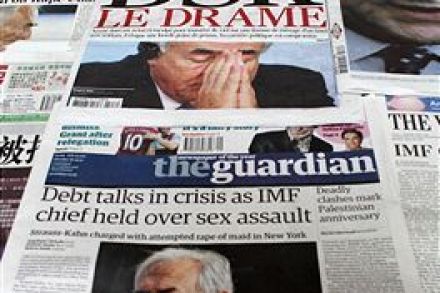
The news that the case against Dominique Strauss-Kahn is in danger of collapsing is almost as surprising as the initial news of his arrest on suspicion of raping a chamber maid. There had been a general assumption in New York, Washington and Paris that the case against the former IMF president was clear-cut and that his political ambitions were over. It is unclear how quickly the case will now be resolved. But there is sure to be pressure in France to delay the nominating deadline for the Socialist Primary beyond the 13th of July to allow Strauss-Kahn to run if he is cleared. The question is whether the various revelations about Strauss-Kahn and his relations with women which followed his arrest have damaged him politically beyond repair.

Will Britain recognise Palestine?

From our UK edition

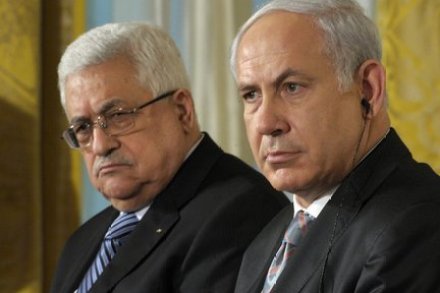
Will Britain recognise Palestine as a state if, as planned, the matter comes to a vote at the UN General Assembly in September? Right now, the government says it has not decided. But if France were to push, the likelihood is that William Hague will order British diplomats either to accept or abstain from the vote. The strategic rationale for a Yes vote is obvious: at a time when Britain is waging war in Libya and rallying support against Syria and Iran, it would be disadvantageous to be seen by Middle Easterners as blocking Palestinian aspirations. And having accepted the case for Palestinian statehood in principle why not support it in practice?

Lagarde’s appointment is a win for Osborne

From our UK edition

The appointment of Christine Lagarde as head of the IMF is a diplomatic victory for George Osborne. The Chancellor was one of her earliest supporters, was the first to nominate her and hit the phones hard on her behalf. She will be a useful ally for Osborne in this position especially given how choppy the global economic waters remain. But the UK government also used the IMF nomination process to do some diplomatic horse-trading. The government made it clear that UK support for Lagarde was contingent on Paris agreeing that Britain should have to play no part in the coming bailout of Greece. There will be those who argue that it is not ideal to have the head of the IMF come from a euro-zone country.

Lagarde three giant steps closer as Russia, China and the US back her IMF bid

From our UK edition

The 24 members of the IMF board are meeting to see if they can agree that Christine Lagarde should be the organisation’s next leader without a formal vote. Lagarde has already gained formidable backing. 40 per cent of the membership had indicated its support before today’s meetings, while her closest competitor, Mexican Augustin Carstens, had mustered just 12 per cent of the IMF’s votes. The remaining 48 per cent is now concentrating behind Lagarde’s candidacy. Her popularity extends beyond Europe into the vital emerging markets.  Russian Finance Minister Alexei Kudrin gave his signature today, saying that he hopes she will ‘secure reform of the IMF in the interests of developing world.

Greece on the precipice

From our UK edition

Europe is a doom-monger's paradise at the moment. Riots in Greece; summary Cabinet reshuffles; meetings between Merkel and Sarkozy to save the single currency — and there's still the potential for things to get worse, much worse. If the Greek government defaults on its debts, then there's no knowing where the contagion will spread, only that it it will spread wide: from Spain and Portugal to markets across the world. Share indices have already been trembling at the prospect, although many of them rallied slightly today. One consolation, however scant, is that all this crystallises just what can happen to governments who operate beyond their means.

Government split over enforcing the Digital Economy Act

From our UK edition

The Digital Economy Act (DEA) is to be 'rebooted' before the summer recess, so that it can be brought into force next January. Digital policy expert James Firth explains how the Act is being brought forward by placing it before the European Commission, a process that was overlooked when the Act was passed during the 'wash out' at the end of the last parliament. He also hints at a possible division on this issue within the Department for Culture, Media and Sport (DCMS), suggesting that this new approach is "being driven personally by Jeremy Hunt". So it seems. Some of those who were privy to discussions at the DCMS say that Ed Vaizey, the minister tasked with the digitalisation of Britain, insisted that government should not be regulating the Internet.

Hall of mirrors

From our UK edition

After the Nazi occupation of Paris was over, Sartre famously said — somewhat hypocritically, given his own slippery behaviour — that the only possibilities had been collaboration or resistance. After the Nazi occupation of Paris was over, Sartre famously said — somewhat hypocritically, given his own slippery behaviour — that the only possibilities had been collaboration or resistance. Alan Riding’s new study of the episode forcefully reminds one that it was never that simple: objectively researched and soberly balanced though the book is, navigating its moral maze leaves one queasy with mixed feelings.

Gaddafi’s position weakens

From our UK edition

As Noman Benotman predicted, Colonel Gaddafi’s relations with his military are disintegrating. Reuters is reporting that 120 loyalist officers have defected and arrived in Rome. Details are scant, but this is a major success for Britain and France’s attempt to effect regime change without intensifying their military deployment. There will be doubts as to how long the resilient dictator can survive without loyal military leadership. Gaddafi now has to choose how to respond to this treachery – rough justice may be tempting, but that might deepen the rebelliousness of his officers, increasing the likelihood of a coup. NATO will be trying to exploit this stroke of luck, encouraging further defections.

Meeting Christine Lagarde

From our UK edition

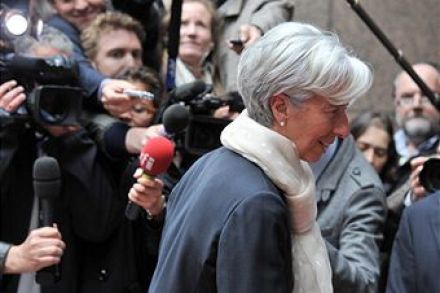
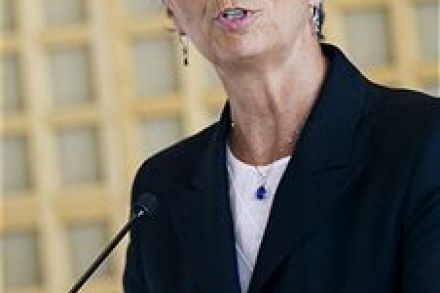
The FT has been speaking to Christine Lagarde, the French finance minister tipped to become managing director of the IMF. A few salient points emerge from it. First, she has more than a dash of hard-nosed Gallic defiance. Responding to the charge of a lack of a qualification in economics, she reiterated the comments she made to the Today programme earlier in the years: “From what I know of the job, I think I can do it. One of the qualities that people recognise in me is my ability to reach out, to try to build a consensus, to bring people to the common interest while still being a very firm and no nonsense person.” Her empathy is well documented, as is her sympathy for all things American.

Very drôle

From our UK edition

It’s nice to know that the trees lining the roads in Paris have microchips embedded in their trunks, that the city council is controlling the pigeon population by shaking the eggs to make them infertile and that the Café Voisin served elephant consommé during the 1870 siege. It’s nice to know that the trees lining the roads in Paris have microchips embedded in their trunks, that the city council is controlling the pigeon population by shaking the eggs to make them infertile and that the Café Voisin served elephant consommé during the 1870 siege. But the pleasure of this learning comes at great personal cost. Where an innuendo can be inserted, Stephen Clarke will insert it.

President Lagarde?

From our UK edition

When President Nicolas Sarkozy dispatched Dominque Strauss-Kahn to the IMF in 2007, he did it to remove a potential competitor. Now, however, the French president may be trying to do the opposite: use the IMF post to create an heir and successor in finance minister Christine Lagarde. Lagarde was on Today this morning, explaining why she was ideal for the job: "Firstly, because I want it... Second, because I can do it.... Number three, because I would be extremely proud to do it." If she lands the IMF job, which seems likely, she will be well placed, as DSK was, to make a run for the Elysee in 2017, whether Sarkozy wins in 2012 or not.

DSK arrest doesn’t spell success for Sarkozy

From our UK edition

Before being arrested in New York for rape, Dominque Strauss-Kahn wasn't just the Managing Director of the IMF. He was also the frontrunner in next year's French presidential election. In virtually every poll since last summer, Straus-Kahn had posted big leads: both against his fellow Socialists in the primary and against Nicolas Sarkozy in the general. So you might have thought that the trouble that has befallen DSK would improve Sarkozy's chances of being re-elected in 2012. Certainly the rape charges make Strauss-Kahn very unlikely to run, and much less likely to win even if he did, but the latest polling suggests it's not Sarkzoy who benefits at his expense. Rather, it's the other prominent Socialist candidates: François Hollande and Martine Aubry.

Choppers add to the Libyan fog of war

From our UK edition

There was much ado about choppers in Westminster earlier today. Yesterday, French Defence Minister Gerard Longuet told reporters that Britain and France were to deploy attack helicopters to Libya; and that the British had instigated this move. The fog of war then descended. Labour’s defence spokesman Jim Murphy called on the British government to explain why the conflict is escalating. Armed Forces Minister Nick Harvey contradicted Longuet's account; and a source at the Ministry of Defence told me that this was the first he’d heard of helicopters being deployed to Libya in that role. The implication was that the French were trying to force the issue. Then again, a separate MoD source has told the Guardian that the “chances are it is going to happen”.

Could a Briton run the IMF?

From our UK edition

With Dominique Strauss-Kahn, known as DSK, undertaking scientific and forensic tests to determine if he sexually assaulted a hotel maid, the International Monetary Fund will be run by its No. 2 official, John Lipsky. A former banker, Lipsky was appointed “first” deputy managing director in 2006, and was expected to step down later in the year. But the change at the top will bring the former Permanent Secretary of the Department for International Development, Minouche Shafik, into the limelight.

Huhne falls victim to another secret microphone

From our UK edition

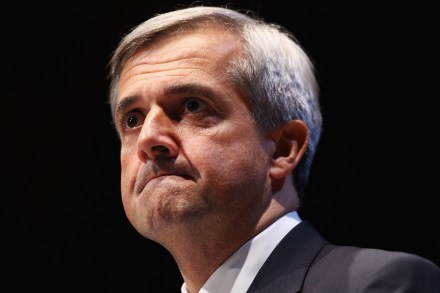
The vultures appear to be circling closer and closer to Chris Huhne — does he have enough strength to shoo them away? After all, he was already diminished by last weekend's claims about his delinquent motoring practices. Today, he is diminished further still. Both the Mail on Sunday and the Sunday Times (£) have published extracts from a taped conversation between the Energy Secretary and an unnamed someone who is alleged to have taken the fall for his speeding tickets. "There is no evidence for this story," says Huhne in one extract, "unless you give it some legs by saying something.

Mixed news from the Eurozone

From our UK edition

France and Germany’s better than expected growth numbers are making news today. But the divergence within the Eurozone — Estonia grew at 2.1 percent in the first quarter, Portugal shrank by 0.7 per cent — highlights one of the single currency’s biggest problems: how can one interest rate fit all? Economists expect Germany, whose GDP is now larger than before the financial crisis, to continue to outperform the rest of the Eurozone. Given that Germany and France together make up half of the Eurozone economy, interest rates will have to be set with this in mind. But, on the other hand, the Iberian countries and Greece are struggling with austerity and need a continued monetary stimulus.

MacShane’s contradictory testimony to the Iraq Inquiry

From our UK edition

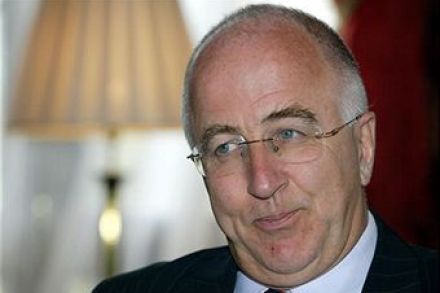
A trickle of documents from the Chilcot Inquiry have been released today, among which is the written witness statement of former Europe Minister Denis MacShane. It's rather intriguing. MacShane told the inquiry that it was his understanding that France 'would not leave the US, Britain and other allies alone in any action against Saddam' and that President Chirac then vetoed military action in the UN at the stroke of the twelfth hour, apparently against the wishes of his colleagues and France's political establishment. MacShane says he gained this impression after speaking to a senior French official at the Anglo-French summit at Le Touquet on 4 February 2003, six weeks before the invasion.

Setting the world to rights

From our UK edition

Wicked Company is the collective biography of a group of men with little in common, apart from a generalised dissatisfaction with the state of the world around them. Perhaps that is true of most intellectual coteries. The kings of the Parisian Enlightenment of the 18th century were the mathematician Jean d’Alembert and the playwright and journalist Denis Diderot, joint editors of the great Encyclopédie.

Is Chris Huhne proving coalitions don’t work?

From our UK edition

This country's not used to coalitions. So when we got one we were sceptical. When it worked, we remained sceptical. When it worked really well, taking decisions that a majority Labour government dared not take, we began to come around to the idea. Most people seemed to accept that they could live with a coalition; that it had a certain utility. Now, we don't know what to think following the spat between George Osborne and Chris Huhne. Is this proof that the coalition cannot work or merely an example of the way coalitions work? There are certainly worse examples of inter-coalition war in countries that often have coalition governments.

There’ll always be a France

From our UK edition

The sensitive chaps at the CRS are always up for a fight. This time it's their turn to battle the French government: The notorious Compagnies Républicaines de Sécurité, or CRS, are outraged at an official decree stating they can no longer drink wine or beer with their meals. Until now, a civilised tipple was part of the daily lunch menu of the controversial force, lauded by Nicolas Sarkozy, whose trademark black body armour and riot shields are a regular feature on French streets. A glass of wine, beer or cider – but not spirits – was always permitted with lunch, including while on duty. Even packed lunches provided out of riot vans while they were patrolling demonstrations came with a can of beer or glass of wine.